rumor has it… the government had a hell of a night on the town

It’s true, unlike the 2020 lockdown when the government subsidized the lockdown, during the 2022 lockdowns in Shanghai and elsewhere (Shenzhen, for example) the actual costs of game of germs are being passed on to ordinary citizens and entrepreneurs. Owners of cars that were parked in commercial lots, for example, are being held responsible for fees accrued during the lockdown, fees which be over 3,000 rmb. Indeed, one of the jokes currently circulating describes post-lockdown accounting for mass testing as a case of different government bureaus passing the buck:

[The government went out for a night on the town.] The medical insurance department believed that the finance bureau would pick up the tab, while the financial bureau assumed that the medical insurance department would foot the bill. The two sat down for dinner, ordering wine, dishes and escorts. They uncorked bottles of foreign spirits, sang karaoke, had massages and paid for sex. Indeed, they ordered everything on the menu. When it came time to settle the account, however, the finance bureau slipped out the door and the medical insurance department pretended to be drunk. And this is how the absurdity ended. 医保以为财政请客,财政以为医保请客,二人落座后加酒加菜要三陪,开洋酒、点歌、按摩、打炮......所有的项目都点了,拿出店家账单找人结账的时候,财政要遛,医保装醉,荒唐的一幕就这样结束了。

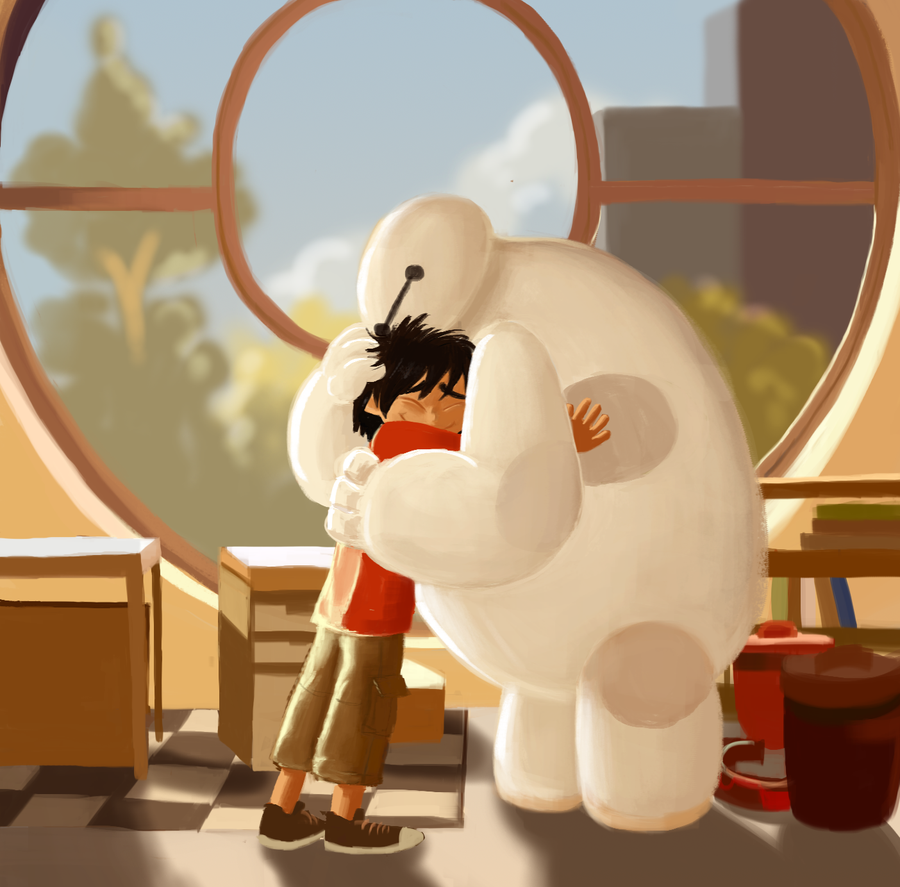
the animated pandemic: big whites on shenzhen social media

 “Big Whites (大白)” are the omnipresent and seemingly omnipotent figures of China’s 2022 lockdown, so named for their white full-body hazmat suits. Big Whites have been the Chinese government’s social interface for managing the Omicron outbreak. Big White teams consist of medical workers, police officers, community office representatives, and volunteers who come (as the government repeatedly emphasizes) from all walks of life. In their capacity as service providers, Big Whites conduct COVID tests, deliver food to residents in locked-down buildings, and coordinate other public services within a designated area. However, Big Whites are also the public face of COVID security. They conduct building sweeps for testing holdouts, they act as gatekeepers at locked-down estates and neighborhoods, and they patrol locked-down areas to ensure everyone else is in their homes. 

The moniker “Big White” has a double origin story. First, it derives from the gear that the management teams wear. In addition to being fully masked, hands are gloved and shoes are covered. There is a turquoise blue stripe which runs along suit seams and some Big Whites have personalized their suits with magic marker inscriptions. Second, “Big White” is also the Chinese translation for the plus-sized inflatable healthcare robot named Baymax, a character from the 2014 Disney film Big Hero 6. In the film, Baymax teams up with 14-year-old robotics prodigy Hiro Hamada to save their hometown San Fransokyo from an evil supervillain. Baymax and Hiro team-up with four other nerds to form a band of high-tech warriors against evil uses of technology especially biotech. 

In a 23 March post on the English language WeChat account, EyeShenzhen, author Li Dan explained the connection between pandemic work teams and an animated film: “Chinese netizens use it [Big White] as a nickname for frontliners who are fighting the COVID-19 pandemic because they wear white protective coveralls on the job, and they work selflessly to protect the safety of the public.”

This essay touches upon two interrelated issues in the social media representations of Big Whites in Shenzhen—the gender of caregiving and the role of animation in conceptualizing pandemic management.

Hiro and Baymax
Continue reading

shameful dis-ease: over the counter cold meds and covid

Body shaming and its ills are familiar: eating disorders in the pursuit of an ideal body-type; feelings of inadequacy and low self esteem caused by fat-phobic, misogynistic, racist and anti-trans bullying; and the intense pain and despair that come from being isolated from those around us simply because of who we are. Indeed, shame is an important component of social control precisely because it shifts responsibility for indifferent and cruel treatment of others from the shamer to the shamed. The logic is insidious, direct and more often than not internalized before we finish elementary school: I am treated like shit because this body is fat/ ugly/ female/ trans/ black/ old…

Recently, I’ve realized that mandatory covid testing manipulates body shame to achieve political and social goals. It has also changed previous expressions of care for family and friends.

Inquiring minds want to know: How does zero-covid play upon extant forms of body shame in Shenzhen? Well, if you lived through the US AIDS epidemic in the 1980s and 1990s, you have (because you read Susan Sontag) a pretty good understanding of how illness and shame work to prevent the ill from receiving necessary care, while allowing the healthy and the powerful to justify their indifference to the pain of others. Below, I track how regulation of over the counter cold medicines is part of a bio-governance regime that has made it shameful to catch a cold.

Continue reading

wither the future? some anecdotes from shenzhen under normalized grid management

Yesterday I spoke with a cabbie about the future. He was excited to learn that I hold a US American passport, and quickly reassured me that even if many Chinese people dislike the USA and its residents, he felt otherwise. He wants China to become more democratic and for more voices to be heard in political conversations. He emphasized that presently China only has one voice, making everybody else what we in the US would call “sock puppets” and in China are sometimes called “marionettes” or 傀儡. He also felt that Shenzhen’s housing market made it impossible for anyone not rich to purchase a house and make a life for themselves, so why not “lay down” 躺平. If you have a place to lay your head and enough to eat, why bother with marriage and children?

Continue reading

无语😓:cultural incompetence is also cross-generational

I recently downloaded this sheet of Covid stickers and emoticons. I really like them because they reference specific features of Shenzhen’s experience during the February and March 2022 Omicron outbreak. However, I haven’t yet used any of them because I’m feeling nervous about being called out for cultural incompetence if I misuse them. Or even more scary is that I won’t be called out and I’ll just continue making the same mistake over and over again. That said, I don’t actually want to use emoticons enough that I am willing to learn how to use them by stumbling along and making mistakes. And there’s the rub: emoticons don’t actually resonate with me. They’re just part of a dialect that I recognize has overtaken me, but even so, I haven’t really put in any effort to learn.

So why don’t I emote-icon with confidence? What am I missing when chosen family and friends insert emoticons into a dialog? And why do I feel more comfortable writing in 普通话 than I do texting in either English or Mandarin?

Continue reading

just when you thought it was okay to think…

To believe or not to believe? China has a “Big White Earth God Shrine” corona test site. Is it performance art or is it an actual test site? After all, zero-Covid is based on science, not irrational commitment to a political policy, which in practice looks a lot like, well, in practice zero-Covid looks a lot like folk religion:

Continue reading

reverse migration from shanghai?

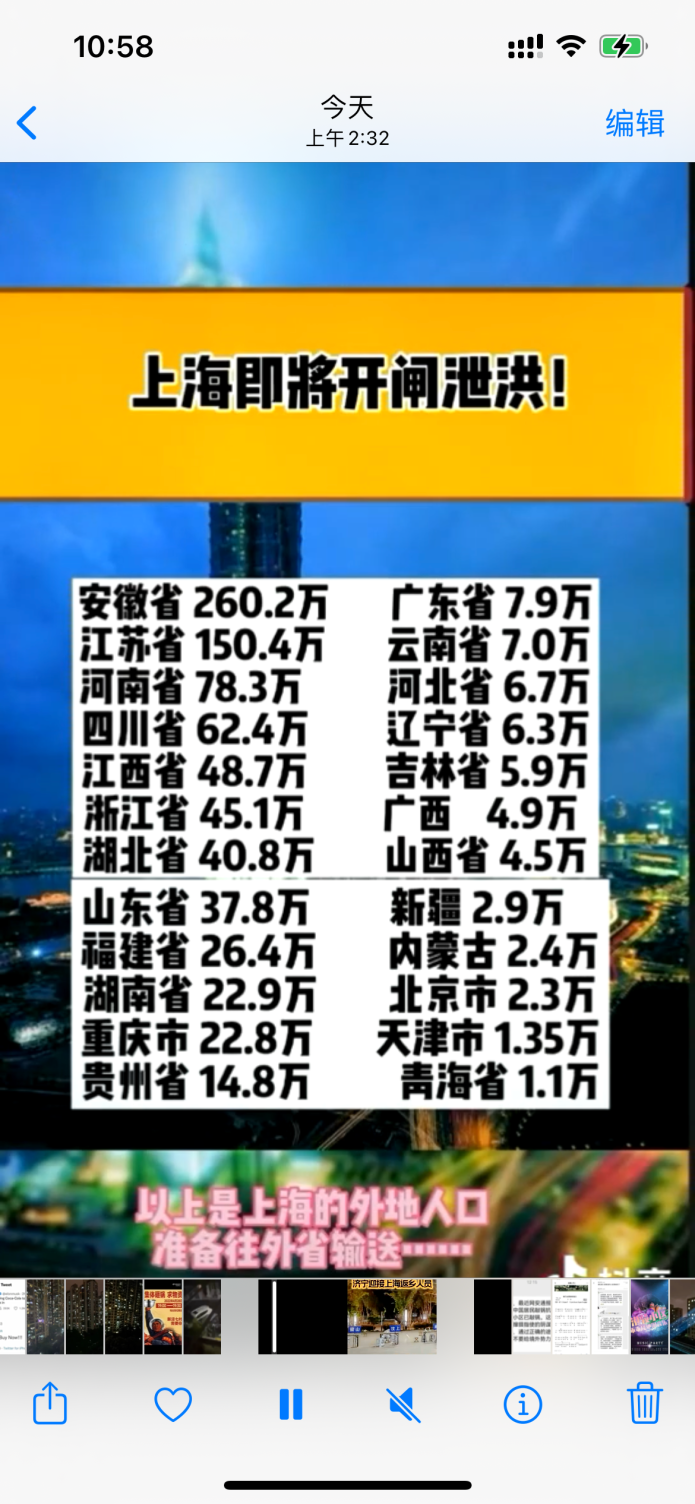
According to viral social media, reverse migration is the latest Shanghai initiative to achieve ‘zero-Covid.’ In turn, the government has explicitly denied that migrant workers are being forced to leave the city, calling these posts disinformation. That said, migrant workers can apply to return to their registered hometown, specifically their hukou residence. A TikTok video (below) includes the following data (translated from above image), suggesting that 8,630,500 people (roughly the population of NYC) could be directly impacted if migrant workers leave:

Shanghai is about to Release the Flood Gates!

Anhui:         2,602,000          Guangdong:     79,000
Jiangsu:      1,504,000          Yunnan:             70,000
Henan:            783,000          Hebei:                67,000
Sichuan:         624,000          Liaoning:           63,000
Jiangxi:           487,000          Jilin:                    59,000
Zhejiang:        451,000          Guangxi:            49,000
Hubei:             408,000          Shandong:        45,000
Shandong:     370,000          Xinjiang:            29,000
Fujian:             264,000          In. Mongolia:    24,000
Hunan:            229,000          Beijing:               23,000
Chongqing:    228,000         Tianjin:                13,500
Guizhou:         148,000          Qinghai:              11,000
Continue reading

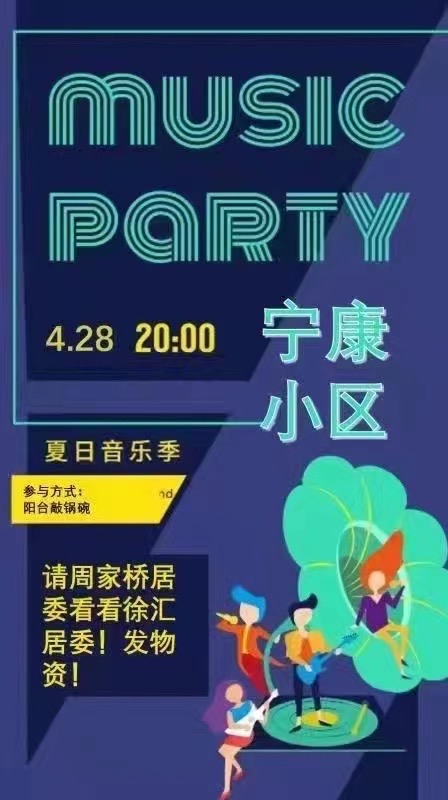
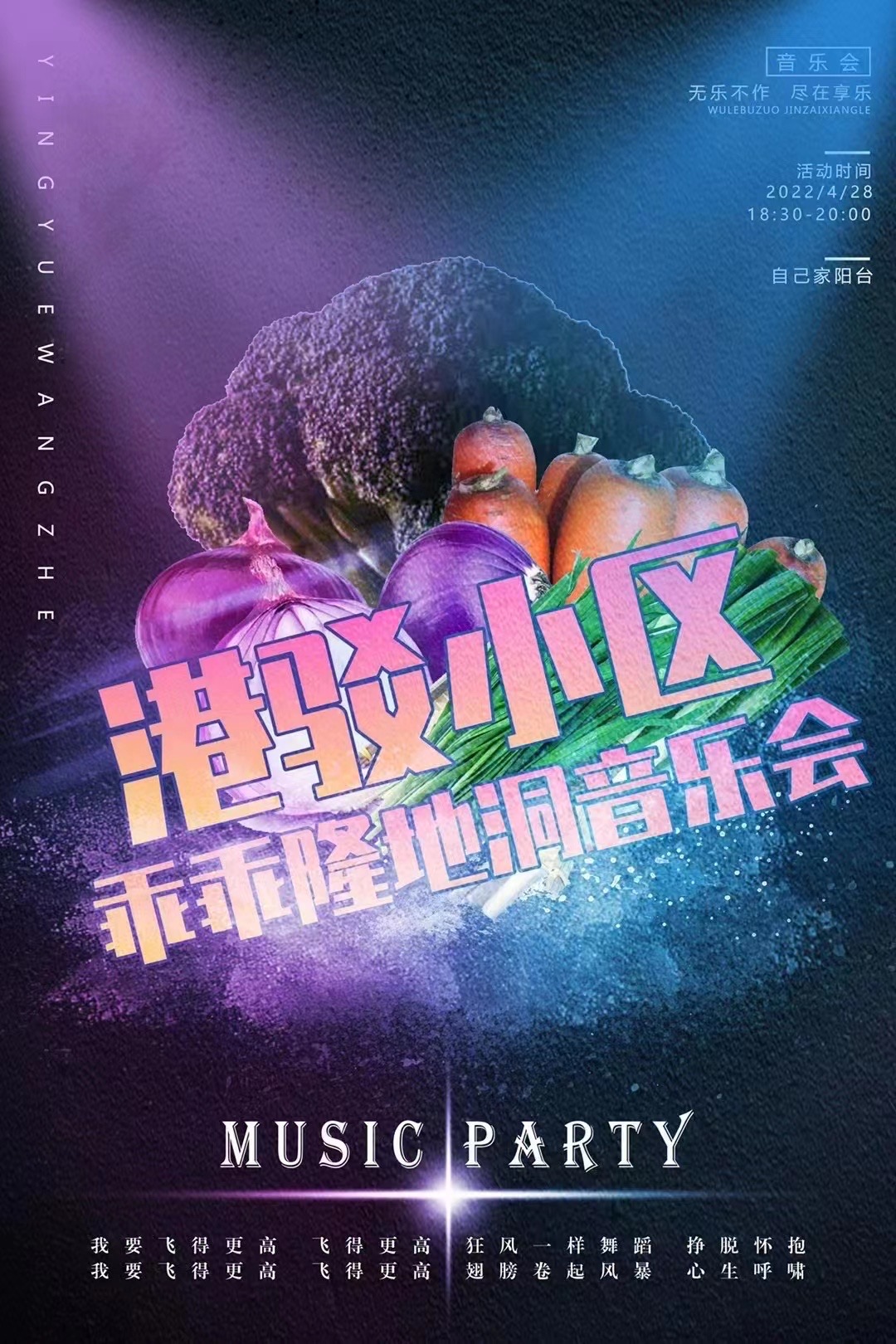
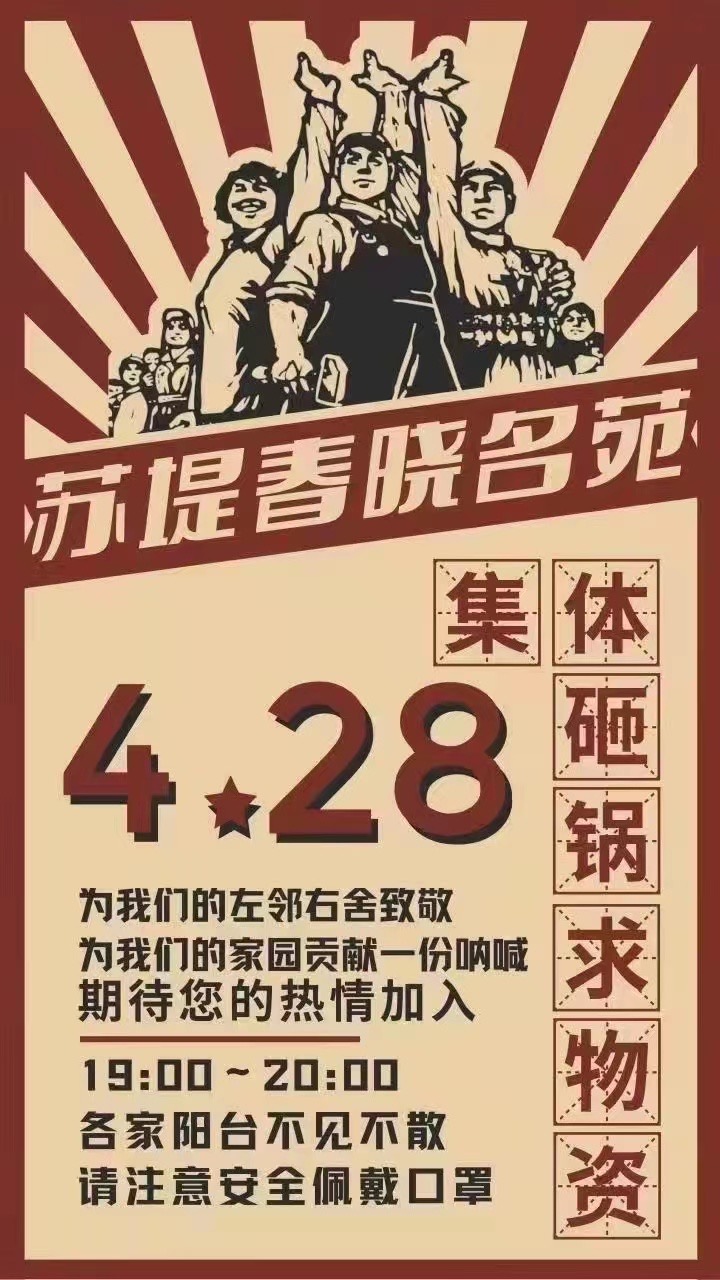
Shanghai Music Party, 28 April 2022

Yesterday evening between 7 to 9, depending on the housing estate, Shanghai people took to their balconies and clanged on pots and pans to demand food. The event, “Music Party” seems to have been widespread, with organizers making and circulating individualized posters, telling neighborhood participants when their group would be playing. “Music Party” allowed Shanghai residents to tactically fill the city with alternative sounds–sounds that were meaningful to them, rather than the sounds of impersonal management.

As Jing Wang observed, sound has become a critical feature of locked-down Shanghai. Robotic dogs and drones carry loudspeakers through neighborhoods, instructions blaring. On repeat. Everyday. In a city where isolation has become the new normal and cell phones mediate intimacy, the materiality of a common voice (or clamor) shared across time and space allows for the mutual recognition that makes us human. Videos of the clanging and robotic dog (and yes the ‘bitch’ speaks with a female voice) as well as some of the posters, below.

lock(ed) down thinking

It turns out that Covid-19 is good to think if your goal is to understand ‘China’ as imagined, perceived and, of course, enforced. (Winning?) After all, even if there are no countries outside are heads, nevertheless, there are test stations, checkpoints, police, and all sorts of social monitoring. Moreover, how different groups–both at home and abroad–are responding to the lockdown shows up interesting aspects of my experience in Shenzhen. So, I’m providing a round-up of some of the Covid related blogs, essays and books that I’ve been reading to embed Shenzhen’s experience into national and international discourses about biological governance, moral geography and new forms of self expression. And yes, they’re all over the place because we don’t really know how the ground has shifted. Moreover, I find comparison and contrast both necessary and useful because the intellectual and political challenge is to provide rich, on the ground accounts of lived experience within and against political-economic systems that are (to use a harsh neologism) always already glocal–the suffering caused by Covid-19 is universal, but responses to and cultural expressions of pain have been highly specific.

The cartoon caption which comes via the 2022 Shanghai lockdown reads, “Who dares call a meal with pig feet and bear’s claw anything less than a feast? You can’t hide that we’re living in a flourishing age.”

Continue reading

check out ‘Aves’

Aves (小鸟文学) has published a special edition, which has collected many accounts of the Shanghai lockdown, including poetry, essays and camp (方舱) diaries. Many of these pieces have been previously published via WeChat and weibo, but. By bringing the works together in one place, Aves has taken an important step in giving a more comprehensive form to the lockdown. These are not individualized twitterings; they form a chorus.