A short video about “Of a Piece”, the project that Handshake 302 brought to the Shenzhen Art Museum, June 1-19, 2015.
Tag Archives: baishizhou

local is as local does. or not.
This week I have been thinking about iterations of the “local” in two sites: the 2015 Shenzhen Hong Kong Biennale of Urbanism/Architecture and the Baishizhou Street Museum. In particular, I’m thinking about the possibility of making connections from “here” to “there” when they hinge on the distance between (a) some outside understanding of what the local might be and (b) what might be interesting to actual locals. The possibility of meaningful dialogue is further complicated when “outsiders” and “locals” are organized by global hierarchies, internal class structures, and unquestioned ideas of what might be intellectually and/or aesthetically engaging. Continue reading
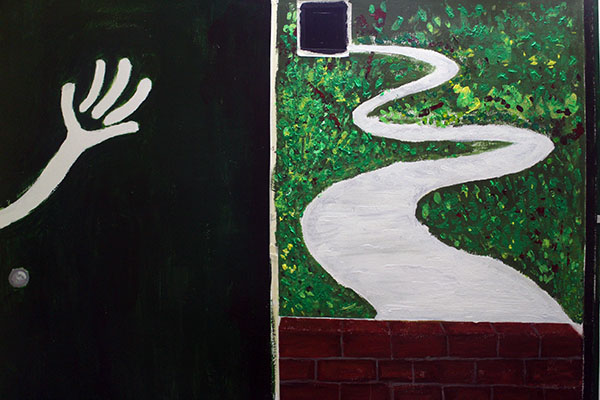
寻找前途/the road not taken
Recently, “Handshake with the Future” curator, Liu He talked with Xin’an Polytechnic professor He about the current exhibition at Handshake 302. Here’s what she said:
Q: 让学生们参与《与未来握手》的初衷是什么?/What did you hope to see happen when by having your students participate in “Handshake with the Future”? Continue reading

handshake with the future: shenzhen’s maker plus culture
The world has glommed on to Shenzhen’s Maker culture, but what is often left undetected is just how Maker Plus the city actually is. Yesterday afternoon at Handshake 302, we held the opening for projects by interior design students from the Guangdong Xin’an Polytechnic College. During the opening, the conversation about their work focused on bridging the distance between design and implementation. A key thought came from Lei Sheng, Handshake 302’s master craftsman (seriously, he can make anything): in an information age, information isn’t the most important element for creativity. Instead, the knowledge of making things with our hands–craftsmanship–is the key to a successful design career.
handshake with the future
opens on Sunday and students from Guangdong Xin’an Polytechnic are hard at work!
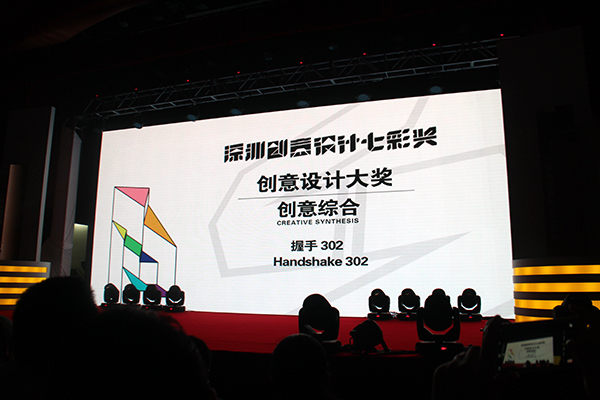
handshake 302: victory lap!
Yesterday, Handshake 302 won the first annual Shenzhen Creative Design Award in the category of creative synthesis. The other five categories included: architecture/space; product development; fashion; visual communication, and; interactive design. The awards recognized social design as an important element of design in general. The overall winners for “special contribution” included the Shenzhen based Ancient Village Network that provides technical and other support for village preservation and the OCT market, which provides young designers and artists a rent-free stalls to sell their products on weekends. Continue reading
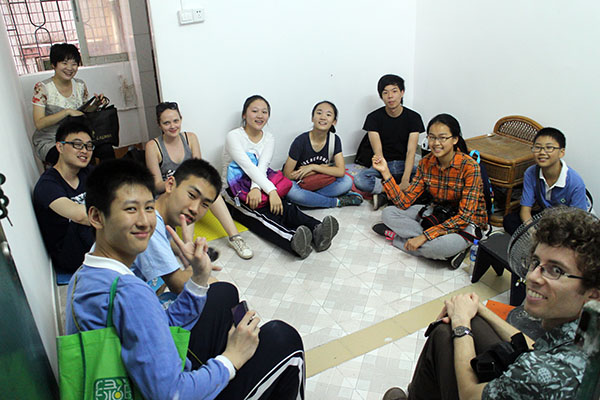
handshake with the future
Handshake 302’s latest project is moving along. This past weekend we met with middle school students (on Saturday) and Guangdong Xin’an Polytechnic students (on Sunday) to think about how their experiences and acquired knowledge about Baishizhou might be put to the interesting work of making art. Continue reading
noodle shop, baishizhou
This past week has been a rush, with little time for organized thinking, let alone putting those thoughts together in written form. Nevertheless, while waiting for my noodles at the shop below Handshake 302, I watched the interactions of the proprietor and a local beggar. He sat at the table, silently, staring out at the road. She cleared tables, made noodles, and then graciously served him a bowl. He didn’t acknowledge her and ate. She returned to her work.
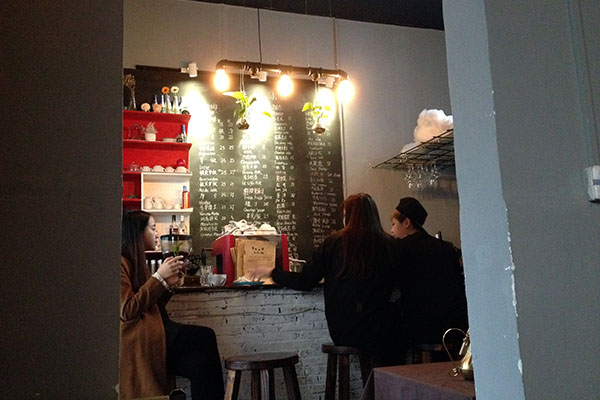
gentrification in baishizhou
Here’s the thing about urban renewal in Shenzhen; it takes time. Consequently, although withering practices can be sensed in Baishizhou, nevertheless, day-to-day it all seems like the hustle and bustle hasn’t changed. Indeed, the neighborhood continues to experience low-level gentrification. There is, for example, now an independent coffee shop in Baishizhou, while outside on Shahe Road, individual upgrades continue. So photos from the coffee shop and ongoing upgrades suggest that even if young people in Baishizhou aren’t exactly hanging out and playing sports, nevertheless, there even low-income residents engage in leisure activities and consumption, which in turn points to the complexity of Baishizhou’s demographics and ongoing construction of Shenzhen’s youth culture.

yumin village: changing meanings of “farmer housing”
Just recently got my paws on “The History of Yumin Village (渔民村村史)”. Yumin Village, of course, was the village that Deng Xiaoping visited in 1984, during his first inspection trip to the SEZs. Xi Jinping followed up with a visit in 2012. So yes, this village has played an important symbolic role both in the ideological construction of post-Mao society and in representations of pre-reform Shenzhen Bao’an County. What struck me as I flipped through the pages was how this transformation can be readily represented in the changing typology of “farmer housing (农民房)”. Continue reading
 Shenzhen Noted