policy by number

In anticipation of the 18th National People’s Congress (and possible trial and sentencing of Bo Xilai and concomitant rise of Wang Yang), I am offering a bit of policy by number — one country, two systems, for example. Chinese policies (at all levels of government) tend to come in easy to remember chunks, which in turn are parsed and memorized in politics class. Of course, in addition to politics classes taught in actual schools, all government organizations also unpack the latest phrase because as the ill-fated reception of Jiang Zemin’s “three represents” demonstrates, its possible to disseminate a catchy catchphrase without the larger public actually figuring out is being said.

A few examples, the author, and a few dates of Chinese policy by number:

One Country, Two Systems (一国两制; Deng Xiaoping, 1984) refers to the decision that Hong Kong would remain administratively separate from the PRC and was used again for the return of Macau, allowing both Special Administrative Regions to continue business operations as they had under colonialism, even as political authority shifted to Beijing. The phras also anticipates the return of Taiwan.

Three Represents (三个代表; Jiang Zemin, 2000) refers to which Chinese interests the Party represents, namely 1. the demand for progressive production capacity; 2. the cutting edge of progressive cultural production, and 3. the basic interests of the vast majority of the People. Unfortunately, even in Chinese the three represents are counter intuitive (1. 始终代表中国先进社会生产力的发展要求;2. 始终代表中国先进文化的前进方向;始终代表中国最广大人民的根本利益) and many thought that the phrase referred to three representatives of Marxism: Marx, Lenin, and Mao. But again, if we were talking about the people’s representatives in the post Mao era, where was Deng Xiaoping’s place in all this?

Four Modernizations (四个现代化;1st plenary session of the 3rd National People’s Congress, December, 1964) refers to the imperatives to modernize industry, agriculture, national defense, and science and technology research (工业现代化、农业现代化、国防现代化、科学技术现代化). The four modernizations where to be accomplished in two, 15 year steps (两步走), or to modernize over the course of 6 five-year plans. Step 1 was to establish a modern industrial base and economic system by 1979; step 2 was to bring China’s industry and economy to the world by 1995. In the 3rd plenary session of the 11th National People’s Congress, Deng Xiaoping memorably reestablished the four modernizations as the guiding policies.

After these first three, Chinese policy by number quickly deteriorates into farce because every level of government and many work units promote their goals through this system. Of note, however, is that Chongqing and Guangdong policy by number soundbites have entered into public discourse, not to mention Hu Jintao’s love of the genre. A few of the more prominent examples:

Three attacks, two establishments (三打两建; Wang Yang, 2011) are the current Guangdong Provincial government’s commitment to attack monopolistic markets, to attack piracy, and to attack corruption and establish systems of social trust and marketplace oversight (打击欺行霸市、打击制假售假、打击商业贿赂;建设社会信用体系、建设市场监管体系).

Five Chongqings (五个重庆; Bo Xilai, 2008) marked the beginning of the Chongqing Model of development, and referred to inhabitable Chongqing, smooth traffic Chongqing, forested Chongqing, safe Chongqing, and healthy Chongqing (宜居重庆、畅通重庆、“森林重庆、平安重庆和健康重庆).

Six Efforts, Six Actualizations (六个着力六个切实; Hu Jintao, 2009) are more ongoing efforts to fight corruption by changing the hearts and minds of Party members by striving to strengthen guiding principles and to actualize the Party for the public good and administering government for the people; striving to improve praxis and to actualize the Party’s praxis of scientific guidance; striving to strengthen responsibility and to actualize the responsibility to follow the Party and the People to be generous; striving to establish correct political positions and to establish objective development [which then has its own numbered list of how tos]; striving to establish a correct view of benefits and to actualize the People’s benefit as being primary, and; striving to strengthen  the Party’s discipline and to actualize Party unity [in four areas] (着力增强宗旨观念,切实做到立党为公,执政为民;着力提高实践能力,切实用党的科学理论指导工作实践;着力强化责任意识,切实履行党和人民赋予的责任;着力树立正确的政绩观,切实按照客观规律谋划发展,要察实情,讲实话,鼓实劲,出实招,办实事,求实效;着力树立正确的利益观,切实把人民利益放在首位;着力增强党的纪律观念,切实维护党的统一,在思想上,行动上,政治上与党中央保持一致,维护党的统一。)

Eight Honors, Eight Shames (八榮八恥; Hu Jintao, 2006) were promoted to cultivate the moral conscious of Party members; patriotism is an honor, while harming the country is a shame; serving the people is an honor, while turning one’s back on the people is a shame; respecting science is an honor, while stupidity is a shame; hard work is an honor, while sloth is a shame; solidarity is an honor, while the pursuit of self benefits is a shame; being trustworthy is an honor, while being opportunistic is a shame; upholding the law is an honor, while breaking the law is a shame; struggle is an honor, while arrogant greed is a shame (坚持以热爱祖国为荣、以危害祖国为耻,以服务人民为荣、以背离人民为耻,以崇尚科学为荣、以愚昧无知为耻,以辛勤劳动为荣、以好逸恶劳为耻,以团结互助为荣、以损人利己为耻,以诚实守信为荣、以见利忘义为耻,以遵纪守法为荣、以违法乱纪为耻,以艰苦奋斗为荣、以骄奢淫逸为耻).


time zoned urbanization

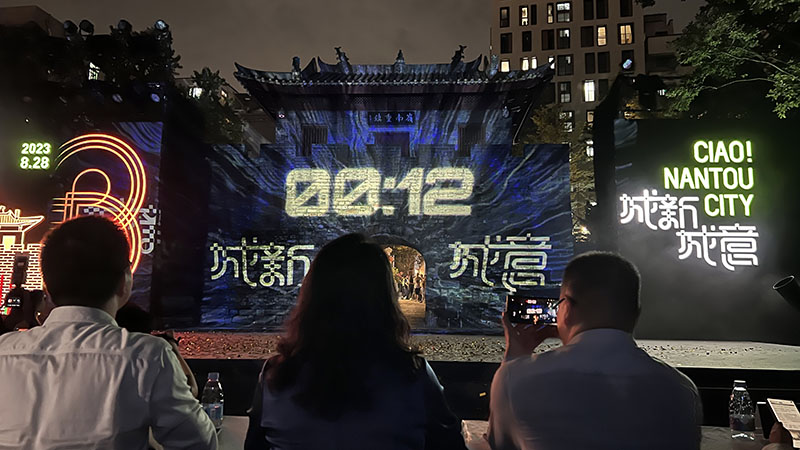
The walk from Central Walk Mall to the Civic Center by way of Central Park suggests the contradictory temporalities of Shenzhen speed, which was set when Guomao went up — one story every three days. Shenzhen Speed is time zoned urbanization, where architecture appears as a function of place X project-time subdivided by GDP expectations and the inevitable algorithm of actual buildings + entropy gains momentum in the absence of mindful inhabitation. Impressions from yesterday’s walk:

This slideshow requires JavaScript.

blue star blues

Yesterday, Ministry of Tofu translated a Southern Daily article about a Shenzhen elementary school teacher who marked students faces with blue stamps for misbehavior. They also published samples of weibo responses to this practice. No unexpectedly, there was general outrage over using humiliation as a means to correct student behavior. The article also mentioned that students received stamps for good behavior. Netizens were noticeably silent on this topic, no doubt because as long as I have been in Shenzhen, rewarding student behavior with stars and stickers has been standard practice in elementary schools.

In fact, public recognition and shaming are the most important motivators in the Shenzhen education system, where schools give and receive public recognition for “results (成绩)”. What’s more there is no question that we are speaking of test results, especially gaokao test results. At the high school level, municipal and district governments reward schools for the number of students sent on to first tier universities, in turn, the schools reward teachers for their students results, and teachers reward their students. In middle schools, public rewards are based on zhongkao, or high school entrance exam results with a similar system of bonuses for teachers who can produce results (出成绩) and students who get into top scores.

Given the importance of test scores their reputation and livelihood, Shenzhen teachers constantly seek ways to help students to improve their test scores. High school teachers run mandatory study sessions, while middle school teachers use classroom time to teach test taking skills. Moreover, most parents not only accept the primacy of test taking to education, but also arrange for their children to attend cram schools at night and over the weekend. In fact, many high school students often ask to attend cram schools in order to compete with their classmates.

Importantly, the system only works – Chinese schools infamously produce test-taking machines – to the extent that teachers and students accept test scores as their raison d’être. Consequently, elementary school schools and teachers have an awkward place in this system because it is their job to transition students from home life to the test life. At the same time and to a greater degree than their middle and high school colleagues, elementary teachers are expected to care for the total student, including their emotional and physical wellbeing. And there’s the rub: most young children and especially boys cannot sit still for long periods of time.

The restlessness of young bodies places elementary school teachers in a difficult position because in order to take tests, students must sit at desks for at least 40 minutes with an eye to eventually taking 2 to 2.5 hour tests that make up the gaokao. The 2012 Shenzhen gaokao, for example, took place on June 7 and 8. In the morning, candidates sat for 2.5 hours (Chinese on the 7th and humanities/science on the 8th) and in the afternoon they sat for 2 hours (humanities/science on the 7th and English on the 8th). The zhongkao was held on the 9th, with two 1.5 hour test periods, one in the morning and one in the afternoon. Thus, more often than not, restless elementary students receive low test scores, their teachers are accused of ineffective pedagogy, and the schools are criticized for not doing their jobs.

In order to transform the restless body into a test-taking machine, elementary school teachers often use public recognition to encourage students. In fact, stickers and stamps are just two elements of a repertoire that also includes publicizing grades, issuing certificates and holding award ceremonies. During weekly flag raising ceremonies, top students receive public commendation and at the end of the year, the best students receive merit scholarships and their photos are hung in prominent places.

Obviously, this system creates pressure for the majority of students who cannot (by definition) earn the top scores. For these students, the desire to alleviate feelings of envy and shame sometimes become motivations to study. Or as often the case, middling students learn to live with second-rate status and find pleasure in non-academic activities. At the same time, teachers will attempt to use envy and shame to motivate students to overtake top students or to redeem themselves in the public eye.

Nor are teachers alone in celebrating top scores and denigrating poor results. Parental bragging about good students is rampant, while parental complaints about poor results are never simply good manners, but also strategies to motivate children to do better in school. Parents often negatively compare a child to another, even as some of the most brutal set downs entail parental complaints about lives wasted to support a student who has failed academically.

Point du jour: The blue star of shame on third grade faces are symptoms of a much larger problem that cannot be ameliorated by ridiculing the teacher herself or calling for different pedagogy. Rather, the system of Chinese education constitutes a problem so vast and entrenched that it is hard to know where to begin deconstructing it. Do we begin with the gaokao? Or with a more equitable system of job opportunities? Or allow for private schools that are certified even when they do not teach the national curriculum?

I am not posting this response to absolve the teacher from her responsibility in damaging her students’ self esteem. I am, however, posting this response to highlight the desperate hypocrisy of netizen complaints about blue stars. On the one hand, in a system that motivates through public recognition, shame is effective. Thus, issuing blue star demerits should be understood as a natural extension of extent pedagogy. On the other hand, until the system changes, parents and teachers find themselves in the desperate position of trying to force children to become test-taking machines in the gentlest manner possible. All recognize that the goal itself is violent, but hope getting there doesn’t have to hurt.

东方村:the modern politics of traditional villages

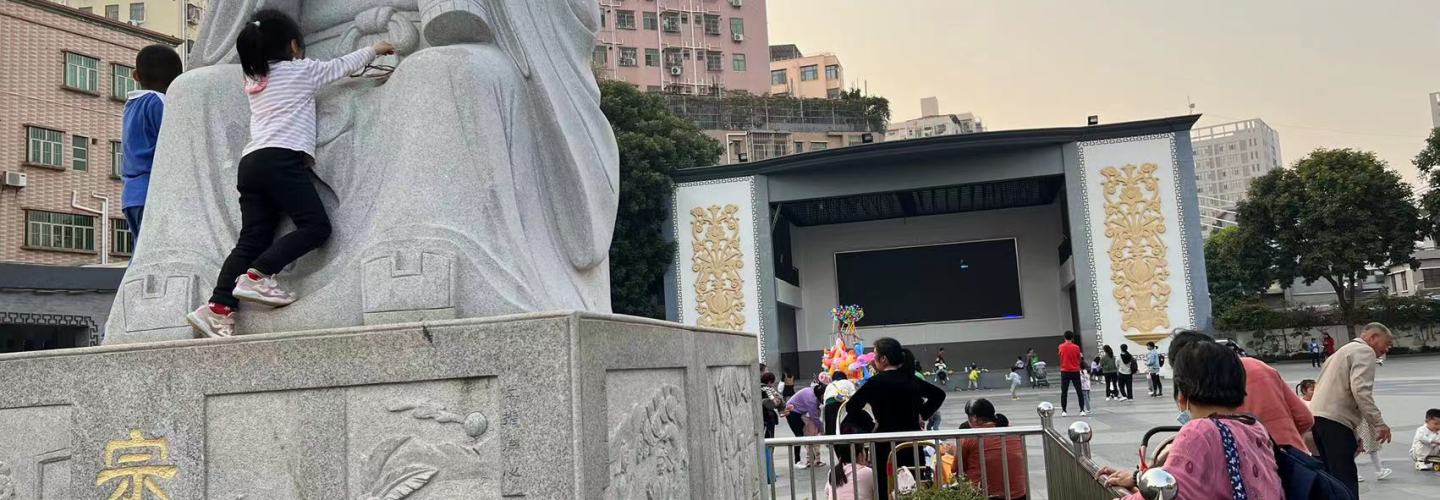
Today, I recount and comment on the 11th episode in The Transformation of Shenzhen Villages (沧海桑田深圳村庄三十年), Dongfang Village (东方村), which is interesting because it illustrates current concerns with rewriting urban village history as the continuation of Confucian values in a new environment.

In 1978, border police captured several refugees from the Dongfang Brigade, who were trying to cross the Sino-British border and enter Hong Kong illegally. The organizer of the group was none other than the brigade party secretary, Wen Zhixiang, who was sentenced to four years in jail for his crime, but did not actually attempt to go to Hong Kong. Instead, he decided to send his daughters to Kong Kong, while he remained in Dongfang. After his release, Wen Zhixiang shifted sand for use in concrete and died four years later of liver cancer.

The story of Wen Zhixiang is presented as a story of sacrifice that links present-day Dong Fang to the Southern Song official, Wen Tianxiang (文天祥). In 1278, Wen Tianxiang committed suicide rather than serve the conquering Yuan. However, in order to insure that his family line would continue, he made sure that his younger brother would escape to have descendants. Accordingly, the two brothers fulfilled their Confucian obligations to both their Emperor and family, in Mandarin their decision has been described as “one loyal and one filial (一忠一孝)”. In fact, Wen Zhixiang was a descendent of Wen Tianxiang’s younger brother, Wen Bi. The Wen family descendants have been living at Dongfang Village for over 600 years.

During Wen Zhixiang’s incarceration, then Baoan Party Secretary, Fang Bao petitioned to have him released. However, the higher ups continually denied to release Wen Zhixiang, but also to approve more than the official quota of border passes for visits to Hong Kong. In his interview for the documentary, Fang Bao emphasized that policy placed local farmers in a difficult, but understandable position. On the one hand, Baoan residents knew life was better across the border because they had family there. On the other hand, they also had worked hard for the Party. This was a question that tested the contradictions between one’s loyalty to the Party and family responsibility.

Not unexpectedly, the film asserts that Hong Kong investment in village-owned factories resolved the contradiction that Wen Zhixiang faced. Good government, it suggests, means enabling citizens to have a high quality of life, so that they are not faced with the decision of remaining loyal to government or their family.

For me, the juxtaposition of Wen Tianxiang and Wen Zhixiang’s respective stories elides important differences between Confucian and neoconfucian understandings of loyalty, and the role of individual consent in traditional and modern hegemony. Wen Tianxiang, for example, did not choose between to extant political orders. Instead, once the Song had been defeated, he chose to die rather than serve the new dynasty. For Wen Tianxiang, loyalty was absolute. This is a traditional political value. In contrast, Wen Zhixiang chose between socialism (and subsistence farming) in Songgang or wage labor in Hong Kong, basing his decision on the quality of life in the two places. In other words, his neoconfucianism allowed for conditional loyalty, which is a highly modern political value.

In other words, the story of Wen Zhixiang reveals the modernity of “traditional” famers, rather than their blind repetition of tradition. From the perspective of local Party Secretary Fang Bao, Wen Zhixiang’s decision was understandable. Even if Wen Zhixiang broke the law, he did not deserve imprisonment. Indeed, the man who replaced Wen Zhixiang as Dong Fang Village secretary reiterated this point; they tried repeatedly to reintegrate Wen Zhixiang into the village after his release. In other words, by making the stories of Wen Tianxiang and Wen Zhixiang analogous, the film reveals the explicit modernity of “traditional” Baoan, where citizens give or withhold loyalty to a government based on their quality of life (however defined), rather than, committing their lives to the government they happened to be born to (as did Wen Tianxiang).

good bye urban village, hello middle class

The ideological consolidation of Shenzhen’s middle class identity continues. Of note is the subtle repositioning of urban villages as sites of upward mobility that have outlived their social usefulness, rather than as the home village of local people. This is particularly interesting because efforts to map Shenzhen’s cultural heritage through the history of local villages have also intensified.

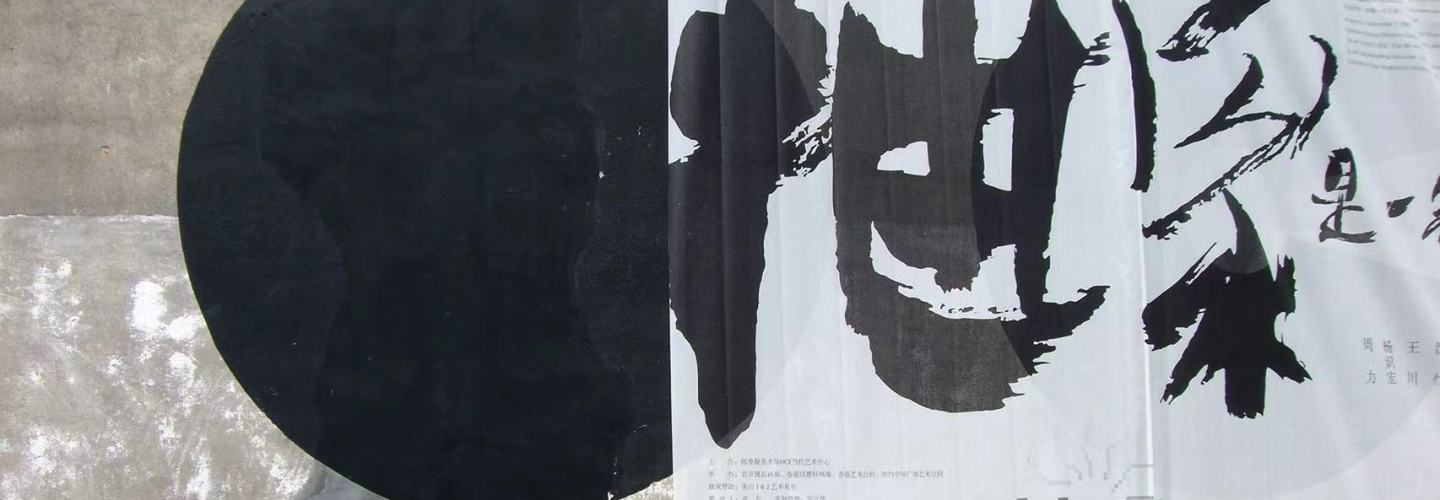
At the OCT B10 Gallery, for example, the Zeus Cultural Communication Group has installed a photography exhibition “Goodbye Urban Village (再见城中村)”, which was part of ceremony to celebrate the commencement of production on an eponymous film. As a company, Zeus specializes in filming large-scale documentary films and documenting engineering projects and “Goodbye Urban Village” will document urban renewal projects in several Shenzhen urban villages.

The images have been mounted in various formats — actual printed photographs, large wall posters, and backlit windows. The content of the images, however, is consistent: the daily life of urban migrants. In the forward to the exhibition catalogue, Zeus CEO Zuo Li provides the ideological gloss for exhibition visitors, “The truest moment in any urban village is that everyone who has made the leap here – man or woman, elder or child, is arduously struggling for a better tomorrow (城中村里最真切的落点,是每一个跃动在这里的身影--男女老少都在为明天艰辛地努力着)”.

Zuo Li’s gloss highlights two sites — migrant bodies and architecture — where new discourse about urban villages semiotically parses them into two, distinct elements of Shenzhen identity — rural migrants and local heritage.

With respect to the representation and ideological construction of a stereotypical urban villager, urban village residents are identified as migrants, who have come to pursue the Shenzhen dream of a better life. A series of portraits literalizes this understanding as young workers pose next to a sign in which they have written their job, salary, length of time in Shenzhen, and dream. These scenes of everyday life relentlessly publicize what in middle class homes are kept private. We see, for example, people sleeping and eating, children playing and urinating, friends playing cards, local security apprehending someone, and prostitutes resting.

Concomitant with this fascination with the display of “real life” in the urban villages is the marked absence of images of Shenzhen locals. This absence is particularly glaring when we remember that as recently as five years ago, photographers still took pictures of village holidays, ceremonies, and festivals to include in discussions about urban village life. Today, those images have been naturalized as local heritage and appear in magazines, travel blogs, and, of course, the Shenzhen Museum.

With respect to the representation of urban villages as human settlements, the urban village environments that are presented are decrepit and dank, and the images overwhelmingly dark, except for moments of muted color. Indeed, many of the pictures frame the human subject with handshake building walls and the garbage that hangs from overhead wires. Again, absent from these images are recent renovations, such as those at Xiasha or Huanggang, where village ancestral halls, temples, small parks, and plazas provide the historical links between contemporary Shenzhen and “ancient” or “traditional” China.

Extant urban villages place middle class Shenzheners in an ideological conundrum: on the one hand, Shenzhen’s rise continues to represent the fulfillment of rags-to-riches dreams. On the other hand, many of those who are now rich want to take the rags out with the trash, cleaning up the environment. The social justice question, of course, remains does cleaning up the environment mean making urban villages sites of clean, convenient and affordable housing? Or, does cleaning up the environment mean transferring urban village land rights to real estate developers and forcing residents to less convenient sites outside the downtown area?

The representational choices made in the Goodbye Shenzhen photography exhibition ellide the important question of the place of (or a place for?) urban poverty in Shenzhen. Instead, they reframe migrant dreams of a better life as being already realized in the anticipated jump from neighborhoods of handshake buildings to those of glass and steel.

In keeping with the theme of exploring the ongoing rise of Shenzhen’s middle class identity, it is interesting to view this show along with the Kojève exhibition in the OCAT Contemporary Art Center. The most obvious difference is the respective intended audiences (OCAT has translated its program into English, while Urban Villages has not). However, at the level of content, the two shows are uncannily similar. OCAT offers Kojève’s photographs/postcards of post-historical spaces and Urban Villages provide realist documentary of Shenzhen’s anticipated past. In both exhibitions, we find ourselves positioned to look at what no longer exists.

The urban village photography exhibition will be up through Saturday September 29. Kojève will be up through November 16.

thank you for your cooperation

What to make of a the following text message from the Shenzhen Public Security Bureau?

A warm reminder from the police: Recently, the public has expressed their patriotic enthusiasm and appeals through various “Diaoyu / Senkako” protests. However, these protests also impact social and economic order. Therefore, the police encourage the public not to participate in gatherings, marches, or protests that have not been approved. Thank you for your support and cooperation! The Shenzhen Public Security Bureau

警方温馨提示:近期,市民群众通过各种形式进行“保钓”抗议活动,充分表达了爱国热情和诉求。但各种抗议活动同时也对社会和经济秩序造成很大影响。在此,警方呼吁市民群众不要参加未经许可的集会、游行、示威活动。感谢大家的支持与配合!深圳市公安局

This popped up on my cell phone at 10:43 a.m. Saturday, September 22. Does anyone know what happened to prompt this warning?

after whose history?

As an anthropologist, I understand the question “what is history” to be empirical; history and its concomitant social value is what a group makes of it. I ask simple questions, such as – how does a group teach its history? Through songs? On game shows? In detective novels set in the Victorian age? As a museum exhibition or perhaps through national curriculum and standardized tests?

After I have a sense of the range of historical genres, I do close readings of a few exemplars, comparing and contrasting respective content. Based on what remains constant throughout the different texts, I come up with a working definition of core history for a particular group. In the US, for example, the Revolution is an unquestioned element of the history that makes us Americans; after all the Tories and their ilk ran off to Canada in order to remain British subjects. Indeed, 1776 as the defining moment of being American not only appears in classrooms and textbooks, but also in musical theatre, commentary during baseball games, and automobile commercials. Similarly, based on what varies in these same texts, I get a sense of ongoing debates how this history is interpreted, and by extension, how we should be using it to create particular kinds of Americans. Thus, the Civil War looms in American consciousness, precisely because we still grapple with the contradiction between the self-evident truth (to us as heirs to the Revolution) of all men being created equal and the historic facts of slavery and the disenfranchisement of women, not to mention contemporary debates over the status of First Nations and immigrants.

I contextualize all this analysis with respect to the relative status of sites where these texts are produced, disseminated, read, and sometimes debated. In the United States, universities have higher status but are less a feature of everyday life than are supermarkets. Consequently, I know that Americans recognize the texts used in university history classes to be more accurate, but not as accessible as the historical fictions sold in supermarkets. I know this because Americans read and enjoy pulp fiction – Abraham Lincoln vampire slayer, for contemporary example – more often than we struggle to make sense of Alexis de Tocqueville’s Democracy in America. Likewise, I also know that accessibility is often confused with democratic practice, so that reading Louis Lamour’s western adventures can be considered as valuable as reading Frederick Jackson Turner’s The Frontier in American History.

I mention my intellectual predilections and cultural heritage because yesterday I attended the opening of OCAT’s exhibition After History: Alexandre Kojève as a Photographer, which struck me as quintessentially European in its preoccupation with the philosophical status of history. Moreover, it raised questions about how this preoccupation might inform understanding history in and of and for Shenzhen, where the point of reform and opening has been to launch China into the future.

As curated by Boris Groys, the exhibit highlights the philosophical continuities and contradictions within and between Kojève’s public and private lives. On the one hand, as a philosopher, Kojève followed Hegel in understanding the desire for equal and universal recognition as being the motor of history. This was explicitly a political project that was realized through the French Revolution. On Kojève’s reading, our lives are post-historical precisely because once the French Revolution brought to consciousness the understanding that the role of the State is to facilitate the realization of universal desire, history as such ended. In turn, it is the task of those of us living in post-historical societies to perfect our States, so that forms of political recognition are increasingly equitable and just, allowing for individuals to achieve their desires. This understanding of history shaped Kojève’s public life in two ways. First, as a philosophy professor in Paris, he maintained that he was not teaching anything new, but rather transmitting Hegel’s thought to a new generation of students. Second, at the end of WWII, Kojève abandoned philosophy altogether and became a diplomat, working to establish the European Union.

On the other hand, as a private citizen, Kojève remained fascinated by history, even as his methodology remained Hegalian. At the same time that he began his diplomatic career, Kojève began collecting postcards of historical important buildings and monuments. These postcards were post historical in that they ignored the present in favor of commemorating that which the French Revolution had already made obsolete. Importantly, these postcards became the template for Kojève’s photography, which, on Groys’ interpretation, aimed to bring the philosopher’s idiosyncratic vision of the world in line with that of the dominant vision of the era. Indeed, Kojève’s photographic practice manifested the Hegelian values of “objectivity” and “neutrality” as defined by the dominant trends of an era. Altogether, Kojève collected over 10,000 postcards and took over 5,000 photographs, none of which he displayed to the public. Instead, he filed the postcards and one slide of each image by location and time, creating a massive – but unknown – private visual archive that complimented and contextualized his public work.

At OCAT, Kojève’s importance as a philosopher of history is not evident from the displays themselves. Perhaps at the original installation at BAK-Utrecht (May 20 – July 15, 2012), visitors might have found Kojève’s private obsession to be intuitively interesting. After all Utrecht is just down the road from Haag (the Hague) and debates about the European Union must resonate in the Netherlands in ways that they cannot in China or the United States. Indeed, in a place where Kojève’s work in creating a new political public had concrete effects, I can also imagine a certain fascination with his private life, a desire to examine individualizing obsessions against the background of Hegelian neutrality. Moreover, Kojève’s itineraries began and ended in European cities. Consequently, visitors to the BAK exhibit could imagine themselves as departing from Ultrect and then on to Hong Kong, Calcutta and Madras before returning to Paris by way of Rome.

In contrast to my imagined BAK exhibition, at OCAT, Kojève’s appeal requires contextualization before it begins to make sense, let alone stimulate conversations about what history is and might be. His postcard collection has been represented on nine printed tablecloths and the photographic slides have been digitally reproduced and projected on concrete walls, but what to make of them? We might, for example, specify the question in terms of European history: how have Europeans conceptualized and deployed history such that it became a matter of philosophical debate, rather than say (as in Confucian societies) a matter of ordering the moral society? Moreover, in Shenzhen, we are aware that international journeys begin with the visas that may or may not be granted to Chinese nationals so the question is also practical and not merely academic. Even those with Shenzhen hukou, for example, need a travel pass to visit Hong Kong. In additin, political class and economic status also determine access to an education in western philosophy because international schools can only accept holders of foreign passports, while Chinese schools continue to prepare students for the gaokao, which emphasizes mathematics, science, Chinese, and English to the exclusion of all other subjects.

There are, of course, other challenges to bringing European concerns to a Chinese public. An important one is mutual recognition as an element of international politics. Crudely, the desire for political recognition within China was not the only motive for the Chinese Revolution. Instead, one of the motivations of Chinese revolutionaries was achieving national recognition within the capitalist world system. From this perspective, the establishment of Shenzhen marked the beginning of history in the area and thus Shenzhen’s futurism becomes legible not only as an effort to move beyond Chinese history, but also as making that history legible to those outside China.

It is not my intention to rehearse an argument of Chinese exceptionalism, but rather to elucidate the challenges inherent to any cross-cultural conversation, whether it takes place linguistically or visually or musically. Many have argued that contemporary art accommodates cross-cultural dialogue more easily than language does because languages constrict possible enunciations, while anyone with eyes can understand works of art. And that’s my point. When we think of cross-cultural discourse as a linguistic practice, we are forced to come to terms with the work it takes to learn our native languages, let alone a foreign language. In contrast, when viewing contemporary art, we often forget that just as we learn grammar in order to understand what we hear, we also learn conventions for understanding and evaluating what see. In other words, for a postcard to become a philosophical statement and an exhibition of touristic slides to become a political act, gallery visitors need more than two eyes; we also need history lessons.

This weekend, OCAT has organized lectures to help contextualize the Kojève exhibition. All involved have worked to make the exhibit more accessible to the public, allowing the gallery to become a site of philosophical re-consideration of the meaning and practice of history. However, I suspect that making this history part of the exhibition itself – in addition to holding a series of lectures – might have been a more practical solution to the challenge of making the end of European history relevant to Shenzhen audiences, where we’ve launched into the future.

anthropologizing

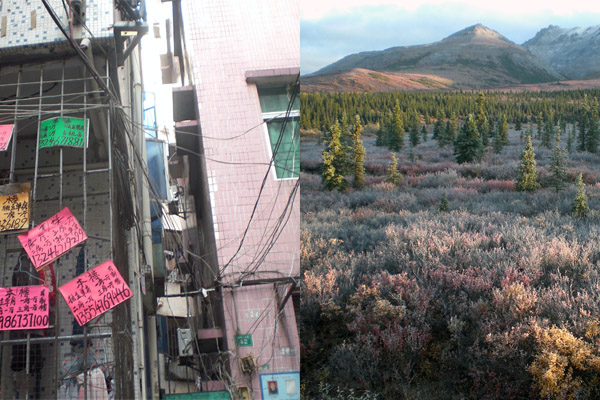
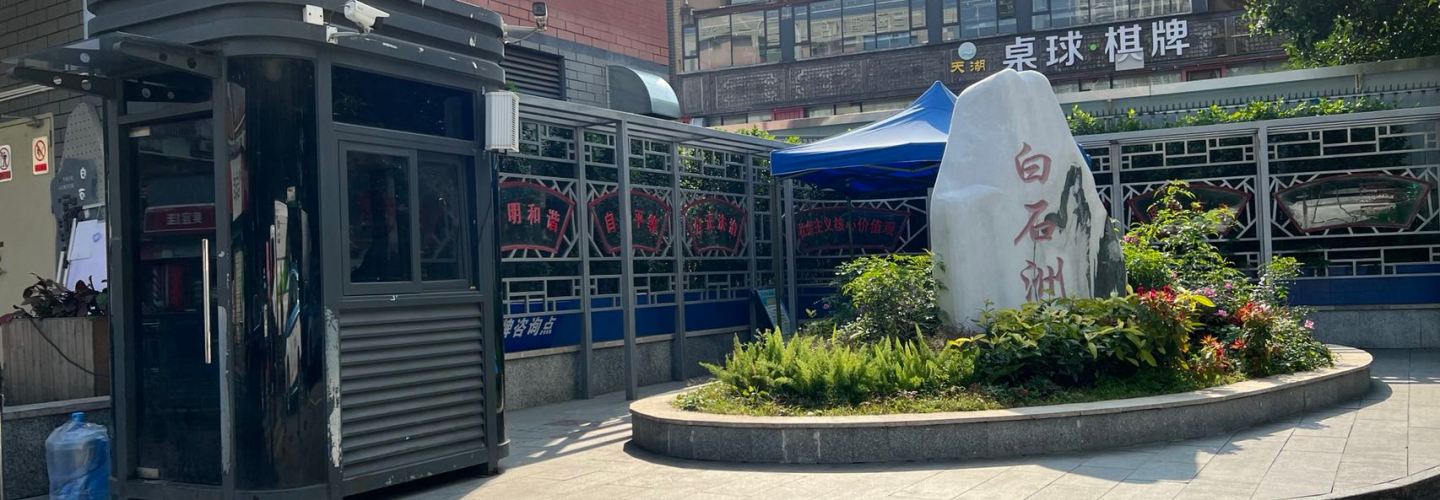
So, a juxtaposition of Baishizhou and Denali, which may be achieved through visual flattening, but as lived required movement through time and space — from Shekou to Hong Kong international by way of Shenzhen Bay checkpoint to SeaTac and then on to Anchorage and passage on the Alaskan Railroad.

I look at snapshots taken here and there, searching for commonalities, for what we might call human universals, which Donald Brown has defined as “those features of culture, society, language, behavior, and mind that, so far as the record has been examined, are found among all peoples known to ethnography and history.”

There is, of course, the eye of the beholder — mine — which seems drawn (here, at least) to pink, but all this does is raise the question of whether or not what I experience in each of these places is what other people also experience. In Chinese poetics, this common — unquestionably and recognizably human — response would be called yijing (意境), which literally means “idea scape” and denotes the moment of union between interior and exterior states of being.  意, for example, is composed of characters meaning “sound (音) and heart (心)”, while 境 is composed of characters for “earth as soil or land (土)” and “final or complete (竟)”, which here functions as a sound marker for jìng.

What are the respective yijing‘s of Baishizhou and Denali? And can we confidently generalize our responses to say, “Just so and how could it be otherwise?”

These questions matter because both Baishizhou and Denali are the focus of conservation efforts, albeit of a different ilk. Both discussions assume a common response to a particular environment. Moreover, in both discussions, one’s response to the environment is taken as an expression of one’s humanity and there, of course, is where the debate rages.

At Baishizhou, the current discussion of how to raze and rebuild an urban village focuses on the experience of mass urbanization and the need for access to housing, food, and transit networks. The debate has two assumes. First, the debate assumes that inequality is a defining feature of human life and that the purpose of social life is to ascertain that level and take measures to insure that people do not live in inhuman conditions. In turn, the content of the debate is over where to draw the line between human, subhuman, and inhuman living conditions. Second, the debate also assumes that urban living is a desirable form of life because it results in access to cultural goods, such as medical care and education by way of intentionally crafted environments, such as hospitals, schools, restaurants, and entertainment districts. As debated, these two assumptions are hierarchically ranked into the Maslovian categories of “basic needs” and “higher needs”. Thus, as one debates, one is not simply drawing lines between this life and that, but also and more importantly, revealing one’s humanity as a function of social responsibility.

Likewise, at Denali a general assumption and its implementation shape debate, but here over the nature and value of wilderness. On the one hand, the debate assumes that the experience of wilderness reveals and cultivates the wild, untamed spirituality that makes us human and that the purpose of social life is to maintain and create spaces where people can realize this spirituality. In turn, one’s love of wilderness functions in this debate as a marker of one’s spirituality. On the other hand, the debate also assumes that wilderness occurs in the absence of human settlements, such that in order to build human settlements one must transform wilderness. As debated, these two assumptions are also ranked hierarchically in terms of what is essentially human (nature) and acceptable transformations of wilderness (culture). Thus, as one debates, one is not simply drawing lines between this life and that, but also and more importantly, revealing one’s humanity as a function of wild spirituality.

It is possible to note the Chineseness of the Baishizhou debate (all that Confucianism going down), just as it is easy to remark on how much Emerson and Muir continue to shape American understandings of our place in the world. And therein lies the challenge of cross-cultural debates about what it means to be human in a world where Baishizhou and Denali cross paths, so to speak. The question is not so much either / or — which is a more accurate definition of what it means to be human: social being or wild spirituality, but rather the question seems to be: what might the Baishizhou debate teach us about the cultural place of wilderness, and what might Denali remind us about the limits to human settlements?

coastal walk, anchorage

This slideshow requires JavaScript.

spiderwebs

This slideshow requires JavaScript.