revenge of the grandparents

Grandparents do the work of raising the next generation. Here’s a joke making the rounds. Go granny go!

「喂!現在我們不在家,請在聽到「嗶」聲後留言………
“Good morning. . . .
At present we are not at home but, please leave a message after the beep………

嗶…
beeeeeppp …
如果你是我的兒子之一,先按1,再依照你打電話的目的,擇1到8;
If you are one of our children, press 1 and then select an option from 1 to 8:
假如你是要我們去陪孫子,按1;
If you need us to stay with the grandchildren, press 1
如果你是要跟我們借車,按2;
If you want to borrow the car, press 2
如果你是要我們幫你洗衣服、燙衣服,按3:
If you want us to wash your clothes and do the ironing, press 3
若是你要送孫子到我們這裡過夜,按4;
If you want the grandchildren to sleep here tonight, press 4
假若你是要我們到學校接孩子,按5;
If you want us to pick up the grandchildren at school, press 5
如果你想禮拜天來吃飯、或是要我們做一頓飯然後送到你家,按6;
If you want us to prepare a meal for Sunday or to have it delivered to your home,
press 6
假如你要過來吃飯,按7;
If you want to come to eat here, press 7
若是你需要錢,按8
If you need money, press 8
如果你是要邀請我們出去吃飯、或是去看戲,請直接說話……
If you are going to invite us to dinner, or, taking us to the theater, start talking,
我們正在聽!!!!!!!!!!」
we are listening !!!!!!!!!!!”

more thoughts on education

Having published on the zhongkao and with Hu Jintao’s visit to the US, my father and I have been discussing education. Here is an excerpt from the dialogue.

Dad: China is in the news as Hu Jintao bops around the states. Since China is our banker, he is being received with open arms. Send more money please Mr. Banker! The news has also been focusing on education, and naturally we (US) suck in comparison. We are now 17th in the world and falling. South East Asia is leading the pack and putting distance between themselves and the US. Due to failing state budgets, (we are in tough economic times), we will be laying off at least 25% of our teachers! Unlike the federal govt., states are required to balance their budgets. In Moore County this means 600 teachers. No school district in the state [North Carolina] is hiring. Who would have thunk?

MA: As for education, I’m not sure we can talk about ahead and behind when both systems reproduce conditions of inequality. Both systems need not only to produce underpaid workers, but also “acceptable” reasons to legitimate inequality. Clearly, the US system is getting really good at it; can’t do math go into service. China is also very good at it, when you keep in mind that they have five times our population; can’t pass the zhongkao go to a factory; can’t pass the gaokao be an underpaid clerk. Consequently, in China the cream that is rising is proportionately much, much smaller than in the US. So maybe what’s actually happening is that China is setting what Marx would have called “acceptable living wage” for the world. Importantly, the acceptable living wage in China is much lower than in the US, so our wages are shrinking because we need to lower our national acceptable living wage in order to compete globally. I think at Harvard business, the unsinkable call this “economic adjustment” and then go out for a Michelin starred meal.

Please join the conversation. How we educate is the expression of why we teach children; clearly, all of us everywhere need fresh inspiration.

possible vocabulary games: xu tan language workshop

Xu Tan is a Shenzhen / New York based artist by way of Guangzhou, getting his artistic start as part of the Big Tail Elephant Group almost twenty years ago. From January 22 through March 20 (with a ten-day break for Spring Festival, Feb 1-10), every afternoon from 3 to 5 p.m. Xu Tan is holding a language workshop at the OCT Contemporary Arts Terminal, where he discusses various keywords in Shenzhen’s development with invited guests and those who sign up to participate.

Xu Tan’s keywords project grapples with the instability of linguistic meaning in contemporary China. Specifically, Xu Tan investigates how industrial urbanization changes the meaning and relative importance of different words. For example, at Convection, the Dafen International Contemporary Arts Exhibition, Xu Tan installed a mixed media space, where he spoke with different artists and museum visitors about the meaning of words such as, creativity, originality, and copyright. At OCT, the words have been drawn from the Shenzhen public sphere and the interests of the workshop guest.

Why participate in one (or several) OCT workshop(s)?

In the first place, if you go tomorrow or sometime over the next week, you can still sign up to be a special guest and be part of the unfolding of the piece. Second, the workshops model and are a continued effort to perform public intellectual life in the city. Indeed, this weekend’s guest, Zhang Zhiyang (张志扬) is a wonderfully quirky yet erudite philosopher, who had much to say about how western belief in God is the context for our keywords, even when we don’t believe, he argued, westerners are striving to transcend. For him, this makes us interestingly different from Chinese, who “live in the world”. Third, it’s fun to grapple with language in cross-cultural contexts because the misunderstandings, confusions, and heated emotions teach all sorts of unexpected lessons about what we think we mean when we impose our ideas on the world and the world resists classification.

the zhongkao cometh: assessing thirty years of reform and opening

In the West, the gaokao gets the most press of any aspect of the Chinese education system. However, the zhongkao or high school entrance exam, which is administered locally may be even more life altering than the gaokao because although high school is non-compulsory in China, it is absolutely necessary preparation for the gaokao.

Indeed, one of Shenzhen’s stickier political problems is dealing with might be called zhongkao refugees: (1) neidi students who have the test scores but not the finances to attend high school and thus have to leave the city; (2) students with Shenzhen hukou who have the economic resources but not the test scores to attend high school (because there aren’t enough public schools for all Shenzhen students); and (3) students with Shenzhen hukou, middling resources, and middling grades who end up in high schools from which testing into a top college is probably not going to happen. After all, only the top four high schools in Shenzhen – Shenzhen Foreign Languages (深圳外国语学校), Shenzhen Middle School (深圳中学, Shenzhen Experimental (深圳实验学校, and Shenzhen Senior High School (深圳高级中学) – guarantee that most graduates will go to college, but even they cannot guarantee a place at Beida, Qinghua, or Fudan.

As with the gaokao, the zhongkao tests, evaluates, and ranks students’ political correctness. In fact preparing for the zhongkao is the entire content of a ninth grade education at top Shenzhen middle schools; this is the quotidian brutality of what is conventionally known as “teaching for the test (应试教育)”. To give a sense of how Shenzhen’s history is being institutionalized to serve the Party, I have translated a portion of a study guide for one of the political essay topics for Shenzhen’s 2011 zhongkao: “Reflect on Shenzhen’s thirtieth anniversary, the invincible might manifest by Reform and Opening (回眸深圳三十周年 改革开放显神威).”

Background Material:
(1) August 26, 2010, China’s first Special Economic Zone, Shenzhen will celebrate its thirtieth birthday. The epitome of thirty years of Reform and Opening, this city was once the concrete explanation of how Chinese People understood the abstract nouns of development, wealth, and progress. For an individual, thirty is the year when s/he becomes independent [in thought and deed], and thrives; for a city, thirty years is also a pivotal year. These thirty years, from Shenzhen’s issuing the first share of stock to lowering the gavel during the first land auction; from Zhuhai’s first offering of a million yuan prize for anyone who made a national contribution to science and technology to the establishment of the first Chinese-Foreign joint enterprise; from Shantou first deciding our Country’s first private property law to the first time reforming the national system of allocating housing…each time a Special Zone stepped forward, daring to pioneer and experiment, it was a deep revolution. According to statistics, these past thirty years, Shenzhen alone created over 300 “National Firsts”. Shenzhen is the lead scout of all the Special Zones.

(2) On September 6, 2010, the Celebration of the Thirtieth Anniversary of the Establishment of the Shenzhen Special Economic Zone was held. Party Secretary, National Chairman, and Military Commission Chair, Hu Jintao attended and gave an import talk, emphatically affirming the successful development and construction of the Shenzhen Special Economic Zone. Hu Jintao affirmed that these past thirty years, by keenly reforming, daring to pioneer, daring to experiment, and daring to forge ahead and create new ideas, Shenzhen’s perseverance has created a global industrial, urban, modern construction miracle, contributing greatly to the national project of Reform and Opening. Hu Jintao expressed that we must be unwavering both in supporting Socialism with Chinese characteristics and supporting the theoretical system of Socialism with Chinese characteristics, bravely reforming, bravely inventing, never becoming rigid. Hu Jintao emphasized that not only was it necessary to continue the Special Economic Zone, but also to do it better. The Central Government will continue to support the Special Economic Zone’s functions of courageous investigation and first attempt and experiment.

(3) Thirty years have passed in a flash and for independent Shenzhen it is a time of ending and new beginnings. Facing new opportunities, Shenzhen has already made strides toward becoming a wise city (智慧城市).

A science and technology wise city is a new road of development, and the first goal in this direction is becoming an “intelligent city”. Shenzhen Municipality’s “Some Opinions about how to Transition from Industrial Economic Development” clearly states that we must take advantage of the new generation of technological revolution and information property wave, fully exploit Shenzhen’s advantages, and construct an urban development wise environment.

A humanitarian wise city. Shenzhen announced that although it was important to commemorate Shenzhen’s thirtieth anniversary, it was more important to pay attention to people’s livelihoods, to secure democracy, to improve work conditions, to move forward in planning that concretely helps the people, to earnestly research and propose projects that benefit the people, in order that the laobaixing can truly enjoy the fruits of the Special Zone’s thirty years.

An ecological wise city. Shenzhen has prosed to become China’s first “low carbon city”, through enthusiastic investigation of planning construction, low carbon industries, public transportation, green architecture, and resource management, the city will be the first to implement and first to try, striving to set new standards for the entire country and province.

Prediction about this essay topic being assigned:

As a successful prototype of Reform and Opening, Shenzhen has received the critical attention of the entire country, also becoming the best exemplar of the successes of Reform and Opening. Therefore this year, the examiners may combine testing knowledge about Shenzhen’s thirty years with knowledge about Reform and Opening, and with attention to the Country’s fate. It’s possible that the type of questions will be analysis or multiple choice because an essay on the thirtieth anniversary of Reform and Opening was already assigned, so this year it is unlikely to be a major question.

The guide then continues with thirteen detailed questions and answers about the meaning of Shenzhen, Reform and Opening, and the necessity of continuing this path even though we are clearly in a different era from when Reform and Opening began. Of note is the rigidity of language use and proper interpretation. These questions leave no room for alternative explanations. Indeed, students are memorizing precise reiterations of Party history. For example, question number one:

深圳三十年来的变化说明了什么?

改革开放是强国之路,是我们党、我们国家发展进步的活力源泉;改革开放是决定当代中国命运的关键抉择,是发展中国特色社会主义、实现中华民族复兴的必由之路;坚持对外开放的基本国策是正确的;改革是动力、发展是硬道理、稳定压倒一切;以经济建设为中心是兴国之要;社会主义制度的优越性得到了初步显示。说明了社会主义制度具有无比的优越性;中国共产党是中国特色社会主义的核心力量等。

What do Shenzhen’s past thirty years prove?

Reform and Opening is the road to becoming a strong country. It is the vital source of our Party and our Country’s developmental progress. Reform and Opening was a crucial choice determining the fate of contemporary China. It is the necessary road to develop Socialism with Chinese Characteristics and to realize the renaissance of the Chinese people. Persevering in the basic policy of Opening is correct. Reform is the force, development is the hard truth, stability overpowers everything. Taking economic construction as the center [of society] is necessary to prospering the country. It is the first realization of the superiority of the socialist system. Reform and Opening demonstrates the incomparable superiority of the socialist system. The Chinese Communist Party is the core strength of Socialism with Chinese Characteristics.

Other questions are more factual, such as, “What are China’s five Special Economic Zones? [Shenzhen, Zhuhai, Shantou, Xiamen, and Hainan]”, but the gist of the study guide is to remind students that memorizing the party line is a condition of getting into high school. At gaokao level, the questions and answers are more detailed, but as rigidly constructed. Indeed, the question and answer section of the study guide reproduces the political study guides on which functionary promotions are still based.

And yet.

Even high school students know that they are not learning knowledge, but rather learning to perform what is expected of them in order to get what they want: parental approval, the respect of their peers, the promise of a beautiful future. And this fundamental cynicism beats at the heart of the political essays, which, if asked in good faith would be the basis of a robust socialism.

as the city empties,

i rest more easily, i feel less hassled by long bus trips, i notice more friendly gestures between strangers, i appreciate the happy jumping of toddlers overdressed in variations of pink bunnywear.

yes, i enjoy spring festival in shenzhen because the mass exodus of folks to homes elsewhere makes the city more livable.

i am not sure how we might establish an index for overpopulation because (a) we are not rats and (b) acceptable (indeed desirable) density does vary from culture to culture, nevertheless, yesterday, as i wandered through streets that were relatively empty, i felt more at ease. in other words, i experience shenzhen’s population viscerally and need quiet spaces.

and yet, the american solution of moving folks out of cities into suburbs didn’t work for me either – i grew up wanting new york and all that global energy.

and there’s the rub. i want today’s shenzhen infrastructure with a 1990s population and i don’t know if that is possible because so many people are needed to sustain this level of development. so new thought for 2011, is this what unsustainable development lives like? and if so, why does even crowded shenzhen appeal more then neidi? and how to unmake my desire for urban life?

Shenzhen bus-mash

This morning, at Shangshui Village stop, which is a major transfer point, a 322 was so packed and so many people were trying to squeeze on that bags were being thrown over the top of the crowd in a kind of bus-mash out of here moment. And here’s the rub: Spring Movement (春运) has started and thus today’s rush hour rush was less rushed than usual. So yes, I understand why those who can buy private cars, do, which in turn, makes rush hour more rushed. Sigh.

I am a Shenzhener

Just had an interesting talk with a young man, who grew up in Yuanling. Of note was his comparison of Yuanling New Village, an example of 80s work unit housing (单位房) with Beijing’s hutong. When I pressed for an explanation of why Yuanling was to Shenzhen as hutong to Beijing, he said because Shenzhen people come from all over.

But, I countered, what about the local villages?

He insisted that Shenzheners began to be Shenzheners in the Reform era, no matter whether their anscestors came from outside Shenzhen or were Baoan natives. Moreover, he was taking pictures and recording the history of Yuanling because he’s afraid it will be gentrified, much like the hutong.

Hopeful conversation because it shows a commitment to embracing Shenzhen’s past as a source of common identity, rather than basing a common Shenzhen identity on what we will build and buy in the unsettled future.

new year’s flowers

Flower streets are one of my favorite Guangdong New Year’s traditions. In the day’s leading up to those beautiful streets, moreover, local flower shops begin to sell intwined bamboo, mandarin orange trees, and narcissus, which if cultivated properly bloom for Spring Festival. The mandarin word for narcissus is “Water Immortal Flower (水仙花)”. The convergence of English and Chinese names for a variation of daffodil shows up an interesting divergence in interpretation. Both focus on the fact that narcissi bloom in shallow water. However, in English, Narcissus was a self-absorbed young man, who rejected Echo’s love and died staring at his reflection in the water. In Mandarin, the flower is an immortal, clearly a wonderful way of welcoming the New Year.

Point du jour is that I learned both the English and the Chinese rather late in life. As a child of the Jersey suburbs, I learned the names of topiary, a few trees, and grass, but gardens and wilderness and oceans and rivers were not part of my world. Or rather, my understanding of these areas was limited to how I interacted with them – hiking in the Pine Barrens, swimming at the Shore, and planting weeping willows. In other words, if learning names reflects the ways through which we come to inhabit the myths and traditions that constitute our worlds, then not learning the names of plants and animals tells us a great deal about our distance from earth. I grew up in a beautiful area, but it was clearly beautiful in the sense of conformed to human desire of what the world should be rather than what it may or may not be.

Yesterday I bought two bulbs of narcissi and placed them on my desk. Today I am wondering about the nature of self-absorption.

settled in?

Am now moved into new home in Shekou. Yesterday, rode the Shekou line to Window of the World, changed for OCT East and arrived for coffee at OCT Creative Park all in about 30 minutes. Very convenient. Nevertheless, half an hour was more than enough time to notice and set me wondering about one or two, well three actually, discordant notes.

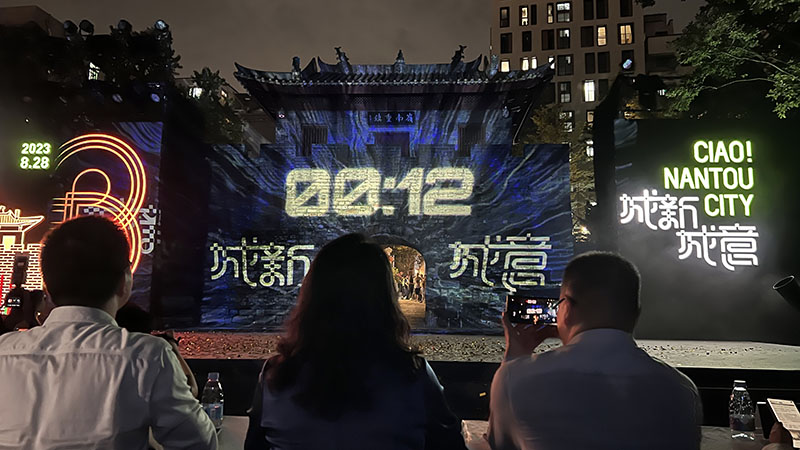
Do: The Shekou line advertising is playing to the cultural Nantou theme. Those who know a bit about Shenzhen’s history, know that Nantou is the oldest city in the area, having been a salt yamen 1,000 years or so ago.Know that there was (and still is) a small temple to those Gods that bless Cantonese Opera singers. Moreover, Reform began in Shekou and the first Chinese themeparks (strictly speaking) were built in OCT, Nanshan; Shenzhen University is also here. So, the Shenzhen Subway company has illustrated these themes from Nantou’s cultural history. Wanxia, for example, is morning tea and Dongjiaotou has a Cantonese singer. An image of Nvwa illustrates Shekou’s importance in Reform and Opening; Windows of the World is the Eiffel Tower.

Alas, those who know this history also realize that this historical trail ran along “old street” from the west gate of Jiujie to Shekou. They also know that know that there was no direct path (except a mountain trail over Nanshan Mountain or on a boat around the peninsula tip) from Shekou to Chiwan. However, the Shekou Subway rewriting of this cultural history is on the order of land reclamation and, in fact, the subway does not connect Shekou to Nantou, but instead at Houhai (and more about Houhai below) turns east, heading through Science and Technology Park South though Mangrove Park to Windows of the World. Thus, the Subway Station History of Nantou appropriates and displaces the cultural ecology of the area. Wanxia, for example, is a local village and yes, you can have morning tea there, but Dongjiaotou was a riparian port, where trade goods from Zhongshan and other parts of the Delta were shipped to and from Nantou. Today, Dongjiaotou is the site of The Peninsula Estates, high end real estate development that winds around a genuinely old and decaying, already being “reclaimed” part of Shekou.

Re: Within this postmodern rewriting of Nantou’s history, Houhai is now a subway station and no longer a sheltered backwater. I have commented upon the Shenzhen tendency to raze mountains and lychee orchards and then name malls and housing estates after the no longer extant land formation. Land reclamation naming practices follow apace. Not only only has Nantou’s cultural history been rewritten as a series of Subway Stations through what used to be Houhai Bay, but also that Bay is now just another subway stop.

More importantly, Nantou’s cultural history was a history of backwater fishing, oyster cultivation, and riparian trade between small, village owned docks. A two-step sequence of appropriation is at play. First, the actual socio-economic base of local history has been destroyed. The last oyster fishing folk were relocated in 2006. Thus, in order to live here, one needs to be part of the new economy, which includes real estate development and working in more abstract cultural industries such as academia and tourism. Second, local history is now being deployed to add “flavor” or “local interest” to rich outsiders who are inhabiting Shenzhen. And real estate promoters can get away with this because most of those moving into Nantou don’t know the history of the area.

Mi: I also noticed that on the “local street map” which hangs in our station, our housing estate is conspicuously absent. There still remains much construction behind us, although I suspect that come Universiade, our own Europe [Shopping Mall for those living in Dubai style condos] will open. Here’s the point: with the opening of the Shekou Subway our housing estate is now part of the historic backwater. And as those of us who have watched the development of Nantou know, the purpose of backwater has been to reclaim it for ever-higher end development. Once all the reclaimed land has been filled in, our short walk to the Subway makes our housing development a prime target for upgrading and us for resettlement. Upside to looming displacement: we aren’t the only affordable housing development not on the map and maybe someone else will be targeted first. More upside: negotiations to raze a development usually take longer than the actual razing an old development and building a new development. We probably have several happy years ahead of us.

So yes, we are as settled as anyone in Shekou, where the landscape has been reshaped, cultural history is being rewritten, and the sands of prime real estate shift beneath our feet.

春运: Where’s home?

From Jan 19 through Feb 27, 2011 we float through the happy daze of 春运 or “Spring [Festival] Movement.” Indeed, the scale of Spring Movement merits its own website. Possibly of more interest to anthropologists, the scale of movement provides another opportunity to wonder about how the tension between hometown feelings and making oneself at home shapes Shenzhen identity.

The Municipalitaty estimates that during Spring Movement, Shenzhen’s land, sea, and air borders will be crossed over 9.4 million times, an increase of 700,000 from 2010’s official Spring Movement stats. However, folks have already started travelling and some, like me will leave during Spring Movement, but return after. Or leave before and return during? So again, shakey figures. Should we go with an estimated 10 million holiday related border crossings?

Other facts shed interesting light on the scale of Shenzhen’s Spring Movement. During these five weeks, the city guarantees that everyday, 9,000 buses will be leaving and returning to the city; in addition to the City’s 1,640 chartered buses, another 2,000 charted buses have been loaned to the City; the downtown and west railway stations will fill 960,000 seats before Feb 3; the airport guarantees 500 flights per day.

The point is that Spring Movement is not simply important, but also one of the events that the government takes very, very seriously. Indeed, going home for the holidays is, among my friends, a self-evident good and therefore a necessarily political event; for officials, problems during Spring Movement can be carreer ending. For many migrants to Shenzhen, Spring Festival makes immigration meaningful. Some may have come to try something new and find new opportunities, but most understand (and endure) the process of migrating to Shenzhen in terms of families elsewhere.

A friend explained to me the feeling of eating with her family.

“I used to think it was really annoying to be with my parents because they nag and stick their noses where they don’t belong. However, once in Shenzhen I had to eat by myself. Everytime, I eat alone, I really miss the feeling of being with my parents. As soon as I get home, they rush down five flights of stairs, carry my suitcase for me, and bring me into a warm room with a big table of food. It’s so comfortable and I’m not lonely, not like in Shenzhen.”

And then she sighed because after the holiday, she’ll return to Shenzhen, alone, to continue working at a job she doesn’t really like so that she can continue to send remitances to her parents, who in turn, will save the money for the next Spring Festival reunion.