

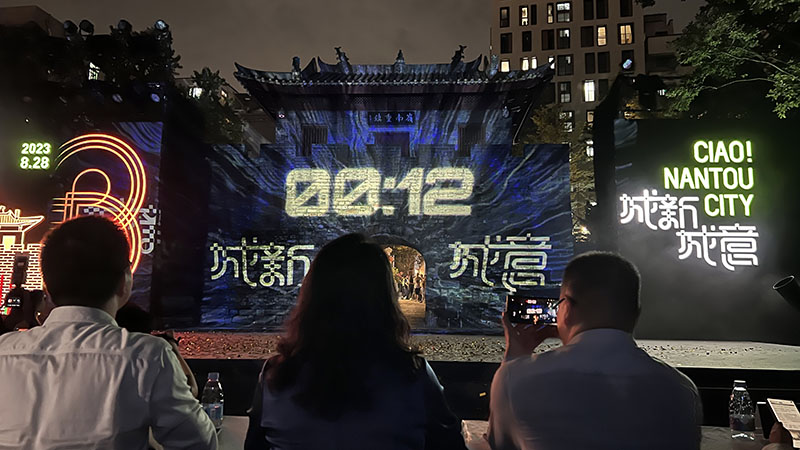

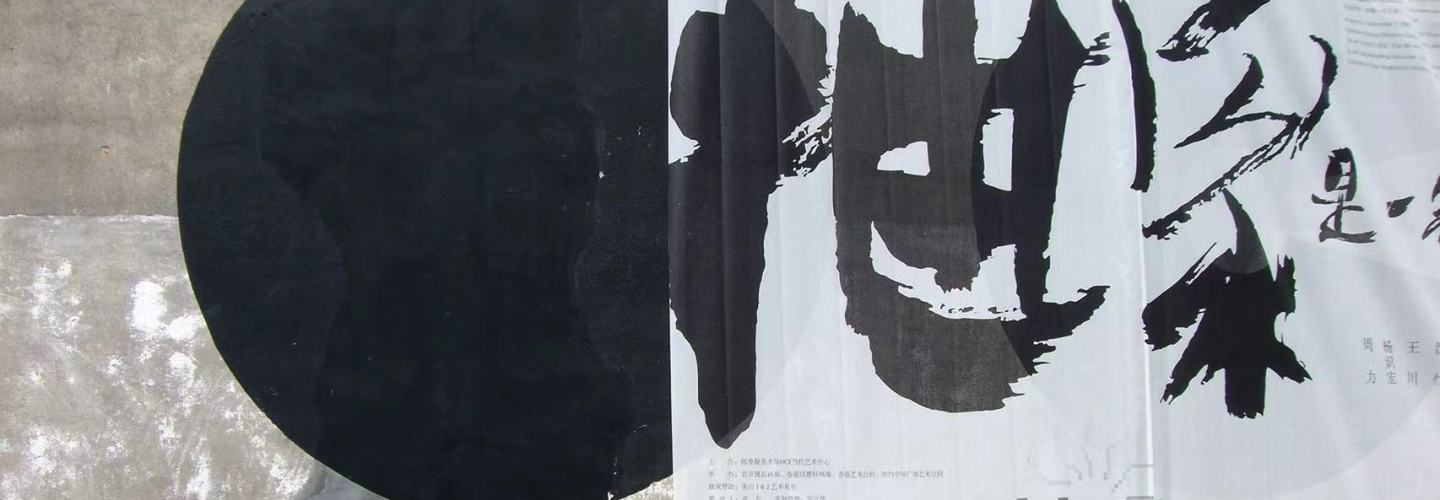
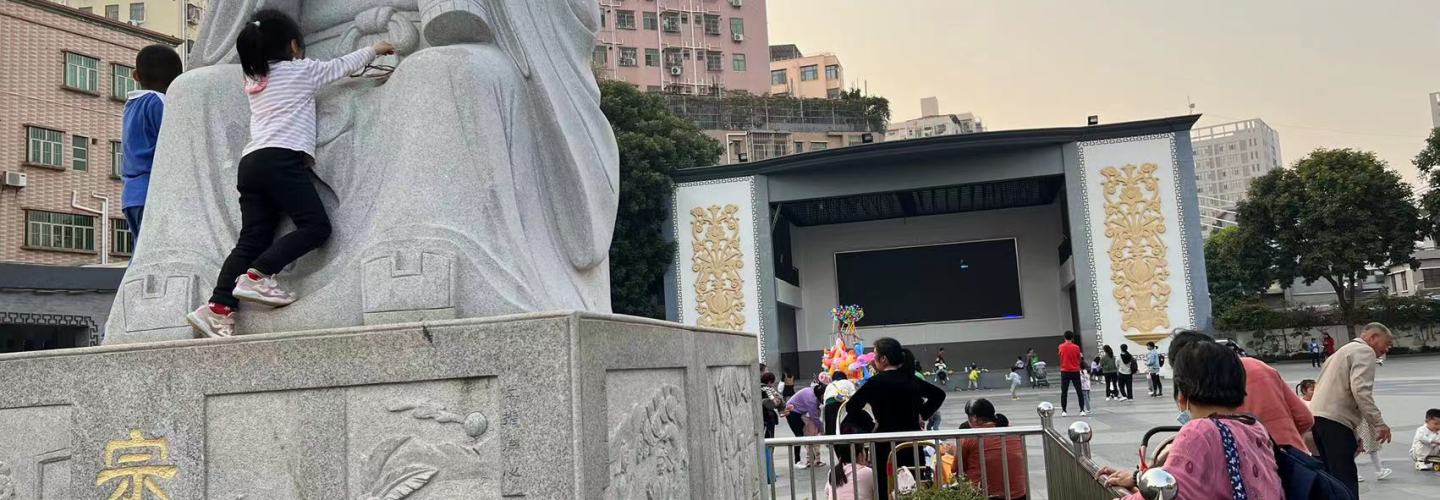
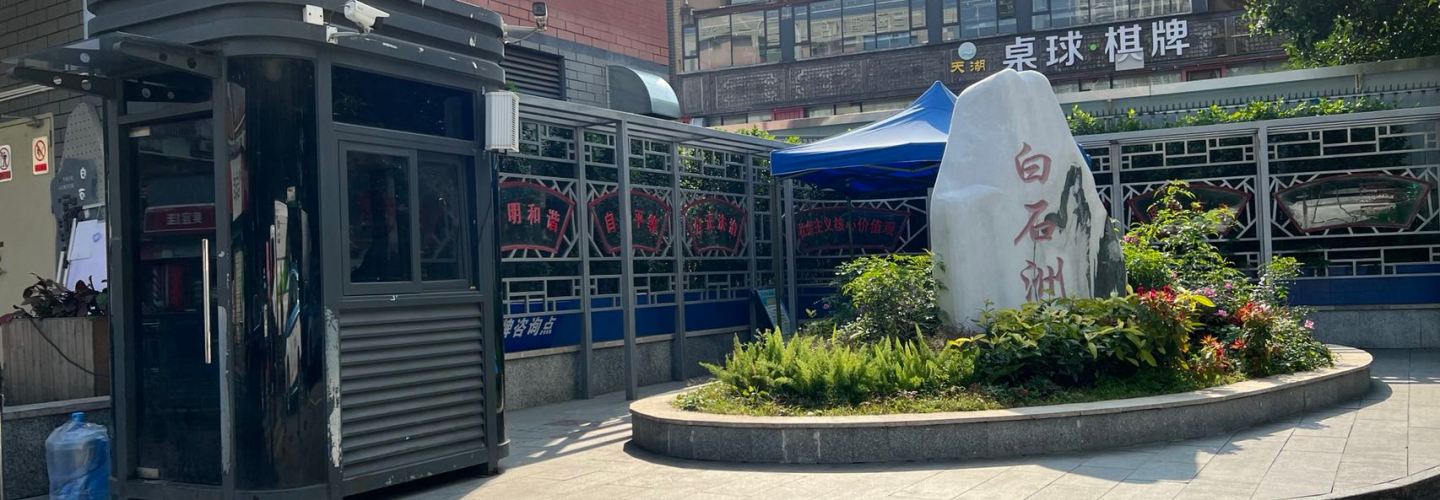

Yesterday, went to the Hexiangning Museum to check out the Fresh Eyes exhibition of work by young painters. Very wonderful. I also enjoyed, again, the museum sculpture walk, which now abuts a shaded area with old bricks, lush south China foliage, and benches! Impressions, below:
what does it mean to say, “我不反对”?
On the face of it, the situation was quite simple. A Shenzhen museum had promised a group of foreign artists that they would hold an exhibition for work completed while in Shenzhen. However, because the Biennale has occupied the better gallery spaces, the question the group faced was, “Where should the exhibition be held?” Finding an answer to this question entailed too many conversations and frayed nerves. Why?
Simple answer: because saying “yes” seems to be easy in either language, but saying and accepting “no” gracefully are tricky in one’s native language, let alone cross culturally.
Longer answer: Professionals, both Chinese and Western, often find ourselves talking at cross purposes because we think we know what we are saying, especially when negotiating consensus on how a project should move forward. Continue reading
the generation show
Currently, Shenzhen satellite tv is broadcasting “The Generation Show (年代秀),” a trivia game show based on Shenzhen’s four generations – Maoist, 80s, 90s, new millennium. Their advertising caught my eye because it speaks to how “modern life” and “urbanization” are popularly understood in Shenzhen.
The Mao era is filmed in sepia browns and shows a tractor pulling a cart with several people in it, a person peddling a bicycle, and several others walking on the road. They are being urged to go forward. The 80s clip was filmed in color and shows two youths wearing bluejeans and large sunglasses, dancing to music coming from a boombox. The 90s clip is of an architect directing construction workers to raise a piling; they are going up. Finally, the new millennium era is empty of people, just glass steel, reflecting a beam of light.
So, yes, a ruthlessly literal interpretation of the generations: Shenzhen has gone from moving forward and dancing in the streets, to building skyscrapers for nobody. Sigh.
… and it ends with Revelations
Yesterday, I heard a rumor and a comment about that rumor, which have me thinking about the importance and fluidity of “reputation” in the absence of any trusted news media and the concomitant rise of weibo as a news source.
The rumor: because the Municipality overspent its universiade budget, this year small businesses will be taxed excessively in order to make up the difference. Apparently, small businesses have been targeted because they are the most vulnerable to government intervention. Private individuals have already been taxed and cannot be taxed again without causing unrest and large, state and/or foreign owned companies all have governmental connections and (in the case of foreign companies) China’s agreements to uphold its tax laws. In contrast, small business owners only have the government connections that they have made through bribes and schmoozing. Moreover, small business owners tend to swim alone, rather than organizing which means that they have neither collective bargaining power, nor use access to public media to air their grievances. Instead, they complain to friends, who in turn, pass the rumor along over tea and snacks with friends.
The comment: It’s difficult to confirm anything in China because important decisions, or rather, the justifications for important decisions aren’t documented and released into the public sphere because anything that can be written down isn’t the total story. My friend then explained that this is why she no longer reads newspapers for news. Instead, she reads newspapers to get a sense of government winds and reads weibo and blogs for news reports. But, when pressed, she also admitted that she doesn’t completely trust weibo or blogs. Instead, she evaluates (based on her experience) the likelihood of a report being true. And she’s aware that different personal experiences will make some people more or less likely to trust a particular report. Continue reading
Xiasha “Old village renovation”
In point of fact, the phrase “village renovation (旧村改造)” is a misnomer. What many Shenzhen villages are renovating is not the old village, but a village that was “new” in the mid-1990s. Images from Xiasha’s recently completed renovations suggest possible tradition-socialist-early reform-contemporary mashups or postmodern post-villages, so to speak.
突破:what is a break through?
Lately, I have been thinking about how each of Shenzhen’s six officially lauded break throughs appears as an instance of slogan warfare. Concomitantly, I have thinking about creative destruction, both Marxist and neo-liberal variants. Roughly speaking, Marx defined creative destruction as the necessary destruction of property and means of production (including social relations) so that new wealth could be generated. In contrast, neo-liberal economists like Joseph Schumpeter have tended to define creative destruction in terms of innovation. A question of emphasis that also beats at the heart of moral value: Marx witnessed destruction and its fallout; Schumpeter saw innovation and its benefits.
So below, a brief survey of Shenzhen breakthroughs to track the shift from socialist to neoliberal political morality. As Marx and Schumpeter indicate, none of these break throughs have been morally neutral, legitimating both new forms of inequality and opportunity. Continue reading
rainy monday
Rain. Again. Pictures from random rainy day walk in the area around the Fanshen Metro Station.
historic ironies: the fanshen metro station, shenzhen
Fanshen is one of the recently opened Baoan District subway stations. Like Daxin (in Nanshan), Fanshen was the name of one of the Communes in Baoan County and now refers to the general area where commune headquarters once stood. Literally, 翻身 (fān shēn)means to turn over. In the context of the Chinese Revolution, fanshen referred to the liberation of peasants from feudal obligations by transferring rights to land and draft animals from local gentry and rich peasants. Fanshen: A Documentary of Revolution in a Chinese Village by William Hinton remains one of the best introductions to the reasons for and implementation of Maoist land reform.
Along Fanshen Road, I also stumbled upon Anle Second Brigade New Village (安乐二队新村), a place name that melds traditional values (安乐 means peace and happiness), Maoist production (小队 small production brigades based on village divisions), and early Shenzhen reforms (新村 new villages were the first local incarnation of the household responsibility system; only as urban area spread to surround them did new villages become “villages in the city (城中村)”). Continue reading
binhe road pedestrian overpasses
So. As part of Shenzhen’s spit and polish for the universiade, some pedestrian overpasses got makeovers. In particular, overpasses in the Futian section of Binhe were turned into a sort of public art. In the pictures below, I have included two overpasses from the Luohu section of Binhe not only to give a sense of how differently Districts spent their upgrade funds, but also to contextualize what pedestrian overpasses looked like before the Universiade. Nanshan has many high end overpasses, but they tend to be located on Nanhai Boulevard (the pedestrian overpass at the Neptune Building is worth mentioning). Below, a survey of two Luohu and the seven Futian pedestrian overpasses on Binhe Road.
Fat Bird Trailer
A new Fat Bird trailer is online, please view.
 Shenzhen Noted