What Does Art Teach Us About History?

In the Republic, Plato argues that the faults of poets are many. In addition to being irrational, they—and this is their gravest fault, he says—“invent” stories about events that never happened. In other words, Plato conflated “story telling” with “telling lies.”

In fact, historians artists approach the past from two different perspectives. Historians are interested in figuring out what happened when and why, while artists explore the past in order to discover future possibilities. Continue reading

Mutual Gaze: The Longheu Artifacts International Exhibition

One of the features of the Longhua (Dalang) Sub-venue of the UABB will be an exhibition of artifacts that were taken back to Switzerland, when the missionaries left China in 1948. To learn more about the Basel Mission and their “Chinese children,” please read the rest of the article. The artifacts will be on display at the Longheu P+V Gallery from December 22, 2017 through December 4, 2018.

Continue reading

Migrations: Stories of Rice

This past Sunday at the Longheu P+V Gallery, we began the “Stories of Rice,” an art project which explores the meanings of women’s work through history. A warm-up for the “Migrations” exhibition, the project combines stories, old photographs, and embroidery. The project is curated by German artist Katharina Sommer. Interested? If you would like to join us, please subscribe to the Handshake 302 We Chat account to register for the next workshop on Sunday, November 26.

This slideshow requires JavaScript.

bookish

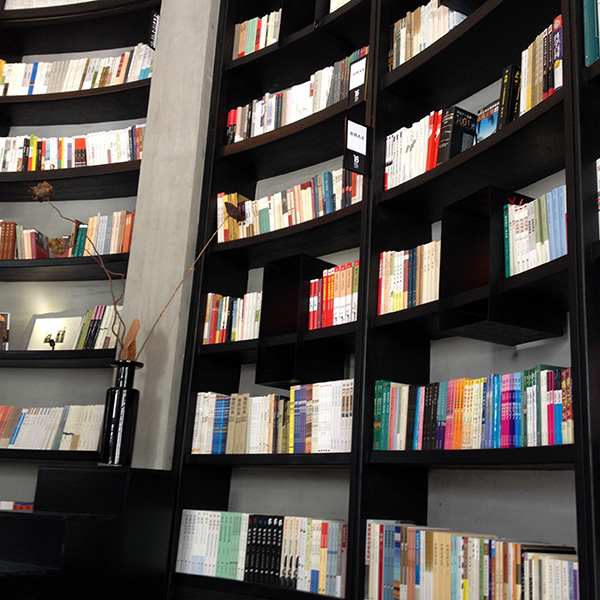
Shenzhen is a bookish city. Even a click over to the English language Alibaba site for “Book Printing in Shenzhen” suggests the extent of how many books are printed in the city. We are so awash in books that it is possible to use them instead of wallpaper when decorating. What’s more, many of my favorite cafes are not only decorated with books, but also serve as lending libraries via 青番茄, a Shenzhen based NGO. All you have to do is register online and then you are free to lend and return books at any of their almost 2,000 participating cafes in China. Continue reading

another weekend in december

So “Oysters and Champagne” the Shajing version opened this weekend and it was quite beautiful:

Meanwhile, Handshake 302’s installation, “n=distortion” also opened at the SZ-HK Biennale:

This rhythm of Shenzhen culture can overwhelm. Suddenly, there are installations, performances, and salons everywhere. We are inundated, but frankly often too tired to enjoy the deluge.

However, as a Cantonese proverb says, “Water is wealth.”

Yes.

getting things done in shenzhen

This past year, I have increasingly collaborated with foreign artists, filmmakers, and scholars to create projects in Shenzhen. Often at stake in these projects is the form and breadth of necessary support. For example, to do any kind of project in a public site (performance, filming, showing an art film), you do and do not need papers to show guards. What does this mean?

If the project looks like a group of friends just talking or filming, or if you’re performing / filming in a private house or shop, no one will ask questions. Hence, the proliferation of coffee shop and bar events with sympathetic owners. However, if you set up a large set, have many people involved, and a crowd gathers to watch, then any local guard can stop you and ask to see your papers. And every building has employed guards, so you will encounter them. In urban villages, where there might not be building guards, there are neighborhood civil police, who will know you are in the area within about five minutes and show up (or at least that was Fat Bird’s experience when we did guerilla performances in Huangbeiling and Dongmen 1 and 2).

If you don’t produce performance permits, the guards will send you away. Sometimes, even when you have papers, if the area has a special event going on, the guards will work to send you away. This happened several times during the 6 > 60 bus film screenings, when guards who knew us and were used to our project became nervous because a leader was visiting that day and thus asked us to leave as a favor to them. This indicates how seriously onsite guards take enforcement because 6 > 60 was part of the Biennale and therefore a municipal level project. Nevertheless, guards took the attitude “one less concern is better than one more  (多一事不如少一事)”. Likewise, at a recent Shenzhen University event, a dormitory guard tried to shut down an approved project because approval had only taken the form of spoken agreement. When the project organizer went to confront the approving official, he denied that he had ever heard of the project.

When organizing a project in China, it bears remembering that upper level officials may agree to help (and often support a project in principle), but if they do not write a letter of support, sign papers or issue permits, their support is practically useless because enforcement takes place onsite. Moreover, in most cases the leaders that can approve a project and the offices that issue permits are separate. This means, of course, that what needs to happen is project directors need to work with leaders who are willing to call the people who do issue permits on their behalf.

The whole question of corruption happens at this overlap between needing political support to obtain permits and the fact that enforcement happens elsewhere. After all, why should an official make a phone call or pursue permit issuing officials for you? What’s in it for them? Likewise, permit issuing officials sometimes become a third site of obstruction, depending on the relative status of the caller — immediate leaders are very helpful in pushing permits through, but their office is usually not high enough to approve a project.

And so point du jour: getting things done in Shenzhen means being able to network as many levels as possible to get the permits necessary to make an onsite intervention. That done, you need to then work with or against onsite guards. One time events can usually be accomplished by arguing with guards, however long term projects require onsite negotiations with guards, and often their leaders, who are responsible to a different chain-of-command than the one that pushed through the permits, which in turn requires another round of explaining and securing agreement.

That said, sometimes bravado will get the same or better results, but it’s a gamble.

Thinking conservation: whose lives matter?

Thursday last (Feb 16), the Hong Kong version of the bi-city biennale opened and then on Friday afternoon, Shenzhen began its closing events with a series of roundtable panels. Along with moderator Juan DU, architect Ben Wood, and urban planner Michael Gallagher, I participated in panel #2, contemporary perspectives on preservation.

We agreed that history should serve living people and thus conservation was not a question of saving old buildings for their own sake. Rather, what is conserved are patterns of human relation and environments that support those relationships. In this sense, any act of conservation entails a value judgment; whose lives do we wish to strengthen and deepen by creating sites that reference the past?

Not unexpectedly, it was at this moment of making value judgements that our differences became clear precisely because history serves different purposes in different social groups. Continue reading

Coaster Raid Biennale Retrospective

Last night, Gigi and Michael of Riptide Collective hosted the opening for Coaster Raid Shenzhen’s Biennale Retrospective. Witty and fresh the Retrospective will be up for the final week of the Biennale and is well worth a visit. Venue:

市民中心B区南门,多功能厅东侧, 地铁市民中心站B出口

Civic Center – East Hall – Area B South Gate, Subway: Civic Center Exit B

This slideshow requires JavaScript.

BOOM! Shenzhen

Gu Yun (she of the lovely biennale impressions) has taken photos of Boom! Shenzhen. Below are images from the show.

This slideshow requires JavaScript.

Boom! Shenzhen

In 1979, Shenzhen was a rural area, organized into collective fishing villages, lychee orchards, and oyster farms. From 1979 through 2010, the Municipality’s estimated population grew from 300,000 to over 13 million people, its GDP exploded from $US 308 million to over $US 149 billion, and agricultural land vanished, being replaced by international ports, industrial parks, residential areas, shopping malls, and green space. Indeed, Shenzhen’s boom redefined the scale and intensity of rural urbanization within China and set new standards for developing nations looking to modernize.

Boom! Shenzhen has five elements, which implode the idea of a timeline to contextualize the lived, environmental, and philosophical meanings of the SEZ’s short, yet volatile history. Continue reading

…and then it became a city workshops (the third window)

I have had the pleasure of participating in the “…and then it became a city workshops (活动照片), bringing the film series curated by David van der Leer to Shenzhen’s general public. The film series provides six answers to the question, “When do planned towns stop being new and turn into actual cities?” as filmmakers explore urban tipping points in Chandigarh, Brasilia, Gabarone, Las Vegas, Almere, and Shenzhen.

The workshops have a simple format. A screen has been installed in a city bus, creating a “third window”. As the bus travels through Shenzhen, visitors simultaneously view Shenzhen (outside the bus windows) and the city onscreen(through a “third window”). The juxtaposition of two new towns creates useful dissonance. Suddenly, the shared peculiarities of new towns become salient and cities that within their home context are decidedly atypical, abruptly make sense within the context of global modernization. For example, like folks in Shenzhen, people in Chandigarh live in large-scale concrete housing complexes, people in Botswana need to call ahead to be picked up because no one is familiar with new addresses, and people in Brasilia have found new ways to inhabit massive plazas and ongoing roads. Then, having viewed the films, we bring biennale visitors to a location in Shenzhen to discuss the question with the general public.

For those in Shenzhen, workshops will run through December 28, so come and think about when planned cities become living cities (报名). Impressions of workshop events, below.

This slideshow requires JavaScript.