shekou redux

For those following the shifts in Guangdong structure, you noticed that yesterday Shekou, along with Qianhai, Nansha, and a bit of Zhuhai was designated a self-governing trade zone (自贸区). Inquiring minds want to know: what does that mean? Speculation abounds and adjustments are coming, but there seem to be two key points. Continue reading

三打两建:ideology in guangdong

Guangdong Party Secretary, Wang Yang has been busy shoring up his position as a reliable, upstanding, and neo-liberal party member.

Since February this year, all of Guangdong has been engaged in “three attacks and two establishments (三打两建)”, a movement that has its own, quite extensive website. The three targets of attack are “illegal monopolization of the market through violence (欺行霸市)”, “manufacturing and selling fake goods (制假售假)”, and “commercial bribery (商业贿赂)”. The two principals to be established are “a system of social trust (社会信用体系)” and “a system of market oversight (市场监管体系)”.

It seems on first glance a call to rationalize highly local systems of production, consumption, and regulation because I have usually seen movement banners in urban villages, rather than in malls, making villagers the target of Guangdong’s current ideological movement. For example, “illegal monopolization of the market through violence” and “commercial bribery” seem to be descriptions of how markets and shops are actually run (with their reputed mafia ties) in villages. Likewise, “manufacturing and selling fake goods” also seems to be located in villages, with low-level investors setting up shanzhai factories in older, under the radar of municipal oversight spaces and then distributing these goods through local outlets. In contrast, the double aim to establish systems of trust and market regulation point to the government’s determination to bring all production, distribution, and consumption under a system of generalized oversight.

Currently, Shenzhen’s villages have all been incorporated into the municipal apparatus and villagers given citizen status. However, to the extent that industrialization in the Pearl River Delta has created rich villages that cultivate loyalty to the collective (or extended family) rather than to the state (as an abstract system), the next step in rural urbanization has become transforming villagers into citizens. Currently, one of the defining characteristics of a citizen in contrast to a villager is that “citizens” position themselves with respect to national laws (shared with strangers), while “villagers” position themselves with respect to traditional values (shared with familiars and intimates).

Point du jour, an important task of Chinese governance has become shifting how the state interpellates rural residents, hailing them as individualized “citizens”, rather than as collectivized “farmers” even when and despite the fact that many villages (such as Xiasha) are investing in symbols of collective identity, and the “urban village” has become a stereotype of Shenzhen cultural identity.

渔一村:of old men and the landfilled sea

Yesterday’s bloggy romance with the sea continues and although I have shifted my gaze from Cuba to Shekou, it is worth mentioning that the writers’ emphasis on masculine conquest continues; today, in episode 8 of The Transformation of Shenzhen Villages (沧海桑田:深圳村庄三十年), Chen Hong tells the story of Fishing Village 1 (渔一村), Shekou. Again, the story begins in a village, but this is also where similarities between the two narratives end. Hemingway figured human life through the isolated figure of an old man navigating the Caribbean on a rickety skiff and superstition. In contrast, Chen Hong figures humanity through the construction of ports, trading ventures and the world-making connections that they enable, suggesting that the opportunity to launch one’s skiff is itself a political decision which once made determines the fate of villagers. For those who remember the 1988 television documentary, River Elegy (河殇) which linked China’s decline and ultimate humiliation to the Ming decision to ban maritime activity, a not-so-subtle critique of Maoist isolation, Chen Hong’s passion for the sea and the [free trade] world it symbolizes is self-evident.

Episode 8 opens by juxtaposing images of Ming and Qing trade centered on Guangzhou with pictures of the construction of Shekou, reminding viewers that Zheng He (郑和) set forth from or loaded supplies at Chiwan Port at least five times. Lest the viewer forget the consequences of isolation, the opening sequence ends with bleak, black and white footage of a backwater port, overgrown and clogged with weeds, small wooden boats berthed in stagnant waters. Boom! The first explosion opens the door to new world order, which is also, new village order.

Traditionally, the villagers of Fishing 1 weren’t actually villagers but individual fishing families who lived on boats, coming onshore to sell the day’s catch. Families came from all over the Pearl River Delta forming a community through their livelihood, rather than through ancestry or even a common version of Cantonese. However, in 1959, the political decision was made to organize them as a brigade (生产大队). They were 90 households with a total population of 450 people and settled as four small production teams (小队) in Nantou, Gushu, Neilingding Island, and Shekou. The Fishing Brigade worked to modernize the fleet and in 1978 during a meeting on scientific production, Hua Guofeng actually gave the brigade a first place award. Indeed, at the beginning of Reform, the Brigade had 69 ocean fishing vessels, 72 transport ships, and 18 oxygen boats that fished the South China Sea and Pearl River Delta bringing in fresh seafood for Cantonese dishes and by 1992, had accumulated enough capital to invest in modern industrial deep sea fishing vessels.

From 1978 through 1986, the Fishing Brigade lived the socialist dream, which was a traditional Chinese dream; the men fished, going as far away as Guangxi, the women kept house, children went to school and had medicine, and all ate in a common canteen, where the work team provided delicious food, including squid and shrimp. The system was called the 8 provisions (八包). However, by the late 80s early 90s, the scale of urbanization and land reclamation meant that traditional fishing areas had been contaminated and fish breeding grounds buried, and it was impossible to continue living from the sea. Suddenly, the advantages of the sea declined as property values soared and Fishing 1 faced a contradiction that many other villages would eventually face — what to do when urbanization decimated the conditions of traditional livelihood?

Once the sea was gone, Fishing 1 had no way of making a living because it did not have any land, except for that which the government had given it for housing in 1959, including a section on Neidingling Island, which Fishing 1 decided to develop as a resort and in 1992 as part of the guannei rural urbanization movement, the Fishing Brigade became the Fishing 1 stock holding corporation. However, after Fishing 1 had already invested their accumulated capital and borrowed against the development, Shenzhen and Zhuhai began a court case over who actually owned the island. Traditionally, the Island belonged to Zhuhai. However, in 1955, the Center had assigned Neidingling to Baoan, but no one could actually prove whether or not the transfer had gone through until 2002, when a copy of 1955 decision was found. In 2009, the Guangdong Provincial government finally ruled in favor of Shenzhen’s claim to Neidingling Island. However, the case raged long enough to impoverish Fishing 1 as the joint stock corporation/ fishing brigade/ village could no longer fish and except for Neidingling had no other traditional land rights. Indeed, by 2009 when the case was settled, Fishing 1’s deep sea fishing rights had already been bought out by China Merchants, which in turn sold them to Wanxia, one of Shekou’s original land-based villages.

And so here’s the neoliberal twist in Chen Hong’s story of old men and their vanishing sea: Fishing 1 re-entered Shenzhen urban planning as part of the Together Rich Project (同富裕项目), and over the past decade restructured and invested elsewhere: an industrial park in guanwai Gongming and fish breeding farms in Zhanjiang, for example. In addition, the Municipality organized training for fishermen to learn new skills. Nevertheless, the members of Fishing 1 have not only been proletarianized over the past 30 years, but are still paying off one of the debts that fueled Shekou’s growth. After all, Fishing 1 had no rights to any of the coastal property developments that enriched both China Merchants and neighboring Wanxia Village. Instead, Episode 8 ends with exhortations — from the Municipality and from the filmmaker — for individual development and initiative, ironically and inexorably returning us to Hemingway’s sea, where old men struggle feed themselves because they have been isolated by .

For more on my obsession with Houhai Land reclamation, more entries, here. A wander through the earliest Shekou landmarks, including the Shekou and Neilingding fishing families settlements, below:

This slideshow requires JavaScript.
the secret to happiness…

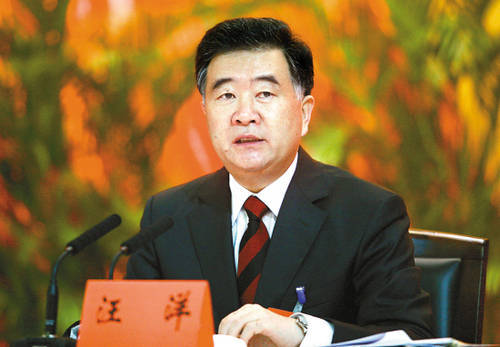
Yesterday, Guangdong Party Secretary Wang Yang (汪洋) addressed the 11th Guangdong Provincial Congress of Party Representatives, making five statements which have set him apart from other high-ranking leaders. Once a rival of Bo Xilai for a place in the 18th Naptional People’s Congress appointments, Wang Yang has also made his gesture to gain the support of the people. However, where Bo Xilai went poor populist, Wang Yang’s speech has me remembering the Province’s historic role in the 1911 Xinhai Revolution, when 100 years ago, with its links to overseas Chinese and relatively advanced economy, Guangdong was the cradle of China’s bourgeois revolution, in contrast to the rural uprising that Mao Zedong transformed into a socialist revolution. Wang Yang is a leader for China’s emergent and increasingly vocal middle class. And yes, many of them live in the Pearl River Delta.

Wang Yang’s Five Statements

1. The People are the agent that makes history, as well as the agent that constructs and enjoys Happy Guangdong. The people have the right to pursue happiness; it is the responsibility of the Party and the government to benefit the People. We must discard the mistaken idea that the People’s happiness is a result of the Party and government’s benevolence. (人民群众是创造历史的主体,也是建设和享有幸福广东的主体。追求幸福,是人民的权利;造福人民,是党和政府的责任。我们必须破除人民幸福是党和政府恩赐的错误认识.)

2. We need to discard unwritten rules and bad habits, creating a just, lively, and orderly social environment, where those who follow the rules don’t suffer, where talented people can take the lead, and can pursue and create their own happy life to the best of their ability. (破除潜规则陋习,创造公平公正、活力有序的社会环境,让守规矩的人不吃亏,让有本事的人有奔头,各尽所能地追求和创造自己的幸福生活.)

3. The greatest threat to the Party’s long-term political control is becoming too far from the masses. Our Party can only achieve eternal success to the extent that it comes from the People, is rooted in the People, and serves the People. (党长期执政的最大危险是脱离群众。只有始终坚持来自人民、植根人民、服务人民,我们党才能永远立于不败之地.)

4. We need the courage to use personal revolution to firmly destroy the interests that have turned their backs on socialist market economic reforms in order to resolve problems of government agents exceeding their function, absenting their function, and mistaking their function, making government into a provider of public goods and services. (我们要以自我革命的勇气,坚决打破背离社会主义市场经济改革方向的利益格局,解决政府职能越位、缺位、错位等问题,使政府真正成为公共产品和公共服务的提供者.)

5. Guangdong’s market society has already begun to change… If we take hold of this opportunity, we can breakthrough many difficulties and problems on the road ahead of us, smoothly entering the ranks of more modern areas; if we don’t take hold of this opportunity, we may be unable to escape “the middle income trap”, stagnating and retreating, and the advances we have already made could be lost.  (广东经济社会已经步入转型期……把握得好,我们就能破解前进道路上的各种困难和问题,顺利步入比较发达的现代化地区行列;把握得不好,我们就有可能跨不过‘中等收入陷阱’,出现停滞和倒退,已经取得的发展成果也有可能断送.)

as yet shenzhen has no capital h history…

The experience of walking Shenzhen is significantly different from visiting, Beijing or Shanghai, Xi’an or Guangzhou, where the meaning of the past has already been codified, renovated, and can be consumed on a nostalgic tour. In school we learn that Beijing’s history is Ming-Qing imperial, Shanghai’s history is East-West colonial hybrid, Xi’an’s history is ancient, while Guangzhou’s history is South China sea commerce and migration. We then go to the respective tourist destination to have our knowledge confirmed and perhaps enriched by and through an appropriate activity. We walk Beijing’s hutong and the Forbidden City, drink coffee or cocktails in a stylish restaurant in Shanghai’s shikumen and the Bund, admire Xi’an’s beilin and terracotta soldiers, and wander the small shops of Guangzhou’s West Gate. Indeed, each of these tourist destinations succeeds as such precisely because the site metonymically represents the respective city’s place in China’s “5,000 years” of civilization. We leave thinking we have a deeper understanding of where we have been. Maybe we do. Most likely we don’t. But there is something reassuring in having our stereotypes confirmed, and those stereotypes are what I mean by capital h history.

Now, there are historically significant sites in Shenzhen — Old NantouDapeng Fortress, the Chiwan Tianhou TempleDongmen, and Yumin Village. However, municipal efforts to promote Old Nantou and Dongmen, notwithstanding, none of these historical sites has captured the imagination of either residents or visitors. I suspect this is in part because each of these places represents a portion of Chinese history that is already preserved elsewhere. Old Nantou and the Chiwan Tianhou Temple, for example, represent ancient efforts to develop the Chinese salt trade and settle the Pearl River Delta, but there are finer examples of that era to be imagined and seen in Guangzhou, while ancient Chinese history is more elegantly preserved in Xi’an and Jiangnan. Even the Tianhou sea cult is more closely identified with Tianjin and Xiamen than it is with South China temples and shrines. Likewise, Dapeng Fortress is an outpost of Ming-Qing military imperialism, but of a failed variety, rather than successful garrisons to be explored throughout the north.

Dongmen and Yumin Village are perhaps more representative of Shenzhen’s importance as the epicenter of early reform. However, both are historically compromised. Although Dongmin is identified with so-called Shen Kong commerce, for example, there really are more upscale malls throughout both Shenzhen and Hong Kong where one might purchase global products. And what about Yumin Village? Deng Xiaoping visited Yumin Village in 1984, inspecting one of the three-story private homes that local villagers had just built. He declared that Shenzhen speed was a good thing and that the rest of the country should follow. The 1995 exhibition to commemorate the 15th anniversary of the establishment of the Shenzhen SEZ included an installation that reproduced the interior of one of those homes, which at the time, was more luxurious than the homes of urban cadres in Beijing and Shanghai. Here’s the rub: although Yumin Village has been integrated into the Shenzhen municipal apparatus as a Luohu neighborhood, nevertheless the actual buildings that Deng saw and even the home he inspected were razed over ten years ago. There is a history board there, but nothing from 1984 remains and Yumin Village continues to function as a border urban village, with low rents for migrants who work nearby, spas and massage parlors for visiting Hong Kong people, and places where villagers play mah jong and gather to drink tea and gossip.

The absence of an agreed upon master narrative means that walking Shenzhen allows individuals to judge what does and does not represent capital h history in the SEZ. Now Shenzhen does boast upscale skyscrapers that represent achievements within this process — Guomao, Diwang, and the Civic Center all come to mind and are worth a visit. Those wanting to see the “real” capital h historic Shenzhen, I suggest visiting either an industrial park or an urban village. Early 80s work unit housing in Luohu and Shekou are also great examples of how industrial urbanization transformed the area. Personally, however, I believe that if Shenzhen has a place in China’s 5,000 years narrative it is as an epicenter of rural urbanization, including transformation of the local environment, proletarianization of rural migrants to SEZ factories, and the forms of urbanization that returned workers have promoted or their remittances enabled. However, even after over 30 years of reforming and opening Baoan villages, the city is only just starting to come to terms with this legacy and most villages, even the most famous such as Baishizhou are scheduled to be razed. All this to say that as yet, the meaning of Shenzhen’s cultural and historical inheritance is still up for grabs because we are only just starting to come to terms with the urban legacy of Reform and Opening. This means that as yet the city has no capital h history and no corresponding historical sites that one can visit and say, “Yes, I’ve been to Shenzhen and I know where I’ve been.”

Walk anyway. The Shenzhen you experience will be only loosely tethered to stereotypes about China and you might make something else of it. Below, impressions of a recent walk in Fuyong.

This slideshow requires JavaScript.

Daban Bridge Road

The other day, Annette Kisling and I walked from Xiangnan Village-Neighborhood to Guantou along Daban Bridge Road (大阪桥路), which once paralleled the coastline, connecting the old Yamen at Nantou to Dongjiaotou, a small cove that geographically marked the entrance to the Shekou Port. The stone bridge went over a small tributary from the inner Pearl River Delta. Today, of course, Daban Bridge Road twists parallel to Qianhai Road and the tributary has been reclaimed. In addition, Nanshan District’s extensive road network has partitioned the villages/ neighborhoods that Daban Bridge Road used to link, creating city blocks. Unfortunately, these blocks to not conform to historic breaks between villages along Daban Bridge Road, but rather enforce a strict traffic grid. Pay attention not only to the diversity within neighborhoods, but also between. Enjoy.

This slideshow requires JavaScript.

The price of a One Country, Two Systems cup of coffee

Today, I went to buy a cup of coffee in a Hong Kong Starbucks. I tried to use a Shekou Starbucks “buy one get one free coupon”, which is valid in any Starbucks throughout Guangdong and Fujian. Nevertheless, the HK Starbucks did not accept my coupon because Shekou is in neidi (the interior). So I asked if Hong Kong was part of Guangdong — after all, the SAR speaks Cantonese and is justifiably proud of its Cantonese cuisine. The barista politely asked for my understanding because with respect to these kind of campaigns, Hong Kong is different from neidi and thus not part of Guangdong. However, when I asked if I could pay for my coffee using Chinese yuan, the answer was not only yes, but also that change would be given in Hong Kong dollars based on a one to one exchange rate. Thus, not only would I loose the exchange rate for the price of the coffee, but would be literally short-changed in the transaction.

Now, those of us who live in the Pearl River Delta are no doubt aware of the One Country, Two Systems policy, which in theory is designed to give Hong Kong, Macau, and Taiwan (at some imagined future date) a certain level of autonomy under a Mainland (Party) government. In practice, however, One Country, Two Systems is and integrated economic system, in which territorial identities create another site of unequal exchange. The most obvious example has been wage differentials between neidi and HK, Macau, and Taiwan. However, as the price of cup of coffee shows, at the level of everyday consumer consumption, these differentials also come into play because every small shop in the Delta has the potential to become a money changer.

In a related update to an earlier post on transferring Chinese yuan into accounts outside the country, a friend told me that the easiest way to get money out of China by way of Macau was to purchase chips in neidi and carry them across the border, play a while, and then exchange remaining chips for Hong Kong dollars.

三洲田村:Narrating the Shen Kong border

So, review of Thirty Years of Shenzhen Villages continues from Episode 7 because for some yet-to-be-ascertained reason, episodes 5 and 6 aren’t available on youku net.

In 2005, construction workers unearthed a 10 kilometer section of the ancient tea route (茶马古道). This road once linked eastern Shenzhen to the new territories, more importantly (for the sake of narrating the Shen Kong border), this road connected to Sanzhoutian Village (三洲田村, literally “Peninsula Paddy Village”), where Sun Yat Sen (孙中山) lead the Sanzhoutian First Uprising (三洲田首义). In retrospect, Sanzhoutian became known as the first explosion of the Gengzi Incident (庚子事件), protesting the Boxer Indemnity that the eight colonial powers imposed on the Qing Dynasty.

Sanzhoutian is a rich symbol in Shenzhen history because it provides deep historic links between the SEZ and Hong Kong at multiple levels. Continue reading

Delta restructuring, or the politics of economic expansion

In the  Chinese administration of economic inequality, higher rankings may be converted into better opportunities. Indeed, that’s the point: to grow the stronger and pull everyone else into the future with you (which is one possible interpretation of the Shanghai debate about “adjusting” the economic dance of cities that constitute the Yangtse Dragon). Anyway, the ranking of each of Guangdong’s 21 地市 cities are:

1. Guangzhou; 2. Shenzhen; 3. Foshan; 4. Zhuhai; 5. Shantou; 6. Shaoguan; 7. Heyuan; 8. Meizhou; 9. Huizhou; 10. Shanwei; 11. Dongguan; 12. Zhongshan; 13. Jiangmen; 14. Yangjiang; 15. Zhejian; 16. Maoming; 17. Zhaoqing; 18. Chaozhou; 19. Jieyang; 20. Yunfu; 21. Qingyuan.

This ranking scheme interests me because it formalizes the power shifts that have occurred in the PRD as a result of Reform and Opening. According to Governor Huang Huahua, Guangdong has all sorts of plans for the next year (and yes, the year begins after Chinese New Year, no matter what the rest of the planet is up to), including deepening the integration of the Pearl River Delta, which is  Guangdong’s equivalent of an economic dragon and includes Hong Kong by way of Shen Kong connections.

Continue reading