The other day, I walked the streets of Old Shatoujiao, just near the entry to Zhongying Street (中英街). Traces of the past appear fragile: early 80s work unit housing, previously fashionable architecture, pedestrian and bicycle friendly streets, the lingering remains of tourism before border restrictions loosened, and clusters of mom and pop shops. Redevelopment presses in on this small bit of history, “Be farsighted and demand development,” a developer’s banner exhorts homeowners, “the faster renovation takes place, the faster you benefit.”
Tag Archives: history

mom and pop opportunities: yet another reason the villages matter
The distribution of villages throughout Shenzhen once afforded opportunities for low capital, small scale businesses to pop up within the urban center. It also meant that workers could find affordable housing within walking distance or short rides to their jobs. In this sense, villages were not simply gateways to the city, but also platforms that gave low-income and working class families economic opportunities that are not available outside the city center. Continue reading

post-industrial villages
Last year, the last of Foshan’s famous pottery kilns was decommissioned, leaving the city poised at the edge of a complete renovation–from a dense network of markets, township and village owned industrial parks, and new villages into something bright and shiny, an amalgamation of high-rises, offices, and malls, where products that are no longer produced in Foshan can be purchased by people who suddenly find themselves positioned to become a next generation of “urban village” landlords. Continue reading
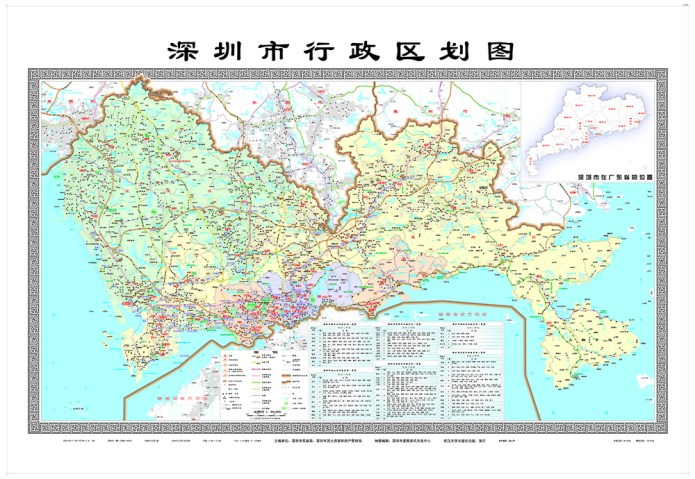
administrative shenzhen, circa 2015
Today, I’m translating a recent update from the Shenzhen Government online–Shenzhen administrative divisions. For those interested in who belongs where, it is an amazingly useful collection of maps. It also introduces the ongoing administrative history of Shenzhen, providing key dates in administrative restructuring. This translation interests as much for what it includes as what it does not; Shekou is notably absent from the administrative history of Shenzhen and this particular version of municipal historiography. Moreover, although this historiography shows when the government apparatus has made grabs to regulate and standardize local production, its unclear what happened in the outer districts when all this inner re-districting was going on. In other words, the official historiography of Shenzhen’s administrative history seems a straight-forward and uncomplicated process. Continue reading
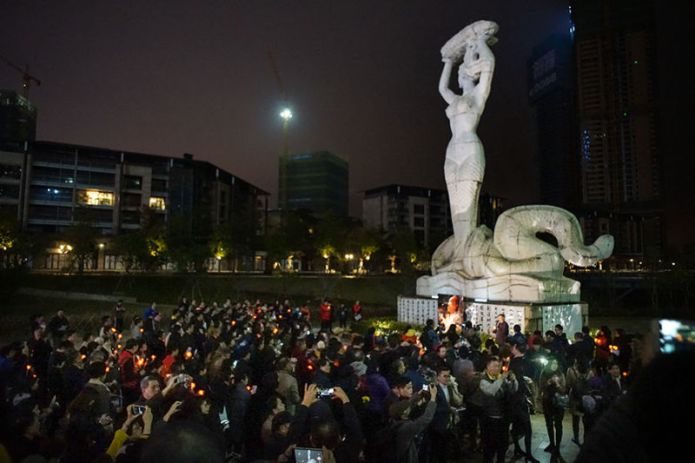
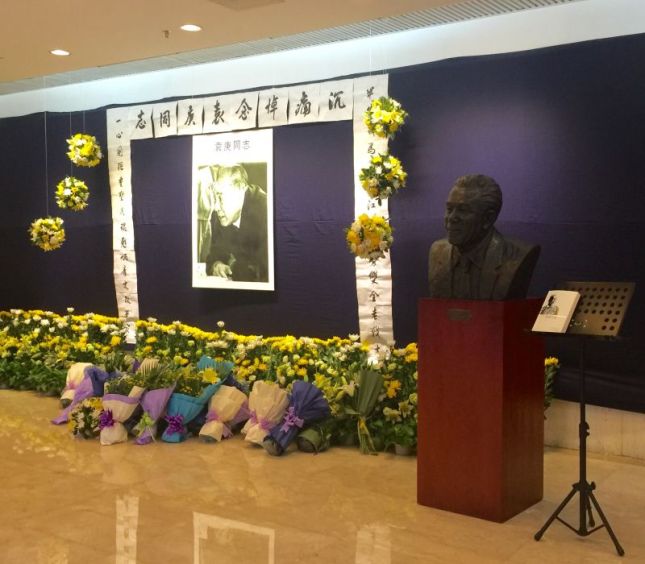
yuan geng memorial
Yesterday morning, the Shekou Community Welfare Fund received word that Yuan Geng, former CEO of China Merchants Shekou had passed. They immediately set to organizing a memorial, which was held on January 31, 2016 at 8 pm. The official memorial was held earlier in the afternoon at the Shekou China Merchants Museum, which is the official mourning hall for the departed leader. “The difference,” one participant commented, “between the two memorials was obvious. At the official memorial, people were waiting for Shenzhen Party Secretary Ma Xingrui and Mayor Xu Xin to arrive and pay their respects. In contrast, at the Shekou Community memorial, Old Shekou people came to mourn the end of an era.”
the “village” thing
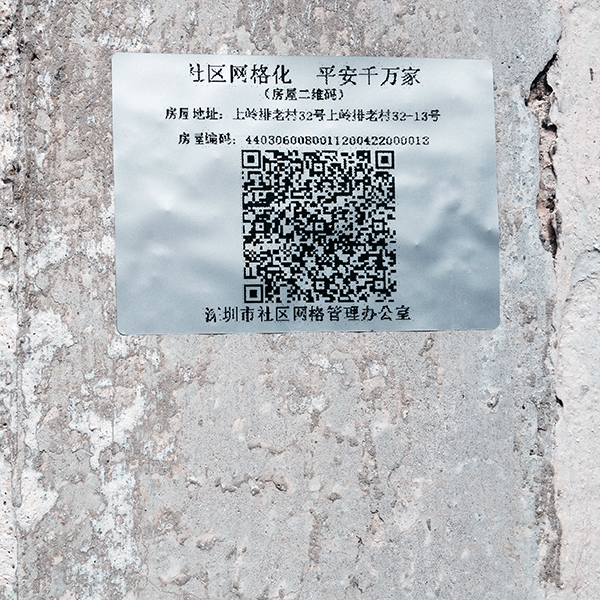
This past week, I toured Shangling Old Village (上岭村) in Dalang. Decaying villages like Shangling contextualize the “what came after” success story that is SHENZHEN! And yet. This contextualization depends upon one, standardized (and quite frankly boring) narrative of rags to riches, sudden wealth, boom boom boom, etcetera etcetera and so forth. Continue reading

local is as local does. or not.
This week I have been thinking about iterations of the “local” in two sites: the 2015 Shenzhen Hong Kong Biennale of Urbanism/Architecture and the Baishizhou Street Museum. In particular, I’m thinking about the possibility of making connections from “here” to “there” when they hinge on the distance between (a) some outside understanding of what the local might be and (b) what might be interesting to actual locals. The possibility of meaningful dialogue is further complicated when “outsiders” and “locals” are organized by global hierarchies, internal class structures, and unquestioned ideas of what might be intellectually and/or aesthetically engaging. Continue reading
houhai / xuefu rd
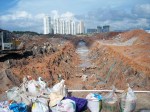
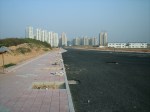
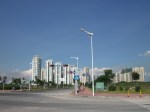
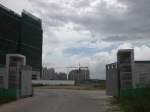
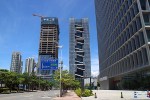
Today, I went to the Software Incubator Area and what to my wondering eyes did appear, but a landmark tried and true and watched for the past decade. It’s true and unexpected, but for years I have been documenting the land reclamation area east of Guimiao and north of Binhai (first impressions, here), and today on an errand to meet someone about the upcoming Maker Faire, I realized the road I was on–Xuefu Road–was in fact the road I had walked while documenting the emergence of New High Technology Park. Anyway, some before and after pictures:






Crossing the Border Between Shenzhen and Hong Kong, 1951
great photos of the luohu border crossing, when it was just being established!


大鹏所城 (II): history in the making
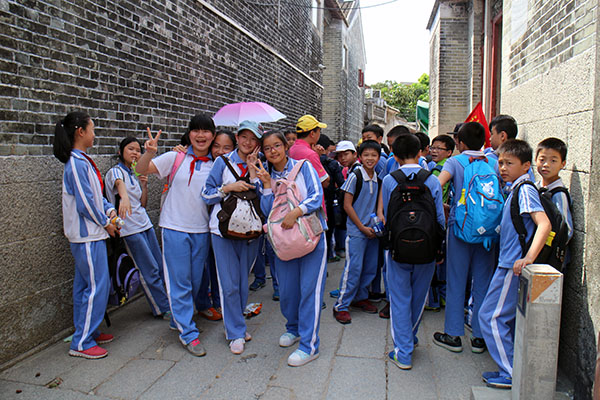
Almost seven years ago to the day, I posted thoughts on cultural history. The prompt for my speculations was Dapeng Garrison, which at the time was the lack of recognition for the site, which is Shenzhen’s only national level cultural relic. Two days ago, I returned and the space was hop, hop, hopping in all sorts of telling ways. What changes had allowed Dapeng Garrison to suddenly attract students, busloads of tourists, and random day-trippers? Like most Shenzhen stories, the answer is a twisting, convoluted story of profits, grey economies, the allure of accomplishments, and the real consequences of administrative failure. Continue reading
 Shenzhen Noted