neo-confucianist administration in guangming?

Today, I’m translating an open apology from Liao Tianye, a young official in the Guangming New District Management Committee (新区管委会) to his parents. In the letter, Liao Tianye expresses his remorse for abusing his parents. Frankly, the letter seemed to me a strange twist on Shenzhen’s ongoing Neo-confucian propaganda campaign; yes, the Municipality is striving to cultivate Neo-confucian ethics in officials and businessmen. But, public apologies for unfilial behavior? Caught me off guard. More prosaically, I’m wondering at the level of abuse, the context in which “abuse” was identified, and how it came to the attention of the Management Committee. Also, in the ongoing turmoil of Chongqing revelations, I’m also wondering about the political culture of holding meetings for self-criticism, which we all remember was one of the key features of Cultural Revolutionary tactics.

Letter of Regret

First, I want to use this letter to express my deep regret to the parents who raised me under such difficult conditions! To the school that formed me and the work unit that has consistently cared for me, I also apologize for any negative effects from my actions! At the same time, I also sincerely apologize for the emotional pain that my actions have caused the public!

I was born into a farmer household, but lived for many years outside the village to complete my studies. After graduating college, I immediately married and our child is now 9 months old. Pregnancy and birth debilitated my wife’s body and she became depressed. During the day, I went to work and at night I came home and still had to care for our child, exhausting both body and mind. In addition, my parents’ traditional ideas of childcare and my own are very different, and I don’t have enough experience handling family conflicts. Nor was I prepared for the contradictions between wives and mother-in-laws. Together it resulted in disputes with and anger at my parents, leading to serious consequences.

These past days, I have consistently engaged in deep reflection and self-criticism. This event has been a deeply painful life lesson, which also negatively impacted my household, work united and society. I will learn from my mistakes and become a citizen who takes responsibility at work and in society.

I hope that everyone will give me a chance to turn over a new leaf!


gu kailai: he made me do it!

As Chongqing Turns takes no prisoners, literally.

According to Mirror News (明镜新闻网), Gu Kailai claims she had nothing to do with the alleged murder of Neil Heywood. Instead, she says that Bo Xilai’s secretary acted on the former Mayor of Chongqing’s orders to kill the British businessman. Her role in all of this was simply to invite Heywood to Chongqing. Moreover, she couldn’t refuse to help Bo Xilai because he frequently beat and sexually abused her.

It seems that Hu Jintao may have successfully arranged for Chongqing’s former power couple to receive the death sentence for their role in Heywood’s death. Or at least that’s cliff-hanger du jour, not to be confused with anything like verifiable news.

Meanwhile, there are reports (here, here, and here) that two days ago several thousand took to the streets of Chongqing to protest the government by singing red, a direct challenge to Bo Xilai’s administration and a call for change a la Mao. They also sang the national anthem: “Ten thousand hearts as one, braving the enemies canons — forward march!” In response, the government ordered the police disperse the protestors using teargas yesterday.

Online, extreme left websites such as “乌有之乡”, “毛泽东旗帜网”, “民声网” and “红色中国” have been closed down, although it is still possible to find their site addresses in Baidu’s cache and the British speculate about how Heywood’s Chinese wife is “suffering“, quote unquote.

gu kailai arrested: “as chongqing turns” really is one of the best shows on the worldwide web

In today’s episode of As Chongqing Turns, Bo Xilai’s wife, Gu Kailai has been arrested for the murder of Neil Heywood, a Beijing-based British businessman.

When we last visited Chongqing, Guagua had been urging his father to truly reform Chongqing’s political-economic system instead of singing Cultural Revolution karaoke and cracking down on “black” activities. One of Bo Xilai’s patrons, Noodle Master Kang (played by Zhou Yongkang) had been fighting with Direct Line to Heaven (played by Wen Jiabao) and Tire (Hu Jintao) for control of the Center. There were rumors of bullets having been fired in Beijing, rumors which increased levels of paranoia because of the administrative separation between control of the military and control of the police. Remember, the military is controlled by, well, the military and in the hands of Tire. The police, however, report to Noodle Master Kang and although the military is larger than the police force, nevertheless the police have more ground forces than the military, who serve and protect Chinese people in the air and at sea, in addition to on land…

Flashback to November, 2011, place: a fancy Chongqing hotel room. Neil Heywood is found dead. Representatives of the Chongqing government tell Heywood’s family that he died of a heart attack. They tell the British Embassy that he died of an overdose of alcohol poisoning. Strange, someone says, I never knew him to drink…

Flashback to Wang Lijun’s mad dash to the US Consulate in Chengdu. Close up of the Chongqing police surrounding the building, demanding that the Americans release Wang Lijun. We jump to a reconstruction of what the New York Times says took place: Wang Lijun telling the Americans (large and in blue suits) all sorts of things about the inner workings of the Center. He lowers his voice and accuses Gu Kailai of poisoning Heywood and to force the Center to reopen the case. Wang Lijun begs the US officials for asylum, but it is not granted. Instead, 30 hours after he entered the Chengdu Consulate, he leaves “of his own accord”, which is what was said at the time and we now know not to be true…

Meanwhile, the Chinese internet pulses and throbs with speculation and analysis. If Gu Kailai did poison Heywood and if hubby, Bo Xilai did cover up the murder, then speculations about the absolute lack of any moral restraints in Chinese leadership seem confirmed. If, however, Wang Lijun lied and now Bo Xilai’s enemies are using the case to end his political career, then speculations about the absolute lack of any moral restraints in Chinese leadership also seem confirmed. And what is to be done when there are two separate armed forces — the military and the police –reporting to (at least two) amoral leaders engaged in a power struggle?

This episode leaves us in Shenzhen to ponder appropriate levels of paranoia. Suddenly, for example, I’m recalling that after the recent Politics and Law Committee Training (政法委书记培训) in Beijing, I’ve notice increased police presence throughout Shenzhen. What’s the reason? I’m reconsidering Bo Xilai’s earlier trip to Kunming Military museum in terms of internal divisions. As Mayor of Chongqing, Bo Xilai had police, his chief supporter, Zhou Yongkang is head of the Politics and Law Committee and  and thus can deploy police from any part of the country anywhere else. Was Bo Xilai actually cultivating military support from his father’s old friends in preparation for a worst case scenario?

And yet. I’m also thinking that the mountain is high and the emperor far away (山高皇帝远) and most of the people in the hot and heavy pursuit of Chongqing rumors tend to be either newspaper reporters, who pursue these sorts of stories for a living and friends from Beijing, who actually identify with whatever the Center is up to and spend time online tracking the rumors. Many of my southern friends don’t seem so interested, except to wonder how the political maneuvering will or will not impact manufacturing, financial services, and summer vacation plans.

That said, I may re-read my Machiavelli just to remind myself that any act by a leader should be interpreted as a power play and not within the rhetoric of serve the people. And sadly, I’m looking at you, too, American politicians who might use this fiasco to pander to anti-Chinese sentiments and American media personalities who would use anti-Chinese sentiments to increase ratings in my homeland. Unfortunately, As Chongqing Turns isn’t a telenovela. It’s what’s happening instead of necessary work to improve the lives of millions of Chinese people, which in a shared world means improving all of our lives.

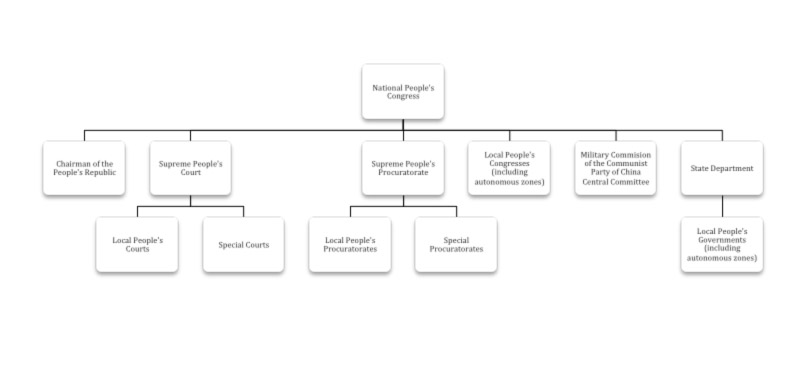
shenzhen administrative structure

I’ve been making charts to organize my thinking. Below is an organizational chart of Shenzhen, circa 2010.

Also, a simplified version of the organizational relationship between the Central government and local governments. Guangdong is the provincial local; Shenzhen is a sub-provincial city, however, as an SEZ, Shenzhen has all sorts of legal privileges that provinces and direct cities do not.

generations

Lately I have been writing about Generations 80 and 90 because much of what they do and think mark interesting sites of departure from older generations. Today, a brief comment about my experience watching Beijing Opera with an 80 year-old friend.

Continue reading

what’s the point of college?

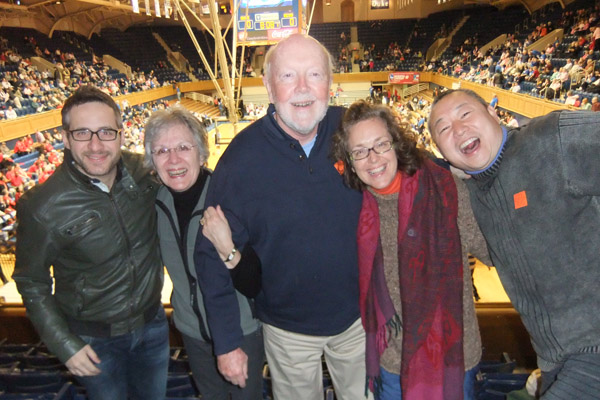
last night, went to cameron indoor stadium to watch the lady blue devils defeat the nc state wolfpack. well, we watched the first half and then returned home. mascot basketball at halftime was a bit much, even for my father who was thrilled to be there because (rumor has it) cameron is a shrine of sorts. certainly, yang qian found the pageantry fun. in contrast, nico (by way of italy) was somewhat nonplussed: how is such a display possible? he seemed to wonder and this was only a women’s game?! yes, those were students camping outside the stadium to purchase tickets for men’s home games, which do sellout. every time. i mentioned that in “utopian verses” wang anyi described her sense of alienation and acute loneliness when attending a university of iowa football game. nico nodded wisely, but remained silent.

watching a duke basketball game with two non-americans made me viscerally aware of the distance between the cultural meaning of “preparing for college” in the u.s. and china. Continue reading

一个朋友一条路: Who can you trust in Shenzhen?

Friendship is an important topic of conversation in Shenzhen, where people want friends (many) because friends help one do things that can’t be done alone. Yesterday, I heard two stories about making friends, both from young women who are laboring (打工) in Shenzhen. Significantly, both stories were about what work had taught them about how to make friends.

The first came from A Han, who is 18 and working in Xiao Chen’s teashop. At first, A Han didn’t like the teashop because it was boring (闷). Her job was brewing tea and chatting with people while they tasted the tea. Moreover, because people who drank tea tended to be old (not even “older”, just “old”!), they weren’t interested in fashionable topics. In contrast, A Meng described herself as lively, out-going, and up-to-date. Nevertheless, as she has learned to brew well so that the qualities of each tea can be tasted and to make conversations interesting, she has made many friends. And all these friendships are the real benefit of selling tea.

“In order to sell tea,” she explained, “you have to quiet your heart (静心) and take your time with people. We don’t force people to buy any tea, but help them satisfy their taste. In the process, we become friends.”

The second story came from A Meng, 21-year old woman who had been on her own since graduating from middle school at age 14.

When I asked her why she had left home so young, A Meng explained, “I knew I was ready to be independent. So I went to Tianjin with a relative.”

A Meng sketched the seven year sojourn that had taught her about independence. When she was fourteen, her relative brought her to Tianjin and then vanished (人不见了 – as inconclusive in Mandarin as English vanishing acts). She found a job in a factory that included room and board. After a year in the  factory, she went home for Chinese New Year and then headed out again, this time to Wuhan, where she studied to give facials and massages in a salon(作美容). After she finished her course in Wuhan, she came to Shenzhen and has been working in mid-level salons. I met her in the salon owned by the wife of the second son of a village head.

A Meng deeply valued independence and her conversation kept returning to it – independence and responsibility. She compared her level of independence to her cousin (one month younger), who has never left home and therefore even at 21 can’t make a decision without her mother’s help. Moreover, A Meng went on to say, only people who are independent can take responsibility for family and friends. Indeed, the more independent she has become, the more capable she has shown herself to be and this, in turn, has helped her make many friends.

I have been mulling the question of why friendship matters in Shenzhen. Why, in other words, do stories about work end up being lessons about how to make friends? I am beginning to think that friendship matters in Shenzhen because Chinese society in general, but business more specifically because there is a low tolerance for collaborative relations with strangers. Instead, people work to transform relations with strangers into person realtions. Continue reading

中国观澜版画基地: What is a cultural resource?

Yesterday, Wenzi and I visited her classmate, Zhao Jiachun who works at the Guanlan Woodblock Print Base (中国观澜版画基地). Jiachun generously showed us the Base and briefly introduced its history.

Guanlan interests me for three reasons (in addition to the beautiful setting, pictures here):

Guanlan is, at the moment, a purely municipal government funded project. This points to the growing ideological importance of culture in Shenzhen’s identity – both domestic and international.

Guanlan is part of the movement to recuperate elements of Shenzhen’s pre-reform history as a cultural resource. What’s interesting is that this recuperation is happening village by village. Consequently, what emerges is a loose network of sites, rather than an overall “history” of the city. In this case, Guanlan is the third Hakka site incorporated into the municipal cultural apparatus. The first was Dapeng Suocheng (大鹏所城), a military installation in the eastern part of the city. The second was Crane Lake Compound, which is now the Hakka Folk Custom Museum (深圳客家民俗博物馆鹤湖新居) in Luoruihe Village, Longgang (罗瑞合村).

Guanlan is an example of using pre-modern architecture to incorporate international art production into local identity. More specifically, the experience of architectural difference (such as living in a Hakka compound) bridges even as it creates cultural difference. Thus, the Base invites foreign and Chinese artists for residencies. These residencies allow foreign artists to “understand” China / Shenzhen and incorporate these new experiences into their art. At the same time, these exchanges also refigure a local art form (woodblock printmaking) as international cultural heritage. Importantly, this kind of “experience” of the local past as a cultural bridge seems a global trend. In Switzerland, we visited Romainmotier, which also offers artist residencies in a beautiful, restored, pre-modern setting.

This has me wondering about the ideological relationship between past and present urban settlements: Is “history” now the location of “culture”, while the “present” is all about one’s location on a scale of relative modernity? In other words, do Shenzhen and NYC participate in the same “culture”, their real differences explained away as “levels of modernity”? While their cultural “difference” must be found by excavating the past?

Continue reading

the overlooked ubiquity of bicycles in shenzhen

I have been collecting discarded objects and then photographing them in different sections of Shenzhen, the oldest and largest of China’s special economic zones. This process has (as yet) denied me photo-ops with a Guanyin statue, but helped me see things so common that they hadn’t previously registered as “Shenzhenese”. This bike tire examplifies how what gets overlooked is often the all-too-common (even by folks who define themselves through acts of documentation).

In the early eighties, just after the PRC had opened to the capitalist West, bicycles symbolized the differences between urban China and urban “us”. I remember magazine articles on Beijing and Shanghai that featured images of hundreds of Chinese citizens biking to (or from) work, school, the market. At the time, Shenzhen had just been established and rarely featured in these articles, except as an example of the extent to which China was changing. From its establishment, however, Shenzhen pursued modernization with an eye to non-Chinese cities. Accordingly, the Shenzhen urban plan deliberately excluded bicycle lanes; Shenzhen’s modernity would be defined by car ownership. I’ve heard that by the mid-1990s, per capita car ownership in Shenzhen had surpassed that of Hong Kong. Certainly, the total number of vehicles cruising Shenzhen streets has surpassed the number in Hong Kong. Nevertheless, bicycles remain a common mode of transportation in the city. Many workers still bike and many business depend upon bicycle delivery. Indeed, throughout the city, usually nestled under an overpass, individuals set up bicycle repair shops. For one or two renminbi, a tire puncture can be repaired, breaks tightened, or chains oiled.

Given their exclusion from the urban plan, bikers often compete with pedestrians for passageways through the city. I have often bumped into bikes or been bumped as bikers rush to their next destination. Nevertheless, I didn’t associate bikes with the city. If I’m any example of how folks have come to inhabit Shenzhen, then the municipality’s urban planners have successfully banished bikes and bikers from mental maps of the city. Or rather, bikes and bikers crash into our consciousness only to the extent that they interrupt normal traffic. All this to say that I have been in Shenzhen for ten years, and am just starting to realize how vast the overlooked landscape might be and how misleading these pictures probably are. Consider them evidence of an emerging awarenss of, rather than reliable data about Shenzhen. Pictures, here.