new traditions: nan’ao mazu

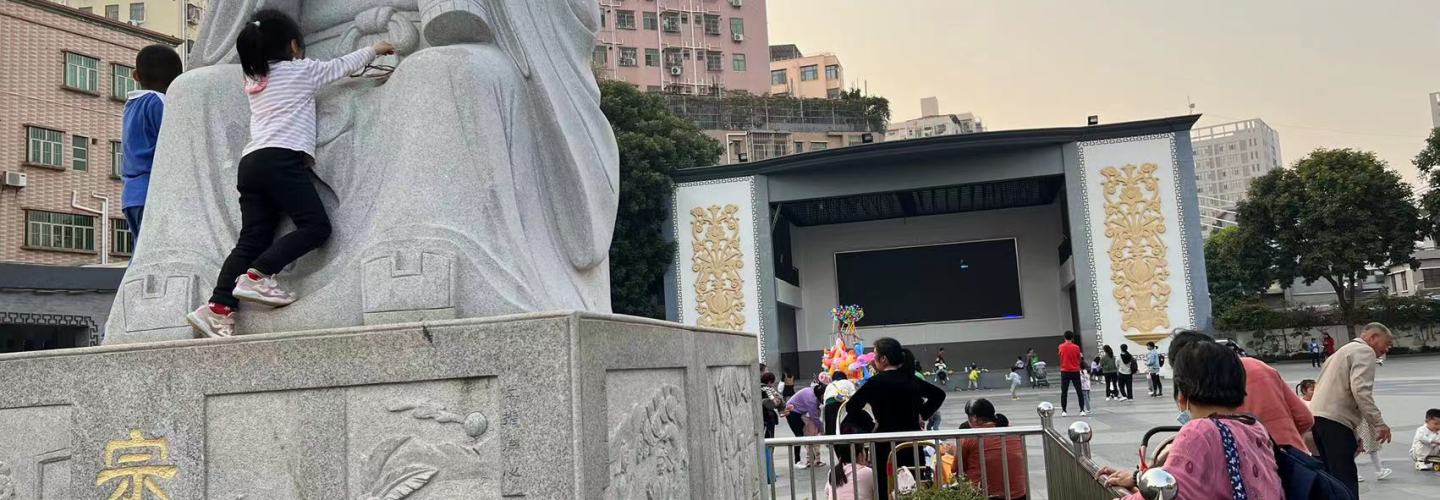
Yesterday, I visited the newly renovated Mazu Temple of Nanyu (南渔), which is located in Nan’ao, Dapeng (大鹏新区南澳). The temple is interesting for (at least) three reasons and the questions they beg.


  1. The temple is a local renovation of a previous existing temple. The icons from the previous temple have been moved into a nearby exhibition of the history of the village;
  2. Although the temple and the exhibition were built on land that Nanyu has claim to, the project was promoted and funded by donations from a successful Chaozhou businessman, and therefore;
  3. He contacted artisans in Chaozhou to design and build the temple according to “proper” requirements.

Questions that the temple raises include:

  1. How is “tradition” being remade at the popular level, now that long-term residents are contributing to the reconstruction?
  2. What has been the role of Chaozhou people in this reconstruction?

Chaozhou people have been involved in the reconstruction of Shenzhen tradition at two levels. First, Shenzhen is known for the shift from the planned to a market economy, but many of the people who built the literal markets (the Hubei fish market, wet markets in many villages, and the dried fish market at Nan’ao, for example) have been from Chaozhou. Secondly, many of the traditional crafts that appear in Shenzhen ancestral halls and temples have been contracted from Chaozhou, which is considered more “traditional” and therefore “authentic.”

The next post will talk about the relationship between the temple and the village. Impressions of the newly constructed Mazu Temple and the exhibition.
This slideshow requires JavaScript.

handshake 302 sound workshop

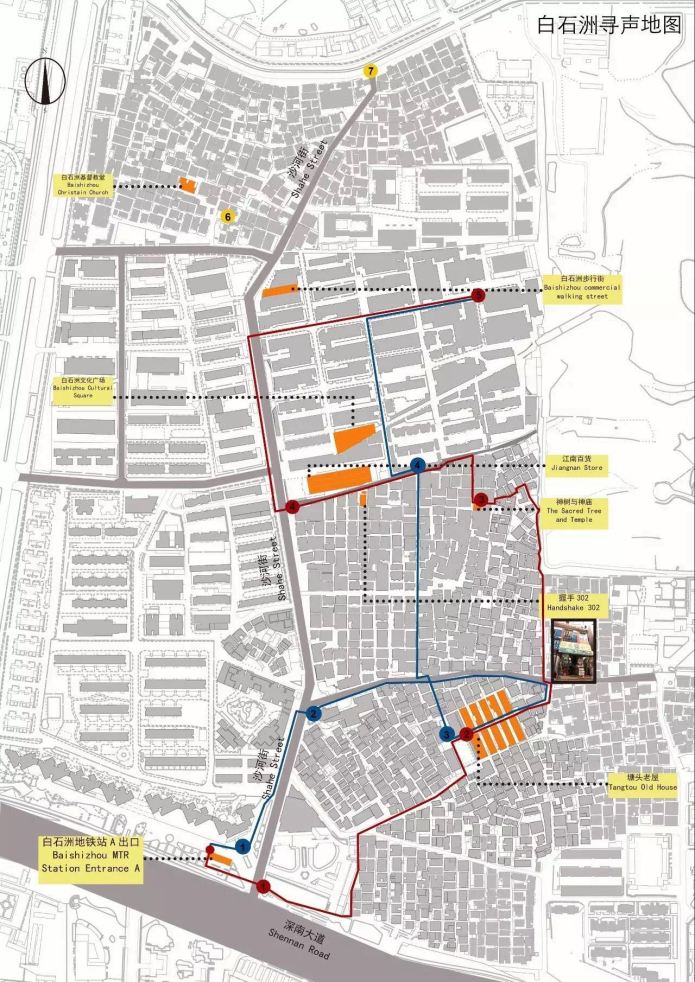
Handshake 302’s last exploration of Baishizhou was a collaboration between Handshake 302 and Shenzhen Center for Design. I comprised two parts: a silent walk through the urban village to collect sounds and a workshop discussion. Zhang Kaiqin and I led the walk (see map), while resident artist Zhang Mengtai led the workshop.

Continue reading

preservation ecologies

Guanhu (官湖) and Shayuchong (沙渔涌) Villages are within walking distance to each other along the Dapeng coastline. Guanhu is the village that has developed Jiaochangwei. A small settlement at the mouth of a river, Shayuchong is undergoing a complete renovation that is reminiscent of the horrific universidade paint-overs. Both villages are in various stages of redevelopment. And in the details I trace Shenzhen’s complicated preservation ecologies, where beauty, kitsch desires, and too much money take strange and curious form. Impressions from today’s walk, below.

This slideshow requires JavaScript.

listening to baishizhou / 白石洲寻声

Tomorrow afternoon, Handshake 302 collaborates with Future+ to explore the Baishizhou soundscapes. The workshop program begins with an hour-long tour to collect sounds and a 1.5 hour sound workshop with resident artist Zhang Mengtai. Meet-up at Baishizhou Metro Exit A.

luohu trivia

Stumbled across a bit of Luohu trivia that suggests that cross border licentiousness has been promoted on both sides of the border as a means of generating profit. According to the Industrial History of Hong Kong Group,

The opening of the “Shum Chun Casino” in 1931, provided one of the only new areas of passenger growth [for the Kowloon-Canton Railway]. By 1934 passengers visiting the casino were a major portion of the cross border revenue until its closure on 1st September 1936. The impact of the casino’s closure was such that there was a shortfall in the last four months of the year at round 30% of the net operating revenue.


baishizhou, otherwise.

It is one of the ironies of publicity that site and time-specific artworks are regularly transformed into texts. On Sunday, September 31, for example, resident artist Zhang Mengtai held an open house in Handshake 302. He built an amplifier that transmitted sounds he had collected in Baishizhou and then compiled into a soundscape. Abstracted from the noisy jumble of handshake allies and crowded streets, the honking cars and migrating dialects that Mengtai recorded seemed delicate, almost lyrical in their evocation of Baishizhou. We were entranced. But this text is not that experience. Continue reading

hubei: recognizing “value”

The current focus on preserving Hubei Old Village obscures just how much Special Zone history and everyday life will be demolished to make way for the new China Resources development downtown. What’s at stake are competing understandings of what makes a good life for whom and who gets to decide the form and function of the city. Continue reading

dalang commercial center

Off the beaten track (or at least a 15 minute bus ride from the Longhua subway station), Dalang remains one of the manufacturing centers of Shenzhen as well as one of the few spaces where it is still possible to see container trucks of various sizes trundling about. The landscape itself is a dense mix of industrial parks, proper urban villages, collectively held property, and limited public and commercial property. In other words, the area retains much of its morphology from when Longhua was officially a market town (镇, 1986-2004) and the entire area was developed through rural institutions.

Continue reading

Baishizhou Soundscapes

Sunday afternoon, 4:00 at Handshake 302:

To truly listen, we must first become quiet, creating a silence proper to ourselves. When quiet, you will hear the sounds of nature. At that moment, the sound flows, and nothing remains but a trace of memory. Silence is itself the opportunity to reflect on what it means to hear.

Listening is not just a question of hearing the music, but of listening to the natural voice, which includes static. Problems come; where does the static of life come from? Why does it appear? The unavoidable sounds of daily life constitute different experiences.

During this workshop we will share sound—its creation, its documentation, and what it means to listen. We invite each participant to quiet their minds and truly listen. The screaming child and your screaming mind: are these sounds the same or different? The rustling wind and a little girls giggle: do they play your heartstrings in the same way? Listen to the soundscapes of Baishizhou and hear your heart. Beat.

interview with huang weiwen!

Happy to have my interview with Huang Weiwen, “The Urban Planning Imaginary: Lessons from Shenzhen” included in the recently published, Shenzhen: From Factory of the World to World City from the International New Towns Institute. As you can see from the index, contributors include many folks who have been involved in thinking about, debating, and planning Shenzhen.