

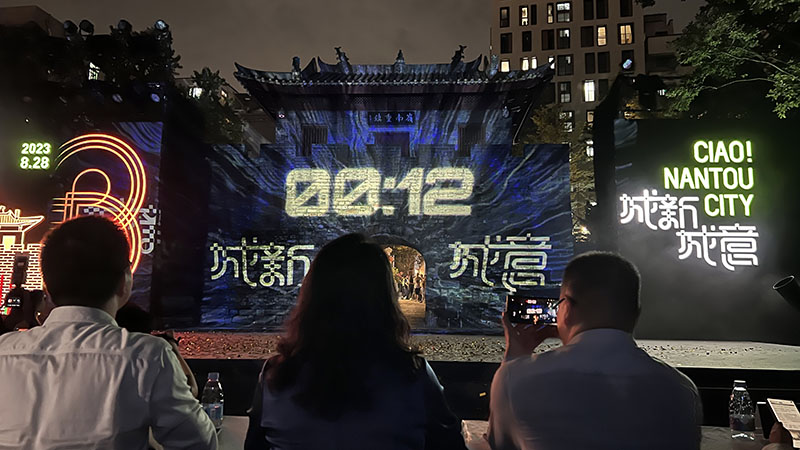

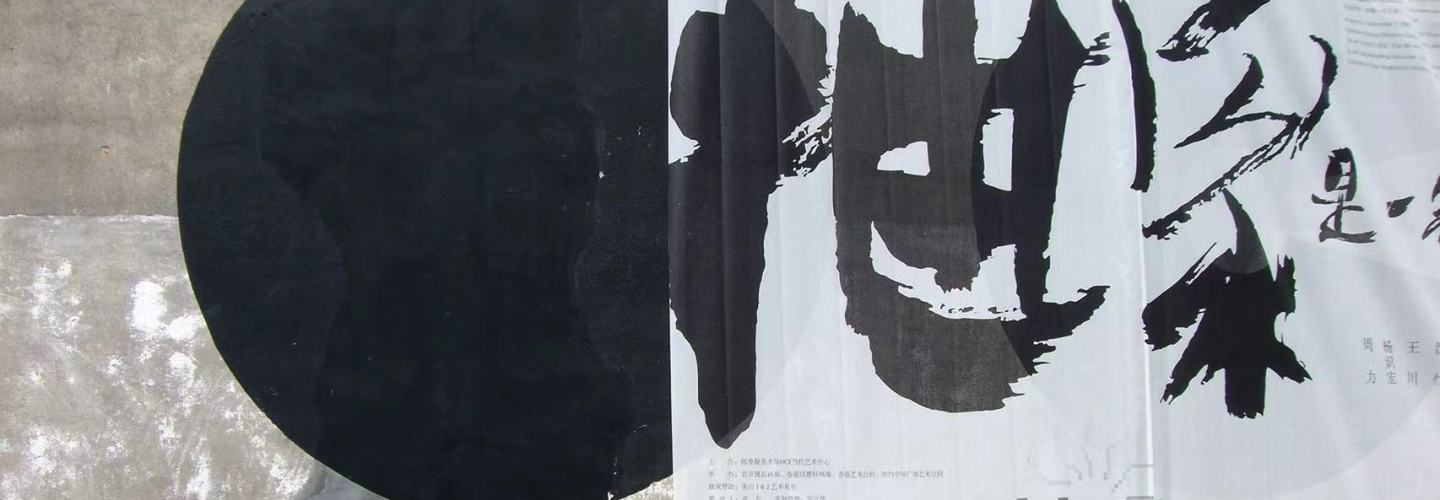
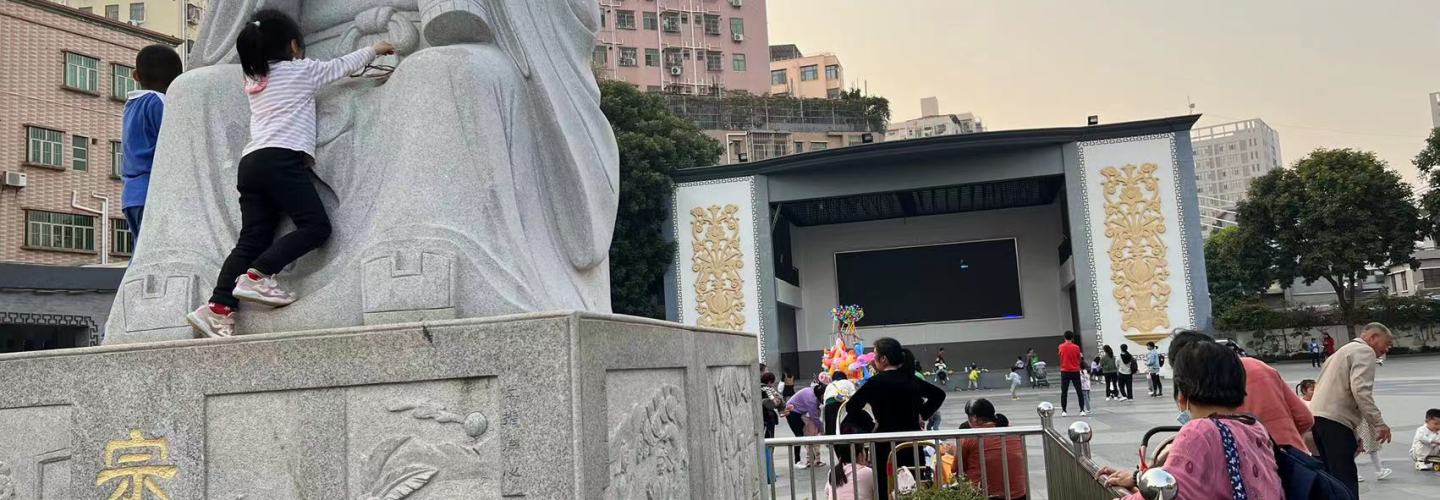
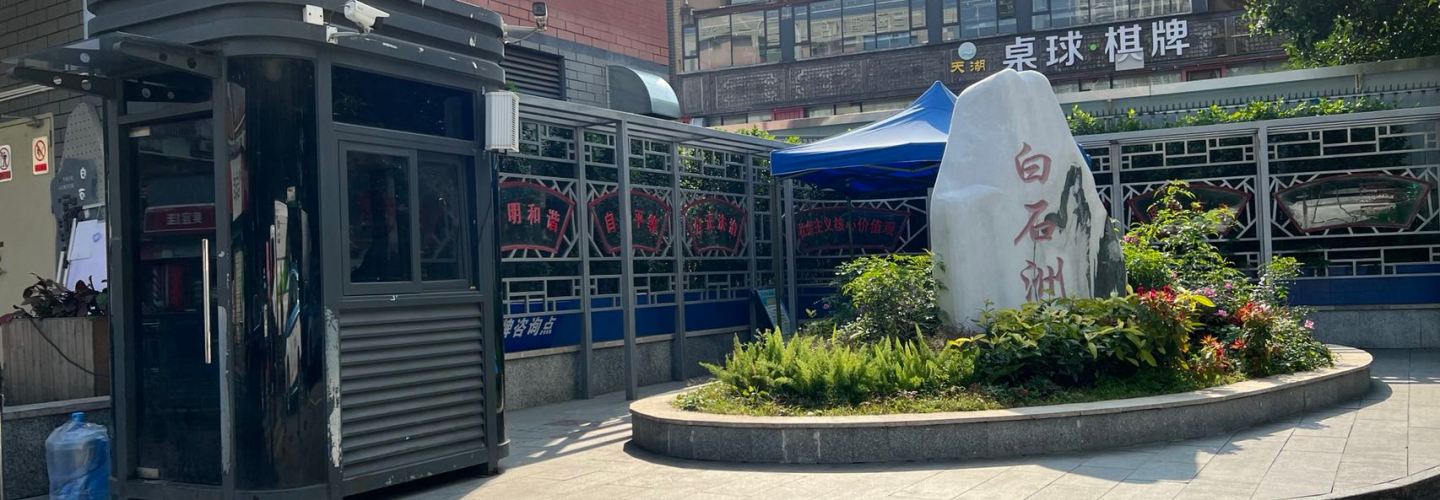

Walking Shekou today, I remembered that not only are urban villages subject to Shenzhen’s cultural industry inspired renovations. Older areas of Shenzhen, especially factories and housing estates are also being razed and/or remodeled to conform to different aesthetics and economic plans. Views on the process near Seaworld and the e-cool area, which used to be Sanyo factories (pictures of area, 2008).
Changing Patterns of Rural Suicide (1980-2009)
Below, I have summarized Liu Yanwu’s article, The Problem of Rural Suicide (1980-2006) [刘燕舞:中国农村的自杀问题(1980-2006)]. The article responds to previous research on rural suicide, which had focused on the changing status of rural women, rather than on the modernization of village society as a whole. Liu argues that changing intergenerational family dynamics and the rising divorce rate of rural couples has caused the changing pattern of suicide in rural China. After the article summary, I make a few observations on what research in Shenzhen contextualizes the question of rural suicide.
The Problem of Rural Suicides (1980-2009)
Abstract [translated from text]: Based on a uniform survey of 34 villages accross 7 provinces and analysis of the suicides of 604 farmers between 1980 and 2009, this author believes that the suicide rate in villages continues to rise. There has been a significant decline in young people’s suicides and the marked rise of elder suicide in contemporary villages. The declining suicide rate of young women lowered the overall rate of young people’s suicide, however, the rapid rise of elder suicide has meant that the overall rate of villager suicide continues to rise. The analysis suggests that the determining factor in this complex situation is not the migration of village young women, but rather changing intergenerational relations and the increase of divorce. At root, the more obvious systemic cause of the complex transformation of rural suicide is that modernity continues to erode villages.
Keywords: sucide rate of young women (青年女性的自杀率), suicide rate of the elderly (老年人的自杀率), transformation of intergenerational relations (代际关系变动), divorce (离婚), modernity (现代性) Continue reading

political subtext in chinese television: bo xilai, wang lijun, and pla history
Just after Wang Lijun was reported on “medical leave”, Bo Xilai went to Kunming on an inspection tour, with a special visit to a military museum. Chongqing news broadcast footage of the tour. Now it is probable that this tour and visit to the military museum were previously scheduled. However, within the context of the Wang Lijun debacle and the rise of the Princeling Party to power, these images of Chongqing’s Secretary inspecting toothpaste and toilet paper resonated ironically.
During the revolutionary war, the People’s Liberation established six military regions: the Northeast (东北军区), the North (华北军区), the East (华东军区), the South (中南军区), the Southwest (西南军区) and the Northwest (西北军区). Each region had a General and a Political Commissar. Bo Xilai’s father, Bo Yibo was the Political Commissar of the North, Xi Jinping’s father, Xi Zhongxun was the Political Commissar of the Northwest, and Deng Xiaoping was the Political Commissar of the Southwest. Thus, in visiting Kunming, Bo Xilai was not simply going on an inspection tour, but also retracing the revolutionary steps of his father’s generation and thereby declaring his revolutionary lineage. Continue reading
Coaster Raid Biennale Retrospective
Last night, Gigi and Michael of Riptide Collective hosted the opening for Coaster Raid Shenzhen’s Biennale Retrospective. Witty and fresh the Retrospective will be up for the final week of the Biennale and is well worth a visit. Venue:
市民中心B区南门,多功能厅东侧, 地铁市民中心站B出口
Civic Center – East Hall – Area B South Gate, Subway: Civic Center Exit B
party melodrama as prelude to the 18th national people’s congress
Shenzhen friends have been speculating about the political-economic shifts we will see as a result of the 18th National People’s Congress. The latest scandal involves Politboro Standing Committee hopeful Bo Xilai (薄熙来) and his henchman slash vice Mayor slash Chief of Police, Wang Lijun (王立军).
The scandal and source of gossip: Wang Lijun visited the US Consulate. The Chongqing military policy surrounded the Consulate, demanding the US to handover Wang Lijun. Beijing sent Qiu Jin, vice Minister of National Security. 24 hours after entering, Wang Lijun “willingly” left the US consulate with Qiu Jin. Subsequently, Bo Xilai went to Kunming for unknown reasons.
I have been trying to understand what’s at stake, why the fallout, and how to read between the lines. This is what I’ve gathered; some of the gossip may even be reliable.
The dramatic background of the Bo Xilai scandal is the fight to become a member of the Politboro Standing Committee, which is a recognized springboard for becoming President and Premier, positions one and two in China. Bo Xilai is one of the more prominent and/or notorious members of China’s Princeling Party (太子党), the generation of Party leaders who have come to power because of their powerful parents. Bo Xilai’s father, Bo Yibo was one of the “eight immortals” of the Deng era Communist Party. The Princelings are in the news because China’s next leader Xi Jinping, son of Communist veteran, Xi Zhongxun is also a Princeling.
serve (only) the people’s currency?
My one brand, two systems cup of java has me thinking about the manipulation of national currencies in an international economic system. In particular, I reviewed what I knew and didn’t know about the rise and fall of 外汇卷 (foreign exchange certificate) as opposed to 人民币 (the People’s currency). FEC circulated from the early 60s through January 1, 1995, when the government began phasing it out, completing the process on Dec 31, 1996, just in time for Hong Kong’s Return.
Now, China’s FEC is interesting because before 1980, Chinese citizens were not allowed to hold either FEC or foreign currency, while after 1980, they were. Continue reading
The price of a One Country, Two Systems cup of coffee
Today, I went to buy a cup of coffee in a Hong Kong Starbucks. I tried to use a Shekou Starbucks “buy one get one free coupon”, which is valid in any Starbucks throughout Guangdong and Fujian. Nevertheless, the HK Starbucks did not accept my coupon because Shekou is in neidi (the interior). So I asked if Hong Kong was part of Guangdong — after all, the SAR speaks Cantonese and is justifiably proud of its Cantonese cuisine. The barista politely asked for my understanding because with respect to these kind of campaigns, Hong Kong is different from neidi and thus not part of Guangdong. However, when I asked if I could pay for my coffee using Chinese yuan, the answer was not only yes, but also that change would be given in Hong Kong dollars based on a one to one exchange rate. Thus, not only would I loose the exchange rate for the price of the coffee, but would be literally short-changed in the transaction.
Now, those of us who live in the Pearl River Delta are no doubt aware of the One Country, Two Systems policy, which in theory is designed to give Hong Kong, Macau, and Taiwan (at some imagined future date) a certain level of autonomy under a Mainland (Party) government. In practice, however, One Country, Two Systems is and integrated economic system, in which territorial identities create another site of unequal exchange. The most obvious example has been wage differentials between neidi and HK, Macau, and Taiwan. However, as the price of cup of coffee shows, at the level of everyday consumer consumption, these differentials also come into play because every small shop in the Delta has the potential to become a money changer.
In a related update to an earlier post on transferring Chinese yuan into accounts outside the country, a friend told me that the easiest way to get money out of China by way of Macau was to purchase chips in neidi and carry them across the border, play a while, and then exchange remaining chips for Hong Kong dollars.
flourishing
Walked the Peak today and remembered why I love trees.
Thinking Macau
Happy serendipity. I have been trying to make sense of my superficial impressions of Macau and this morning, a former student pointed me to the article, Capital Flight of China’s Wealthy Gets Ready for Takeoff. Long story short — using credit card purchases to transfer Chinese savings into international accounts. If this loophole sounds suspiciously like the money laundering another friend attributed to Yongfengyuan, that’s probably because the same group of people are involved: China’s officials and/or those with business ties to the current administration.
What have I seen and overheard? Continue reading
living rocks in dragon’s claw
To get to the Trail of Morro de Hac Sa (黑沙龙爪角家乐径), we walked past high-end shop windows — Prada and Zelga and Lv, oh my — that grace the Avenida de Sagres, under the Rua Cidade da Sintra, and waited at the feet of the New Casino Lisboa, which glittered in faint noonday sun, the buildings size and audacity dwarfing its earlier, abruptly human-scaled incarnation. A #25 bus, carried us across the Ponte Governador Nobre de Carvalho Bridge from Macau to Taipa and then trundled through Taipa and Cotai, where 5-star accommodations rise like comic book illustrations on reclaimed land. We continued past the Vila Coloane to Black Sands, disembarked, and oriented ourselves away from the beach to the coast, which shimmers, alive.
 Shenzhen Noted