So here’s a story about a young Chinese man in Angola. I heard it from a 30-something deliveryman, who currently makes his living delivering express letters and packages in and around Shenzhen. He is dissatisfied with this job because although he is the number one deliveryman in his unit, he feels that his potential is being wasted. He said that after facing down gunmen three (!) times in the streets of Luanda, delivering packages in a rainstorm, which many other deliverymen refuse to do is child’s play, implying, of course, that what he really wants to do is play with the big boys. Continue reading
Category Archives: shenzhen elsewhere

late arrivals: thoughts on catch-up urbanism
I came to Shenzhen by way of Houston circa 1995. It was a time when the boom had fizzled and young developers were just rediscovering the downtown. The city I inhabited was proud to live like a suburb with its lamentable public transportation, its ethnic strip malls and its destination malls like the Galleria. For street life, most of us bypassed the Montrose area, choosing instead to drive to Austin or San Antonio, which were further along in their urban renewals.

the left behind
Here’s the thing about the retreat of manufacturing from the townships and villages of the Pearl River Delta; these areas have urbanized, migrants have settled in and are raising families, but as the low-end jobs and shops that once sustained local and migrant communities follow the factories elsewhere, these neighborhoods are withering. Consider, for example, the older section of Dongguan–莞城, which only twenty years ago was a vibrant community and today is an abandoned reminder of the area’s complicated history with Ming pirates and British opium, its deep relationships with the late Qing Chinese diaspora, and the Pearl River Delta’s urban village origins. Old Dongguan has become a focus of concern for urban planners and concerned citizens: how to revitalize an “old street” that is no longer viable, but sits on prime real estate, or more precisely, inquiring minds want to know: to raze or not to raze historic areas and landmark buildings? Continue reading
a bully’s honor
As I watch the US president scream and shout and justify his socio-pathologies, as I engage low-ranking officials who change their minds and force their subordinates to work unnecessary overtime everyday, and as I argue with parents who think that their children are not “strong enough (不够厉害)” to take what they want in life, I’ve been thinking a lot about bullies and institutional forms of bullying that are misrecognized as education or leadership or honor and virtue. Like many in the United States, a significant number of Chinese people accept social Darwinism as an accurate description of “the real world,” rather than recognizing social Darwinism for the self-serving misreading of evolutionary theory that it is.
Then, after a grumble about the normalization of bullying in everyday life, I continue reading E. J. Eitel’s Europe in China: the History of Hongkong from the beginning to the Year 1882, which compounds my frustration with righteous bullies and their inability to empathize with anyone’s pain, including their own. I manage three sentences before the arrogance, misogyny and general smugness of Eitel’s text force me to consider if I really want to read over 600 pages of what must have been considered “edifying” reading material. The text does make clear is the extent to which imperial bureaucracies, colonialism and some misplaced yearning for civilization continue to overdetermine the hierarchies and injustices that characterize contemporary societies. Continue reading
what’s so free about free trade?
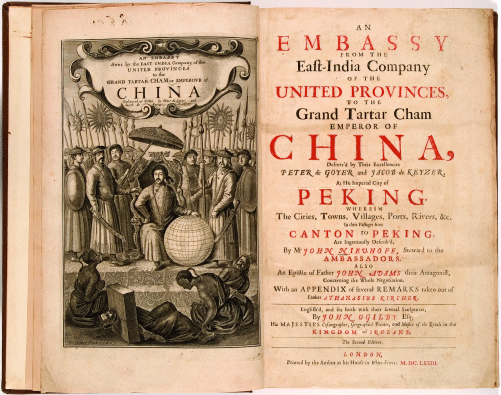
Like many late 19th century Britons, E. J. Eitel saw the East India Company (EIC) as the economic equivalent of the Qing Dynasty, asserting, “However galling this stolid assertion of self-adequacy and supremacy, and this persistent exclusivism of the Chinese Government, must have been to the East India Company’s officers and to the Ambassadors specially commissioned to bolster up the position of the East India Company in China, it must not be forgotten that the East India Company was, within its own sphere, just as haughty, domineering and exclusive a potentate, as any Emperor of China (19).”

first look at the belt and road
Its difficult when looking at a map of the proposed Belt and Road and not associate the maritime road with British colonialism, albeit in reverse and more than a century after the fact. But that’s what’s so distressing. When the British parliament dissolved the East India Company (EIC), it did not dismantle the systems of unjust and unjustifiable extraction that EIC had put in place over roughly four centuries of occupation, exploitation, and forced participation in the system. Instead, independence movements saw the rise of local elites who were determined to benefit from the system, justifying their profits with respect to local values and structures of oppression. In other words, it was never just the Brits, but also the Brits and their local running dogs (to use Mao Zedong’s felicitous phrase) and even after Independence, the dogs kept yapping, securing military support from the US and elsewhere (for the distressing tale of the fate of the Third World as a revolutionary ideal, check out The Darker Nations by Vijay Prashad).
The problem, of course, was that the profitability of the British system depended on opium; where would surplus profits (to fund industrialization, for example) come from without monopoly, forced labor, and addiction? Certainly, once India regained control of the Bihar plantations and China retook its ports, both countries were faced with the problem of “surpassing England and catching up with the United States” in the absence of captive markets and a drug monopoly to finance their industrial revolutions. And this may be why Europeans and US Americans fear the Belt and Road: if you’re not a running dog with Chinese characteristics, just what are your options in the new world dis/order (and yes, I’m looking at you, midwestern farmer)?

Map from an early analysis of Belt and Road, eurasia review.

Map of EIC trade routes from Nick Robins (2006) The Corporation that Changed the World: How the East India Company Shaped the Modern Multinational.
sex in the chasm
In a series of responses to E.J. Eitel’s Europe in China: The History of Hongkong from the Beginning to the Year 1882, I read within and against the emergence of the Shenzhen Special Economic Zone. I am not so much interested in providing a comprehensive history of the SEZ as I am in tracking Shen Kong, a form post-Mao post-coloniality that is one of the roots of the Belt and Road initiative. As I read, I note associations that link contemporary Shenzhen and colonial Hong Kong. In those flashes of awareness, the norms and forms of contemporary global restructuring make uncanny and distressing sense. Page citations are noted in parentheses and refer to the 1895 edition of Europe in China.
Sex in the Chasm Continue reading
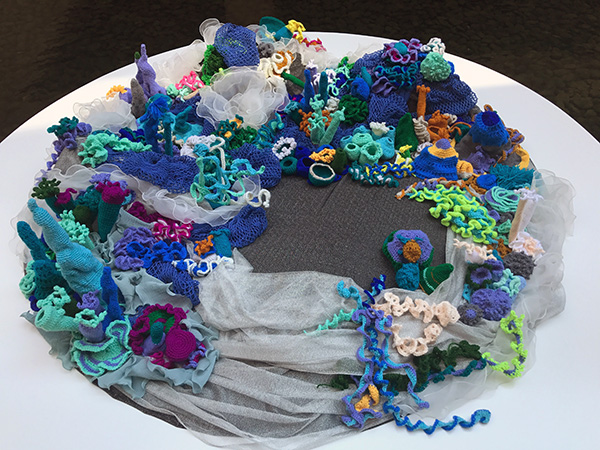
Handshake 302 “Coral Garden: Overlooked Contributions” Curatorial Workshop
People agree that art is important to cultivating a creative society, however, there is less agreement about how art enhances creativity. At Handshake 302, we believe that art praxis does not emphasize making something new, but rather emphasizes using materials already at hand in new ways. This is a slight but important difference. We are interested in the creative process more than we are interested in creative products. In fact, artists are simultaneously curious and pragmatic, asking a simple question: what can I do with this? Continue reading
iGlobalization@szurbanvillage
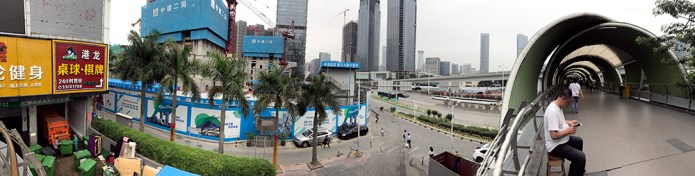
In order to talk about the ways in which urban villages are both the form and content of the emergence of Shenzhen, the mind searches for a narrative arc in the earnest hyperbole of a Sci-Fi universe where the good is still mostly good and the bad drags its slimy tale through fetid waste streams. However recycled and repurposed, we’re still talking about the contradictions that made Fritz Lang’s Metropolis so compelling. Above ground, the Metropolis boasts spires and towers for scientifically enhanced bodies that play in an Olympian stadium and pleasure gardens. These beautiful bodies can only be achieved through exploitation and guided mutation; evil is attractive. Underground, human workers endlessly labor. Unappealing and gaunt, shriveled and inert, these low-end bodies are fashioned through usefulness to the machine and dreary tenement lives.
My recent turn to Sci-Fi is (as were Mary Shelley’s and Fritz Lang’s respective turns) informed not so much by a fear of mad science, but by distress over how technology is produced, distributed and used in neoliberal cities. Technology has been central to the form and content of social polarization in Shenzhen. Urban villages are not substandard living spaces. In fact, when compared to low-income neighborhoods in other Chinese cities and abroad, Shenzhen’s villages are almost middle middle class quality. But here’s the rub. Shenzhen’s urban villages are substandard with respect to the city’s gated communities, shopping malls, and office towers–and the gap is growing.
africa it would seem, is also made in shenzhen?
For the curious, a series of posts on Ghanian entrepreneur, Desmond Koney’s visit to Shenzhen.
 Shenzhen Noted