the houhai river, dusk

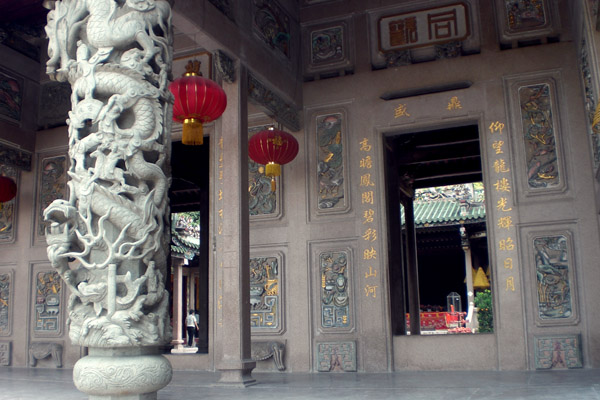
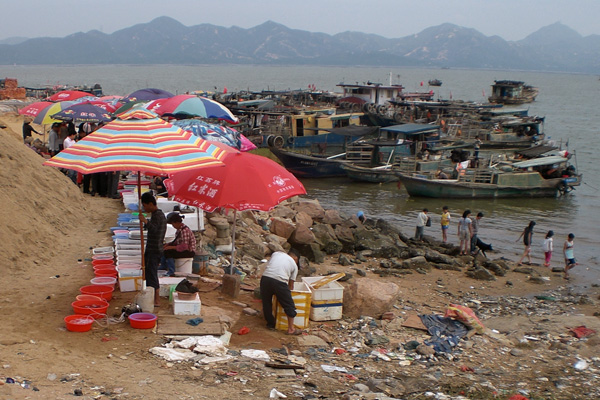
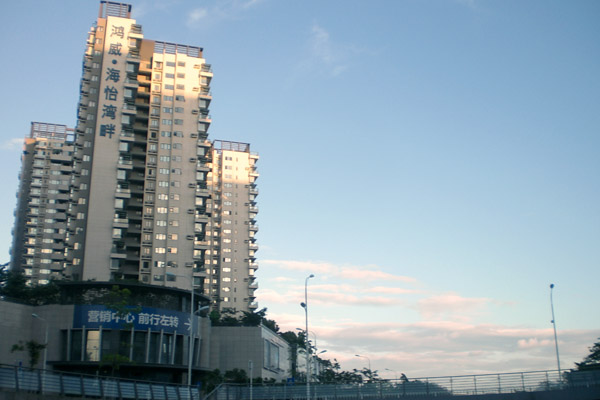
I have learned that the runoff stream that threads the Houhai land reclamation area along the southern coast of the Nantou peninsula is called, the Houhai River. It has been mapped and landscaped to accompany the futuristic luxury homes that boast both estuary and river views, and it leads to the Shenzhen Bay Park. Nevertheless, remnants of an older landscape linger, fishing families and the sand processing docks of the no longer extant Dongjiaotou pier.

This slideshow requires JavaScript.

nanling to danzhutou, impressions

Nanling and Danzhutou Village-Communities are located just next to Dafen in Buji Precinct. Walked the area today with Sarah, Carina, and Lorena. Impressions, below:

This slideshow requires JavaScript.

渔一村:of old men and the landfilled sea

Yesterday’s bloggy romance with the sea continues and although I have shifted my gaze from Cuba to Shekou, it is worth mentioning that the writers’ emphasis on masculine conquest continues; today, in episode 8 of The Transformation of Shenzhen Villages (沧海桑田:深圳村庄三十年), Chen Hong tells the story of Fishing Village 1 (渔一村), Shekou. Again, the story begins in a village, but this is also where similarities between the two narratives end. Hemingway figured human life through the isolated figure of an old man navigating the Caribbean on a rickety skiff and superstition. In contrast, Chen Hong figures humanity through the construction of ports, trading ventures and the world-making connections that they enable, suggesting that the opportunity to launch one’s skiff is itself a political decision which once made determines the fate of villagers. For those who remember the 1988 television documentary, River Elegy (河殇) which linked China’s decline and ultimate humiliation to the Ming decision to ban maritime activity, a not-so-subtle critique of Maoist isolation, Chen Hong’s passion for the sea and the [free trade] world it symbolizes is self-evident.

Episode 8 opens by juxtaposing images of Ming and Qing trade centered on Guangzhou with pictures of the construction of Shekou, reminding viewers that Zheng He (郑和) set forth from or loaded supplies at Chiwan Port at least five times. Lest the viewer forget the consequences of isolation, the opening sequence ends with bleak, black and white footage of a backwater port, overgrown and clogged with weeds, small wooden boats berthed in stagnant waters. Boom! The first explosion opens the door to new world order, which is also, new village order.

Traditionally, the villagers of Fishing 1 weren’t actually villagers but individual fishing families who lived on boats, coming onshore to sell the day’s catch. Families came from all over the Pearl River Delta forming a community through their livelihood, rather than through ancestry or even a common version of Cantonese. However, in 1959, the political decision was made to organize them as a brigade (生产大队). They were 90 households with a total population of 450 people and settled as four small production teams (小队) in Nantou, Gushu, Neilingding Island, and Shekou. The Fishing Brigade worked to modernize the fleet and in 1978 during a meeting on scientific production, Hua Guofeng actually gave the brigade a first place award. Indeed, at the beginning of Reform, the Brigade had 69 ocean fishing vessels, 72 transport ships, and 18 oxygen boats that fished the South China Sea and Pearl River Delta bringing in fresh seafood for Cantonese dishes and by 1992, had accumulated enough capital to invest in modern industrial deep sea fishing vessels.

From 1978 through 1986, the Fishing Brigade lived the socialist dream, which was a traditional Chinese dream; the men fished, going as far away as Guangxi, the women kept house, children went to school and had medicine, and all ate in a common canteen, where the work team provided delicious food, including squid and shrimp. The system was called the 8 provisions (八包). However, by the late 80s early 90s, the scale of urbanization and land reclamation meant that traditional fishing areas had been contaminated and fish breeding grounds buried, and it was impossible to continue living from the sea. Suddenly, the advantages of the sea declined as property values soared and Fishing 1 faced a contradiction that many other villages would eventually face — what to do when urbanization decimated the conditions of traditional livelihood?

Once the sea was gone, Fishing 1 had no way of making a living because it did not have any land, except for that which the government had given it for housing in 1959, including a section on Neidingling Island, which Fishing 1 decided to develop as a resort and in 1992 as part of the guannei rural urbanization movement, the Fishing Brigade became the Fishing 1 stock holding corporation. However, after Fishing 1 had already invested their accumulated capital and borrowed against the development, Shenzhen and Zhuhai began a court case over who actually owned the island. Traditionally, the Island belonged to Zhuhai. However, in 1955, the Center had assigned Neidingling to Baoan, but no one could actually prove whether or not the transfer had gone through until 2002, when a copy of 1955 decision was found. In 2009, the Guangdong Provincial government finally ruled in favor of Shenzhen’s claim to Neidingling Island. However, the case raged long enough to impoverish Fishing 1 as the joint stock corporation/ fishing brigade/ village could no longer fish and except for Neidingling had no other traditional land rights. Indeed, by 2009 when the case was settled, Fishing 1’s deep sea fishing rights had already been bought out by China Merchants, which in turn sold them to Wanxia, one of Shekou’s original land-based villages.

And so here’s the neoliberal twist in Chen Hong’s story of old men and their vanishing sea: Fishing 1 re-entered Shenzhen urban planning as part of the Together Rich Project (同富裕项目), and over the past decade restructured and invested elsewhere: an industrial park in guanwai Gongming and fish breeding farms in Zhanjiang, for example. In addition, the Municipality organized training for fishermen to learn new skills. Nevertheless, the members of Fishing 1 have not only been proletarianized over the past 30 years, but are still paying off one of the debts that fueled Shekou’s growth. After all, Fishing 1 had no rights to any of the coastal property developments that enriched both China Merchants and neighboring Wanxia Village. Instead, Episode 8 ends with exhortations — from the Municipality and from the filmmaker — for individual development and initiative, ironically and inexorably returning us to Hemingway’s sea, where old men struggle feed themselves because they have been isolated by .

For more on my obsession with Houhai Land reclamation, more entries, here. A wander through the earliest Shekou landmarks, including the Shekou and Neilingding fishing families settlements, below:

This slideshow requires JavaScript.
launching

These past few days, rain has cleared Shenzhen skies and when the sun comes out, everything sparkles. Yesterday, I followed the rays to the Spring Cocoon, which has been opened for commercial use. The walk from Coastal City to the sports center was once landscaped to assert the SEZ’s green ambitions. However, the corridor is now under construction. In the east, another shopping mall and in the west, lest we have any doubts about the Municipality’s futuristic plans, China State Construction (中国建筑) has begun laying the foundations for the Aerospace Science and Technology Square. Impressions, below; past walk when the Cocoon was under construction, here.

This slideshow requires JavaScript.

as yet shenzhen has no capital h history…

The experience of walking Shenzhen is significantly different from visiting, Beijing or Shanghai, Xi’an or Guangzhou, where the meaning of the past has already been codified, renovated, and can be consumed on a nostalgic tour. In school we learn that Beijing’s history is Ming-Qing imperial, Shanghai’s history is East-West colonial hybrid, Xi’an’s history is ancient, while Guangzhou’s history is South China sea commerce and migration. We then go to the respective tourist destination to have our knowledge confirmed and perhaps enriched by and through an appropriate activity. We walk Beijing’s hutong and the Forbidden City, drink coffee or cocktails in a stylish restaurant in Shanghai’s shikumen and the Bund, admire Xi’an’s beilin and terracotta soldiers, and wander the small shops of Guangzhou’s West Gate. Indeed, each of these tourist destinations succeeds as such precisely because the site metonymically represents the respective city’s place in China’s “5,000 years” of civilization. We leave thinking we have a deeper understanding of where we have been. Maybe we do. Most likely we don’t. But there is something reassuring in having our stereotypes confirmed, and those stereotypes are what I mean by capital h history.

Now, there are historically significant sites in Shenzhen — Old NantouDapeng Fortress, the Chiwan Tianhou TempleDongmen, and Yumin Village. However, municipal efforts to promote Old Nantou and Dongmen, notwithstanding, none of these historical sites has captured the imagination of either residents or visitors. I suspect this is in part because each of these places represents a portion of Chinese history that is already preserved elsewhere. Old Nantou and the Chiwan Tianhou Temple, for example, represent ancient efforts to develop the Chinese salt trade and settle the Pearl River Delta, but there are finer examples of that era to be imagined and seen in Guangzhou, while ancient Chinese history is more elegantly preserved in Xi’an and Jiangnan. Even the Tianhou sea cult is more closely identified with Tianjin and Xiamen than it is with South China temples and shrines. Likewise, Dapeng Fortress is an outpost of Ming-Qing military imperialism, but of a failed variety, rather than successful garrisons to be explored throughout the north.

Dongmen and Yumin Village are perhaps more representative of Shenzhen’s importance as the epicenter of early reform. However, both are historically compromised. Although Dongmin is identified with so-called Shen Kong commerce, for example, there really are more upscale malls throughout both Shenzhen and Hong Kong where one might purchase global products. And what about Yumin Village? Deng Xiaoping visited Yumin Village in 1984, inspecting one of the three-story private homes that local villagers had just built. He declared that Shenzhen speed was a good thing and that the rest of the country should follow. The 1995 exhibition to commemorate the 15th anniversary of the establishment of the Shenzhen SEZ included an installation that reproduced the interior of one of those homes, which at the time, was more luxurious than the homes of urban cadres in Beijing and Shanghai. Here’s the rub: although Yumin Village has been integrated into the Shenzhen municipal apparatus as a Luohu neighborhood, nevertheless the actual buildings that Deng saw and even the home he inspected were razed over ten years ago. There is a history board there, but nothing from 1984 remains and Yumin Village continues to function as a border urban village, with low rents for migrants who work nearby, spas and massage parlors for visiting Hong Kong people, and places where villagers play mah jong and gather to drink tea and gossip.

The absence of an agreed upon master narrative means that walking Shenzhen allows individuals to judge what does and does not represent capital h history in the SEZ. Now Shenzhen does boast upscale skyscrapers that represent achievements within this process — Guomao, Diwang, and the Civic Center all come to mind and are worth a visit. Those wanting to see the “real” capital h historic Shenzhen, I suggest visiting either an industrial park or an urban village. Early 80s work unit housing in Luohu and Shekou are also great examples of how industrial urbanization transformed the area. Personally, however, I believe that if Shenzhen has a place in China’s 5,000 years narrative it is as an epicenter of rural urbanization, including transformation of the local environment, proletarianization of rural migrants to SEZ factories, and the forms of urbanization that returned workers have promoted or their remittances enabled. However, even after over 30 years of reforming and opening Baoan villages, the city is only just starting to come to terms with this legacy and most villages, even the most famous such as Baishizhou are scheduled to be razed. All this to say that as yet, the meaning of Shenzhen’s cultural and historical inheritance is still up for grabs because we are only just starting to come to terms with the urban legacy of Reform and Opening. This means that as yet the city has no capital h history and no corresponding historical sites that one can visit and say, “Yes, I’ve been to Shenzhen and I know where I’ve been.”

Walk anyway. The Shenzhen you experience will be only loosely tethered to stereotypes about China and you might make something else of it. Below, impressions of a recent walk in Fuyong.

This slideshow requires JavaScript.

the dragon king

At the foot of Fenghuang Mountain, Fuyong, there is a small temple to the Dragon King. The Wens of Baishixia renovated the temple in 2003. Nearby, the outer row of factories in the Dragon King Temple Industrial Park have been given a faux traditional facade. Above, squatters inhabit small, concrete buildings at the foot of the stepped lychee orchard. Impressions.

This slideshow requires JavaScript.

The Value of Urban Villages

US American real estate developers chant, “location, location, location.” In Shenzhen, primary locations open for development are actually urban villages slated for old village renovation — redevelopments that involve the final transfer of village held property to the Municipality.

In a Jingbao article on the future of Nanshan District, Li Xiaogan, recently appointed Nanshan District Secretary, noted for example, “In constructing a global district and promoting urban renovation, Nanshan District will have several advantages over the next few years. First, the largest urban renovation project in Guangdong Province – Dachong Urban Village, with a total project area of 683,000 square meters; second, the urban renovation project for the five villages of Baishizhou in Shahe, which is currently being planned, also has an area of over 650,000 square meters, and is again one of the largest in the Province; third, located in the north of the District, the three Shuiyuan villages are within the water conservation and ecological conservation red lines, and are thus relatively backward, however, they are also now in the planning stage of development; forth, the old Xili Market, which we are planning to convert to an urban complex; fifth, the banks of the Shahe River, where we will take international bids to create an ecological cultural corridor, and; six, Nanshan Old City, which with everyone’s support we hope to return to its status as Shenzhen’s historical and cultural root, by resituating all residents and completely rebuilding.”

Recent impressions of Baishizhou, below:

This slideshow requires JavaScript.

Langxin: Impressions of Rural Preservation

I first walked through Langxin in 2006 and returned yesterday to discover that the area had been designated a historic preservation area in 2007. Unfortunately, this time, we were unable to talk our way into the Ancestral Hall, even though we did talk our way into several homes and up to the roof of a three-storey walk up. The higher perspective gives a broad impression of the former lay of village housing. During the Mao-era, the round buildings were used for grain storage. Of documentary note: the Shiyan Precinct Administrative Law Enforcement Building is located in the Together Rich Industrial Park (同富裕工业区), from the “Together Rich Project” that began in early 1997 in a first effort to ameliorate uneven development within Shenzhen. Impressions, below.

This slideshow requires JavaScript.

return of the bivalves

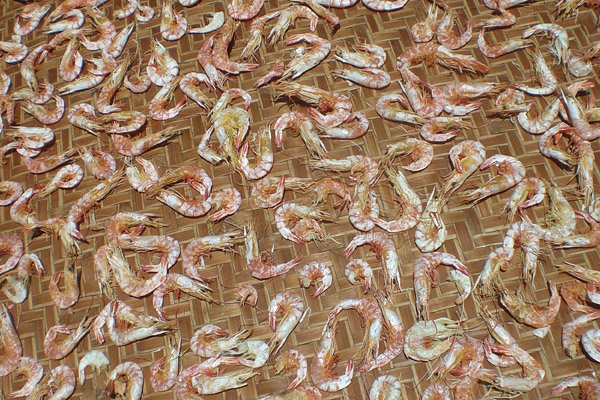
Yesterday, I walked around Dongjiaotou, which in days earlier served as a small port for building materials coming in from Foshan and other Delta cities. Pedestrians jumped the fence to get to the small strip of beach where several families were selling oysters. In 2007, Nanshan District removed all oyster cultivation and processing from the Houhai coastline, especially around the Seaworld area (pictures from 2003 and 2007, here).

This slideshow requires JavaScript.

hakka borderlands: xiawei and shiyan

On Thursday, I joined a group of architects and students from the Future Cities Laboratory on a rainy guanwai trek along Bulong Road, which parallels the second line. This particular trek interests because it hints at generations of ongoing cultural transformation both as industrial manufacturing has spread and as Cantonese and Hakka urban villages have renegotiated collectives identities over the past 150 years.

We departed from Huaqiangbei and crossed at the former Buji Checkpoint, which today has been partially cleared to make room for the Buji subway station (Longgang Line) although cars still lined up to pass through check booths. Directly north of the erxian boundary, Xiawei Village (吓围村) handshakes huddle tightly, giving the impression of an ordinary new South China village. However, the entry gate and main hall of Xiawei’s ancestral hall remain, suggesting that at some point the village had enough collective funds to erect a substantial building. According to an old worker who was organizing collected paper products in the compound plaza, villagers continue to burn incense for ancestors during the Spring Festival.

We then headed west to the precinct headquarters of Shiyan. During the Mao-era, this area also served as the headquarters of Shiyan Commune. Located between the Kowloon-Canton railroad and Guangzhou Shenzhen corridors, Shiyan has remained relatively poor when compared to precinct headquarters at Buji or Shajing, for example. Nevertheless, it has Mao-era flat housing, Reform era factories, and two generations of single-family homes and handshakes. More to today’s point about Hakka borderlands, Shiyan is also interesting because it is located along Baoan County’s traditional border between Cantonese and Hakka cultural regions. Thus, although the Ye Ancestral Hall boasts Hakka exhortations of Confucian morality, the structure itself, like many of the areas older flat buildings are Cantonese style.

Impressions:

This slideshow requires JavaScript.