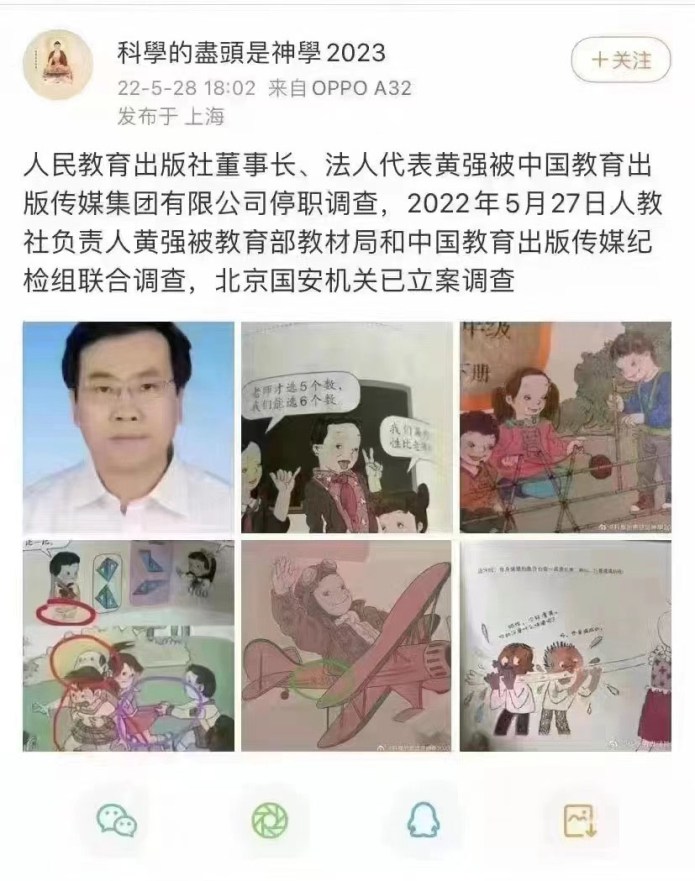
Turns out–after an investigation–that the People’s Education Press has been using the questionable photos (see previous post) for over ten tears??! There are three theories of why the escalation of complaints hinge on rumors of turmoil at the top.
The ideological direction of the country has shifted;
The purpose of the scandal is to redirect public attention from larger issues, and;
The fight to control the profits from the textbook monopoly has broken out into the open.
The conclusion? No matter what the primary reason for media focus on textbook illustrations might or might not be, the actual situation is most likely related to the 20th Party Congress in October this year.
So, on Friday, May 27, the People’s Education Edition of forth grade textbooks set the internet ablaze. Seriously, despite everything else that was going on in the country–bank failures and Covid-crazy, rumors of upper level infighting and a tanking economy–the entire country was united in outrage over textbook illustrations. And frankly, the disgust is understandable. It’s as if some cynical artist whose work deconstructs authoritarian childhood was asked to draw the illustrations for books aimed at ten-year olds. There’s a whole level of critique going on that may not be accessible to children, even as their parents moan about aesthetic standards. “Ugly, ugly, ugly,” the crowd screams. And from where I sit that seems to be the point of the images. Just not the place? Or audience?
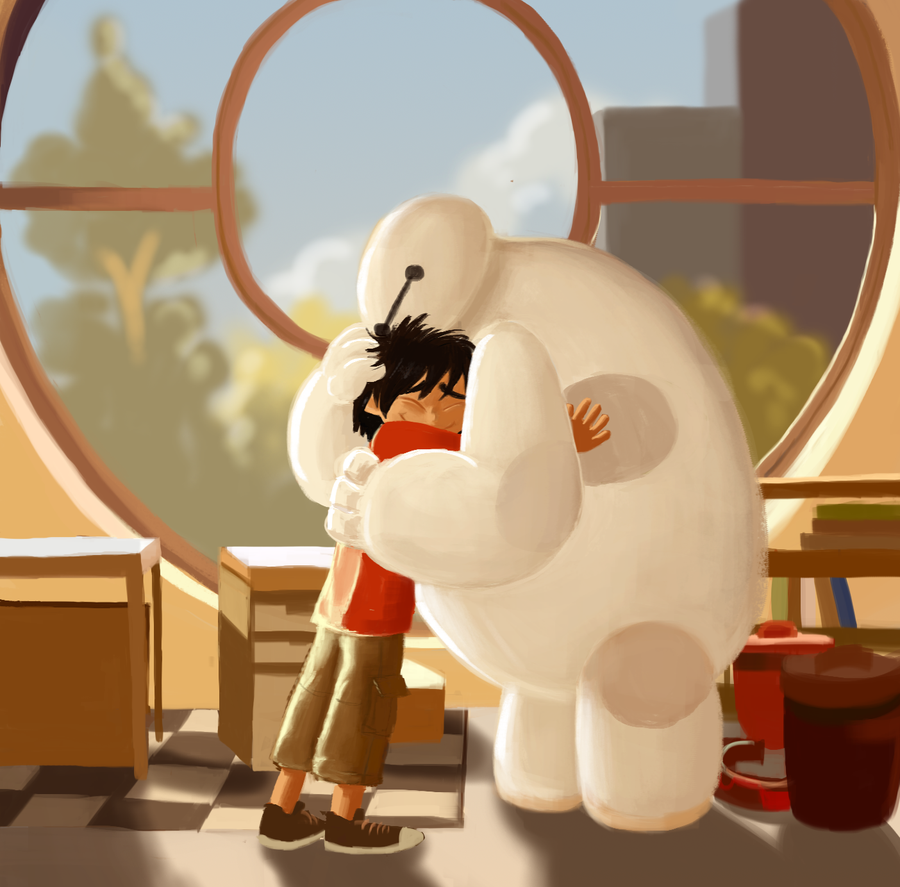
“Big Whites (大白)” are the omnipresent and seemingly omnipotent figures of China’s 2022 lockdown, so named for their white full-body hazmat suits. Big Whites have been the Chinese government’s social interface for managing the Omicron outbreak. Big White teams consist of medical workers, police officers, community office representatives, and volunteers who come (as the government repeatedly emphasizes) from all walks of life. In their capacity as service providers, Big Whites conduct COVID tests, deliver food to residents in locked-down buildings, and coordinate other public services within a designated area. However, Big Whites are also the public face of COVID security. They conduct building sweeps for testing holdouts, they act as gatekeepers at locked-down estates and neighborhoods, and they patrol locked-down areas to ensure everyone else is in their homes.
The moniker “Big White” has a double origin story. First, it derives from the gear that the management teams wear. In addition to being fully masked, hands are gloved and shoes are covered. There is a turquoise blue stripe which runs along suit seams and some Big Whites have personalized their suits with magic marker inscriptions. Second, “Big White” is also the Chinese translation for the plus-sized inflatable healthcare robot named Baymax, a character from the 2014 Disney film Big Hero 6. In the film, Baymax teams up with 14-year-old robotics prodigy Hiro Hamada to save their hometown San Fransokyo from an evil supervillain. Baymax and Hiro team-up with four other nerds to form a band of high-tech warriors against evil uses of technology especially biotech.
In a 23 March post on the English language WeChat account, EyeShenzhen, author Li Dan explained the connection between pandemic work teams and an animated film: “Chinese netizens use it [Big White] as a nickname for frontliners who are fighting the COVID-19 pandemic because they wear white protective coveralls on the job, and they work selflessly to protect the safety of the public.”
This essay touches upon two interrelated issues in the social media representations of Big Whites in Shenzhen—the gender of caregiving and the role of animation in conceptualizing pandemic management.
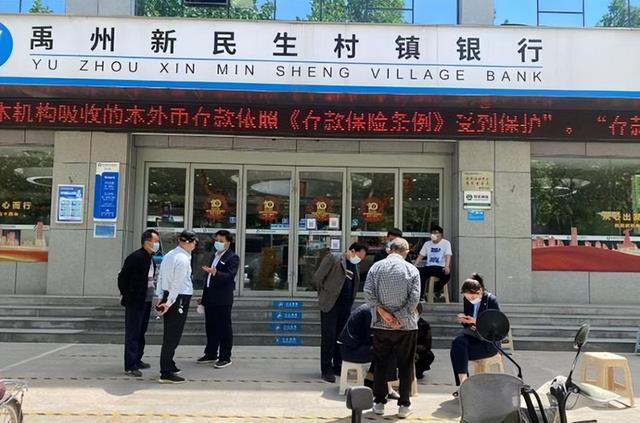
On May 23, protests in rural Henan brought national attention to the fact that five rural banks in the province–禹州新民生村镇银行、上蔡惠民村镇银行、柘城黄淮村镇银行、开封新东方村镇银行、安徽固镇新淮河村镇银行–are no longer allowing clients to withdraw savings. Over 2,900 clients have tried to access over 1.2 billion yuan, and there are reports that this is just the tip of the iceberg because many people have bought financial products that are held by these banks. Estimates suggest that millions may have lost billions. So what’s happened? Where’s the money? And why are people in Henan protesting at banks?
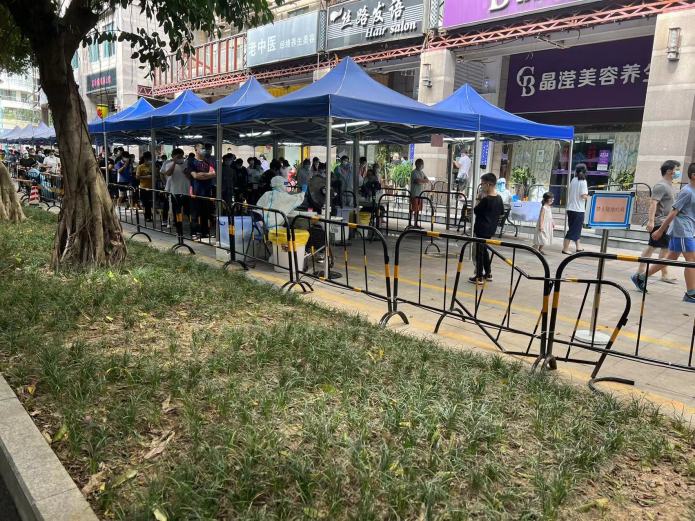
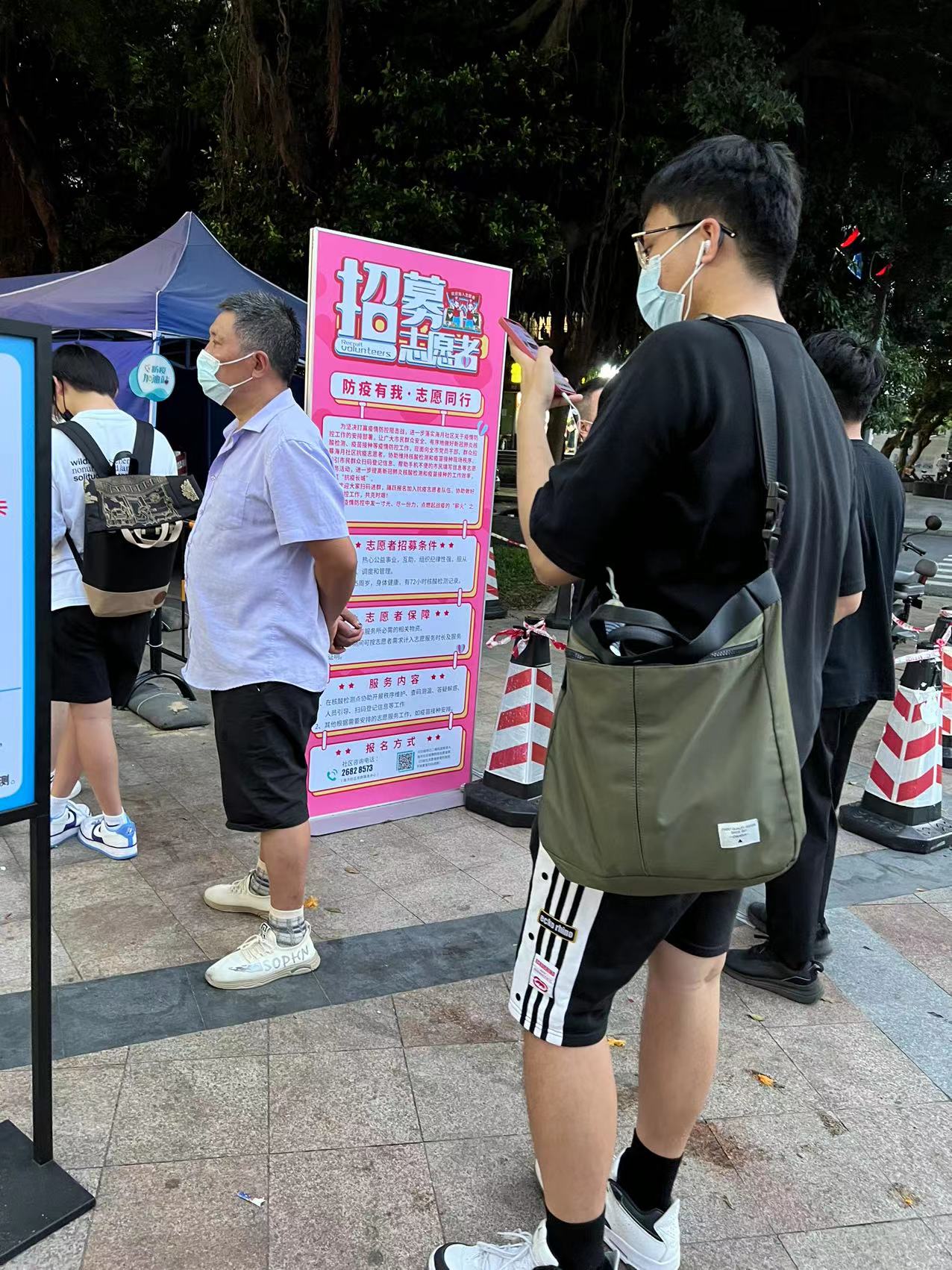
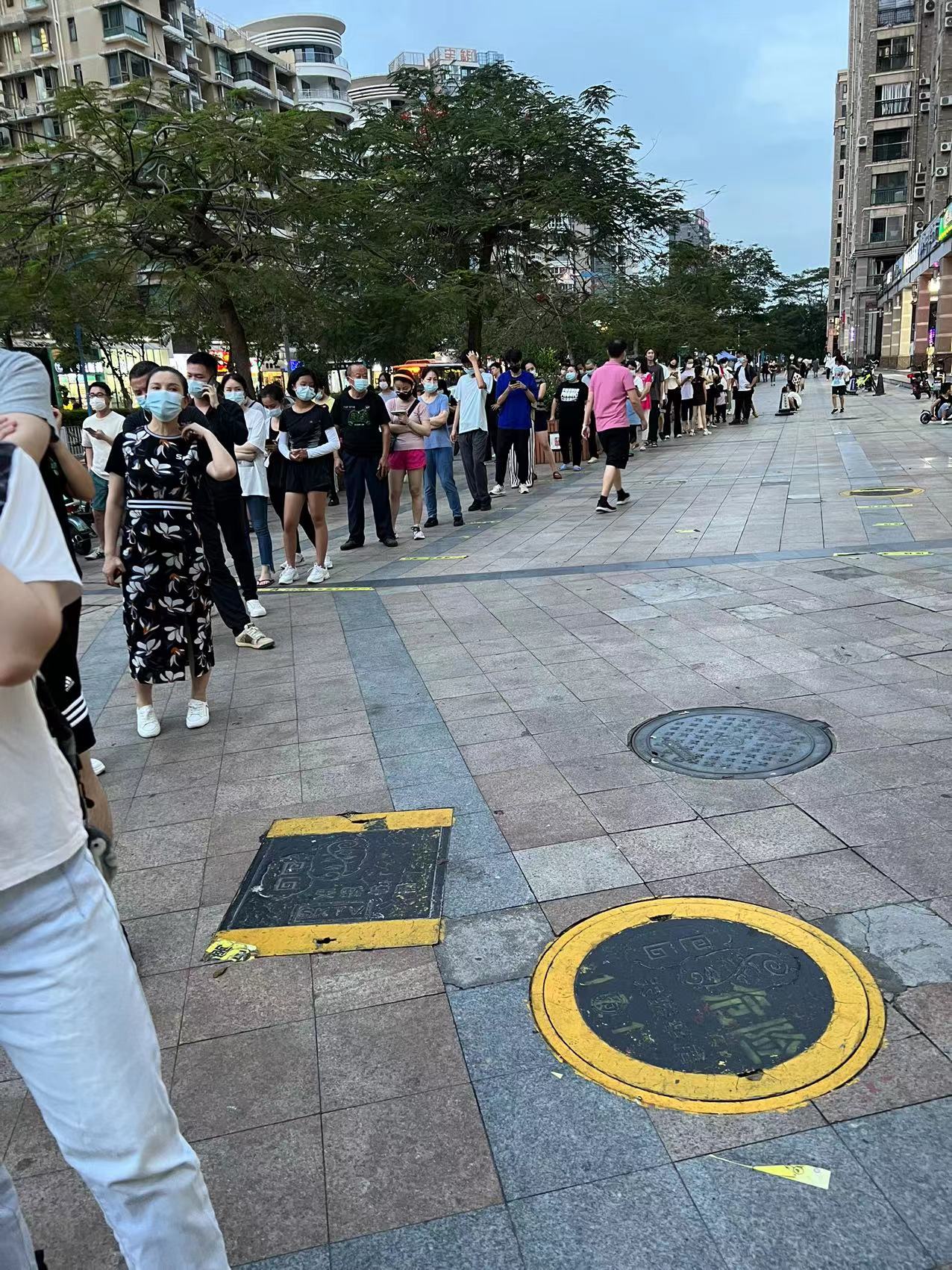
I’m not sure if Shenzhen has settled into its new normal, but it does seem that zero-Covid is trying to be low-key in a city where 72-hour negatives remain mandatory for public transportation and buildings? Advertisements for volunteers, for example, are bright pink and non-threatening. Join and help, they invite ordinary citizens to participate. What’s more, while the volunteers who coordinate test lines are masked and gloved, nevertheless some wear the unmistakable red vest of Shenzhen’s volunteer corps, rather than being covered head-to-toe in white hazmat suits. At the station were I get tested, the only people wearing hazmat suits were the medical personal swabbing throats (or ‘poking’ 捅 as the vernacular calls it). The overall effect downplays any threat to public health. In fact, yesterday, many of those who walked or jogged past the lines to get tested were not wearing masks. Instead, as the unmasked went about their ordinary lives, those of us standing on line (masked, of course) performed compliance. And frankly, the overall feeling was not exhaustion, but boredom. Swipe left. Poke. Poke. Swipe right.
Body shaming and its ills are familiar: eating disorders in the pursuit of an ideal body-type; feelings of inadequacy and low self esteem caused by fat-phobic, misogynistic, racist and anti-trans bullying; and the intense pain and despair that come from being isolated from those around us simply because of who we are. Indeed, shame is an important component of social control precisely because it shifts responsibility for indifferent and cruel treatment of others from the shamer to the shamed. The logic is insidious, direct and more often than not internalized before we finish elementary school: I am treated like shit because this body is fat/ ugly/ female/ trans/ black/ old…
Recently, I’ve realized that mandatory covid testing manipulates body shame to achieve political and social goals. It has also changed previous expressions of care for family and friends.
Inquiring minds want to know: How does zero-covid play upon extant forms of body shame in Shenzhen? Well, if you lived through the US AIDS epidemic in the 1980s and 1990s, you have (because you read Susan Sontag) a pretty good understanding of how illness and shame work to prevent the ill from receiving necessary care, while allowing the healthy and the powerful to justify their indifference to the pain of others. Below, I track how regulation of over the counter cold medicines is part of a bio-governance regime that has made it shameful to catch a cold.
Shenzhen has beautiful coastlines, especially in Dapeng District, where the coastline hasn’t been over-reclaimed and recreational areas still remain. Here’s the the thing, however. In order to generate income, most Dapeng beaches have been stutter-stepped developed within the city’s tourist industry. I know, this is what capitalist inclinations do to coastlines–remake water’s edge into commodity. So, in a manner of speaking, nothing new here. Why then visit Shayuchong 沙鱼涌 and/or Xichong 溪涌? Well, two reasons (in addition to going for a swim). First, these beaches make visible what a 涌 is, allowing us to imagine life before agriculture, when coastal dwellers first settled the area 7,000 years ago. Second, capitalism packages history and geography in order to profit in the present. So, when we’re visiting Shenzhen beaches, we’re not only looking at what sells, but also what is allowed to be sold, trying to figure out how red capitalist tides have restructure the coast since the late 1980s.
Both Shayuchong and Xichong are located in Kuichong Subdistrict (葵涌街道), which traverses the Dapeng isthmus, facing Dapeng Bay in the south and Daya Bay in the north, map above. Impressions from yesterday’s trip to Shayuchong and Xichong, below.
Yesterday, I participated in a day-long conference to promote environmentalism. I think I was invited for some combination of two reasons: I’m a recognized foreign friend of the city and anthropologists tell better stories than scientists do. Although technically, I’m a scientist, too! (Social science for the win–hee!) Anyway, the other guests have been diligently working alongside and via the government apparatus to create green spaces throughout the city. Event host, Nan Zhaoxu 南兆旭, for example, wrote The Shenzhen Natural History Encyclopedia 深圳自然博物百科 and event organizer, Meng Xiangwei 孟祥伟 has been director of the OCT Wetlands Field School since its establishment seven years ago. Their efforts have been instrumental in elevating district-level events to municipal, provincial and even national levels, not only contributing to Shenzhen’s status as China’s greenest first-tier city, but also to getting environmental sustainability on the city’s urban planning laundry list.
So, now you’re wondering: what was my takeaway from the event? Just how sustainable is Shenzhen’s environment? And what can environmentally conscious people do via an apparatus that is structured to sustain a political environment, rather than an economic let alone non-human environment? Unfortunately my thoughts are not so grand. Instead, I ended up thinking about the cultural forms of environmentalism:
Yesterday I spoke with a cabbie about the future. He was excited to learn that I hold a US American passport, and quickly reassured me that even if many Chinese people dislike the USA and its residents, he felt otherwise. He wants China to become more democratic and for more voices to be heard in political conversations. He emphasized that presently China only has one voice, making everybody else what we in the US would call “sock puppets” and in China are sometimes called “marionettes” or 傀儡. He also felt that Shenzhen’s housing market made it impossible for anyone not rich to purchase a house and make a life for themselves, so why not “lay down” 躺平. If you have a place to lay your head and enough to eat, why bother with marriage and children?
I recently downloaded this sheet of Covid stickers and emoticons. I really like them because they reference specific features of Shenzhen’s experience during the February and March 2022 Omicron outbreak. However, I haven’t yet used any of them because I’m feeling nervous about being called out for cultural incompetence if I misuse them. Or even more scary is that I won’t be called out and I’ll just continue making the same mistake over and over again. That said, I don’t actually want to use emoticons enough that I am willing to learn how to use them by stumbling along and making mistakes. And there’s the rub: emoticons don’t actually resonate with me. They’re just part of a dialect that I recognize has overtaken me, but even so, I haven’t really put in any effort to learn.
So why don’t I emote-icon with confidence? What am I missing when chosen family and friends insert emoticons into a dialog? And why do I feel more comfortable writing in 普通话 than I do texting in either English or Mandarin?




 Shenzhen Noted