village·culture

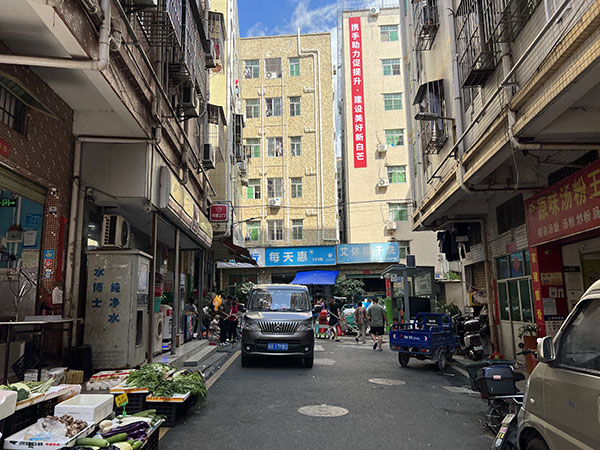
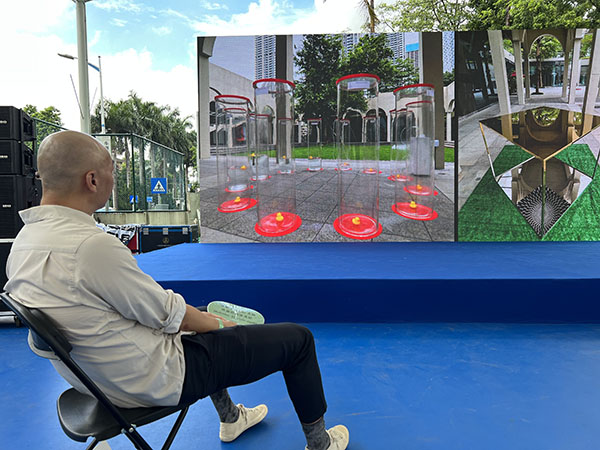
Like many events in Shenzhen (and yes I’m looking at you, UABB), the china international cultural industries fair was first held in central areas in the inner districts and has subsequently expanded into the villages. Indeed, many of these events are now explicitly used as venues to reimagine development or even urban planning. This past weekend, I participated in two such events. One was held in the New Who Art Village (鳌湖/牛湖) and the other in Jingkou Experimental Center (迳口).

Continue reading

同组: unified rentals

A few weeks ago, there were protests in Baimang (白芒) Village about the new “unified rental” plan. (Perhaps “consolidated” would be a better translation?) In a nutshell: the government will become the only second landlord in a village, upgrading rentals and then renting them out, preferably to college graduates. The protests came about (as in Baishizhou four years ago) because the forced eviction notices came out in late May early June, which is test month. Students and their families were being evicted after intake for the 2023-24 school year had finished, meaning that many would not only loose their homes, but also their place in school. Also as in Baishizhou, the new plan threatens family life because there are few places where families can live together and send children to school. At the moment, the village is going through a “cooling down” period, but it seems that once school is out, the process will proceed.

Sigh.

Located in what used to be a huge swathe of lychee orchards, Baimang is primarily a residential village, where commerce is geared to the everyday needs of renters–small markets and shops selling plastic household goods. At the center of the village are old village buildings, including an ancestral hall and two towers (碉楼). These row houses are surrounded by several generations of new village housing–concrete villas and tiled handshake buildings. Once one of the second line border villages, Baimang is now within Nanshan District’s “Innovation Corridor” and offers relatively easy commutes to University Town and High Tech Industrial Park.

后海大道X蛇口新路 the houhai avenue X new shekou road intersection

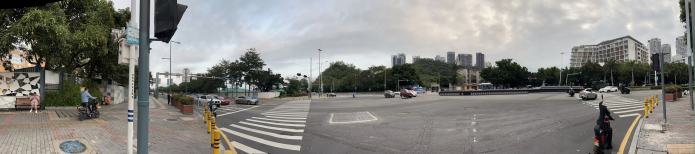
The history of the city is underfoot and can, when the light is clear, old waters shimmer into awareness. Twenty years ago (give or take) Houhai Avenue and New Shekou Road met at a 90 degree angle. To the northeast was the entry to Dongjiaotou Port, where sand, building materials and “unauthorized stuff” were brought in. The port entry faced a gas and oil supply station, which was located at the northeastern foot of Shekou Hill, behind the hill, away from the water, where there were docks for ships to anchor.

Today, I noticed the intersection is an intersection. Both the entryway to the port and the gas supply station are under construction, as is the former dock area. The northeastern and northwestern corners of the intersection remain unchanged and thus are showing their age. In the northeastern corner is the Shekou #4 pump station, which was built as a work unit compound. In the northeastern corner is an older Shekou administrative building that looks abandoned?

Point du jour: the intersection is an uncanny reminder of the coastline that is no longer. Walking west along New Shekou Road, you enter that once-upon-a-time coastline. At Wanxia Road, you turn north to enter Wanxia Village and south to enter Fishing #2 Village. A few meters ahead is Old Shekou Street, follow it west to the Industrial Zone. Below, pictures of the intersection four corners. Imagine salt in the air, the approach of ships, and workers on bicycles navigating muddy roads…
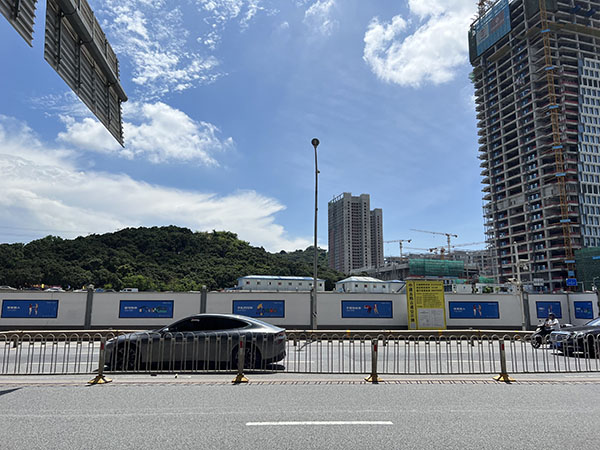
images from cloud city

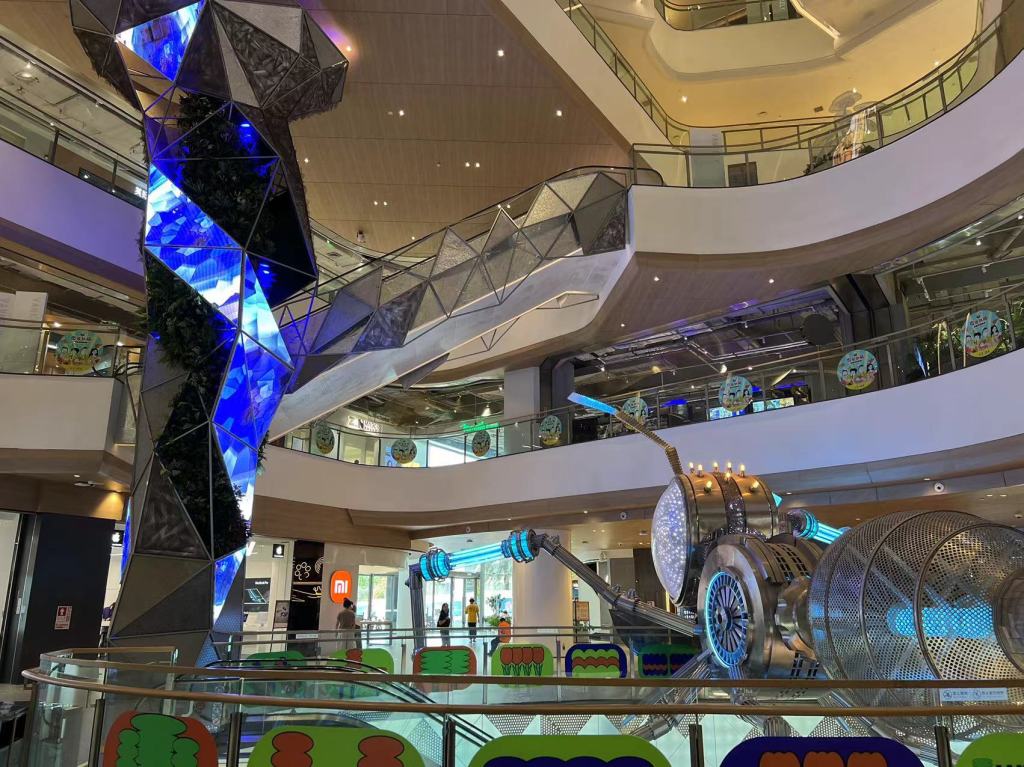
It’s been a few years since I roamed Liuxiandong (留仙洞), which was an industrial area and then (briefly) a creative area. I remember in 2006 or 7, it was so cheap to rent that artists were renting several hundred meters for a few 1000 a month. Now, however, it is cloud city, a large Vanke project that looms on the horizon like a rendering.

迪玛希 qudaibergen

So, six years after his appearance on “歌手 (The Singer),” I finally saw the youtube of Dimash Qudaibergen’s performance of Vitas’s “Opera 2.” Where have I been? His voice. His presence. And yes, his anime vibe. Seriously. If this was the kind of globalism with Chinese characteristics that Belt and Road was about, I’ld be walking the walk. But. Today, I’m grateful for the convergence of events that brought “进口小哥哥 (imported bro)” Dimash Kudabergen to Hunan TV in 2017.

here’ the thing: for virtual surveillance to succeed, you still have to mobilize people on the ground

This morning I went for a walk through one of Nanshan’s park. About 50 meters ahead of me on the path, a woman in sporting gear was kneeling with her camera held to film her friend, who was also wearing coordinated sportswear (pastels) jog toward me. They waited for several elderly people to walk past and then “action!” I waited for the jogger to pass me, but both she and the videographer wanted to film me walking past. Was I really that much more attractive to their Shenzhen vision than the grannies? When I refused to be filmed, the woman shut off the function and commented, “Wow! Your Chinese is really good.”

Continue reading

huangbeiling

Yesterday, I walked Huangbeiling, which is located on the eastern section of Shennan Road. Before the construction of the subway system, Huangbeiling felt like the end of the accessible SEZ; there was more beyond, but getting there required a car or plans for a day trip. Today, Huangbeiling is a major transportation transit hub, linking the downtown area to the eastern coast.

Looking west along Shennan Road East from the Huangbeiling bus station toward Hubei Village and Dongmen.

Huangbeiling still feels like a golden era urban village, albeit recovering from Covid shutdowns. The layout of the village is against and up the Wutong Mountain Range, with enough nooks and crannies for unexpected encounters: a household temple to Guanyin, a mountain park with feral cats hanging out in tree branches, and good, relatively cheap food.

Sixteen years ago, one of the earliest Fat Bird guerrilla performances was held at the Huangbeiling pet market. Dogs and cats were just becoming fixtures–like cars and branded items–of the middle class Shenzhen lifestyle. Fat Bird “rented” a large dog cage for about five minutes before security guards and village leaders appeared and asked us to leave In the video of the post-performance interview you can also glimpse what this section of Shennan Road used to be like. After the performers were asked to leave, we jumped on a bus and went across the city to Chiwan. The short performance gives a sense of both the transformation of the area, as well as the relative openness of the city at the time compared to the present moment.

302 pops up at OCT loft craft fair

So, this weekend we’ve brought “Mahjong Parlor” to the Overseas Chinese Town craft fair. Its our second 10th anniversary activity/ exhibition (in the palm of your hand). If you have time today or tomorrow, please stop by.

shangwei: the other artist village

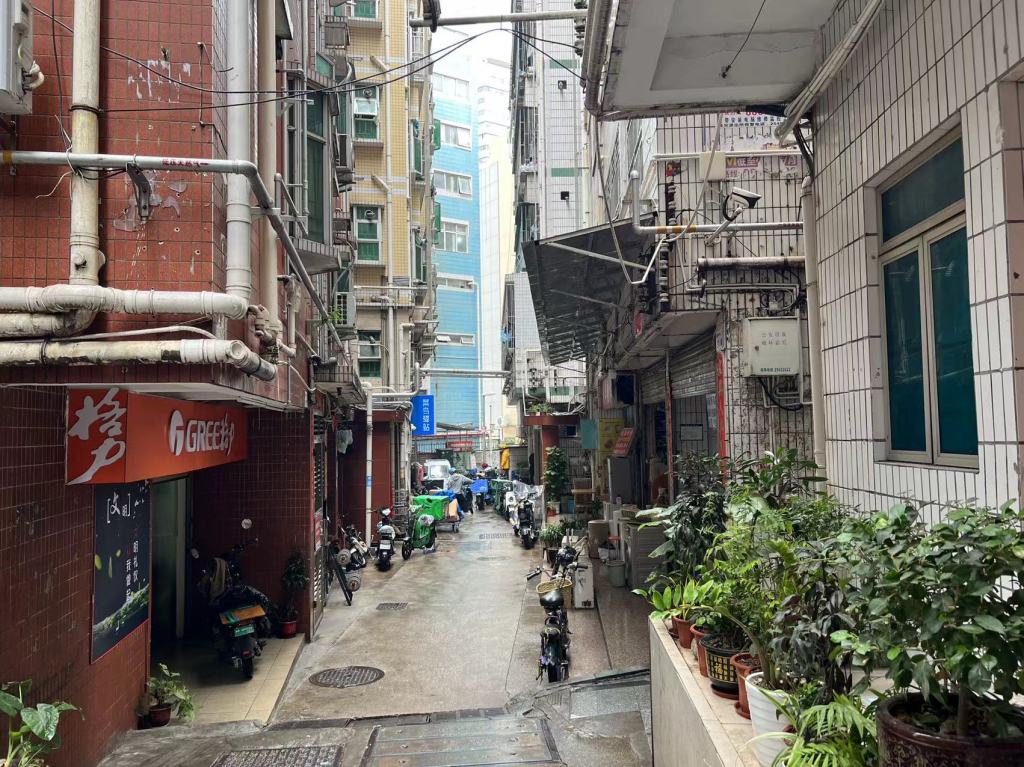
Shenzhen has more art-adjacent villages than one might think. There’s Dafen, Aohu, Wutongshan, and Shangwei (上围). There’s also Baoyuan, which is not an art village per se but located next to the F518 space. So. You decide. 4? 5? Do we also include any of the villages that have veered into creative industries? Guimiao, the village next to Shenzhen University and now crumbling to the excavators of progress, for example, was once home to artists and bibliophiles. Anyway. Shangwei.

Continue reading

li liao: labor at PAM

I went to the opening of Li Liao (李燎)’s solo exhibition, Labor (劳动) at the Pingshan Art Museum. Li Liao lives and works in Shenzhen, where he and his wife are working off their large mortgage. When his wife decided she wanted to start her own company, Li says that he decided to work as a delivery boy in order to pay off one month’s mortgage payment. It took him six months to earn his keep, so to speak.

Continue reading