material and spiritual traditions. thoughts?

Long ago and far away, I wondered when History would enter Shenzhen’s bildungsroman. And now that it has, it’s interesting to see how deeper settlements have emerged as roots for contemporary Shenzheners. The original SEZ–now the inner districts (关内)–especially Luohu (Dongmen) has become the city’s connection to Hong Kong. Indeed, it is still where you go if you want to speak Hong Kong Cantonese and eat delicious Cantonese and Chao-Shan style foods. In the outer districts, “Longgang” (and I’m using it in its circa 1990 designation, rather than picking through the new districts) is home to Hakka traditions, which are housed in the area’s great compounds (围屋、世居). In Bao’an (and yes, as a cultural homeland, we’re talking about the sliver of villages that stretch north-south between the reclaimed west coast (now Qianhai) and Bao’an Boulevard), ancestral halls are flourishing and traditions like lion dancing have been elevated to national immaterial culture status (上川黄连胜星狮舞). The Huang alliance comprises eight troups, extending from Shanghe to Fuyong.

What I’ve noticed is that this geographic distribution assumes different historical subjects which are all mushed together into some kind of “Shenzhen” identity. The implicit subject of history in Luohu, for example, are the cross-border entrepreneurs (个体户 mainly from Chao-Shan area) and their Hong Kong clientele (many who also originally hail from Chao-Shan). This first generation came in the early 1980s and transformed the old market into a gritty cross-border playground a la Tijuana. In Bao’an, the villages (now communities under a street office) have cultivated and paid for the continuation of their traditions, including pencai (盆菜) banquets, the birthdays of divinities and founding fathers, and celebrations at various scale. In contrast, in the Hakka areas, various levels of government have assumed responsibility for the compounds and are using them to promote new kinds of high culture. Pingshan Art Musuem, for example, includes the Dawan Compound (大万世居) as a satellite exhibition hall, while Longgang District has transformed the Hehu Compound (鹤湖新居) into the base of its cultural think tank, hosting outdoor lectures underneath shade trees.

So, thoughts du jour are more random associations that still make a kind of sense. Shenzhen’s culture and history are being reworked in ways that both deploy local cultural geographies and map along the city’s historic interest in establishing a new material and spiritual culture. In Luohu, the early Special Zone is re-emerging in new forms of (admittedly cleaned up) cross-border consumption; Bao’an is emerging as the locus of South China Sea diaspora connections (the lion dance, for example, is a major competition in the region), and Longgang compounds form a material platform for high end civilization, where the city’s “new guests” can strut their cultural stuff.

shenzhen’s population, circa october 2022

What is the population of Shenzhen? This question remains tough to answer because there is the official hukou population, the official long-term population, and the population of everyone who lives here or is here… Anyway, according to the Shenzhen Statistics bureau website, in 2022 the city’s population was 17.66 million. However, according to journalist Nan Zhaoxu, who does wonderful work ferretting out those bureaucratic nooks and crannies where alternative truths might be found, on Jan 1, 2022, the city processed 22.19 million covid swabs, making the difference between the official and resident populations about 4.5 million souls. Long story short: Since the mid 2010s, I have thought of the city as home to 20 million people. I am now bumping that figure up to 22 million.

This may mean that ways of counting people are finally catching up to the city’s actual number of residents because both population turnover and growth seem to have significantly slowed. However, it may also be the case that different bureaus have different forms of legitimacy as well as quite different relationships to the city. Public health, for example, was tasked to test everyone in the city. In contrast, education bureaus are only responsible to official youth. In this sense, the city’s “population” is the result of bureaucratic actions (such as registering people), rather than a group that exists as such.

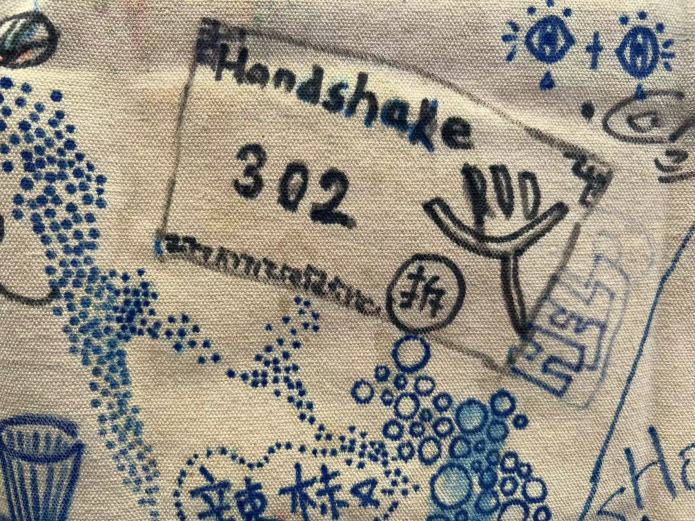
handshake 302: a baishizhou retrospective

I wrote an article about the awkwardness of Handshake 302’s Baishizhou praxis. It came out in 碧山 14, January 2024.

a look back

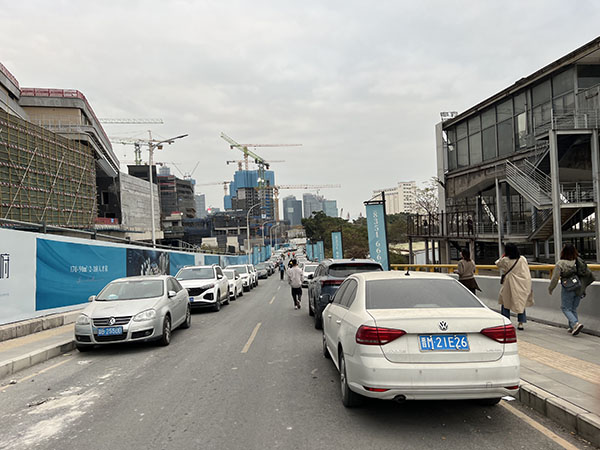
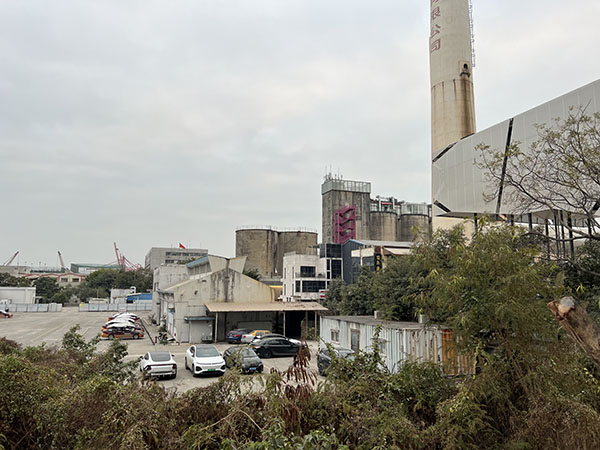
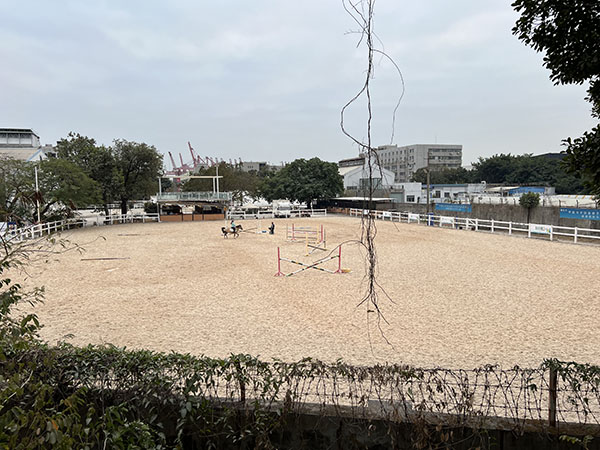
You may remember the 2013 UABB the Value Factory, which aimed to place Shekou once again at the heart of Shenzhen culture. Well, today I went back, and its all real estate, complete with a horse-riding practice area. So, first post of 2024 is just a note that changes changes and more. Changes.

singleton take-out: a restaurant owner’s thoughts on the take-out economy

Before Shijie and Dafu opened their restaurant, 「主局·韩式炸猪蹄」, they had decided not to offer takeout service. Many of their friends have told them, “if you don’t provide take out service from your restaurant, you’ll never survive in Shenzhen.” Handshake 302 was curious to hear their story and to understand the reasons behind their decision. We also wondered, “how important is takeout to an individual restaurant owner? Can a restaurant survive without offering takeout service?” Consequently, we invited them to be the special guests of the third edition of Singleton Takeout. Frankly speaking, we learned a lot from their honest thoughts about their new endeavor. 

Continue reading

singleton take-out: no free lunch!

Its official: Liu He has made take-out ordering skills. On Saturday, September 23, he ordered a rich and satisfying meal for participants in the second edition of “Singleton Take-out.” What’s more, the selection of Chinese and western foods came with different condiments, meaning that during the handicraft part of the event, there were many different kinds of packaging to use. 

Continue reading

luohu landmarks: the border as an apparatus of integration

The Shenzhen-Hong Kong border at Luohu manifests the contradictions and aspirations of integrating the two cities. On the one hand, the border has been solidified with concrete and barbed wire, while on the other, the border is presented as an easily accessible gateway to a modern shopping experience. Indeed, the concrete and barbed wire fence that lies parallel to the border is located directly behind Luohu Plaza, as seen in the pictures below.

Continue reading

bogang, shajing, bao’an, shenzhen

Shajing is a large subdistrict in northern Bao’an. Until the road system took shape and the second line ceased to operate as a strict boundary (both circa 2003-4), most locals went to Changping, a market town in southern Dongguan when they wanted to purchase or enjoy those things that were only available in a town. Historical Shajing comprises three main areas: the oyster settlements, Bogang, and Wanfeng. Indeed, one of the pleasures of visiting a Shajing neighborhood is not only its architectural and cultural diversity, but also the reminder: Shenzhen has only become important recently. Historically, the largest settlements were located along the northwestern coastline in the Fuyong-Shajing plain.

Continue reading

ciao! nantou city

What does the invention of Belt & Road culture look like on the ground? Approximation du jour: it looks like a mash-up of classical European music, traditional Chinese martial arts, and a yearning to explore and trade and understand.

Continue reading

the cultural geography of xixiang

The number 1 subway line stops at Pingzhou (坪洲), which once upon a time was a sandbar near the coast of the Nantou Sea. The station is at the edge of Qianhai, but near the former center of restored Bao’an County. The county seat of restored Bao’an was Baocheng (Bao City)-Xixiang, with administrative functions in Bao City and commercial functions in Xixiang. Indeed, the layout of Bao City-Xixiang echoes the layout of Luohu-Shagbu, with a new town going up next to the older market town.

Continue reading