I wrote an article about the awkwardness of Handshake 302’s Baishizhou praxis. It came out in 碧山 14, January 2024.
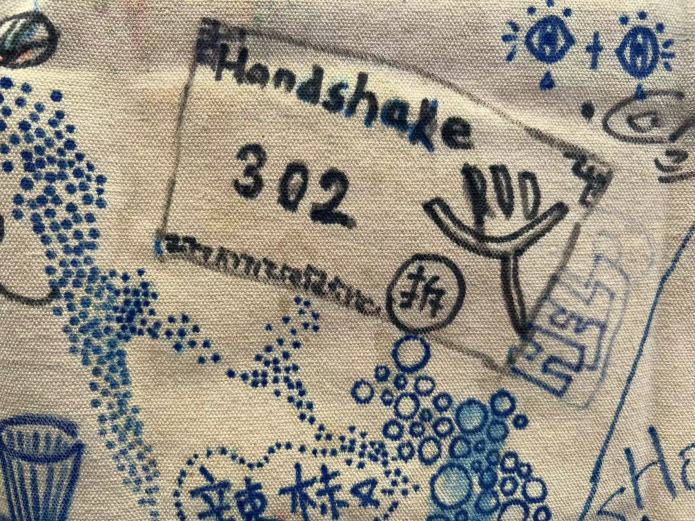
I wrote an article about the awkwardness of Handshake 302’s Baishizhou praxis. It came out in 碧山 14, January 2024.

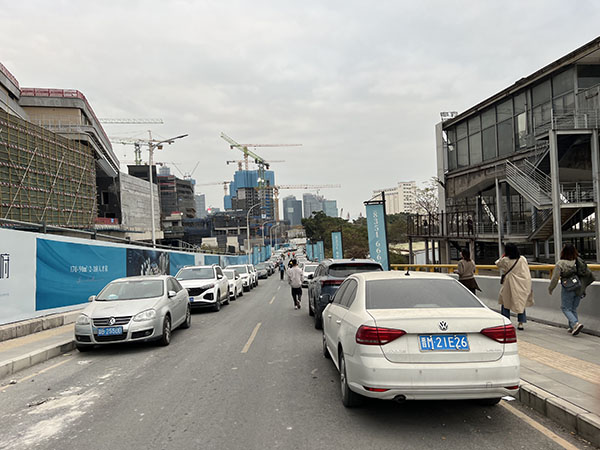
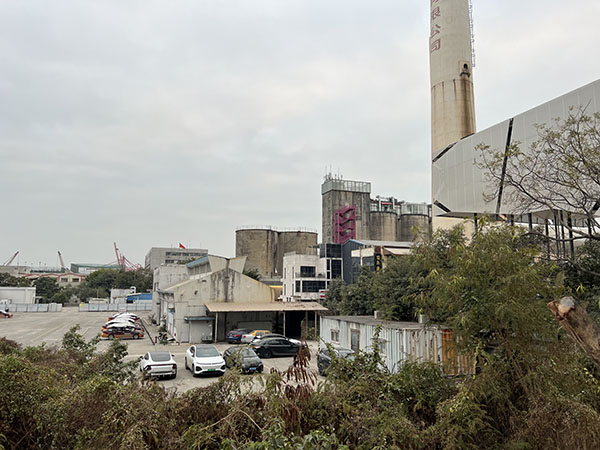
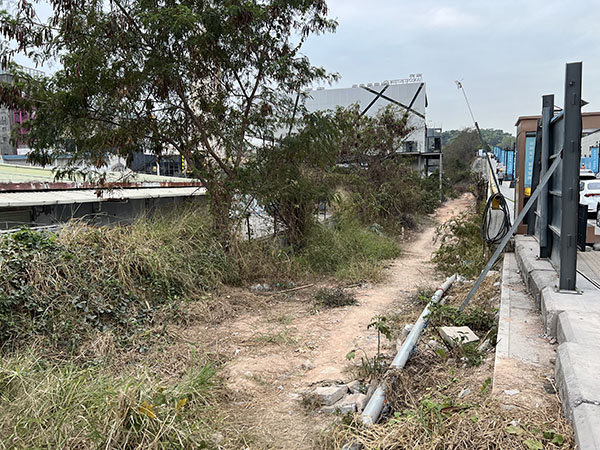
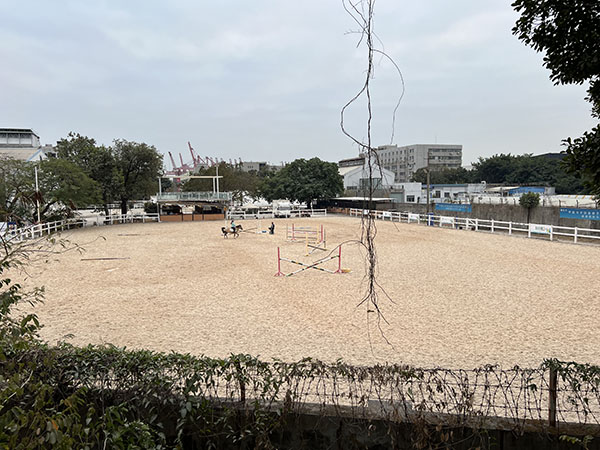
You may remember the 2013 UABB the Value Factory, which aimed to place Shekou once again at the heart of Shenzhen culture. Well, today I went back, and its all real estate, complete with a horse-riding practice area. So, first post of 2024 is just a note that changes changes and more. Changes.


Before Shijie and Dafu opened their restaurant, 「主局·韩式炸猪蹄」, they had decided not to offer takeout service. Many of their friends have told them, “if you don’t provide take out service from your restaurant, you’ll never survive in Shenzhen.” Handshake 302 was curious to hear their story and to understand the reasons behind their decision. We also wondered, “how important is takeout to an individual restaurant owner? Can a restaurant survive without offering takeout service?” Consequently, we invited them to be the special guests of the third edition of Singleton Takeout. Frankly speaking, we learned a lot from their honest thoughts about their new endeavor.


Its official: Liu He has made take-out ordering skills. On Saturday, September 23, he ordered a rich and satisfying meal for participants in the second edition of “Singleton Take-out.” What’s more, the selection of Chinese and western foods came with different condiments, meaning that during the handicraft part of the event, there were many different kinds of packaging to use.
Continue reading
The Shenzhen-Hong Kong border at Luohu manifests the contradictions and aspirations of integrating the two cities. On the one hand, the border has been solidified with concrete and barbed wire, while on the other, the border is presented as an easily accessible gateway to a modern shopping experience. Indeed, the concrete and barbed wire fence that lies parallel to the border is located directly behind Luohu Plaza, as seen in the pictures below.


Shajing is a large subdistrict in northern Bao’an. Until the road system took shape and the second line ceased to operate as a strict boundary (both circa 2003-4), most locals went to Changping, a market town in southern Dongguan when they wanted to purchase or enjoy those things that were only available in a town. Historical Shajing comprises three main areas: the oyster settlements, Bogang, and Wanfeng. Indeed, one of the pleasures of visiting a Shajing neighborhood is not only its architectural and cultural diversity, but also the reminder: Shenzhen has only become important recently. Historically, the largest settlements were located along the northwestern coastline in the Fuyong-Shajing plain.
Continue reading
What does the invention of Belt & Road culture look like on the ground? Approximation du jour: it looks like a mash-up of classical European music, traditional Chinese martial arts, and a yearning to explore and trade and understand.
Continue readingThe number 1 subway line stops at Pingzhou (坪洲), which once upon a time was a sandbar near the coast of the Nantou Sea. The station is at the edge of Qianhai, but near the former center of restored Bao’an County. The county seat of restored Bao’an was Baocheng (Bao City)-Xixiang, with administrative functions in Bao City and commercial functions in Xixiang. Indeed, the layout of Bao City-Xixiang echoes the layout of Luohu-Shagbu, with a new town going up next to the older market town.
Continue readingUsing phones to order food in restaurants has become commonplace. There is no longer direct interaction with waitstaff, unless in a high-end restaurant. Otherwise, most workers in restaurants are now food servers and cooks. Other areas where phones are necessary (and have been for a while): health forms when crossing the border; paying bills; making healthcare appointments, and; finding one’s way around the city. I don’t know that I’ve seen a paper map for sale (outside of proper bookstores) in years. Used to be, every kiosk sold maps that were constantly being upgraded. It strikes me how difficult it is to navigate the city without a smart phone, even as it is more difficult to use many apps without an identity number. Indeed, I sometimes wonder how much of what I take for granted is a result of opening accounts before they were all consolidated via phones and identity numbers.

Many of you probably wonder: what happened to Bagualing, the other industrial park in Shangbu Management Zone? And it’s true, so much has been made of & off Huaqiangbei that we forget: the 1986 master plan called for two industrial parks in Shangbu and like Huaqiangbei, Bagualing changed the world as we knew it. And by we, I mean those of us born in the 60s and 70s . For roughly two decades (let’s say ≈ 1990-2010), Bagualing was the printing capital of the world–books, books, and more beautiful books were printed there. In the States, you probably encountered these books via the discount warehouses that sold cheap books either by mail or in large downtown spaces. Chez Shenzhen, especially in the naughties, Bagualing was a great place to shop and purchase a Korean manga or a French novel. Of course, architecture, design, and art books were everywhere, in every language, and could be had for 30 or 40 rmb. Good good days, no more.
Continue reading Shenzhen Noted