where have all the post offices gone?

Just a short post on the Chinese postal service, which was one of the most important infrastructures in early Shenzhen because it connected migrants in the city to their families back home. Not, however, because migrants were writing and receiving so many letters, but because the postal service remitted money back home. The postal bank allowed migrant workers–even those from remote areas–to transfer money to families who were still (especially in the 1980s and early 1990s), living under the command economy.

Today, if you visit a post office, you’re probably going to encounter an express mail station. Indeed, most don’t regularly accept packages because most people have packages collected at their place of work or at home. Instead, post offices like the comprehensive facility on Shekou Gongye #7 Rd offer a selection of services that seem either nostalgic or opportunistic. It is possible, for example, to buy stamps and send a post card there, but it is also possible to register an electric scooter there. It is also possible to buy commemorative stamps (including from the Ne Zha blockbuster) that add to collections which were started decades ago.
all that is solid…

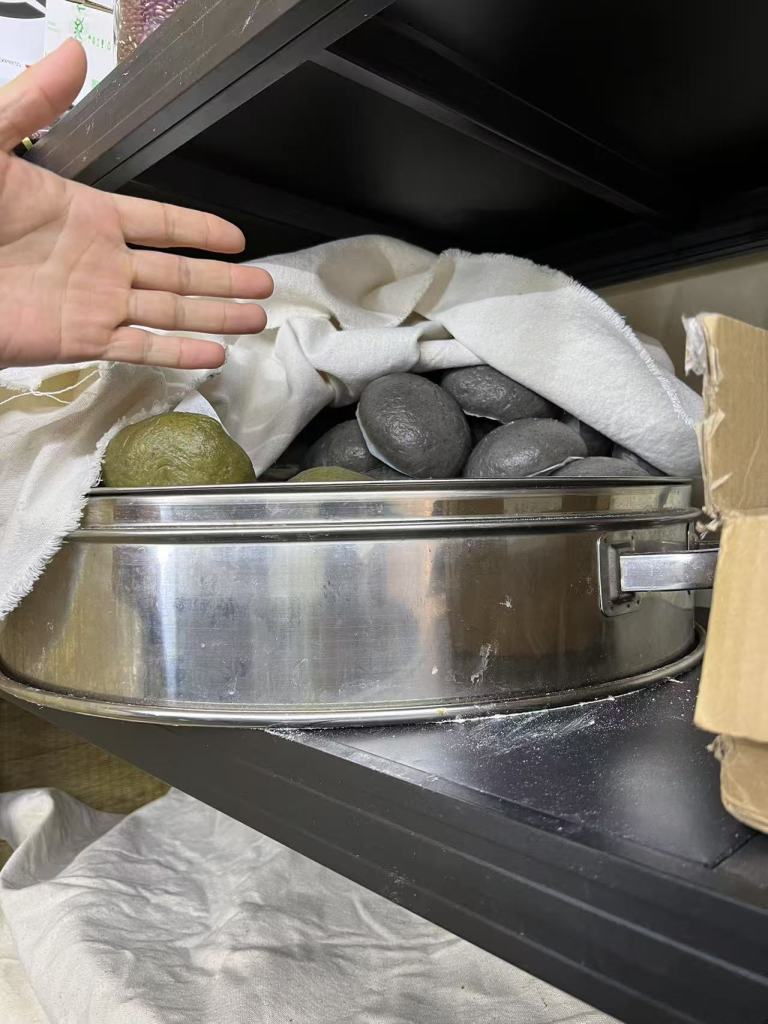
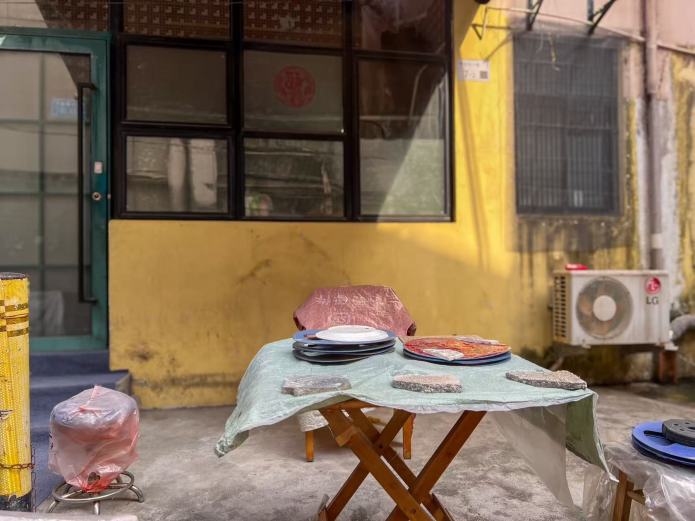
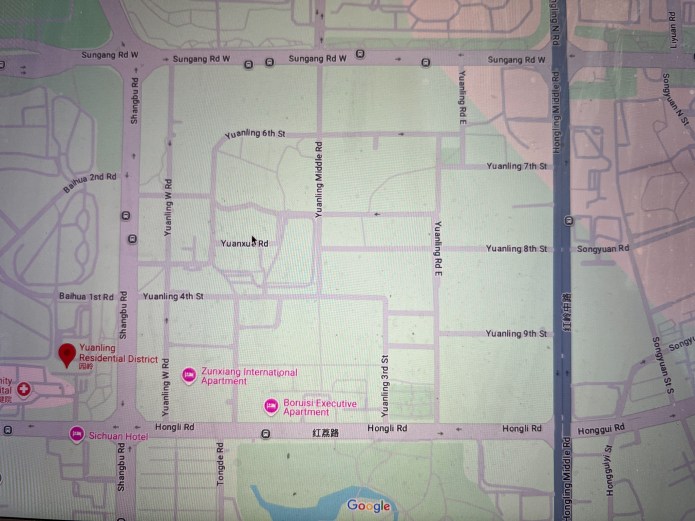
Originally a farmer, in Shenzhen CY worked in a kitchen at the Shangri-la Hotel in Xili and then went to eastern Huizhou to run a small, organic farm. Unfortunately, he couldn’t make a living as a farmer. Now he’s selling organic organic congee, buns, and medicinal teas. and sourcing his material through a network of “farm friends 农友.” CY’s restaurant used to be a first story apartment, which has been divided. In the other section of the house, a bike repairer lives. It’s the low rent that brought them to Yuanling. A two- or three-bedroom apartment can rent for as little as 5,000 rmb a month. He pays 3,100 for his section of the divided apartment.

Continue reading

quotidian tech chez sz

Short update on all the tech stuff I’ve encountered today. I had breakfast with friends who said that they were using AI to read and summarize books for them and that while an expert might do better, DeepSeek was faster and more accurate than a young, just hired employee. I then when to Handshake for an event. Outside Nantou Ancient City, there was a robot sweeping the path to the south gate and a police robot that could take reports and photos. My day concluded with to a virtual exhibit on Pompei. Digital impressions of recent archaeology which allowed for the discoveries to be shown to scale, without giving a sense of the texture of anything. In fact, only the souvenirs were material. So we went through a virtual exhibition and could leave with high quality tchotchkes.

Baishizhou update

So, rumors before pictures. They say Lvgem 绿景 is bleeding. I’ve been told that the company can’t pay back the interest on its loans, let alone make a dent into the principal. Moreover, its become a problem because they are also unable to pay for the housing for the villagers who will move back 回迁 to Baishizhou, once the first buildings are complete. Nevertheless, on the ground its difficult to see any problems. The buildings are going up, and two developments–Century City and World Garden Milanju–are open for residents.

Continue reading

meanwhile in shenzhen…

So, I’m back in Shenzhen after a North Carolina interlude. What’s the first thing I did with friends? I learned how to use DeepSeek to tell my fortune. Turns out its a thing…

Continue reading

following deng’s footsteps in shenzhen

Red tourism is a thing in China, especially visiting revolutionary sites — Yan’an’s 400+ sites (which have been ranked); Shanghai’s revolutionary heritage, and; Beijing’s Red Trail. These pilgrimages tend to be excruciatingly pedagogical, but also fun because they usually mean a day off work or school to hang with friends and eat snacks. The ideological point of these tours lies in how before and after experiences structure moral sentiment. The meaning of these tours are more complicated that Mao was there and so was I! Instead, the expected experience includes visceral gratitude: When the elders 前辈 were here, life was hard. I am here, enjoying this (implied easier and better) life because they suffered.

So what does red tourism in Shenzhen look like? It means exploring the sites that Deng Xiaoping visited in 1984 and especially in 1992. And yes, this is more or less the same trek that Xi Jinping made in 2012 during his first tour outside Beijing after becoming General Secretary. Let’s make the trip!

Continue reading

sino-british border, 1972

This short “border tour” emphasizes the training of British troupes in contrast to Chinese troupes, with clips of the Luohu border crossing as well as food and livestock being transported into the Colony from Wenjingdu.

At his youtube site, Ben Mumford has also posted 8 Hong Kong Beat documentaries, which look at how the British managed police corruption at the border. The intro to the series on the BBC webpage promises all sorts of adventure, seeming more soap opera that cinema verite.

Nine documentary programmes which take a close look at the world’s most controversial police force in action. The Royal Hong Kong Police have been accused of corruption and bribery at all levels. This series shows the job they have to do – as a British Colonial Force working among 4 1/2-million Chinese. John Norman, ex-London policeman is now a CID Inspector in Tsim Sha Tsui – Hong Kong’s Soho -Triad Territory, where you’re bought off or framed if you get too near the truth. As Norman is drawn into robbery, kidnap and murder, he shows what it is to be on the Hong Kong beat, where British policemen bow before the God Kwandai. And where the Yaumati Force now row in a Dragon Boat Race against the Triads.

what’s the difference between a typhoon and reform and opening up?

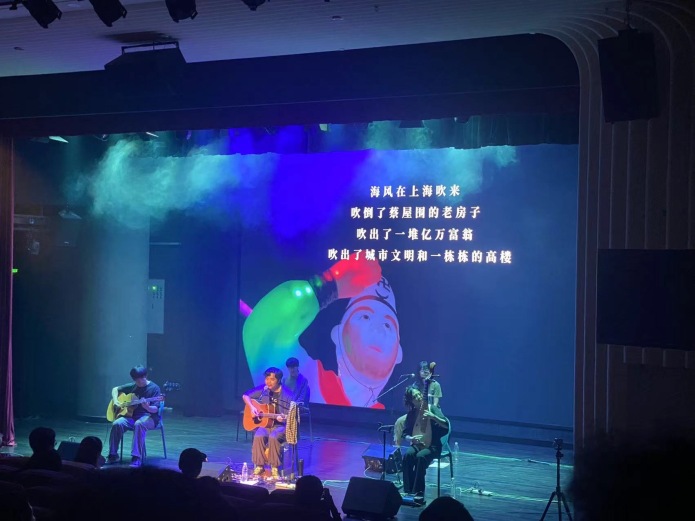
And this is not the opening to a joke, but a loose interpretation of a stanza from a new song celebrating the Shenzhen story. The stanza is:

海风在上海吹来;吹倒了蔡屋围的老房子;吹出了一堆亿万富翁;吹出了城市文明和一栋栋的高楼, which translates as: the sea breeze blew in across the seas; blew down the old houses of Caiwuwei; blew a pile of millionaires into existence; blew urban civilization and rows of high-rises into existence.

Continue reading

调休: timely thoughts

When Dragon Boat Festival approaches, my thoughts usually turn to zongzi and all the delicious fillings. However, this year they have unexpectedly turned to how the Chinese state controls both the distribution of land (space) and time. Usually, I spend my time thinking about hukou and land ownership. However, it suddenly occurred to me that something similar happens with the organization of work and rest times. The prompt — how much I dislike “调休 tiao xiu” or “adjust rest time.” In practice, tiao xiu means rearranging work schedules to create a five- or seven-day stretch of time off for consumption. The catch? There may only be one actual vacation day. The other days are made are made up by working on Saturday, creating 6-day work weeks.

Anyway, I haven’t worked out all theoretical details. But. When thought about in conjunction with Beijing Standard Time, tiao xiu suggests the extent to which the state shapes everyday life in China. In turn, this highlights the fact that everywhere space and time are human constructs with contested origins and purpose (Thanksgiving vacation, for example).

an apparatus of integration 2: the shen kong border, wutongshan south to liantang

Yesterday had a wonderful time with good friend Denise exploring Shatoujiao and then the land border from Wutongshan South to Liantang subway stations (Shekou Line). Three observations (with illustrations!) and unsubstantiated speculation, below:

Continue reading