the secret to happiness…

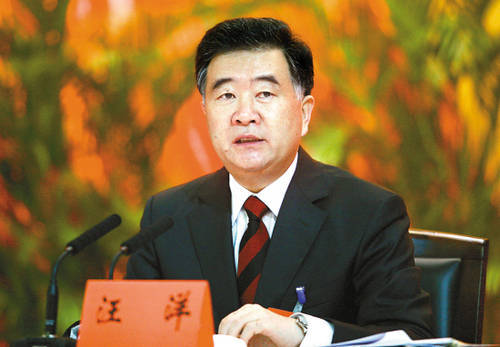
Yesterday, Guangdong Party Secretary Wang Yang (汪洋) addressed the 11th Guangdong Provincial Congress of Party Representatives, making five statements which have set him apart from other high-ranking leaders. Once a rival of Bo Xilai for a place in the 18th Naptional People’s Congress appointments, Wang Yang has also made his gesture to gain the support of the people. However, where Bo Xilai went poor populist, Wang Yang’s speech has me remembering the Province’s historic role in the 1911 Xinhai Revolution, when 100 years ago, with its links to overseas Chinese and relatively advanced economy, Guangdong was the cradle of China’s bourgeois revolution, in contrast to the rural uprising that Mao Zedong transformed into a socialist revolution. Wang Yang is a leader for China’s emergent and increasingly vocal middle class. And yes, many of them live in the Pearl River Delta.

Wang Yang’s Five Statements

1. The People are the agent that makes history, as well as the agent that constructs and enjoys Happy Guangdong. The people have the right to pursue happiness; it is the responsibility of the Party and the government to benefit the People. We must discard the mistaken idea that the People’s happiness is a result of the Party and government’s benevolence. (人民群众是创造历史的主体,也是建设和享有幸福广东的主体。追求幸福,是人民的权利;造福人民,是党和政府的责任。我们必须破除人民幸福是党和政府恩赐的错误认识.)

2. We need to discard unwritten rules and bad habits, creating a just, lively, and orderly social environment, where those who follow the rules don’t suffer, where talented people can take the lead, and can pursue and create their own happy life to the best of their ability. (破除潜规则陋习,创造公平公正、活力有序的社会环境,让守规矩的人不吃亏,让有本事的人有奔头,各尽所能地追求和创造自己的幸福生活.)

3. The greatest threat to the Party’s long-term political control is becoming too far from the masses. Our Party can only achieve eternal success to the extent that it comes from the People, is rooted in the People, and serves the People. (党长期执政的最大危险是脱离群众。只有始终坚持来自人民、植根人民、服务人民,我们党才能永远立于不败之地.)

4. We need the courage to use personal revolution to firmly destroy the interests that have turned their backs on socialist market economic reforms in order to resolve problems of government agents exceeding their function, absenting their function, and mistaking their function, making government into a provider of public goods and services. (我们要以自我革命的勇气,坚决打破背离社会主义市场经济改革方向的利益格局,解决政府职能越位、缺位、错位等问题,使政府真正成为公共产品和公共服务的提供者.)

5. Guangdong’s market society has already begun to change… If we take hold of this opportunity, we can breakthrough many difficulties and problems on the road ahead of us, smoothly entering the ranks of more modern areas; if we don’t take hold of this opportunity, we may be unable to escape “the middle income trap”, stagnating and retreating, and the advances we have already made could be lost.  (广东经济社会已经步入转型期……把握得好,我们就能破解前进道路上的各种困难和问题,顺利步入比较发达的现代化地区行列;把握得不好,我们就有可能跨不过‘中等收入陷阱’,出现停滞和倒退,已经取得的发展成果也有可能断送.)

launching

These past few days, rain has cleared Shenzhen skies and when the sun comes out, everything sparkles. Yesterday, I followed the rays to the Spring Cocoon, which has been opened for commercial use. The walk from Coastal City to the sports center was once landscaped to assert the SEZ’s green ambitions. However, the corridor is now under construction. In the east, another shopping mall and in the west, lest we have any doubts about the Municipality’s futuristic plans, China State Construction (中国建筑) has begun laying the foundations for the Aerospace Science and Technology Square. Impressions, below; past walk when the Cocoon was under construction, here.

This slideshow requires JavaScript.

as yet shenzhen has no capital h history…

The experience of walking Shenzhen is significantly different from visiting, Beijing or Shanghai, Xi’an or Guangzhou, where the meaning of the past has already been codified, renovated, and can be consumed on a nostalgic tour. In school we learn that Beijing’s history is Ming-Qing imperial, Shanghai’s history is East-West colonial hybrid, Xi’an’s history is ancient, while Guangzhou’s history is South China sea commerce and migration. We then go to the respective tourist destination to have our knowledge confirmed and perhaps enriched by and through an appropriate activity. We walk Beijing’s hutong and the Forbidden City, drink coffee or cocktails in a stylish restaurant in Shanghai’s shikumen and the Bund, admire Xi’an’s beilin and terracotta soldiers, and wander the small shops of Guangzhou’s West Gate. Indeed, each of these tourist destinations succeeds as such precisely because the site metonymically represents the respective city’s place in China’s “5,000 years” of civilization. We leave thinking we have a deeper understanding of where we have been. Maybe we do. Most likely we don’t. But there is something reassuring in having our stereotypes confirmed, and those stereotypes are what I mean by capital h history.

Now, there are historically significant sites in Shenzhen — Old NantouDapeng Fortress, the Chiwan Tianhou TempleDongmen, and Yumin Village. However, municipal efforts to promote Old Nantou and Dongmen, notwithstanding, none of these historical sites has captured the imagination of either residents or visitors. I suspect this is in part because each of these places represents a portion of Chinese history that is already preserved elsewhere. Old Nantou and the Chiwan Tianhou Temple, for example, represent ancient efforts to develop the Chinese salt trade and settle the Pearl River Delta, but there are finer examples of that era to be imagined and seen in Guangzhou, while ancient Chinese history is more elegantly preserved in Xi’an and Jiangnan. Even the Tianhou sea cult is more closely identified with Tianjin and Xiamen than it is with South China temples and shrines. Likewise, Dapeng Fortress is an outpost of Ming-Qing military imperialism, but of a failed variety, rather than successful garrisons to be explored throughout the north.

Dongmen and Yumin Village are perhaps more representative of Shenzhen’s importance as the epicenter of early reform. However, both are historically compromised. Although Dongmin is identified with so-called Shen Kong commerce, for example, there really are more upscale malls throughout both Shenzhen and Hong Kong where one might purchase global products. And what about Yumin Village? Deng Xiaoping visited Yumin Village in 1984, inspecting one of the three-story private homes that local villagers had just built. He declared that Shenzhen speed was a good thing and that the rest of the country should follow. The 1995 exhibition to commemorate the 15th anniversary of the establishment of the Shenzhen SEZ included an installation that reproduced the interior of one of those homes, which at the time, was more luxurious than the homes of urban cadres in Beijing and Shanghai. Here’s the rub: although Yumin Village has been integrated into the Shenzhen municipal apparatus as a Luohu neighborhood, nevertheless the actual buildings that Deng saw and even the home he inspected were razed over ten years ago. There is a history board there, but nothing from 1984 remains and Yumin Village continues to function as a border urban village, with low rents for migrants who work nearby, spas and massage parlors for visiting Hong Kong people, and places where villagers play mah jong and gather to drink tea and gossip.

The absence of an agreed upon master narrative means that walking Shenzhen allows individuals to judge what does and does not represent capital h history in the SEZ. Now Shenzhen does boast upscale skyscrapers that represent achievements within this process — Guomao, Diwang, and the Civic Center all come to mind and are worth a visit. Those wanting to see the “real” capital h historic Shenzhen, I suggest visiting either an industrial park or an urban village. Early 80s work unit housing in Luohu and Shekou are also great examples of how industrial urbanization transformed the area. Personally, however, I believe that if Shenzhen has a place in China’s 5,000 years narrative it is as an epicenter of rural urbanization, including transformation of the local environment, proletarianization of rural migrants to SEZ factories, and the forms of urbanization that returned workers have promoted or their remittances enabled. However, even after over 30 years of reforming and opening Baoan villages, the city is only just starting to come to terms with this legacy and most villages, even the most famous such as Baishizhou are scheduled to be razed. All this to say that as yet, the meaning of Shenzhen’s cultural and historical inheritance is still up for grabs because we are only just starting to come to terms with the urban legacy of Reform and Opening. This means that as yet the city has no capital h history and no corresponding historical sites that one can visit and say, “Yes, I’ve been to Shenzhen and I know where I’ve been.”

Walk anyway. The Shenzhen you experience will be only loosely tethered to stereotypes about China and you might make something else of it. Below, impressions of a recent walk in Fuyong.

This slideshow requires JavaScript.

the dragon king

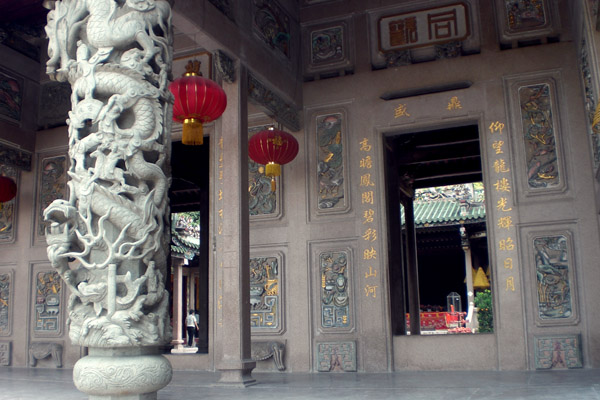
At the foot of Fenghuang Mountain, Fuyong, there is a small temple to the Dragon King. The Wens of Baishixia renovated the temple in 2003. Nearby, the outer row of factories in the Dragon King Temple Industrial Park have been given a faux traditional facade. Above, squatters inhabit small, concrete buildings at the foot of the stepped lychee orchard. Impressions.

This slideshow requires JavaScript.

怀疑: A Cross Cultural Parable

This and next weekend, the teachers of the Shenzhen University Department of Acting are performing a Chinese adaptation of Doubt: A Parable by John Patrick Shanley, or 怀疑 as it is translated. After the show, several friends approached me and asked me what I thought of the acting. I said that I had enjoyed the performance. They looked at me strangely and pressed, “No, really, what did you think?” Evidently, they didn’t like it so I asked what they thought. Answers included, “I keep hoping that they’ll make me get nervous with the anticipation of waiting to see the show.”

“And you don’t feel that way?”

Flat out, “No.”

Another mentioned that he thought the actors were doing the best they could. But. But?

“They just don’t get the story. I mean, I don’t feel it with them.”

“What about the story?” I started asking, “Is the question of Doubt/ 怀疑 important to you?”

A considering look and then, “The actors are supposed to make me care about the topic. That’s their job.”

As the title suggests, Doubt is a teaching story, figuring the incessant problematic of faith in rigidly dogmatic Sister Aloysius’s certainty that the personable Father Flynn sexually abused Donald Muller, the school’s first black student. The story is set in the Bronx, during the fall of 1964 and the historical background matters because the characters also function allegorically for larger social shifts and ruptures. In 1962, Vatican II opened, but would not close until 1965, when the Council famously challenged the relationship between the Catholic Church and the modern world, acknowledging that truth could exist outside the community and declaring that the mass could be given in vernacular languages instead of Latin. Sister Aloysius embodies these past certainties and the Church’s previously unquestioned authority in all things moral, which tended to be, well everything; she suspected children of harming themselves to play hooky and saw sexual abuse in slight gestures. In contrast, Father Flynn represents the newer, hipper face of the Church; he plays basketball, wants to sing secular Christmas carols, and likes his tea sweet, perhaps even, too sweet, hmm?

Similarly, even though Donald Muller never appears onstage, his shadowy presence signals that like the Catholic Church, New York society was also changing and nowhere more than the Bronx. In 1963, Robert Moses’ Cross Bronx Expressway was completed. The bridge displaced families and businesses, was a constant source of noise and air pollution, and catalyzed the decline of the South Bronx from a district of family neighborhoods and businesses to the poorest district in the United States, despite its proximity to Manhattan. In fact, the South Bronx erupted into American national consciousness in 1977, when during a baseball broadcast, Howard Cosell exclaimed, “Ladies and Gentlemen, the Bronx is burning!” Sister James and Mrs. Muller are left to deal with the spiritual and practical aftermath, respectively. Sister James agonizes over the meaning of faith when innocence has been shatter and Mrs. Muller begs to protect her child despite his “differences”. Donald is black and may or may not be “that way” — his father and former classmates regularly beat him because they suspect he is — although Stonewall was only five years in the future, 1969.

Contemporary history also shapes reception. In 2002, the Boston Globe broke the story of sexual abuse in the Boston Archdiocese. Shanley first staged Doubt and won the Pulitzer in 2005. Soon, productions had been mounted in Australia, Singapore, the Philippines, and New Zealand. Roman Polanski directed the play in Paris; it was also staged in Venezuela and London. In 2008, Meryl Streep and Philip Seymour Hoffmann performed the antagonists, Sister Aloysius and Father Flynn. Clearly, Shanley’s nuanced exploration of moral ambiguity resonated with English-speaking audiences precisely because it resonated at so many levels — historically, spiritually, and personally. Or as an older Catholic friend summed up his response to the play, “Of course he did it and yes, she’s a bitch. But still, none of that changes the truth…” And implicit in this statement, reverberating through our souls is the desire to believe, to have faith. And yet, we doubt. As Shanley elegantly described our situation, “For those so afflicted, only God knows their pain. Their secret. The secret of their alienating sorrow. And when such a person, as they must, howls to the sky, to God: ‘Help me!’ What if no answer comes?”

And therein lies our cross-cultural rub. For my Chinese friends there was no story except as conveyed by the actors. 怀疑 means doubt and suspect, and is often used to describe situations when someone may or may not be lying, as in, “I suspect she’s actually dating him,” or “I suspect he’s hiding something.” In the final scene, when Sister Aloysius cried, “我怀疑!” the audience seemed confused, unmoved by the Sister’s predicament. Maybe had cried, “无地自容” the audience may have understood that the foundation of her life had shifted, and she would never again act from life-affirming conviction. Perhaps not. Nevertheless, for those of us raised Irish-American Catholic, a profound chasm separates religious doubt from secular suspicions. We are taught, after all, to render unto Caesar, but in the last instance, when forced to choose, to vote our conscious, so to speak, we move within and against the heart’s fragile certainties; we yearn to be one with God and he is silent, but we must act as if he had answered our call. Thus, in the final scene, when doubt brings Sister Aloysius to despair, I understand. I am with her regardless of the quality of the acting. The acting was sufficient to move me because, as Stanley reminds us, “Doubt can be as powerful a bond and sustaining as certainty,” which I amend with the cross cultural caveat, “especially amongst former Catholics…”

The Value of Urban Villages

US American real estate developers chant, “location, location, location.” In Shenzhen, primary locations open for development are actually urban villages slated for old village renovation — redevelopments that involve the final transfer of village held property to the Municipality.

In a Jingbao article on the future of Nanshan District, Li Xiaogan, recently appointed Nanshan District Secretary, noted for example, “In constructing a global district and promoting urban renovation, Nanshan District will have several advantages over the next few years. First, the largest urban renovation project in Guangdong Province – Dachong Urban Village, with a total project area of 683,000 square meters; second, the urban renovation project for the five villages of Baishizhou in Shahe, which is currently being planned, also has an area of over 650,000 square meters, and is again one of the largest in the Province; third, located in the north of the District, the three Shuiyuan villages are within the water conservation and ecological conservation red lines, and are thus relatively backward, however, they are also now in the planning stage of development; forth, the old Xili Market, which we are planning to convert to an urban complex; fifth, the banks of the Shahe River, where we will take international bids to create an ecological cultural corridor, and; six, Nanshan Old City, which with everyone’s support we hope to return to its status as Shenzhen’s historical and cultural root, by resituating all residents and completely rebuilding.”

Recent impressions of Baishizhou, below:

This slideshow requires JavaScript.

The White Lady of Shiyan

Last week, I met Ye Enling, a 70-something Shiyan native. Mr. Ye worked in Overseas Chinese affairs for over twenty years, and his current interests include calligraphy, linguistics, architectural design, and social philosophy. Of note, Mr. Ye is a Hakka and has devoted much time and energy to promoting Hakka culture by collecting Shiyan mountain songs (石岩山歌), compiling vocabulary lists, recording Shiyan history, and composing essays on diverse topics. In fact, he has published three collections and a book of calligraphy.

Below, I have translated Mr. Ye’s retelling of The White Lady’s Temple on Yangtai Mountain (叶恩麟者《闲雅集》111-2页. Online Chinese versions, here and here). I find the story interesting because it places singing within the sentimental context of gendered yearnings, which continue to shape family life and personal desire. The fact that the story continues to circulate suggests that even if most Chinese professors have opted into modern academics and concomitant specialization, traditional intellectual life and knowledge production may be fading, but are nonetheless still kicking.

I also find the story interesting because when contrasted with Shenzhen’s contemporary arts or traditional culture fairs, the White Lady of Shiyan reveals the extent to which expressive creativity has been alienated from everyday life, an ongoing lament in modernist art. The living presence of this tradition dovetails with the Municipality’s ongoing promotion of Neo-Confucian mores as a strategy of governance. I had tended to think of Neo-Confucianism’s appeal in terms of an invented nostalgia for “good old days” sans hunger, warlords or opium. However, my meeting with Mr. Ye has me thinking that there may actually be a popular basis for Shenzhen’s decision to disseminate Confucian sayings at bus stops and other public places, cultural revolutions notwithstanding.

The actual content of the White Lady story is far more disturbing and has me thinking about structural analogies between the 1920s and contemporary Shenzhen. In Diary of a Madmen, which was published a mere ten years before the white lady’s story is said to have taken place,  Lu Xun gives a chilling representation of human desperation in which the only way to survive is to eat other people; the clearest Lu Xun overlap is, of course, Medicine. Similarly, today, we keep hearing stories of illegal transplants and the shady sourcing of human organs. Less than a hundred years separate workers of the south China diaspora from the neidi migration of workers to Shenzhen. And it seems that rumors of cannibalistic medical treatments continue to emerge out of the experience. Families are fractured, bodies broken, and loved ones vanish.

The White Lady’s Temple on Yangtai Mountain

All Shiyan elders remember that there was once a small temple on Yangtai Mountain and have passed on the following story about it.

In 1928, a Ye family lived in Shiyan Market. The man had gone to Indonesia and not returned. At the time, parents arranged marriages and in his absence he was married to another Ye. A year after their parents had organized the marriage, the wife prepared to go to Indonesia to be united with the husband she had never even seen. But the sea voyage was rough and the road long, and being afraid to travel alone, she looked for a companion. The Ye woman discovered that in another Shiyan village Liguang there was a white woman whose husband was also in Sanbaolong, Indonesia. The white woman was also preparing to join her husband. This white woman had skin the color of kneaded dough, with a hint of pink. No one knew if she had Caucasian blood or a skin disease. After so many years, we no longer know what her surname was or who her people were.

The white woman didn’t have a son and her husband had been overseas for many years. She decided to build a temple on Yangtai Mountain in order to pray for her husband’s safety abroad. While building the temple, she could also stand on the mountaintop and gaze toward Indonesia. It’s obvious how much she yearned for her husband! She said she would do it and she did. The white woman bought a load of bricks. Everyday, she shouldered four bundles of bricks on a carrying pole, and made the difficult trek from Liguang Village up Yangtai Mountain.

Whenever she paused to rest, she sang a mountain song in her beautiful, high-pitched voice, “Older Brother has drifted away on the sea, and hasn’t returned the years; I know the years of time and swallow them whole, no one understands how to open my heart. Standing beneath the mountaintop pines, tears, only tears. I have only one question of Heaven: When will my man return home? (阿哥出洋漂大海,三年五载不回来,线纱打结吞落肚,无人解得崖心开,崖在高山松树下,眼泪汗水落泪花,崖向苍天问句话,崖郎几时转屋家。)

When she reached the peak, she sang in a loud voice, “No one smokes these cigarettes, no seedlings growing in these fields. Younger sister dares climb these roads, younger sister dares view these skies” (无瘾唔食这支烟,无秧唔莳这块田,阿妹敢登这条路,阿妹敢看这重天。)

When the sun set in the west of the mountain, the hope of another day was extinguished. The white lady was deeply saddened and she cried while singing, “From dusk to dawn, I think of you, and my tears endlessly role down my cheeks, they water the mountain grass and drown the people below (黄昏想郎到明天,眼泪滴滴流不停,流到山上草变绿,流到山下浸死人).”

Her melancholy songs reverberated in the mountain valleys, startling birds and causing those who heard to cry. The white lady used her songs to relieve her yearning for her husband, and in this way, day after day, without any help she forced herself to shoulder the burden of bricks, ceramic tiles, lime, sand, and beams and carry them up the mountain. Only after bringing all the necessary materials did she hire a a builder. The temple was finally completed and although it was only several meters big, it brimmed with the white lady’s hard work, blood, sweat, and tears. The white lady also placed a censor and an idol in the temple. The first and fifteenth of every month, she climbed the mountain, undeterred by inclement weather, to pray to the gods and bow to Buddha, saying, “Every 15th or 16th the moon is full, I hope my heart is the same as my husband’s. I pray that the Lord of Heaven protects my husband, insuring that Older Brother makes a fortune (十五十六月光圆,崖同情郎心相连,崖求天公来保佑,保佑阿哥赚大钱).”

The white lady’s story spread throughout Shiyan, her spirit and will-power moving villagers, and many began climbing the mountain to see and burn incense. After many years, this place became rich with incense.

Later, the Ye woman received a letter from her husband saying that she should not go to Indonesia because he was returning to Tang Mountain. Accordingly, the Ye woman changed her plans and the white lady left alone for Indonesia. The white lady’s husband waited for months on the coast, but his wife had vanished without a trace and his heart was aflame with worry. He searched for her and finally got word that his wife suffered from motion sickness on the trip. As she thrashed unconscious, an evil person took advantage of the situation to kill her for her gallbladder because he had heard that white people’s gallbladders could be used for medicine. After removing her organ, he threw her body into the ocean. On hearing what had befallen his wife, the husband was overcome with grief.

To commemorate the white lady, the named the temple she had built “The White Lady’s Temple”. Unfortunately, during the Cultural Revolution, the temple was razed. Nevertheless, the moving love story of a devoted wife continues to be told.

Exporting the Shenzhen Model

The Shenzhen Model not only shapes neidi development, but also the form and content of China’s recent push to expand and develop its international presence. Friend Jonathan Bach directed me to the article, African Shenzhen: China’s Special Economic Zones in Africa by Deborah Brautigam and Tang Xiaoyang. The article contextualizes contemporary Chinese investment in Africa, concluding that:

“These zones are using an unprecedented business model in Africa. Although there are exceptions, most economic zones in Africa, especially sub-Saharan Africa, have historically been developed and operated by governments, and the results have often been disappointing (FIAS 2008: 31). In China’s own zones, government agencies were also responsible for their development, with generally good results. However, the new Chinese zones in Africa are not being planned by government bureaucrats and given to Chinese firms to implement. Instead, they are designed and established by Chinese enterprises spontaneously according to their assessment of business feasibility. The Chinese zone developers are expected to bring future-oriented design, high-standard infrastructure and world-class professional management to help industrial investors survive the harsh market environment in Africa and facilitate their growth.

In some parts of Africa, clusters of dynamic industrial development have arisen spontaneously, as private initiatives. If the expectations for the Chinese-run zones are realised (and the jury is still out on this), these cooperation zones could form a synergistic third model, combining the market forces of existing clusters with the systematic organisation of the top-down model. If so, this would help the business sustainability of the zones. The scale and experience of the developers mean that they are less vulnerable, and better connected to networks of capital, ideas and support than Africa’s existing clusters.

These developments may yet come to naught, given the obstacles that have beset past efforts to develop economic zones in Africa. They face significant challenges of inclusion, communication, and integration with local economies. Yet the timing is right for some African countries to catch the new wave of investors coming out of China. If even some of these experiments lead to a genuine transfer of knowledge and opportunity from China to Africa, much as happened with Japan and south-east Asia in the 1970s and with Hong Kong and Mauritius in the 1980s, employment could see significant gains and, in some spots, long-delayed industrial transitions may yet be realised (CHINA’S SPECIAL ECONOMIC ZONES IN AFRICA 51-2).”

To get a sense of why export Shenzhen and not Chongqing, check out the urban distribution of China’s top 679 enterprises. Not unsurprisingly, Beijing’s national state-owned enterprises dominated the list and Shanghai came in second. However, Chongqing had a mere 18 companies in the top. In contrast, Shenzhen came in third, with 52 top company headquarters. Moreover, the Shenzhen companies tended to be in the hi-tech, financial, or service sectors, representing the highest growth in new, rather than traditional industries and are precisely the companies investing in Africa.

Shenzhen-based Huawei‘s global expansion continues to accelerate, for example. Founded in 1987 by Ren Zhengfei, is the largest China-based networking and telecommunications equipment supplier and the second-largest supplier of mobile telecommunications infrastructure equipment in the world (after Ericsson). Likewise, Shenzhen-based Tencent made Forbes Magazine’s list of Asia’s Fab 50 companies and although the company is not yet in the China 500, it is the country’s largest and most-used Internet service portal. Other top Shenzhen companies include: Ping An Insurance (finance), ZTE Corporation (telecommunications), Vanke (real estate), and OCT Group (real estate).

And yet. These rankings indicate increasing inequality between regions, also explaining the ongoing appeal of Maoism.

怀德村:virtue’s rewards

It’s been a while since I’ve summarized an episode from The Transformation of Shenzhen Villages (沧海桑田深圳村庄三十年) and so today, episode 6: The Secret of Huaide Village (怀德的秘密), which puns the village’s name and also means “the secret to cherishing virtue”.

The episode opens by telling viewers that Huaide is a revolutionary village, which contributed over 40 soldiers to the People’s Liberation Army. The connection between good Party leadership, virtuous villagers, and getting rich is then personalized through the story of Pan Baliang, a Huaide villager, who fought in the Korean War, (or the Resist American War as it is known in Chinese). However, during the Cultural Revolution he was jailed because his children were abroad, and was only to be rehabilitated in 1980, when out of gratitude for his fellow villagers continued support, he petitioned the village/ brigade if he could open a factory.

In 1988, Huaide was chosen as the location for Shenzhen’s Baoan International Airport. At the time, the SEZ decided that guannei land should be saved for urban development, rejecting a proposal to build at Baishizhou, which was then considered the suburbs and choosing instead to stimulate the guanwai economy by converting Shenzhen’s largest duck farm into an international airport. The Shenzhen airport expropriated over 1,000 mu of village land and in return Huaide received a compensation package of 3.5 million yuan. The question became: should the sum be divided evenly and distributed to each villager (as many villages had chosen to do) or should the village create a jointly held corporation and invest the money in common cause?

In 1988, guanwai New Baoan County was still rural. This meant that the village was still organized as a collective brigade, which provided the organizational infrastructure for Huaide’s subsequent development as a jointly held corporation. Huaide’s current CEO and current Party Secretary, Pan Shansen earnestly explains that Huaide Party leaders understood that unless they could correctly direct the thinking of the villagers, the village was in danger of making a collective mistake. Collective and Party leaders then went to work on villagers with dissenting opinions in order to make sure that everyone was on board with the next step — using the money for capital investment to build and manage Cuigang Industrial Park. Pan Shansen then expresses his gratitude for the previous Party leaders’ foresight in using the Airport compensation to create a strong, collective economy.

Pan Shansen describes the work of creating “a center where there was previously no center” as arduous and only possible through the cooperation of the people and their government. In addition to creating a large wholesale furniture market, in 1996 Pan Shansen established a venture capital fund that provided interest free loans to young villagers who wanted to start up companies. The fund started with 1/2 million when and grew to 2 million, and loans grew from 20-50,000 per project. In 2005, this venture capital project was expanded through collaboration with Shenzhen’s rural bank, providing low interest loans of up to 300,000 yuan to Huaide Villagers. By 2010, when the documentary was made, in addition to the villages collected holdings, over 40 families had used Village venture capital to create family businesses.

Fiscal conservatism of the defining features of Huaide Village’s success. Huaide Village has its own “constitution” that requires any private investment over 5 million yuan to be approved by the village, they set up a legal aid office for villagers to consult when writing contracts, and since 1992 have not sold any village land rights. Telling, Pan Shansen makes a point of reminding documentary viewers that Huaide Villagers are farmers — to break their ties to the land and the village is tantamount to destroying what makes them who they are, regardless of how they actually make money. Land is at the heart of Huaide’s neo-Confucian CCP virtue and unlike many Shenzhen villages that no longer have collective land, Huaide still owns almost 1/2 of the land they owned before 1980. What’s more, the Village has actively purchased land rights from other Shenzhen villages, leaving its own land for future use.

The rewards of Huaide’s virtue are a neo-Confucian-socialist hybrid capitalist success story, or as it is sometimes said, villagers washed their feet and left the paddies. In addition to its village venture capitalist fund, Huaide invested in social services and local culture. Huade provides medical insurance, education, including college scholarships, and old age activities for its 700 villagers, and in 2010, its Lion Dancing Troupe was the only village level troupe to receive an invitation to perform at the opening ceremony of Belgium’s Chinese Culture Festival. And thus, the moral to this episode tallies with Shenzhen’s ongoing campaign to promote Confucian ethics: good party cadres are at heart neo-Confucians, serving their people, who become collectively rich. In turn, inquiring minds wonder: to what extent has Huaide’s ethical sensibility extended to the organization of workers’ rights in the village’s three industrial parks?

Cultural postscript: the Lion Dance Troupe is talented and fun. Check out a performance, here.

cultural revolutionaries? bo xilai, mao zedong and populist politics in china

According to a politically savvy friend, if anyone has a chance to democratize China, it will be a leader like Bo Xilai because 1. he had the support of the people; 2. he had support within the Party; and, 3. he could have held power after the transition from a one party to a multi-party system.

The purpose of government is to distribute and justify the distribution of goods, which range from food and shelter through education opportunities and healthy living environments throughout society. Some societies use money as the primary tool to mediate the allocation of social goods, in China, however, political status — power with explicit connection to either the military or the police — is the primary social means of deciding who gets what and how it is delivered. This means that the closer one is to the Center, the more opportunities one will have to monopolize not only the allocation of social goods, but also what those social goods are and how they are produced. In short, opportunities to control and benefit from state monopolies over the means of production.

My friend explained that Chinese politics is a series of expanding circles. At the center are high officials, in the next circle their family and friends, and then lesser relatives, and then the families of friends of friends of family friends… The point, of course, is double.

First, with respect to those who have occupied the center, there are no compelling reasons to change the current structure of unequal distribution. What’s more, successfully changing the structure would entail creating political alliances that cut across all those circles in such a way as to first be able to dismantle the system and then maintain power in the new system.

Second, the one hundred surnames are so far from the center that direct appeals to the people constitute a political wild card, which can be wielded by anyone with a wide enough power base. This is frequently the case in local and regional level politics where national appointees navigate and negotiate unfamiliar terrains before they are sent to their next position. However, most national appointees do not become popular in their brief bureaucratic tenures and popular local leaders rarely convert their local appeal into national charisma.

Bo Xilai, however, was exceptional: he had widespread national appeal; he had deep support within and across the Party organization, including ties to the military and the police; and, he was savvy enough to navigate political upheavals. Indeed, he seemed particularly adept at outside-the-box responses to unexpected problems and it will be interesting to see if he is executed or ends up back at the center in ten years time.

On my friend’s reading, the insular structure of Chinese political interests  overdetermined the Cultural Revolutionary connection that linked Bo Xilai to Mao Zedong. Like Mao, Bo Xilai made highly symbolic gestures to help the people. In Chongqing, fore example, Bo set up neighborhood help systems for elderly residents whose family was working in other cities. A solitary elder could directly ring a bell that linked her to the neighborhood committee representative who would be responsible for coming to her aid. This gesture resonated across generations who have been separated as children have left home to work in other cities. Moreover, Mao and Bo’s willingness to upset high-ranking leaders when making these gestures further endeared them to the people.

Bo Xilai skated at the edge of central Party politics for many years before transmuting a minor appointment in a Dalian county into a springboard to national politics precisely because like Mao, he not only dazzled the people, but also impressed journalists and intellectuals, who in turn promoted his project. Not only journalists sang Bo’s praises, but recently closed leftist websites like Utopianet (乌有之乡) publicly supported the Chongqing Model in contrast to the Shenzhen Model, which remains a key symbol of the success of Reform and Opening.

Bo Xilai symbolized the possibility of an end to Party politics as usual and his “Sing Red, Attack the Black” campaign resonated across Chinese political classes in ways that nothing Xi Jinping or Hu Jintao or Jiang Zemin have done. Today, there are efforts to disparage the Mao-Bo connection, but none have addressed the man’s capital C charisma. In fact, I’ve heard someone say, “I don’t care who he did or didn’t kill, Bo Xilai moved me. I only saw him once, but I felt like a crazy fan, who wanted a body autograph” and this comment goes straight to my point du jour.

Weber has warned us that charismatic leaders do not necessarily overturn unpopular regimes and establish democratic governments. Moreover, the rise and fall of populist leaders in Eastern Europe and Russia have demonstrated that its difficult to uproot the Party machine from national politics. Nevertheless, Bo Xilai’s popularity despite his acknowledged crimes not only hints at just how high levels of dissatisfaction with Chinese politics as usual are, but also alerts us to how much violence is necessary to maintain the status quo.