Once you have a house on the beach, what do you do there? You play. And where were the toys once made? In factories built along the old new coastline. Continue reading

Once you have a house on the beach, what do you do there? You play. And where were the toys once made? In factories built along the old new coastline. Continue reading

… this time on Jiming Island, which is located in Rongcheng City, Shandong and made famous during an episode of “Daddy, where are we going? Impressions, below:

So romancing the ocean, or is it oceans of romance? At any rate, once we’ve cordoned off and sold the coastline, it seems that all we’re left with romantic sunsets, looking toward the horizon that we’ll never reach. Poetic. Deliciously melancholy, even. And I do like looking off into the sunset. It’s just that the reduction of the coastline to commodified views distresses me. I keep wondering, what about the other senses? In Shenzhen it is incredibly difficult to smell fishing nets, feel of water rippling over our toes, listen to seabirds diving for crabs, and taste a gritty ocean breeze because we have been reduced to a pair of eyes in bodies that do not move beyond high rise window sills. Continue reading
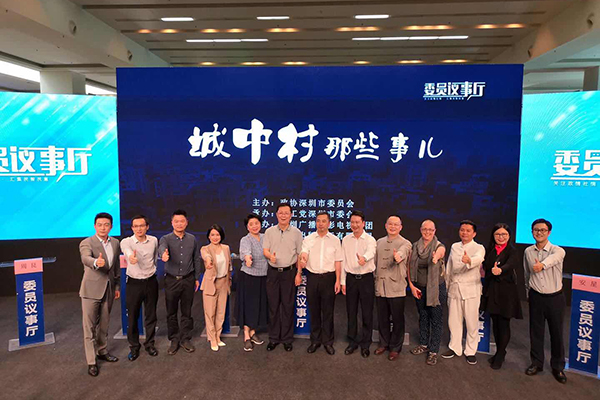
On May 26, I participated in a municipal CPPCC event with the intimate title 《城中村——那些事儿》. The event name might be translated as “What’s happening in our urban villages?” PCC, of course, stands for Political Consultative Conference (政协), which has an advisory role to the government. Continue reading

So one of the ongoing transformation in Shenzhen has been the transvaluation of the coastline from a space of production and transportation to a space of consumption and international logistics. In practical terms, it means that Shenzhen residents have been “landlocked” despite having a 162 mile (260 km) coastline. Inquiring minds want to know: how did that happen? Continue reading
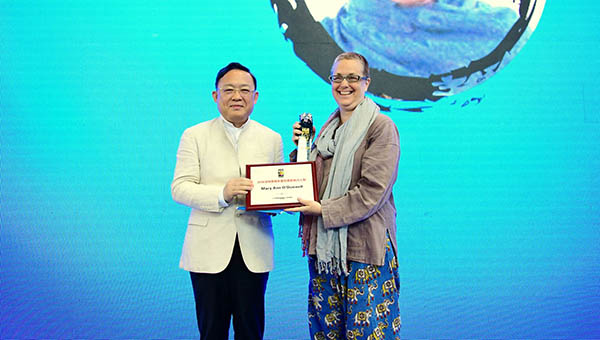
Proud to have been selected by Shenzhen Economic Daily as one of Shenzhen’s 2018 Ten Most Influential Creatives. The award was announced on May 19 at the Cultural Industries Fair as part of the city’s ongoing efforts to promote and cultivate creativity. And yes, this award is the result of ongoing collaboration with Handshake 302.


When Shenzhen moved mountains to fill the sea (移山填海), fish and mollusks, oysters and shrimp–all were buried alive. Continue reading

On Saturday April 27, Handshake 302 led fifteen curious guests on a full-day discovery of Huaqiangbei from perspective of the historic Shangbu Industrial Park. The organization of the tour emphasized the intimate stories behind the emergence of Huaqiangbei as a global landmark. After all, Huaqiangbei did not emerge as fully formed nexus in a global network of technological innovation, but rather formed in the ongoing evolution of Shenzhen’s cultural geography. Continue reading
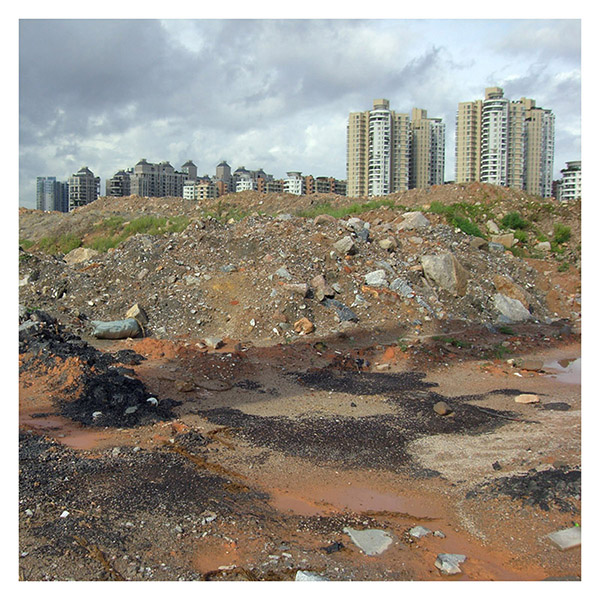
Here’s the thing about innovation and copy-catting; our focus on individuals and copyrights makes it difficult to see that what happened in Shenzhen was a re-invention of capitalism. “Shenzhen Speed” is the name we give to the accelerated pace of accumulation and concomitant disruptions that have defined the past 40 years in Shenzhen (counting from 1979). Now, when we focus on objects like household electronics, oil paintings, and graphic design, it is easy to overlook how this acceleration reorganized capitalism as we knew it. But that’s the point. In Shenzhen, innovation has pretty consistently taken place at the structural level——reorganizing populations, restructuring factories, and remaking landscapes. Continue reading
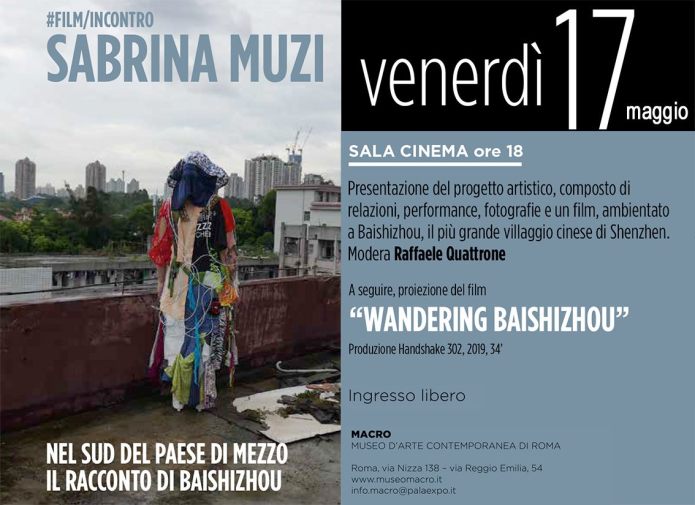
Sabrina Muzi was the Handshake 302 visiting artist in June 2017. Her work is wonderful. She’ll be showing her video “Wandering Baishizhou” on Friday, May 17. If you are in Rome, do check it out.
 Shenzhen Noted