in a globalized world, is the categorical imperative still “universal”?

Yesterday I attended a book launch for, Yang Lichuan’s second book, “The Transformation from Vertical Society to Horizontal Society: The Historical Philosophy of the Crash between Chinese and Western Civilizations (纵横之变:中西文明碰撞中的历史哲学)”. The two parts of the book title suggest the political thrust and method of intervention, respectively. The first part of the title expresses the author’s hope for social transformation to a more egalitarian society, while the second part captures the discourse–philosophy–through which this call for social transformation will be made. And yes, although the political call for social transformation was clear, the philosophical argument was as overwhelmingly comprehensive as the title suggests.  Continue reading

when efficiency matters more than the humanity of our cities…

European institutions were designed to direct flows of global capital. In doing so, they’ve become less accountable to people. But in this gap between people and their institutions, citizens are rising up to reclaim the commons.

Insights into Shenzhen urbanization by way of European debates over the commons in Closed in and Crowded out: urbanizing against the city.

大鹏所城 (II): history in the making

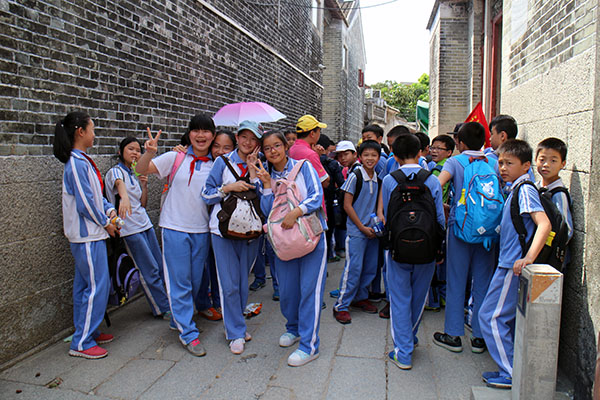
Almost seven years ago to the day, I posted thoughts on cultural history. The prompt for my speculations was Dapeng Garrison, which at the time was the lack of recognition for the site, which is Shenzhen’s only national level cultural relic. Two days ago, I returned and the space was hop, hop, hopping in all sorts of telling ways. What changes had allowed Dapeng Garrison to suddenly attract students, busloads of tourists, and random day-trippers? Like most Shenzhen stories, the answer is a twisting, convoluted story of profits, grey economies, the allure of accomplishments, and the real consequences of administrative failure. Continue reading

noodle shop, baishizhou

This past week has been a rush, with little time for organized thinking, let alone putting those thoughts together in written form. Nevertheless, while waiting for my noodles at the shop below Handshake 302, I watched the interactions of the proprietor and a local beggar. He sat at the table, silently, staring out at the road. She cleared tables, made noodles, and then graciously served him a bowl. He didn’t acknowledge her and ate. She returned to her work.

This slideshow requires JavaScript.

the thing about egalitarian ideologies

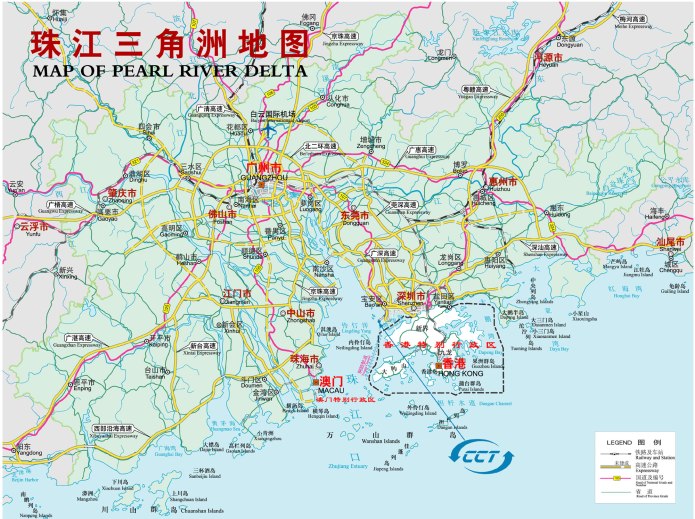
is that very unequal material living environments have to be made to look, well, equal. This is why the current Chinese government focus on growth rates, rather than actual GDP figures matter. With mandated growth rates, every city looks like they’re growing (more or less) equally, while others don’t look like they are stagnating. However, when the actual GDP figures for, let’s say, the Pearl River Delta cities are compared, what we see is that three cities–Hong Kong, Guangzhou, and Shenzhen–completely dominate the region, even as collectively the 9 PRD cities are estimated to account for 70% of Guangdong’s GDP (and only 30% of population). Moreover, given that sub provincial Shenzhen can’t (yet) officially have a higher GDP than provincial Guangzhou, we have know way of knowing if Shenzhen is in fact earning less than Guangzhou.

Provocation du jour: government growth rate targets directly impact a functionary’s ability to rise within administrative ranks, even as the business of Shenzhen remains, well, profitable business. Inquiring minds want to know: is this a contradiction between the people, or a meaningful crack between the government and its residents (居民)?

业绩 is calculated in terms of GDP percentages!!

I’ve been searching for 2014 GDP statistics for cities in the PRD. One would think that would be easy. But it’s not. The reason, I’ve discovered while jumping from city website to city website is that targets are set in terms of growth rates, rather than the actual GDP figure. In turn, government websites tend to publish growth percentages (to advertise that they’ve hit their targets), rather than rawer data. So, my a-ha moment du jour.

military installations in the south china sea

Victor Robert Lee presents satellite images and analysis of China’s New Military Installations in the Spratly Islands. His conclusion is that China is creating bases out of land formations reclaimed on top of coral reefs. Sad images, sad thoughts, and ironic resonances with The Fable of Donkey Island and Piggy Island. I’m especially distressed by the ongoing connections between booming economies and actual bombs.

sunday afternoon in dafen

Dafen is now a destination, with artists posing as painters, and visitors posing with paintings. Meanwhile, the subway is open and many of the new developments are opening and real estate is booming, so that it’s now difficult to find the painting village–it’s a sinkhole in the midst of rising towers. Impressions, below:

This slideshow requires JavaScript.

gentrification in baishizhou

Here’s the thing about urban renewal in Shenzhen; it takes time. Consequently, although withering practices can be sensed in Baishizhou, nevertheless, day-to-day it all seems like the hustle and bustle hasn’t changed. Indeed, the neighborhood continues to experience low-level gentrification. There is, for example, now an independent coffee shop in Baishizhou, while outside on Shahe Road, individual upgrades continue. So photos from the coffee shop and ongoing upgrades suggest that even if young people in Baishizhou aren’t exactly hanging out and playing sports, nevertheless, there even low-income residents engage in leisure activities and consumption, which in turn points to the complexity of Baishizhou’s demographics and ongoing construction of Shenzhen’s youth culture.

This slideshow requires JavaScript.

yumin village: changing meanings of “farmer housing”

Just recently got my paws on “The History of Yumin Village (渔民村村史)”. Yumin Village, of course, was the village that Deng Xiaoping visited in 1984, during his first inspection trip to the SEZs. Xi Jinping followed up with a visit in 2012. So yes, this village has played an important symbolic role both in the ideological construction of post-Mao society and in representations of  pre-reform Shenzhen Bao’an County. What struck me as I flipped through the pages was how this transformation can be readily represented in the changing typology of “farmer housing (农民房)”. Continue reading