contradictions within the party?

Happened upon a newspaper article that quoted Tianjin Party Secretary, Sun Chunlan (孙春兰)as saying,

We must thoroughly study and understand the spirit of General Party Secretary Xi Jiping’s important talks, and deeply realize that criticism and self-criticism are vital weapons for resolving contradictions within the Party (要深入学习领会习近平总书记重要讲话精神,深刻领会批评和自我批评是解决党内矛盾的有力量武器。。。)

Talk of reform and harmony has characterized post Mao political discourse in China, so when a major player such as the Tianjin Party Secretary starts speaking of contradictions within the Party inquiring minds want to know — just how entrenched are political differences between top leaders and, more practically, to what extent has the legal system become an important arena for these ongoing battles?

Of note, the public execution of Xia Junfeng and the equally public non-conviction of Bo Xilai. In the former, an ordinary citizen was executed for defending himself against two Shenyang urban managers (城管). In the later, the court found Bo Xilai guilty of illegally owning a French villa. By today’s standards if that was all he did he was a clean official (清官)!

But. These rulings had obvious and interrelated political messages. In the case of Xia Junfeng, the courts made it clear that they will support the urban management officers in any and all disputes with ordinary citizens. In the case of Bo Xilai, the courts made it clear that the high ranking leaders can engage in all sorts of criminal activities, including accessory to murder, so long as they hold the Party line.

In other words, the Xia Junfeng and Bo Xilai convictions expressed the same political logic — hold the Party line and you will be protected. Fail to hold the line and you may find yourself in a life or death battle to resolve those pesky contradictions within the Party. Those outside the Party must fend for themselves as best they can.

Happy National Day!

dream of a red china

On November 29, 2012, in one of his first appearances as the General Party Secretary of the People’s Republic, Xi Jinping defined “China’s Dream”, saying, “everyone is debating what China’s Dream is. I think that since the modern era, the greatest dream of the Chinese nation has been the renaissance of the Chinese people (大家都在讨论中国梦。我认为,实现中华民族伟大复兴,就是中华民族以来最伟大的梦想。).”

In support of Xi Jinping’s exhortation, the walls surrounding Shenzhen’s construction sites have been covered in posters that define this dream in terms of Chinese tradition. Visually, this is achieved through folk paintings of children learning to use a calligraphy brush or symbols of new year’s prosperity. However, given that folk nationalism was such an important part of early Maoism, these posters also reference the joys of labor and strengthening the country.

Shenzhen’s take on the campaign interests me because the posters reference Maoism indirectly through a visual rhetoric that reiterates 1950s folk nationalism. Traditional activities and visual styles further evoke a nostalgia for the good old days. Moreover, these posters explicitly celebrate Confucianism. All this to say, the current Shenzhen interpretation of Xi Jinping’s Chinese Dream takes the form of nostalgia for a past that ever happened creates a Chinese identity that is explicitly cultural, rather that political.

I’m not sure if Shenzhen’s take on China’s Dream is the same as in other cities. A quick google of 中国梦, for example, brings up illustrations that are more scientific and futuristic that these colorful posters. Thus, there is something determinedly anti-socialist realism in the Shenzhen campaign, which might lead us to think that Shenzhen’s leaders are ambivalent about the Party. Certainly, it leaves me wondering just how far the current regime will distance itself from its former incarnations in order to maintain hegemony without sharing power.

Examples of these posters, below:

This slideshow requires JavaScript.

carry the purse, gentlemen!

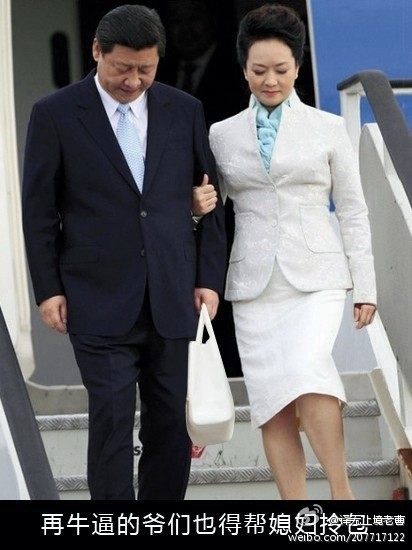
5198cc4ejw1e326t05m2gjMeme du jour: Even the most impressive have to carry their wife’s purse (在牛逼的爷们也得帮媳妇拎包).

Yes, it’s true. Xi Jinping carryies wife, Peng Liyuan (彭丽媛)’s purse and the Chinese internet is gleefully sharing the news. I know that many westerners-in-China have been disconcerted by the fact during a Chinese courtship, men carry their girlfriend’s purse. After marriage,  many men — especially those “caring alpha” types — carry their wife’s purse. And now Xi Jinping and Peng Liyuan have brought this bit of intimacy to the international scene.

My friends have been thrilled by Peng Liyuan’s performance as China’s First Lady. Now, they’re ecstatic that she’s reminding their menfolk about what it means to be a gentleman.

bao tong analyzes the southern weekend incident

baotongZhao Ziyang’s former secretary, Bao Tong has weighed in on the Southern Weekend Incident. And once again, his quirky take sheds all sorts of light into the dark corners of power at the top of China’s massive state apparatus.

Bao Tong suggests that the Southern Weekend Incident has raised three questions.

First, inquiring minds want to know, who’s actually opposing Xi Jinping? According to Bao Tong, all seven members of the Central Politburo Standing Committee of the Communist Party of China had to agree on Xi Jinping’s take on constitutionalism before he announced it. Thus, when the Southern Weekend decided to run “China’s dream, the dream of constitutional government”, they were doing their job, pushing forward the national agenda. Thus, what struck Bao Tong as abnormal wasn’t that an opinion piece was unilaterally changed, but that we don’t know who actually did it because none of the top seven have said, “I’m opposed to the national agenda.” In other words, on Bao Tong’s reading, we still don’t know who exactly is opposing constitutional reform. Is it someone in Guangdong? In Bejing? In the Ministry of information? Somewhere higher and deeper?

Second, inquiring minds want to know, why haven’t the seven just said, yes China has a constitution and it is the legal standard in the country? The seven announced that they would participate in reforming the constitution. They also announced that the constitution was the legitimating authority in China. But when the Southern Weekend encountered a force that was anti-constitution, none of the Standing members said anything. Surely, any and all of them could have said, yes, Constitution, good? So, Bao Tong wants to know, in this case where speaking was more natural than not speaking, what exactly does the seven’s collective silence mean?

Third and most seriously, at present, the role of the constitution is unclear. If the seven aren’t talking in support of the constitution, is it because the constitution doesn’t actually matter? Or if the opposition to the constitution is so strong, why not just admit that constitutional government in China isn’t really an option?  Bao Tong’s actual words go right to the point, “If China’s constitution doesn’t have legitimacy, then we should take the opportunity to tell everyone to stop hoping for constitutional government. This way we can avoid the people dreaming their way onto an evil road and blindly wasting their time (如果憲政在中國沒有合法性,應該趁早叫大家死了這條心,免得全國全民在夢中走上邪路瞎折騰).”

Last year, as Chongqing Turns became an international melodrama, Bao Tong provided one of the most interesting takes on Bo Xilai, arguing that Chongqing’s most infamous Party secretary was in fact Mao’s true heir because he was not afraid to use power to achieve political ends.

thinking about the southern weekend event

It’s called “the Southern Weekend Incident (南周事件)” in Mandarin and refers to a standoff between the Guangdong Provincial Minister of Information, Tuo Zhen and the editorial board of the Southern Weekend News Weekly (南方周末). If you’ve been following the story in the western press, you are well aware that at stake in the standoff is the question of just how free China’s press should be. However, if you’ve been following the story in Chinese, you’re also aware that what the Incident has revealed how serious disagreement between the two main factions in the central government are.

So what happened and what might it mean?

At the beginning of the year, the Southern Weekend editorial board decided to use “China’s dream, the dream of constitutional government “中国梦,宪政梦)” as the headline for their social commentary page.  With the support of the National Minister of Information, Liu Yunshan, GD Provincial Minister Tuo Zhen change the headline to read “China is closer than it has ever been to achieving its dreams (我们比任何时候都更接近梦想)”.

Apparently, Tuo Zhen made the changes after the editorial board had gone on holiday to celebrate the new year. On January 3, when they discovered what had happened, they went to weibo and announced that “After the Southern Weekend had already decided on its final draft, the editorial board left work, and thus were completely unaware that the Guangdong Provincial Standing Committee Member and Minister of Information Tuo Zhen directed the New Year’s words to be change and altered, leading to many mistakes. On January 4 the editorial board went on strike to protest Tuo Zhen’s heavy-handed intervention, garnering widespread support.

Importantly, the content of the two editorials represent different factions within the central government. The expression “China’s dream, the dream of constitutional government” are quotations of current General Party Secretary Xi Jinping. In contrast, the idea that “China is closer than it has ever been to achieving its dreams” reflects the position of the Jiang Gang, who are supporters of the former General Party Secretary Jiang Zemin.

Thus, the stakes in the conflict were two-fold: (1) the formal question of freedom of the press and (2) the political question of the Jiang Gang’s blatant challenge to Xi Jinping’s reforms.

The day after the Incident became public, Xi Jinping gave a talk that went after one of the primary conflicts with the Jiang Gang — dismantling the labor camp system. Liu Yunshan responded by way of “The Southern Weekend‘s ‘to our readers’ Really Makes one Reflect (南方周末“致读者”实在令人深思)” an editorial that was published in the Global Times (环球时报). Subsequently, the Ministry of Information demanded that all subordinate newspapers print the editorial, supporting Tuo Zhen and attacking Southern Weekend. Not unexpectedly, there were different levels of cooperation with the Ministry; the editor-in-chief of New Beijing Times (新景报), Da Zigeng resigned in protest.

Yesterday, in his first public appearance since the Southern Weekend Incident, Tuo Zhen was unrepentant. He opened the Guangdong Ministry of Information Meetings by announcing that the meetings transmitted the spirit of the national Ministry of Information, rather than the spirit of the new General Secretary’s reforms. The opposition to Xi Jinping was straight forward because on January 4 during its meetings, the national Ministry had made it clear that the mission of the Ministry of Information was to “continue to be guided by of Deng Xiaoping theory, the three represents thought, and the perspective of scientific development (要坚持以邓小平理论、‘三个代表’重要思想、科学发展观为指导)”. Thus in his opening speech, Liu Yunshan explicitly invoked Jiang Zemin’s political project (the three represents) and did not mention Xi Jinping’s project (constitutional government).

So what happens now that Tuo Zhen has backed off, but not really, and an abbreviated version of the Southern Weekend came out as scheduled yesterday? Well the two meetings (两会) are upon us. The Chinese People’s Consultative Committee (全国政协) will meet March 3, 2013 and the National People’s Congress (全国人大) will convene on March 5, 2013. As important government positions are filled, inquiring minds are curious to see how successful the Jiang Gang’s attack on Xi Jinping will be, or whether Xi Jinping and the Princelings will solidify their authority. We’re also wondering whether or not the embattled General Secretary will be able to wrest control of the Ministry of Information away from the Liu Yunshan and Jiang Gang supporters, or if no matter what he does, it will be at odds with the truth that the Jiang Gang is putting forward.

All this to say, more freedom of the press would be welcome precisely because we need open debate about these two positions — constitutional reform versus maintaining the status quo. Indeed, open debate would also allow for alternative voices to enter the conversation, allowing us to see how deep and far-reaching Xi Jinping’s reforms might actually be.

xi jinping rocks shenzhen

On his first trip out of Beijing, Xi Jinping visited Shenzhen and none of the streets or areas were cordoned off. And he walked the unguarded walk with Wang Yang, proponent of ongoing neoliberal reforms (transparency and ending corruption). Weibo went wild. As the two toured, Shenzhen residents swarmed taking pictures and uploading them to weibo, taking the trip as a sign that Guangdong may be the first Chinese provence to actually take on corruption.

“Anti-corruption” is, of course, the new content of political “reform”. Hence Xi Jinping’s explicit and repeated references to Deng Xiaoping. The trip itself inscribed the cartography of neoliberal reforms that are glossed as the Shenzhen Model, visiting the Qianhai Cooperation Zone and Tengxun’s corporate headquarters — both symbolize Shenzhen’s role emergence as a leader in new forms of international investment and high technology. In addition, Xi Jinping’s southern tour not only celebrated the 20th anniversary of Deng’s 1992 southern tour, but also included a visit to Luohu’s Yumin Village, the village that became famous during Deng’s 1984 tour. And in case anyone missed the point — Deng Xiaoping reformed Maoism, Xi Jinping will reform corrupt practices — Xi Jinping laid a wreath of flowers at Deng’s statue in Lianhua Park.

It is in this context that “no cordons” between the Party Secretary and the Shenzhen People resonated so strongly. One of my friends commented on the weibo posts saying, “If the biggest (老大) is willing to go out unprotected, the rest of them won’t dare to set up cordons!”

Another replied, “Well Comrade Jiang keeps himself safe.”

“Bah,” was the immediate reply, “He’s an old man, so we’ll give him face. That’s just a question of respect.”

This brief conversation hints at the cultural context of anti-corruption / political reform in China. Both friends were correct. On the face of it, Xi Jinping and new best friend Wang Yang are anti-corruption. Yet, they confront an entrenched power structure that doesn’t retire. All this conjecture matters because many of us are hopeful that Guangdong will be the first province to require corporations and public officials to release financial records to public scrutiny. This is being called “the clean government storm (廉政风暴)”, another reference to the Shekou Model, the Shekou Storm of 1988, when Yuan Geng protected students from investigation by visiting Beijing officials.

the shenzhen-guangdong model is xi jinping’s road to recovery!

.. and it’s official! Xi Jinping’s road to recovery is the neoliberal policies of Shenzhen and Guangdong.Yes, the first signal of whither Xi Jinping is pointing to Shekou, by way of the second of Shenzhen’s top ten concepts.

If CCTV is to believed everyone is enthusiastically studying the spirit of the 18th national people’s congress. Xi Jinping and friends have charted a road to recovery that sounds exactly like Yuan Geng, 1992, except of course in English, where the translations have missed the historical citation.

Xi Jinping, 2012: 空谈误国,实干兴邦 (Empty talk is useless, only hard work can achieve the revival of a nation).

Yuan Geng, 1992: 空谈误国,实干兴邦 (Empty talk endangers the nation, practical work brings prosperity).

Not surprisingly, Xi Jinping’s “it’s the economy” moment parallels Yuan Geng’s. Yuan Geng first decried empty talk in response to Beijing educators who claimed that Shekou youth were gold diggers (Shekou Storm 1988). First time round, empty talk actually supported alternative voices. However, Yuan Geng made empty talk an official Shekou slogan response as part of Deng Xiaoping’s 1992 Southern Tour in an effort to silence critics about the June 4th Incident, returning the focus of reform to economic growth. Second time round, empty talk seemed to mean “suck it up and get back to work”.

So here we are. Again. And inquiring minds want to know: is Xi JInping talking the talk of 1988 or the talk of 1992?

Personally, I’m thinking we’re still caught in the post 6.4 quagmire. Xi Jinping’s less talk, more action comes in the aftermath of the Bo Xilai incident and the demise of the Chongqing Model, which included the call for a return to collectivist economic policies a la Mao Zedong. Speculation du jour: Xi Jinping’s road to recovery is probably the continued silencing of progressive voices for social liberalization in favor of rising GDP, or the “steady at 7 (经济保7)” policy, a reference to China’s decision to continue to grow the GDP at 7% annually.

the 18th npc: princelings and the jiang gang

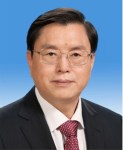
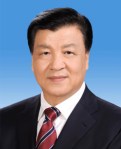
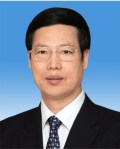
This afternoon at lunch, the new members of the Central Politburo Standing Committee of the Communist Party of China trundled out, in order: re-elected members Xi Jinping (习近平) and Li Keqiang (李克强), and newly elected members, Zhang Dejiang (张德江), Yu Zhengsheng (俞正声), Liu Yunshan (刘云山), Wang Qishan (王岐山), and Zhang Gaoli (张高丽). Other than the fact that the Standing Committee members rank number 1-7 in the country, we also know that they overwhelmingly represent the Princeling Party and the remnant strength of Jiang Zemin’s power base (Liu Yunshan and Zhang Gaoli). For those of us in Guangdong, we also learned that Wang Yang will remain in Bejing as a vice-premier, with a very good chance of becoming a standing committee member in the 19th national people’s congress. Pictures of Chinese top 7:

princeling genealogy and advanced guanxixue

Normally, I am not a fan of imperial court television dramas first because the family dynamics of dog eat dog don’t appeal and also (and primarily) because I can’t keep track of all the players. Even with a scorecard, the nuances of multiple and overlapping connections between protagonists and lesser characters evade me. There are, for example, reportedly over 400 main characters in Dream of the Red Chamber. What’s more as an American, I like watching the action. However, as far as I can tell in an imperial television drama nothing of substance ever really happens — a marriage here, a conquered nation there, perhaps, but we never see it. Instead, the drama of an imperial court melodrama unfolds through charting various levels of family ties and in turn the revelation of who respects those ties, who abuses them, and who ignores what those ties mean. In other words, family protocols reveal personal ethics — national affairs are an effect thereof.

Take, for example, a brief sojourn into Bo Xilai’s family circle. I’ve already mentioned that his father was Bo Yibo and that his son, Guagua is know for his extravagant lifestyle. Bo Xilai’s second wife, Gu Kailai is a Beijing lawyer slash Princess. Gu Kailai’s father and Bo Yilai’s father-in-law, Gu Jingsheng (谷景生) was one of the key leaders in the December 9th [1935] Movement (一二九运动) to organize resistance against the Japanese invasion. Imprisoned for twelve years (from the Anti-Rightest campaign through the Cultural Revolution), Gu Jingsheng was appointed Vice Political Commissar of the Guangzhou Military Region after his rehabilitation, leading troupes in China’s brief Vietnam War, when Deng Xiaoping secured his place among PLA leaders. In 1981, Gu Jingsheng was appointed Second Secretary of Xinjiang, the first Secretary of the Xinjiang Production Brigade, and first Standing Member of the Xinjiang Provincial Politboro.  Just a few days ago, Bo Xilai’s brother-in-law, Lt. General Gu Junshan (谷俊山), Vice Minister of the People’s Liberation Army was removed from office. Speculation is that the removal is connected to the Wang Lijun fiasco and associated corruption charges.

All this to say, the Bo Xilai Wang Lijun scandal has rekindled my anthropological interest in genealogy and its obvious connection to guanxixue (关系学). And yes, it seems that Bo Xilai’s family background is more and more the story, regardless of what he or Wang Lijun may or may not have done. Meanwhile, Shenzhen announcements have begun to remind us that in 1979, when Xi Zhongxun, father of China’s future leader Xi Jinping was Guangdong’s governor, he proposed the establishment of the Shenzhen SEZ. And in that shimmering moment of imperial court Princeling drama, Deng Xiaoping is simultaneously remembered and erased from Shenzhen history, as local leaders try to position themselves and the SEZ as close to the inner party family as they can.