time zoned urbanization

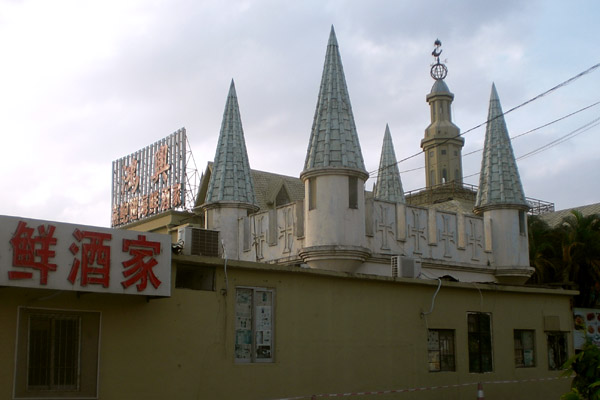
The walk from Central Walk Mall to the Civic Center by way of Central Park suggests the contradictory temporalities of Shenzhen speed, which was set when Guomao went up — one story every three days. Shenzhen Speed is time zoned urbanization, where architecture appears as a function of place X project-time subdivided by GDP expectations and the inevitable algorithm of actual buildings + entropy gains momentum in the absence of mindful inhabitation. Impressions from yesterday’s walk:

This slideshow requires JavaScript.

land reform, again.

An Old Shenzhener once complained to me that since the 1989 Crackdown, in Shenzhen “reform” has been too often interpreted to mean “refining the state system”, rather than actually reforming society. His point was simple. During the first decade of Reform, people had an opportunity to participate in and even direct the direction of development in Shenzhen. The fact of widespread participation made Shenzhen “special”. In contrast, after June 4th, Shenzhen became increasingly bureaucratized – like Beijing – and participating in social transformation was no longer possible for the common people. Instead, the Government had become the key social force and thus, social agency meant “works under the guidance of government bureaus” for the benefit of government officials and their cronies.

The Municipality’s latest “land reform (土改)” program illustrates the problem that aggrieved my friend. Last week, the government released three documents that legislate the scope and direction of land reform: The Comprehensive Plan to Reform Shenzhen Land Administration (深圳市土地管理制度改革总体方案), The Immediate Short Term Plan (2012-2015) of the Comprehensive Plan to Reform Shenzhen Land Administration, (〈深圳市土地管理制度改革总体方案〉近期实施方案(2012~2015年), and Notification of the Establishment of the Shenzhen Land Administration Reform Guiding Committee (关于成立深圳市土地管理制度改革领导小组的通知). Together these documents determine the target of reform, the method of reform, and the people who will interpret and implement land reform. Moreover, even a cursory reading the documents indicates that at stake in these documents is (1) finalizing the transfer of outstanding land rights from village holdings to the Municipality and (2) determining the status of informal property rights in urban villages so that (3) developers can more easily realize the goals outlined in the Municipality’s Comprehensive Master Plan, 2010-2020.

And there’s the rub: During the 1980s, villagers and various entrepreneurs collaborated to build the urban villages. My friend understood this situation be “true” or “ideal” reform because ordinary people could realize projects outside the purview of government plans. At the time, none of those projects were “informal” or “illegal” because the villages held legal land rights. He also thought that this freedom to develop land was the precondition for true social reform. He didn’t think that all villages had done a good job with the opportunity, but nevertheless believed that the idea of small-scale development and common participation was the point of reform. However, once the villages had been incorporated into the Municipal apparatus, that first round of development could be reinterpreted in terms of illegal buildings and informal property rights, alienating villagers and unofficial developers from participating in future development projects except as recipients of compensation packages.

Shenzhen property rights are a muddle that the Government needs to handle carefully to avoid aggravating extant (and growing) inequality. On the one hand, by incorporating village lands into the state apparatus and compensating villagers and independent landlords for their extant holdings, the Government creates ill will on two counts. First, people without hereditary land rights or informal property rights have no chance to benefit from this process. Second, with the exception of farmers, the process enriches government officials and corporate executives, which is the common sense definition of “corruption”. On the one hand, if the government were to reform property laws to allow for individuals to develop land, this would mean completely restructuring the state apparatus and concomitant property rights. This is what my friend would like to see – capitalist opportunities for individuals, rather than for government officials and large corporations. But this seems more a definition of “revolution” than “land reform” as it would mean redistributing rights to high-rises, shopping malls, neighborhoods, housing estates, and industrial areas.

Guanwai village lands were not only extensive, but also remain underdeveloped. Consequently, the experimental target of overall land reform in the 2012-2015 short term plan is Pingshan New District, while the experimental targets of “second round development (第二次开发)” are be Gonghe Community, Shajing Precinct, Baoan and Shanxia Community, Pinghu Precinct, Longgang.

shekou industrial road 7: echos of jane jacobs

One of the ongoing questions of urban planning is: what are the material conditions that support community life? To answer this question, we can’t simply look around and see what has been built, but rather have to reflect on what makes human life interesting, lively and fresh.

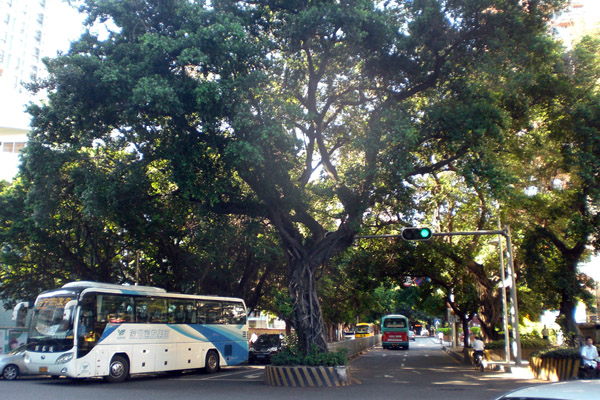
This morning I wandered Shekou Industrial Road 7 (蛇口工业7路) and realized that one of the reasons I enjoy this street is not simply the mix of residential, commercial, and industrial spaces, but also the expanse of public space and schoolyards. This public space has been created through the designation of Sihai Park and neighboring sports center, and also because the road is only two-lanes wide, with banyan trees that provide shade. Importantly, one stretch of Industrial Road 7 abuts Wanxia Village, where handshakes line-up in neat rows along one-lane roads and narrow alleys and give way to bustling urban village life.

Street life on Industrial Road 7 manifests the Chinese virtue of renqi (人气), which literally means “human air” and might be translated as “active” or “popular”. Hawkers set up stands under the trees, while elderly men practice water calligraphy on the sidewalk and pre-school children snack on steamed buns and soymilk. Window shopping (逛街) is thoroughly social as neighbors bump into each other on their way to preferred shops, or see each other’s children on their way to school. In the evening, once the sun has set and dinner bowls washed, the area becomes even more lively with families strolling and teenagers hanging out.

Admittedly, there is not much public space on Industrial Road 7. Significantly, however, many of the streets private spaces were built in the early 80s. Landscaping within residential compounds is a continuation of street landscaping, rather than planted with imported topiary that signal the end of the street and the beginning of elite consumption. More tellingly, guards do not actively prevent pedestrians from entering what are now considered low-income housing areas. Likewise, da pai dang (al fresco) mom and pop restaurants also integrate consumption into public life.

In The Death and Life of Great American Cities, Jane Jacobs documented and lamented how middle class flight from American cities to the suburbs contributed to the polarization and decay of our inner cities. In contemporary Shenzhen, a similar process is underway as the city’s middle class consolidates its identity and class consciousness through urban renewal projects and gentrification that not only result in clear razing urban villages, but also the construction of expensive malls and gated communities. The movement of people is different — the US middle class abandoned urban cores, and Shenzhen’s middle class is occupying the urban core and pushing the majority low income residents further to the periphery — but the result is the same. The unremitting blandness of these spaces announces and maintains social distinctions between the middle class and working poor, even as they homogenize differences between members of Shenzhen’s rising elite, creating an identifiable “Shenzhen” identity.

Over fifty years ago, Jacobs maintained that people like to live neighborhoods like Industrial Road 7. Moreover, she held that youngster and elders alike need accessible areas of mixed activities, cross-use of land, short blocks, mingle buildings of varying size, type and condition, and encourage dense concentrations of people. The point is to nurture marginal activities and small businesses, little restaurants and bars, as well as everything deviant, bohemian, intellectual or bizarre that make an area charming and vigorous.

I agree.

I also believe that this diversity humanizes us to the extent that we recognize ourselves in someone else’s life and consequently the wider our experience of difference, the more human we may become. In contrast, when we lay 4-lane roads without shade trees, build gated communities that isolate themselves from the street, and decide that malls, rather than parks better serve the public interest, we have proclaimed that to be human in the early 21st century is to aspire to life as a high-end mallrat.

Impressions of morning walk along Shekou Industrial Road 7, from Houhai Road west to Yanshan Road.

This slideshow requires JavaScript.

honey lake: the charm of organic kitsch

Honey Park PK OCT Bay.

In the early 1980s, the Honey Lake Resort was designed as a suburban getaway for the folks working “downtown” in the city limits that conventionally ended at the Shanghai Hotel. Almost three decades later, the Resort Area has been picked apart to make room for the Urban Planning buildings and lawns, the Lake fenced, and the concrete boxy hotels, yurts, and three story castle gradually transformed into a kitschy smorgasbord of themed dining experiences. The labyrinthine alleyways in Honey Lake transform dinner into a proper urban adventure, where the creativity of our neighbors offers unexpected worlds.

This slideshow requires JavaScript.
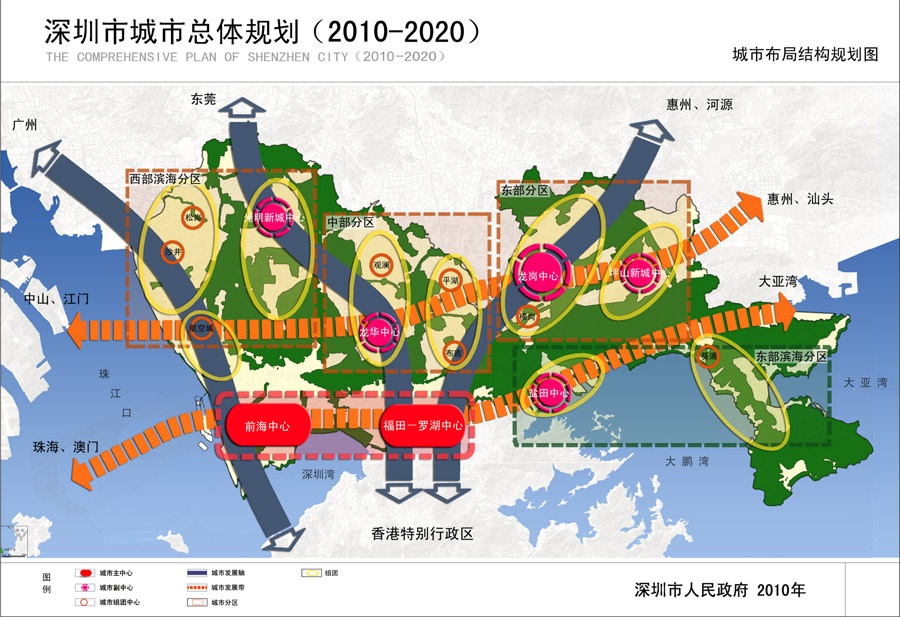
borders and corridors: one interpretation of the 2010-2020 shenzhen comprehensive plan

At first glance, Shenzhen’s 2010-2020 Comprehensive Plan seems a writhing mass of blue snakes and bright hotspots.

However, by simplifying the Comprehensive Plan in terms of the historical relationship between political boundaries and and early infrastructure in Shenzhen development, I came up with the following grid of borders and corridors, which explains the Plan’s horizontal flows, the connections to Hong Kong, and investment initiatives in New District hubs:

Three borders have enabled urbanization in Shenzhen: the border with Hong Kong, the second line, and the city limits, which abut Dongguan in the northwest and Huizhou in the northeast. Two economic corridors have facilitated Shenzhen’s growth: the Guangshen highway corridor and the Kowloon-Canton Railway. The Guangshen highway corridor parallels the area’s riparian trade routes, which were the means of Han expansion from Guangzhou southwardly on the Pearl River and its tributaries. The KCR, of course, was the British attempt to preempt and redirect the PRD’s extensive trade network.

This grid enters everyday conversation through place name protocols. For example, no one today refers to the “second line”, which evokes the yesteryears of early reform. In contrast, ever since the boundaries of the SEZ have been made coterminous with city limits, we now speak of guannei and guanwai, or “inside the gate” and “outside the gate”, respectively. Interestingly, however, I rarely hear people speak of the guanwai area well east of the railroad as “guanwai”, instead, it is more common to refer to that part of Shenzhen as “the east”.

In fact, the SEZ’s historically most important hubs are all located on this grid. Luohu/ Dongmen is the first stop on the Chinese side of the railroad, while Buji was the first stop on the guanwai side of the second line. Likewise, Shekou was the end of the old riparian trade network, activating Delta resources. Bao’an District government is found just over the guanwai side of the Guangshen highway corridor and Shajing Wanfeng Village, once called “the first village in the south” occupies the area just south of Dongguan on the Guangshen Highway corridor. Given the importance of political territorializations and infrastructure to development, it is unsurprising that the poorest areas in Shenzhen are either in (a) the guanwai area between the railroad and highway corridors (Shiyan and Guangming) or (b) the East. With the exception of Guangming, all of Shenzhen’s other three new districts — Pingshan, Longhua, and Dapeng — are located in the east, far from easy access to the railroad, let alone the Pearl River and riparian access to Guangzhou.

In the new Comprehensive Plan the old hubs appear renamed, but their functions unchanged. The Guangshen corridor has been resutured to the Pearl River through the Qianhai Center. The Luohu/ Dongmen railroad corridor has been interestingly diverted into two streams, one that enters guannei at Huanggang/ Lok Ma Chau and leaves guanwai through Guangming and a second that enters guannei at Luohu and then exits guanwai through Longgang. Meanwhile, Hong Kong has been absorbed/ extended into the Shenzhen administrative apparatus at both the Lok Ma Chau Loop and Qianhai Cooperation Zone, begging the question: will the next Comprehensive adjustment will be political integration of the two cities and the re-establishment of a first or second line at Shenzhen city limits? Indeed, the question doesn’t seem too far-fetched when we recall that for 5 months in 1997, the transition government for the Hong Kong Special Administrative Zone met in Shenzhen.

shenzhen history page

I have just finished a page that organizes 15 posts into 5 chapters which provide an overview of Shenzhen’s history. Chapters include:  a introduction Shenzhen’s “special” status, Urban Planning, Cultural Demographics, and the Shenzhen- Hong Kong border.I conclude with an assortment of conclusions by myself and others on this history.

Daban Bridge Road

The other day, Annette Kisling and I walked from Xiangnan Village-Neighborhood to Guantou along Daban Bridge Road (大阪桥路), which once paralleled the coastline, connecting the old Yamen at Nantou to Dongjiaotou, a small cove that geographically marked the entrance to the Shekou Port. The stone bridge went over a small tributary from the inner Pearl River Delta. Today, of course, Daban Bridge Road twists parallel to Qianhai Road and the tributary has been reclaimed. In addition, Nanshan District’s extensive road network has partitioned the villages/ neighborhoods that Daban Bridge Road used to link, creating city blocks. Unfortunately, these blocks to not conform to historic breaks between villages along Daban Bridge Road, but rather enforce a strict traffic grid. Pay attention not only to the diversity within neighborhoods, but also between. Enjoy.

This slideshow requires JavaScript.

handshake urbanity — xinqiang community

In 2003, Shenzhen initiated a sanitation beautification project called the “clean, smooth, peaceful project (净畅宁工程)”. The aim of the project was to clean up roads and gutters and trash and beautify public areas, which included razing the shanty communities (棚户区) that once flourished deep in the area’s lychee orchards.

How common were the lychee orchard shanties? Continue reading

(光明新区)楼村: Of what use is [urban] planning?

Located in Guangming New District (光明新区), Lou Village has the largest area of any in Shenzhen and a villager population of 4,000. Of course, it is no longer Lou Village but Lou Village Neighborhood (楼村居委会) and its population is no longer under 5,000 — and therein lies today’s tale.

At the 15th Anniversary of the Establishment of the Shenzhen Special Economic Zone, the second line (二线) still divided Shenzhen into two distinct administrative structures, the SEZ (now called guannei or “inside the gate”) and Baoan and Longgang Districts (now called guanwai or “outside the gate”). The year was 1995 and Baoan and Longgang District governments had been built and staffed, 25 urban markets soon to be precincts (镇 into 街道办事处) had been designated, and consequently the work of incorporating over 200 guanwai villages into the municipal apparatus begun. Economic advancement was an important aspect of political incorporation precisely because 15 years into reform, Shenzhen had discovered that “allowing a few to get rich first (让一部分人先富裕起来)” undermined social stability. Continue reading

old haunts

In the mid-1990s, when Nanshan District launched “Cultural Nanshan” most events were held in or around the Nanshan Cultural-Sports Center (南山文体中心), which included a sculpture museum and the Red Earth Cafe and Bar, where Zero Sun Moon, an early incarnation of Fat Bird first performed. The design and scale of the Cultural-Sports Center reflected early Shenzhen values; it was three stories high, had an outdoor stage for Everybody Happy (大家乐video) events, and small, cultural entrepreneurs rented rooms. I remember walking two-lane boulevards to use the computers at one of those shops, as well as playing go at the weiqi and western chess club.

Located diagonally across the street from the Cultural-Sports Center, the Nanshan Library was finished in time for the Handover and signaled the area’s future designs. Beijing sculptor, Bao Pao collected discarded metal and sutured it together to make the Library’s fence, which still stands. However, the Cultural Center crumbled where it stood until 2009, when Nanshan District approved an 800 million (8亿) budget to build a landmark building on the site. By this time, of course, the Coastal City mall was already open and the abutting Tianli and Poly Center Malls were nearing completion in anticipation of the Universiade. The point is that this area of upscale consumption is now called “the Nanshan Cultural Center” and the Nanshan Cultural Sports Center has been demoted to a bus station even though that’s where all the cultural infrastructure was / is being built.

Below, pictures from a walk around the Nanshan Cultural Sports Center block. Of note, Nanshan District’s neo-Confucian propaganda, the remnants of Old Nanshan, and the neoliberalization of the cityscape, including a high-concept Marriage Registration Bureau Hall and shopping plaza. Also, there will be a diamond market just around the corner.

This slideshow requires JavaScript.