渔一村:of old men and the landfilled sea

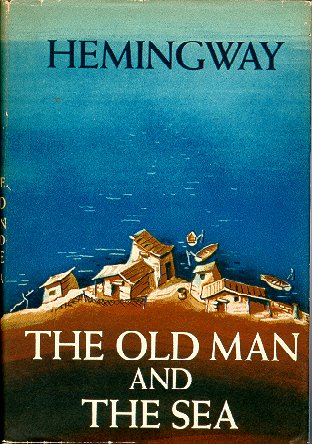
Yesterday’s bloggy romance with the sea continues and although I have shifted my gaze from Cuba to Shekou, it is worth mentioning that the writers’ emphasis on masculine conquest continues; today, in episode 8 of The Transformation of Shenzhen Villages (沧海桑田:深圳村庄三十年), Chen Hong tells the story of Fishing Village 1 (渔一村), Shekou. Again, the story begins in a village, but this is also where similarities between the two narratives end. Hemingway figured human life through the isolated figure of an old man navigating the Caribbean on a rickety skiff and superstition. In contrast, Chen Hong figures humanity through the construction of ports, trading ventures and the world-making connections that they enable, suggesting that the opportunity to launch one’s skiff is itself a political decision which once made determines the fate of villagers. For those who remember the 1988 television documentary, River Elegy (河殇) which linked China’s decline and ultimate humiliation to the Ming decision to ban maritime activity, a not-so-subtle critique of Maoist isolation, Chen Hong’s passion for the sea and the [free trade] world it symbolizes is self-evident.

Episode 8 opens by juxtaposing images of Ming and Qing trade centered on Guangzhou with pictures of the construction of Shekou, reminding viewers that Zheng He (郑和) set forth from or loaded supplies at Chiwan Port at least five times. Lest the viewer forget the consequences of isolation, the opening sequence ends with bleak, black and white footage of a backwater port, overgrown and clogged with weeds, small wooden boats berthed in stagnant waters. Boom! The first explosion opens the door to new world order, which is also, new village order.

Traditionally, the villagers of Fishing 1 weren’t actually villagers but individual fishing families who lived on boats, coming onshore to sell the day’s catch. Families came from all over the Pearl River Delta forming a community through their livelihood, rather than through ancestry or even a common version of Cantonese. However, in 1959, the political decision was made to organize them as a brigade (生产大队). They were 90 households with a total population of 450 people and settled as four small production teams (小队) in Nantou, Gushu, Neilingding Island, and Shekou. The Fishing Brigade worked to modernize the fleet and in 1978 during a meeting on scientific production, Hua Guofeng actually gave the brigade a first place award. Indeed, at the beginning of Reform, the Brigade had 69 ocean fishing vessels, 72 transport ships, and 18 oxygen boats that fished the South China Sea and Pearl River Delta bringing in fresh seafood for Cantonese dishes and by 1992, had accumulated enough capital to invest in modern industrial deep sea fishing vessels.

From 1978 through 1986, the Fishing Brigade lived the socialist dream, which was a traditional Chinese dream; the men fished, going as far away as Guangxi, the women kept house, children went to school and had medicine, and all ate in a common canteen, where the work team provided delicious food, including squid and shrimp. The system was called the 8 provisions (八包). However, by the late 80s early 90s, the scale of urbanization and land reclamation meant that traditional fishing areas had been contaminated and fish breeding grounds buried, and it was impossible to continue living from the sea. Suddenly, the advantages of the sea declined as property values soared and Fishing 1 faced a contradiction that many other villages would eventually face — what to do when urbanization decimated the conditions of traditional livelihood?

Once the sea was gone, Fishing 1 had no way of making a living because it did not have any land, except for that which the government had given it for housing in 1959, including a section on Neidingling Island, which Fishing 1 decided to develop as a resort and in 1992 as part of the guannei rural urbanization movement, the Fishing Brigade became the Fishing 1 stock holding corporation. However, after Fishing 1 had already invested their accumulated capital and borrowed against the development, Shenzhen and Zhuhai began a court case over who actually owned the island. Traditionally, the Island belonged to Zhuhai. However, in 1955, the Center had assigned Neidingling to Baoan, but no one could actually prove whether or not the transfer had gone through until 2002, when a copy of 1955 decision was found. In 2009, the Guangdong Provincial government finally ruled in favor of Shenzhen’s claim to Neidingling Island. However, the case raged long enough to impoverish Fishing 1 as the joint stock corporation/ fishing brigade/ village could no longer fish and except for Neidingling had no other traditional land rights. Indeed, by 2009 when the case was settled, Fishing 1’s deep sea fishing rights had already been bought out by China Merchants, which in turn sold them to Wanxia, one of Shekou’s original land-based villages.

And so here’s the neoliberal twist in Chen Hong’s story of old men and their vanishing sea: Fishing 1 re-entered Shenzhen urban planning as part of the Together Rich Project (同富裕项目), and over the past decade restructured and invested elsewhere: an industrial park in guanwai Gongming and fish breeding farms in Zhanjiang, for example. In addition, the Municipality organized training for fishermen to learn new skills. Nevertheless, the members of Fishing 1 have not only been proletarianized over the past 30 years, but are still paying off one of the debts that fueled Shekou’s growth. After all, Fishing 1 had no rights to any of the coastal property developments that enriched both China Merchants and neighboring Wanxia Village. Instead, Episode 8 ends with exhortations — from the Municipality and from the filmmaker — for individual development and initiative, ironically and inexorably returning us to Hemingway’s sea, where old men struggle feed themselves because they have been isolated by .

For more on my obsession with Houhai Land reclamation, more entries, here. A wander through the earliest Shekou landmarks, including the Shekou and Neilingding fishing families settlements, below:

This slideshow requires JavaScript.

reading the old man and the sea (in shenzhen)

I am currently reading The Old Man and the Sea with two 16 year old Chinese high school sophomores. They are cousins. One is a “good” student, strong and sly in the self-protective way of students who know how to work the system, but do not reach the upper echelon of test results. The other is delicate and shy, a “top” student, who is being groomed to test into Beijing University, producing results (出成绩) for her school and family. The good student knows that unless she goes abroad, she will no doubt end up at Shenzhen University, no matter how much harder she works at school; fortunately, her parents can afford to send her anywhere and so she is not too sly, and her eagerness to model good student answers quickly gives way to assertive self-confidence. The top student already struggles with contradictory desires and ambitions. She yearns to study abroad, but her homeroom teacher has already begun pressuring her to stop studying for the TOEFL and to use her extra time more productively — taking practice gaokao tests or studying the junior year high school curriculum. What’s more, the child of divorce she knows that her mother can’t afford Chinese tuitions, let alone foreign and thus she must secure a scholarship  wherever she attends university.

We sit around a square table, tracking the relationship between the old man and the marlin. Santiago believes that his fish is out there, and his quest begins when he sights the purposeful circling of a man-of-war bird. His faith is rewarded and the contest engaged. As the fish pulls the man further out to sea, away from from the lights of Havana and known landmarks, the old man endures, charts his progress against the stars and his suffering, and the fish becomes more than a fish — first a friend, then a brother, more noble, but less intelligent, a brother who must be convinced that he is less than he who came to kill. It is a grand battle that does not end in glory, but the realization of hubris, “I shouldn’t have gone out so far, fish,” the old man says to the marlin’s corpse, which has been strapped to the skiff and is being inexorably eaten by sharks. When the old man finally drifts ashore, all that remains is an 18 foot skeleton and the certainty of death.

I chose The Old Man and the Sea because, well misgivings about Hemingway notwithstanding, he knew his craft. His language is deceptively simple. Any sentence taken out of context seems ordinary, common even, but together his words sculpt moral landscapes that make exquisitely salient the brute masculinity and ultimately tragic consequences of lives lived against nature.

“Americans aren’t very peace-loving,” the good student concludes.

“Did the old man have faith in luck or faith in the sea?” the top student asks.

Thus, yesterday’s lesson transformed from a discussion about human limits into a conversation about how being human is culturally defined and experienced. The old man is not their old man, his fish is not their fish, and the sea that relentlessly pulls us out of our depth, that tests our forbearance and ultimately claims our soul, that sea does not figure their dreams. It may be a generational difference. But perhaps not. Certainly the new US passport is replete with pictures of men taking on nature — cowboys and seamen ruggedly occupying the western plains and Pacific waves, respectively. And that’s the point: the girls read with me because the good student’s mother is a friend and she has entrusted her daughter to me (and yes those words were used “交给你”) for old-fashioned Chinese purpose: edification rather than simple instruction. The goal of our bi-weekly meetings is not to improve English test scores or practice oral English, but rather close reading of novels, essays and poetry, to help the teenagers learn to navigate literary nuance elsewhere, which it turns out is also learning to simultaneously recognize oneself and one’s Other despite and across epic difference, which isn’t quite what Hemingway had in mind when he figured Man through his engagement with the Fish, but nevertheless where yesterday’s lesson ended.

early edition vs weibo: who are you reading on the way to work?

Successful monopolies not only dominate an industry sector, but also provide enough diversity within their fiefdom to create the illusion of choice and competing views. Take, for example, the Shenzhen News Publishing Group, Ltd. (深圳报业集团发行有限公司), which was formed in 2002 through the merger of Shenzhen Special Zone News Group and the Shenzhen Commercial News Society. Today, the Group publishes ten newspapers and five journals, owns a book publishing house, and operates the city’s largest news website (深圳新闻网).

The Group has identified four primary news audiences. Shenzhen Daily (深圳日报) offers a Party-centric take on news of the city, country, and world and its audience is self-identified through their (actual or aspired) level of integration into the Municipal apparatus. Shenzhen Commercial News (深圳商报) provides daily reportage on the economy and investors, businessmen, and white collar workers constitute its intended audience. Shenzhen Nightly News (深圳晚报) is a comprehensive newspaper aimed at blue collar workers and ordinary people, who are interested in gossip, local happenings, and a concise reiteration of who’s in charge. Jing Bao (晶报) seems aimed at Generation 80, who are interested in hip takes on the news, more arts reportage, and have slightly “new social movement” impulses, including interests in environmentalism, social justice, and healthy yoga lifestyles.

What happens when new social media challenge that monopoly? Insight comes from how the Shenzhen News Publishing Group has targeted morning commuters on the Shenzhen subway.

During the Shenzhen morning commute, subway riders read Subway 8 a.m., read weibo, or space out; few actually talk to each other or watch the incessant advertising broadcasts on the LED screens (four to a car so that everyone can watch). Shenzhen News Publishing prints Subway 8 a.m. (地铁早8点) under its Shenzhen Metropolitan (深圳都市报) brand and distributes it to commuters on their way to work. The free newspaper unabashedly rehashes news in the most provocative ways, foregoing either analysis or background, reproducing in paper form the weibo experience. In yesterday’s edition, for example, the drought in Lijiang is covered in 91 characters, with a picture three times the size of the text area. Likewise, a 131 character report on Shenzhen’s heatwave was sensationalized with an over-saturated image of a human silhouette against an azure sky and white cloud. In a more explicit weibo reference, a story about a drunken subway rider who used a fire extinguisher to smash a window and then attacked the subway worker who tried to stop him included four surveillance coverage photos, a brief description of what had happened, and a report of weibo cries for human flesh. What’s more, Subway 8 a.m. does not include political news; this isn’t a newspaper, but a collection of sensationalist stories, sports coverage, and gossip.

The differences between Subway 8 a.m. and weibo are also instructive because they remind us that although the weibo and Subway 8 a.m. provide the same content, nevertheless the form of reporting is critical both to a reader’s experience and  (as yet) to capitalist experience, indicating why the Shenzhen Publishing Group has decided to publish a free gossip rag. On the one hand, from a reader’s perspective, Subway 8 a.m. comes in paper form with all the advantages thereof: bigger characters for easy reading, space for somewhat longer stories so that readers can choose between weibo-shorts and more detailed reports on why your child is always coughing or services for wishing neidi mothers, “Happy Mother’s Day!” Consequently, Subway 8 a.m. appeals to those of us who are tired of backlit spaces or enjoy the feel of newsprint or may even want to read an article that will occupy our imaginations for longer than it takes to ride from the Window of the World to the OCT station. On the other hand, from a business perspective, Subway 8 a.m. includes space for advertising. The early edition’s front page includes the masthead, one headline, and two half-page advertisements. Consequently, in between the front-page and the back-page gossip (“We no longer believe in love” was the title of the article on Zhang Yimou’s decision to sign with CCA and split with Zhang Weiping’s Beijing New Pictures (北京新画面影业公司) and yes it was a report on a weibo report!) are 22 pages filled with advertisements that look suspiciously like weibo stories — compelling pictures and seductive blurbs, such as: luxurious homes on the subway line.

Point du jour: the Shenzhen News Publishing Group has met the weibo challenge to its monopoly over local news (and sports and entertainment and society) coverage by becoming a print edition of weibo plus. Like weibo, Subway 8 a.m. is free-of-charge and content-lite, plus easy to read characters, plus slightly longer stories, and plus plus: advertising and info-stories.

launching

These past few days, rain has cleared Shenzhen skies and when the sun comes out, everything sparkles. Yesterday, I followed the rays to the Spring Cocoon, which has been opened for commercial use. The walk from Coastal City to the sports center was once landscaped to assert the SEZ’s green ambitions. However, the corridor is now under construction. In the east, another shopping mall and in the west, lest we have any doubts about the Municipality’s futuristic plans, China State Construction (中国建筑) has begun laying the foundations for the Aerospace Science and Technology Square. Impressions, below; past walk when the Cocoon was under construction, here.

This slideshow requires JavaScript.

as yet shenzhen has no capital h history…

The experience of walking Shenzhen is significantly different from visiting, Beijing or Shanghai, Xi’an or Guangzhou, where the meaning of the past has already been codified, renovated, and can be consumed on a nostalgic tour. In school we learn that Beijing’s history is Ming-Qing imperial, Shanghai’s history is East-West colonial hybrid, Xi’an’s history is ancient, while Guangzhou’s history is South China sea commerce and migration. We then go to the respective tourist destination to have our knowledge confirmed and perhaps enriched by and through an appropriate activity. We walk Beijing’s hutong and the Forbidden City, drink coffee or cocktails in a stylish restaurant in Shanghai’s shikumen and the Bund, admire Xi’an’s beilin and terracotta soldiers, and wander the small shops of Guangzhou’s West Gate. Indeed, each of these tourist destinations succeeds as such precisely because the site metonymically represents the respective city’s place in China’s “5,000 years” of civilization. We leave thinking we have a deeper understanding of where we have been. Maybe we do. Most likely we don’t. But there is something reassuring in having our stereotypes confirmed, and those stereotypes are what I mean by capital h history.

Now, there are historically significant sites in Shenzhen — Old NantouDapeng Fortress, the Chiwan Tianhou TempleDongmen, and Yumin Village. However, municipal efforts to promote Old Nantou and Dongmen, notwithstanding, none of these historical sites has captured the imagination of either residents or visitors. I suspect this is in part because each of these places represents a portion of Chinese history that is already preserved elsewhere. Old Nantou and the Chiwan Tianhou Temple, for example, represent ancient efforts to develop the Chinese salt trade and settle the Pearl River Delta, but there are finer examples of that era to be imagined and seen in Guangzhou, while ancient Chinese history is more elegantly preserved in Xi’an and Jiangnan. Even the Tianhou sea cult is more closely identified with Tianjin and Xiamen than it is with South China temples and shrines. Likewise, Dapeng Fortress is an outpost of Ming-Qing military imperialism, but of a failed variety, rather than successful garrisons to be explored throughout the north.

Dongmen and Yumin Village are perhaps more representative of Shenzhen’s importance as the epicenter of early reform. However, both are historically compromised. Although Dongmin is identified with so-called Shen Kong commerce, for example, there really are more upscale malls throughout both Shenzhen and Hong Kong where one might purchase global products. And what about Yumin Village? Deng Xiaoping visited Yumin Village in 1984, inspecting one of the three-story private homes that local villagers had just built. He declared that Shenzhen speed was a good thing and that the rest of the country should follow. The 1995 exhibition to commemorate the 15th anniversary of the establishment of the Shenzhen SEZ included an installation that reproduced the interior of one of those homes, which at the time, was more luxurious than the homes of urban cadres in Beijing and Shanghai. Here’s the rub: although Yumin Village has been integrated into the Shenzhen municipal apparatus as a Luohu neighborhood, nevertheless the actual buildings that Deng saw and even the home he inspected were razed over ten years ago. There is a history board there, but nothing from 1984 remains and Yumin Village continues to function as a border urban village, with low rents for migrants who work nearby, spas and massage parlors for visiting Hong Kong people, and places where villagers play mah jong and gather to drink tea and gossip.

The absence of an agreed upon master narrative means that walking Shenzhen allows individuals to judge what does and does not represent capital h history in the SEZ. Now Shenzhen does boast upscale skyscrapers that represent achievements within this process — Guomao, Diwang, and the Civic Center all come to mind and are worth a visit. Those wanting to see the “real” capital h historic Shenzhen, I suggest visiting either an industrial park or an urban village. Early 80s work unit housing in Luohu and Shekou are also great examples of how industrial urbanization transformed the area. Personally, however, I believe that if Shenzhen has a place in China’s 5,000 years narrative it is as an epicenter of rural urbanization, including transformation of the local environment, proletarianization of rural migrants to SEZ factories, and the forms of urbanization that returned workers have promoted or their remittances enabled. However, even after over 30 years of reforming and opening Baoan villages, the city is only just starting to come to terms with this legacy and most villages, even the most famous such as Baishizhou are scheduled to be razed. All this to say that as yet, the meaning of Shenzhen’s cultural and historical inheritance is still up for grabs because we are only just starting to come to terms with the urban legacy of Reform and Opening. This means that as yet the city has no capital h history and no corresponding historical sites that one can visit and say, “Yes, I’ve been to Shenzhen and I know where I’ve been.”

Walk anyway. The Shenzhen you experience will be only loosely tethered to stereotypes about China and you might make something else of it. Below, impressions of a recent walk in Fuyong.

This slideshow requires JavaScript.

the dragon king

At the foot of Fenghuang Mountain, Fuyong, there is a small temple to the Dragon King. The Wens of Baishixia renovated the temple in 2003. Nearby, the outer row of factories in the Dragon King Temple Industrial Park have been given a faux traditional facade. Above, squatters inhabit small, concrete buildings at the foot of the stepped lychee orchard. Impressions.

This slideshow requires JavaScript.

怀疑: A Cross Cultural Parable

This and next weekend, the teachers of the Shenzhen University Department of Acting are performing a Chinese adaptation of Doubt: A Parable by John Patrick Shanley, or 怀疑 as it is translated. After the show, several friends approached me and asked me what I thought of the acting. I said that I had enjoyed the performance. They looked at me strangely and pressed, “No, really, what did you think?” Evidently, they didn’t like it so I asked what they thought. Answers included, “I keep hoping that they’ll make me get nervous with the anticipation of waiting to see the show.”

“And you don’t feel that way?”

Flat out, “No.”

Another mentioned that he thought the actors were doing the best they could. But. But?

“They just don’t get the story. I mean, I don’t feel it with them.”

“What about the story?” I started asking, “Is the question of Doubt/ 怀疑 important to you?”

A considering look and then, “The actors are supposed to make me care about the topic. That’s their job.”

As the title suggests, Doubt is a teaching story, figuring the incessant problematic of faith in rigidly dogmatic Sister Aloysius’s certainty that the personable Father Flynn sexually abused Donald Muller, the school’s first black student. The story is set in the Bronx, during the fall of 1964 and the historical background matters because the characters also function allegorically for larger social shifts and ruptures. In 1962, Vatican II opened, but would not close until 1965, when the Council famously challenged the relationship between the Catholic Church and the modern world, acknowledging that truth could exist outside the community and declaring that the mass could be given in vernacular languages instead of Latin. Sister Aloysius embodies these past certainties and the Church’s previously unquestioned authority in all things moral, which tended to be, well everything; she suspected children of harming themselves to play hooky and saw sexual abuse in slight gestures. In contrast, Father Flynn represents the newer, hipper face of the Church; he plays basketball, wants to sing secular Christmas carols, and likes his tea sweet, perhaps even, too sweet, hmm?

Similarly, even though Donald Muller never appears onstage, his shadowy presence signals that like the Catholic Church, New York society was also changing and nowhere more than the Bronx. In 1963, Robert Moses’ Cross Bronx Expressway was completed. The bridge displaced families and businesses, was a constant source of noise and air pollution, and catalyzed the decline of the South Bronx from a district of family neighborhoods and businesses to the poorest district in the United States, despite its proximity to Manhattan. In fact, the South Bronx erupted into American national consciousness in 1977, when during a baseball broadcast, Howard Cosell exclaimed, “Ladies and Gentlemen, the Bronx is burning!” Sister James and Mrs. Muller are left to deal with the spiritual and practical aftermath, respectively. Sister James agonizes over the meaning of faith when innocence has been shatter and Mrs. Muller begs to protect her child despite his “differences”. Donald is black and may or may not be “that way” — his father and former classmates regularly beat him because they suspect he is — although Stonewall was only five years in the future, 1969.

Contemporary history also shapes reception. In 2002, the Boston Globe broke the story of sexual abuse in the Boston Archdiocese. Shanley first staged Doubt and won the Pulitzer in 2005. Soon, productions had been mounted in Australia, Singapore, the Philippines, and New Zealand. Roman Polanski directed the play in Paris; it was also staged in Venezuela and London. In 2008, Meryl Streep and Philip Seymour Hoffmann performed the antagonists, Sister Aloysius and Father Flynn. Clearly, Shanley’s nuanced exploration of moral ambiguity resonated with English-speaking audiences precisely because it resonated at so many levels — historically, spiritually, and personally. Or as an older Catholic friend summed up his response to the play, “Of course he did it and yes, she’s a bitch. But still, none of that changes the truth…” And implicit in this statement, reverberating through our souls is the desire to believe, to have faith. And yet, we doubt. As Shanley elegantly described our situation, “For those so afflicted, only God knows their pain. Their secret. The secret of their alienating sorrow. And when such a person, as they must, howls to the sky, to God: ‘Help me!’ What if no answer comes?”

And therein lies our cross-cultural rub. For my Chinese friends there was no story except as conveyed by the actors. 怀疑 means doubt and suspect, and is often used to describe situations when someone may or may not be lying, as in, “I suspect she’s actually dating him,” or “I suspect he’s hiding something.” In the final scene, when Sister Aloysius cried, “我怀疑!” the audience seemed confused, unmoved by the Sister’s predicament. Maybe had cried, “无地自容” the audience may have understood that the foundation of her life had shifted, and she would never again act from life-affirming conviction. Perhaps not. Nevertheless, for those of us raised Irish-American Catholic, a profound chasm separates religious doubt from secular suspicions. We are taught, after all, to render unto Caesar, but in the last instance, when forced to choose, to vote our conscious, so to speak, we move within and against the heart’s fragile certainties; we yearn to be one with God and he is silent, but we must act as if he had answered our call. Thus, in the final scene, when doubt brings Sister Aloysius to despair, I understand. I am with her regardless of the quality of the acting. The acting was sufficient to move me because, as Stanley reminds us, “Doubt can be as powerful a bond and sustaining as certainty,” which I amend with the cross cultural caveat, “especially amongst former Catholics…”

Exporting the Shenzhen Model

The Shenzhen Model not only shapes neidi development, but also the form and content of China’s recent push to expand and develop its international presence. Friend Jonathan Bach directed me to the article, African Shenzhen: China’s Special Economic Zones in Africa by Deborah Brautigam and Tang Xiaoyang. The article contextualizes contemporary Chinese investment in Africa, concluding that:

“These zones are using an unprecedented business model in Africa. Although there are exceptions, most economic zones in Africa, especially sub-Saharan Africa, have historically been developed and operated by governments, and the results have often been disappointing (FIAS 2008: 31). In China’s own zones, government agencies were also responsible for their development, with generally good results. However, the new Chinese zones in Africa are not being planned by government bureaucrats and given to Chinese firms to implement. Instead, they are designed and established by Chinese enterprises spontaneously according to their assessment of business feasibility. The Chinese zone developers are expected to bring future-oriented design, high-standard infrastructure and world-class professional management to help industrial investors survive the harsh market environment in Africa and facilitate their growth.

In some parts of Africa, clusters of dynamic industrial development have arisen spontaneously, as private initiatives. If the expectations for the Chinese-run zones are realised (and the jury is still out on this), these cooperation zones could form a synergistic third model, combining the market forces of existing clusters with the systematic organisation of the top-down model. If so, this would help the business sustainability of the zones. The scale and experience of the developers mean that they are less vulnerable, and better connected to networks of capital, ideas and support than Africa’s existing clusters.

These developments may yet come to naught, given the obstacles that have beset past efforts to develop economic zones in Africa. They face significant challenges of inclusion, communication, and integration with local economies. Yet the timing is right for some African countries to catch the new wave of investors coming out of China. If even some of these experiments lead to a genuine transfer of knowledge and opportunity from China to Africa, much as happened with Japan and south-east Asia in the 1970s and with Hong Kong and Mauritius in the 1980s, employment could see significant gains and, in some spots, long-delayed industrial transitions may yet be realised (CHINA’S SPECIAL ECONOMIC ZONES IN AFRICA 51-2).”

To get a sense of why export Shenzhen and not Chongqing, check out the urban distribution of China’s top 679 enterprises. Not unsurprisingly, Beijing’s national state-owned enterprises dominated the list and Shanghai came in second. However, Chongqing had a mere 18 companies in the top. In contrast, Shenzhen came in third, with 52 top company headquarters. Moreover, the Shenzhen companies tended to be in the hi-tech, financial, or service sectors, representing the highest growth in new, rather than traditional industries and are precisely the companies investing in Africa.

Shenzhen-based Huawei‘s global expansion continues to accelerate, for example. Founded in 1987 by Ren Zhengfei, is the largest China-based networking and telecommunications equipment supplier and the second-largest supplier of mobile telecommunications infrastructure equipment in the world (after Ericsson). Likewise, Shenzhen-based Tencent made Forbes Magazine’s list of Asia’s Fab 50 companies and although the company is not yet in the China 500, it is the country’s largest and most-used Internet service portal. Other top Shenzhen companies include: Ping An Insurance (finance), ZTE Corporation (telecommunications), Vanke (real estate), and OCT Group (real estate).

And yet. These rankings indicate increasing inequality between regions, also explaining the ongoing appeal of Maoism.

怀德村:virtue’s rewards

It’s been a while since I’ve summarized an episode from The Transformation of Shenzhen Villages (沧海桑田深圳村庄三十年) and so today, episode 6: The Secret of Huaide Village (怀德的秘密), which puns the village’s name and also means “the secret to cherishing virtue”.

The episode opens by telling viewers that Huaide is a revolutionary village, which contributed over 40 soldiers to the People’s Liberation Army. The connection between good Party leadership, virtuous villagers, and getting rich is then personalized through the story of Pan Baliang, a Huaide villager, who fought in the Korean War, (or the Resist American War as it is known in Chinese). However, during the Cultural Revolution he was jailed because his children were abroad, and was only to be rehabilitated in 1980, when out of gratitude for his fellow villagers continued support, he petitioned the village/ brigade if he could open a factory.

In 1988, Huaide was chosen as the location for Shenzhen’s Baoan International Airport. At the time, the SEZ decided that guannei land should be saved for urban development, rejecting a proposal to build at Baishizhou, which was then considered the suburbs and choosing instead to stimulate the guanwai economy by converting Shenzhen’s largest duck farm into an international airport. The Shenzhen airport expropriated over 1,000 mu of village land and in return Huaide received a compensation package of 3.5 million yuan. The question became: should the sum be divided evenly and distributed to each villager (as many villages had chosen to do) or should the village create a jointly held corporation and invest the money in common cause?

In 1988, guanwai New Baoan County was still rural. This meant that the village was still organized as a collective brigade, which provided the organizational infrastructure for Huaide’s subsequent development as a jointly held corporation. Huaide’s current CEO and current Party Secretary, Pan Shansen earnestly explains that Huaide Party leaders understood that unless they could correctly direct the thinking of the villagers, the village was in danger of making a collective mistake. Collective and Party leaders then went to work on villagers with dissenting opinions in order to make sure that everyone was on board with the next step — using the money for capital investment to build and manage Cuigang Industrial Park. Pan Shansen then expresses his gratitude for the previous Party leaders’ foresight in using the Airport compensation to create a strong, collective economy.

Pan Shansen describes the work of creating “a center where there was previously no center” as arduous and only possible through the cooperation of the people and their government. In addition to creating a large wholesale furniture market, in 1996 Pan Shansen established a venture capital fund that provided interest free loans to young villagers who wanted to start up companies. The fund started with 1/2 million when and grew to 2 million, and loans grew from 20-50,000 per project. In 2005, this venture capital project was expanded through collaboration with Shenzhen’s rural bank, providing low interest loans of up to 300,000 yuan to Huaide Villagers. By 2010, when the documentary was made, in addition to the villages collected holdings, over 40 families had used Village venture capital to create family businesses.

Fiscal conservatism of the defining features of Huaide Village’s success. Huaide Village has its own “constitution” that requires any private investment over 5 million yuan to be approved by the village, they set up a legal aid office for villagers to consult when writing contracts, and since 1992 have not sold any village land rights. Telling, Pan Shansen makes a point of reminding documentary viewers that Huaide Villagers are farmers — to break their ties to the land and the village is tantamount to destroying what makes them who they are, regardless of how they actually make money. Land is at the heart of Huaide’s neo-Confucian CCP virtue and unlike many Shenzhen villages that no longer have collective land, Huaide still owns almost 1/2 of the land they owned before 1980. What’s more, the Village has actively purchased land rights from other Shenzhen villages, leaving its own land for future use.

The rewards of Huaide’s virtue are a neo-Confucian-socialist hybrid capitalist success story, or as it is sometimes said, villagers washed their feet and left the paddies. In addition to its village venture capitalist fund, Huaide invested in social services and local culture. Huade provides medical insurance, education, including college scholarships, and old age activities for its 700 villagers, and in 2010, its Lion Dancing Troupe was the only village level troupe to receive an invitation to perform at the opening ceremony of Belgium’s Chinese Culture Festival. And thus, the moral to this episode tallies with Shenzhen’s ongoing campaign to promote Confucian ethics: good party cadres are at heart neo-Confucians, serving their people, who become collectively rich. In turn, inquiring minds wonder: to what extent has Huaide’s ethical sensibility extended to the organization of workers’ rights in the village’s three industrial parks?

Cultural postscript: the Lion Dance Troupe is talented and fun. Check out a performance, here.

three class theory: speculating on the scale and possibility of reforming china

A while back I heard a princeling turned Shenzhen nouveau riche (and they do surface every now and again, entrepreneurs in their late 50s and 60s, who came to the SEZ to live well below the national political radar, but nevertheless take advantage of their status to reap economic benefits in the city that launched Reform) half-mockingly challenge a lunch table of intellectuals, saying:

China has three classes — high ranking officials (高干), national intellectuals (高知), and peasants (农民). Officials need help governing and are good to those who help them, but that’s not the important issue. The real question is: do you really want to share power with peasants?

That smug question provoked self-conscious chortles because most at the table were low-level national intellectuals, not peasants, no, but certainly ecclesiastes, who Gramsci defined as the category of intellectuals “who for a long time…held a monopoly of a number of important services: religious ideology, that is the philosophy and science of the age, together with schools, education, morality, justice, charity, good works, etc. The category of ecclesiastes can be considered the category of intellectuals organically bound to the landed aristocracy.”

The a-ha moment in “three class theory” is the emphasis on political, rather than economic power. Take a look at Chinese society and what becomes obvious is that high-ranking officials are, by and large, China’s property-owning class and national intellectuals are, by and large, members of the bourgeoisie. Within each of these classes, of course, exist various opportunities to confirm and strengthen social status, as well as opportunities to transfer and exchange socially valued goods, including money, but also including housing, medical care, and other social benefits. In contrast, peasants are those organically tied to the land, with all that the status has historically entailed: providing quota grain under Maoist collectivism to fund socialist urbanization, and presently being excluded from China’s urban boom except as members of the proletariat. The point, of course, is that in Chinese society economic opportunity is a function of political and social status, rather than the reverse.

The status of peasants and their ties to land are at the center of Shenzhen’s development.On the one hand, as rural areas urbanize, the question of land comes to the fore and in it we see how officials and intellectuals cooperate to expropriate land and justify its expropriation. In this scenario, the class struggle is over the terms of proletarianization and the creation of what are called “peasant workers (农民工)”. On the other hand, to the extent that villages retain control of their land and pursue capitalist projects, we see the stability of the three class system as local systems reproduce this hierarchy, producing “local emperors (土皇帝)”.  In this parallel scenario, the struggle is over the extent to which local emperors and local intellectuals might launch themselves into national politics. Obviously, although both historical trajectories transform individual lives, it is also clear that these changes are not bringing about a more just society, but rather using previous injustices to make and legitimate power grabs and the concomitant distribution of the spoils.

As China enters its fourth decade of reform, Gramsci’s call for intellectuals to theorize and provide alternatives to the present situation still haunts us. The fact that US and Chinese leaders continue to cosy up to one another and that US and Chinese intellectuals find so much in common makes salient the compatibility of US neoliberal ideologies and Chinese ideologies of socialist exceptionalism. However, this ideological compatibility has blinded many of us to a simple truth; the quality of life for Chinese nongmin remains the standard for evaluating the scale, possibility, and social forms of Reform and Opening, not the cross-cultural comfort level of high-ranking officials and national intellectuals, whatever their passport status may be.