bogang, shajing, bao’an, shenzhen

Shajing is a large subdistrict in northern Bao’an. Until the road system took shape and the second line ceased to operate as a strict boundary (both circa 2003-4), most locals went to Changping, a market town in southern Dongguan when they wanted to purchase or enjoy those things that were only available in a town. Historical Shajing comprises three main areas: the oyster settlements, Bogang, and Wanfeng. Indeed, one of the pleasures of visiting a Shajing neighborhood is not only its architectural and cultural diversity, but also the reminder: Shenzhen has only become important recently. Historically, the largest settlements were located along the northwestern coastline in the Fuyong-Shajing plain.

Continue reading
玉律–thoughts on the shifting cultural geography of shenzhen urban villages

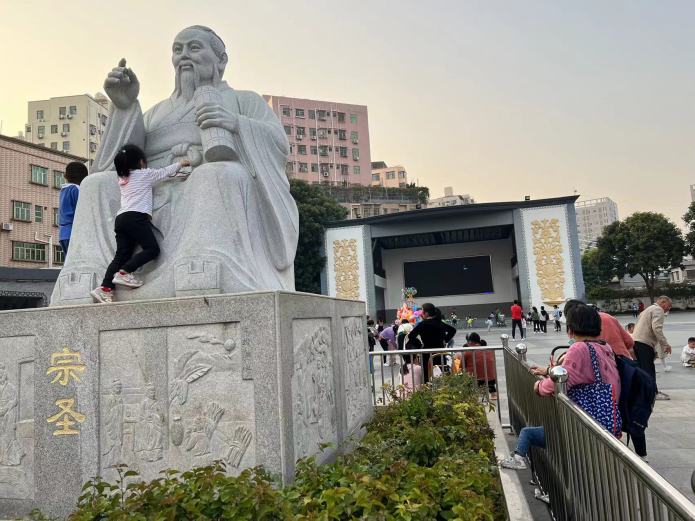
One of the driving forces behind cultural preservation Xinqiao (新桥) and neighboring Yulv (玉律) is the 新桥曾氏仕贵公理事会, which for the moment I’m translating as the Xinqiao Zeng Surname Council, rather than Zeng Family or Zeng Clan. The reason I’m opting for literal translation of 氏 is that during the times that I have visited Xinqiao and now Yulv, the emphasis has been on the family connection, rather than on explicit kin connections.

Continue reading

baishizhou village: a return of the repressed-what’s in a name mash-up

Most are aware that the area we once knew as “Baishizhou” was located north of Shennan Road, comprising four villages–Shangbaishi, Xiabaishi, Tangtou and Xintang. The neighborhood’s name derived from the “Baishizhou” subway station. In turn, the station was named for the historical Baishizhou, a mudflat or sandbank, which was located south of Shennan Road. Historically, our Baishizhou was a continuation of historic settlement patterns, while Baishizhou Village seems to have emerged more recently. Nevertheless, the demolition of our Baishizhou has led to the emergence of a new Baishizhou and this new Baishizhou has a telling (and frankly distressing) general layout. Below, I give a brief overview of the layout and then a brief history of the place name, Baishizhou. And yes, its more speculative than conclusive. Reader be warned.

Continue reading

SZ8X80208//The Myriad Transformations//City on the Fill: Oyster Beds

By 2003, the oyster farmers who worked the coastline that would be reclaimed as Ocean City were removed so that more coastline could be reclaimed. At the cusp of that transformation, I walked the coast that was still littered with oyster shells, sanpans, and poles that had been used for fishing nets. An old border tower stood, unused for years until it would be occupied by squatters after the next phase of reclamation.

This slideshow requires JavaScript.

Continue reading

local flavor: shajing

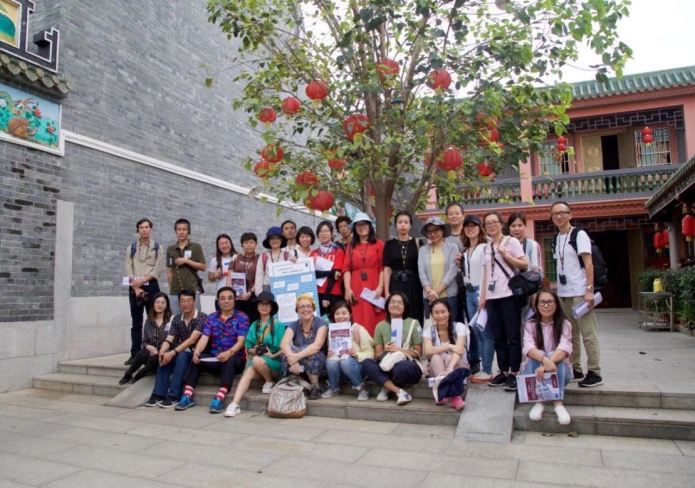
On May 25, 2019, Handshake 302 was honored to have Cheng Jian lead the fifth tour of Urban Flesh and Bones—Local Flavor: Shajing.

Continue reading

a special zone avant la lettre: old shajing

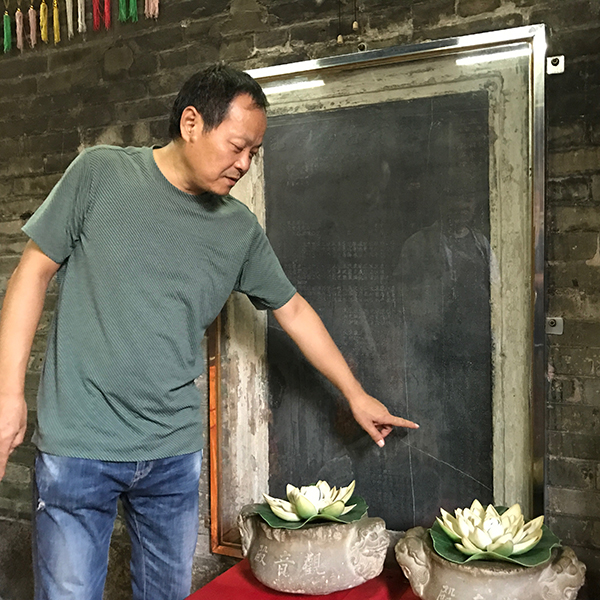
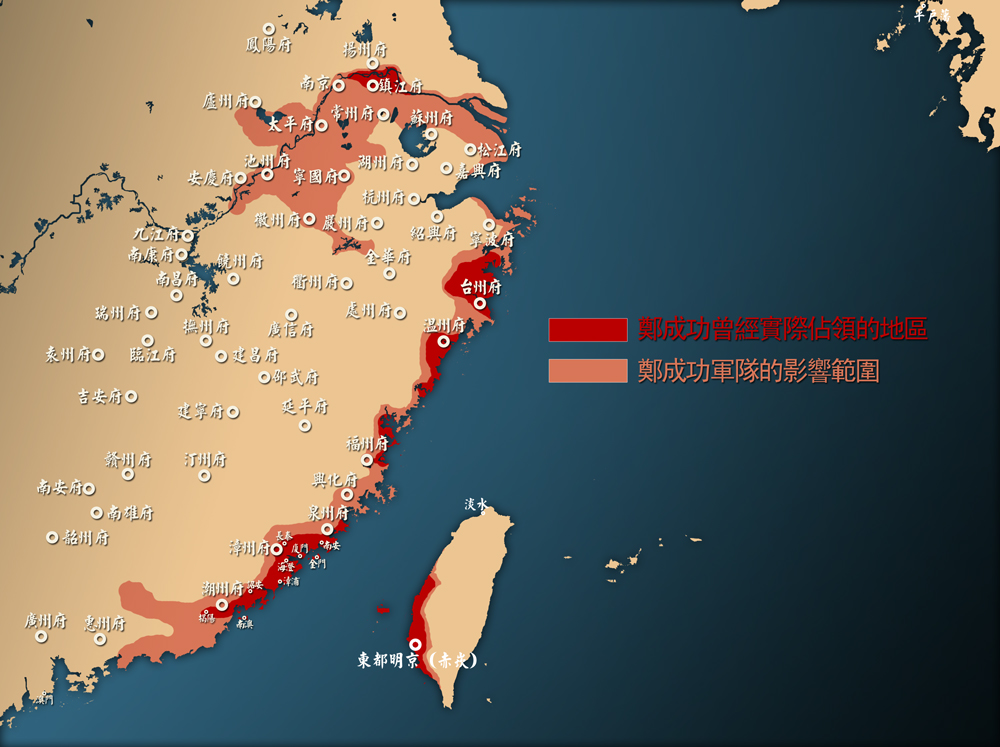
If you’ve had the privilege of walking Old Shajing with anthropologist Cheng Jian (程建), you know that the Chens settled the area during the Southern Song (960-1127). You also know that the Chen family network stretched throughout Dongguan and Xin’an Counties and that when most of Xin’an was abandoned during the Qing Dynasty relocation order (迁海令1644—1661), significant sections of Shajing remained settled despite the fact that it fell squarely within an area controlled and/or influenced by Koxinga (an honorific from 國姓爺; pinyin: Guóxìngyé; Pe̍h-ōe-jī: Kok-sèng-iâ, his name was 郑成功). Clan members also received special dispensation that allowed them to travel into the coastal no-man’s land to harvest sea salt. That’s right: administrative borders, cross border exceptions, and concomitant territorial reorganization have a deep history in the area.

Koxinga_territory

Map of coastal areas either occupied by (red) or under the influence of (orange) Koxinga.

Continue reading

line 11 mini encyclopedia: reforming the delta

The last five stations of the line 11 metro provide insights into how township and village enterprises reshaped the Pearl River Delta.

shajing oysters

Today I learned about cultivating oysters. I also visited Shajing, the town that oysters built even though oysters are no longer cultivated here. Instead the oyster babies are sent to Taishan where they are raised and returned to Shajing for processing. It’s almost like assembly manufacturing, except its agricultural production. Continue reading

on strike in longgang

According to molihua dot org, 4,000 workers at the Zhongda Printing Factory went on strike on January 10, 2013 to protest the factory’s decision to discount all years of service. Years of service are essential to calculating pensions, with this decision, workers lost all accumulated time and benefits. Moreover, the company offered no compensation for the decision.The justification given was that the factory will be changing its name and so previous time will not be credited to the “new” company.

Today, the Epoch Times followed up this story with a report that the police had entered into the conflict, preventing striking workers from marching outside the compound.Video interviews, here.

The Shenzhen Police Department’s decision to prevent the protestors from marching to the Henggang government is simple: Zhongda’s decision to unfairly deny workers accumulated time and benefits does not seem to be an isolated case. On January 2, 2013, 3,000 workers at the Chongguang Electronics factory in Shajing struck for the same reason. According to the report, On January 10, they marched on the Shajing government to protest.

The Zhongda Printing factory is owned and operated by the Neway Group Holdings Ltd, a Hong Kong firm (香港中星集团).

Shajing Wanfeng Community learns from Wukan

Weibo reports that on the afternoon of April 8, 5-600 Wanfeng (万丰社区) community members/ villagers took to the street to protest Community Secretary and  Wanfeng Ltd CEO, Pan Qiang’en selling off collective lands for private profit. The protests began February 17, when 20-30 elder villagers gathered outside village offices and have continued until today.This afternoon, Epoch Times reported on the event, noting that villagers are calling for an accounting of the past twenty years. Currently, Wanfeng Community has an area of 6.8 sq km and a population of 2,067. Most are surnamed Pan. It is estimated that over 50,000 migrant workers also live in Wanfeng.