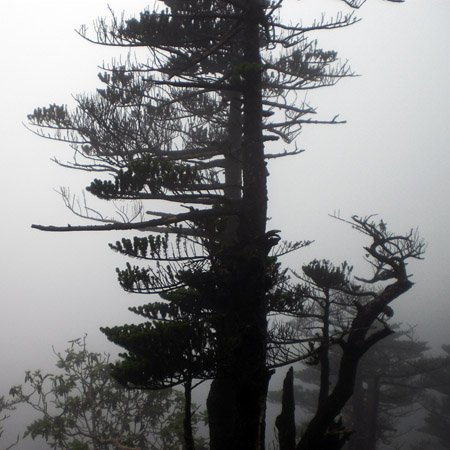
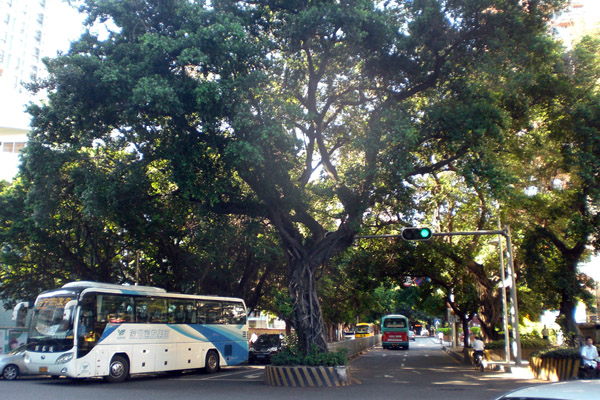
sunny day, lushi

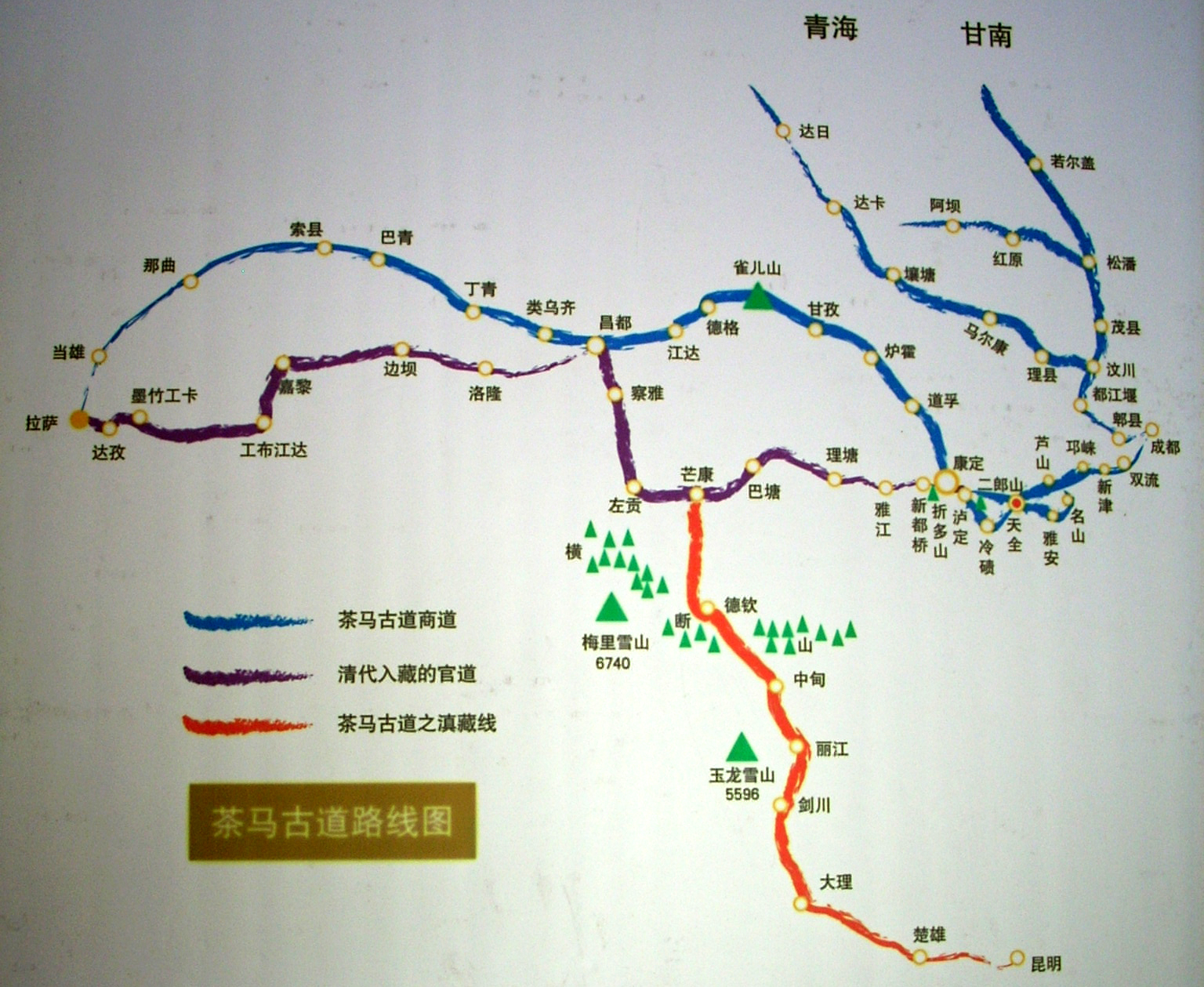
Although less famous than the Silk Road, the Tea and Horse Route (map) had three branches: the commercial route (Lhasa to Chengdu), the official route into Tibet (Lhasa to Kangding, where it reconnected with the commercial route), and the Yunnan-Tibet route (Mangkang to Kunming), which threaded through the Lincang mountains until it met up with the official route in Kangding. A small commercial center on the Yunnan-Tibet route, Lushi was located at the nexus trails that threaded through the Lincang Mountain Range.

Local farmers continue to live in villages along those ancient trails and still use pack mules to bring supplies from the town to surrounding villages. Mrs. Zhang discovered us wandering on one of the partially cemented trails that led to the river and invited us into her family compound for tea.

Mr. Zhang’s grandfather built the first building in the in the 1930s. Each subsequent generation added to the complex, and today the compound has three main buildings and a separate section for farm stock, a kitchen, and solar panels for heating water. With the family responsibility system, the Zhangs obtained several mu (666 2/3 sq meters) of land, where they have planted feed corn, walnuts, and vegetables. Their daughter has moved with her husband to Kunming and their son has opened a small shop in Lushi. One of the three buildings is for him and his girlfriend upon their marriage. The Zhangs earn between 10-20,000 rmb ($US 1,750 – 3,500) a year, which has been almost completely invested in building the house and their children’s education.

We chatted about their lives and in turn, they asked about ours. After half an hour, we took our leave and headed back toward Lushi. I remarked on the difference between walking in Lushi and Shenzhen, where I have been stopped by guards when trying to climb Jingshan Mountai in Shekou, let alone invited in for tea. My friend replied that the more commercialized a village or town, the less hospitable the residents.

This experience has me thinking about the potential and paradoxes of hospitality. In Lushi, if a door was open, we could walk into the compound and expect to be welcomed. The previous day, for example, Old Mr. Zhang (same surname as the village Zhangs) sat with us for 40 minutes, chatting about local history. We offered to continue the conversation by sending photos to the qq accounts of younger family members, who are online. At the same time however, when deflected through tourism, hospitality slips from a social practice into a commercial strategy. During this trip to Dali and its hinterland, we have stayed at hotels where our hosts are friendly, helpful, and pleasant and yet we do not feel obliged to grow the relationship.

Today I am wondering about hospitality in globalizing times. Social hospitality remains an important means of transforming strangers into acquaintances, even as commercial hospitality has expanded with the growth of tourism. The difficulty, of course, is that many of us travel hoping to encounter social hospitality and end up frustrated by differing expectations about the obligations of commercial hospitality. So just what do hosts and guests owe each other when the bill can be paid in full and yet we now live in a global village?

This slideshow requires JavaScript.

rainy day, lushi

We drove about eight hours from Dali to Lushi (鲁史), a market town (镇) in the Lincang Mountains (临沧山). The last 80 kilometers covered a narrow road, which twisted through dramatic slopes and was, in places, covered in thick mud and rocks from a rainstorm the night before. The trip and the unreliability of the roads created a sense of distance from my everyday life; lack of access to internet reinforced this sense that I was far from the modern world. Moreover, I found it difficult to understand local Mandarin, let alone the local language.

And yet.

The layout and size of the old city area remind us that Lushi was once a vibrant center of mountain life. Peasants packed mules with tea, walnuts, and palm leaves and then set out on narrow trails to sell their goods in seasonal markets in Fengqing (凤庆), Nanjian (南涧), and Weishan (巍山). Old Mr. Zhang told us that during WWII, national forces from Guangdong and Hunan stationed at Lushi. In the not so distant past, Lushi was more prosperous than Fengqing, which only rose to local prominence as a county seat during the Mao era.

Moreover, this was not a trip that placed me beyond the reach of gaokao results (all 42 members of the graduating class of 2012 found places at university), Olympic broadcasts, and packaged snacks. We stayed at a clean motel and ate regional specialities, including jizong mushrooms in spicy oil (油鸡枞) and broad beans stir fried with local pickles. There were telephones and high heels, motorcycles and cigarettes, angry bird balloons and electronic toys scattered through out the crumbling buildings and old stone walkways.

The restructuring of the relationship between Chinese cities and their hinterlands that began during Maoist collectivization and intensified with post Mao industrialization not only favored coastal cites, but also disenfranchised rural China. Today, Lushi is a painful contemporary to Shenzhen precisely because the mountain town has been so obviously positioned at the underdeveloped edge of the modern world and not because that’s what it once was.

Impressions of a rainy day in Lushi, below:

This slideshow requires JavaScript.

west lake, dali

This slideshow requires JavaScript.

fengyu: at the periphery of the periphery

The two hour trip from Dali to Fengyu Market Town (凤羽镇) eases senses overstimulated by tourist crowds, let alone Shenzhen’s urban crush. Nestled within extensive rice paddies and surrounded by mountains, Fengyu stands in provocative contrast with Shenzhen’s industrial parks and reclaimed housing estates. The town’s crumbling architecture evokes past elegance and stately lifestyles, while elderly women dressed in traditional Bai costumes maintain local religious traditions, setting up small altars at the entrance to the town. Here, at the periphery of urban China’s periphery, I slip into forms of rural nostalgia — once upon a time, a stately, elegant society of noble warriors, rural scholars and happy peasants resisted both Tibetan and Han incursions.

And yet. Where Shenzhen streets bustle with young migrant workers, Fengyu’s main street and side alleys shimmer silently. Whatever remains of the Nanzhao and Dali Kingdoms, today, young Bai must choose between agricultural labor and life elsewhere, in Shenzhen, for example, where one of my favorite restaurants serves Yunnan delicacies that are flown in daily to tempted jaded palates. A walk through Fengyu, below:

This slideshow requires JavaScript.

traveling in dali

Am in Dali, Yunnan, which for years was a favorite spot for backpackers, Chinese and foreign. The out of the way city boasts mountains for trekking, fresh weather, ethnic minorities with links to Tibet, and inexpensive crafts and food. Almost 30 years of backpackers have shaped the development of tourism in the area and many of the shops sell hippy clothes, while the cafes serve better bread and muesli than are available in Shenzhen.

Nevertheless, consistent low-end tourism has brought the area enough capital to inspire dreams of  attracting higher-end tourists. Yesterday, for example, I took the Cangshan Mountain Cable Car and then walked through the mountains to Xima Pool. The trip is over 5.8 meters long with a rise of almost 2 meters. Built with French technology, the cable car symbolizes the initiative to transform Yunnan into a world class tourist destination. In fact, the Kunming Airport, which opened June 28, 2012 exemplifies the scale of ambition — according to an architect friend, it is large enough to handle 30-40 million people a year, which is larger than Shanghai’s airport.

I’m not sure how much infrastructure debt Yunnan has incurred, but Cangshan has not been diminished.

Impressions, below.

This slideshow requires JavaScript.

branding shenzhen fashion

The Shenzhen Clothing Association held it’s its 12th trade fair at the Convention and Exhibition Center. Exhibitions ranged from themed installations in the main showroom to high end spreads in other showrooms. The annual trade fair is part of the Municipality’s ongoing efforts to brand itself as a center for Chinese fashion and indeed, many of China’s top fashion brands are Shenzhen firms. Impressions below, and yes, when the sun shines the exhibition center sparkles impressively.

This slideshow requires JavaScript.

shekou industrial road 7: echos of jane jacobs

One of the ongoing questions of urban planning is: what are the material conditions that support community life? To answer this question, we can’t simply look around and see what has been built, but rather have to reflect on what makes human life interesting, lively and fresh.

This morning I wandered Shekou Industrial Road 7 (蛇口工业7路) and realized that one of the reasons I enjoy this street is not simply the mix of residential, commercial, and industrial spaces, but also the expanse of public space and schoolyards. This public space has been created through the designation of Sihai Park and neighboring sports center, and also because the road is only two-lanes wide, with banyan trees that provide shade. Importantly, one stretch of Industrial Road 7 abuts Wanxia Village, where handshakes line-up in neat rows along one-lane roads and narrow alleys and give way to bustling urban village life.

Street life on Industrial Road 7 manifests the Chinese virtue of renqi (人气), which literally means “human air” and might be translated as “active” or “popular”. Hawkers set up stands under the trees, while elderly men practice water calligraphy on the sidewalk and pre-school children snack on steamed buns and soymilk. Window shopping (逛街) is thoroughly social as neighbors bump into each other on their way to preferred shops, or see each other’s children on their way to school. In the evening, once the sun has set and dinner bowls washed, the area becomes even more lively with families strolling and teenagers hanging out.

Admittedly, there is not much public space on Industrial Road 7. Significantly, however, many of the streets private spaces were built in the early 80s. Landscaping within residential compounds is a continuation of street landscaping, rather than planted with imported topiary that signal the end of the street and the beginning of elite consumption. More tellingly, guards do not actively prevent pedestrians from entering what are now considered low-income housing areas. Likewise, da pai dang (al fresco) mom and pop restaurants also integrate consumption into public life.

In The Death and Life of Great American Cities, Jane Jacobs documented and lamented how middle class flight from American cities to the suburbs contributed to the polarization and decay of our inner cities. In contemporary Shenzhen, a similar process is underway as the city’s middle class consolidates its identity and class consciousness through urban renewal projects and gentrification that not only result in clear razing urban villages, but also the construction of expensive malls and gated communities. The movement of people is different — the US middle class abandoned urban cores, and Shenzhen’s middle class is occupying the urban core and pushing the majority low income residents further to the periphery — but the result is the same. The unremitting blandness of these spaces announces and maintains social distinctions between the middle class and working poor, even as they homogenize differences between members of Shenzhen’s rising elite, creating an identifiable “Shenzhen” identity.

Over fifty years ago, Jacobs maintained that people like to live neighborhoods like Industrial Road 7. Moreover, she held that youngster and elders alike need accessible areas of mixed activities, cross-use of land, short blocks, mingle buildings of varying size, type and condition, and encourage dense concentrations of people. The point is to nurture marginal activities and small businesses, little restaurants and bars, as well as everything deviant, bohemian, intellectual or bizarre that make an area charming and vigorous.

I agree.

I also believe that this diversity humanizes us to the extent that we recognize ourselves in someone else’s life and consequently the wider our experience of difference, the more human we may become. In contrast, when we lay 4-lane roads without shade trees, build gated communities that isolate themselves from the street, and decide that malls, rather than parks better serve the public interest, we have proclaimed that to be human in the early 21st century is to aspire to life as a high-end mallrat.

Impressions of morning walk along Shekou Industrial Road 7, from Houhai Road west to Yanshan Road.

This slideshow requires JavaScript.

mountain town: puli

埔里 (Puli) is a small mountain town, about an hour outside Taichung. I wandered the streets, snacking and looking at the mountains. If you go, rent wheels and go deeper into the clouds.

This slideshow requires JavaScript.

lugang: of pirates and south china seas

鹿港 (Lugang) is one of the oldest port cities in Taiwan. The winding network of alleys, streets, and boulevards knits together Ming and Qing Dynasty pirates, southern Chinese merchant families, and the influx of Nationalist troops and their families. Over 200 shrines and temples punctuate these pathways, and two of the oldest temples on the island — Matzu (1725) and Longshan (1786) — are in wonderful condition because well cared for. With industrialization and GMT rule, the importance of Lugang to the island economy has lessened, with inland Taichung gaining importance as Taipei shifted cosmographic ordering on Taiwan. Consequently, the city’s layout gives an impressive sense of the urban form of South Chinese port cities during the roughly 500 years that piracy threatened trade ships, their crews and cargo. Just recently, however, Lugang has been reintroduced to world as one of Taiwan’s top tourist destinations and the site of many traditional festivals, including Double 5th (dragon boats) and Mid-autumn (mooncakes). Worth a visit. Impressions, below:

This slideshow requires JavaScript.

two neighborhoods and a soap opera plot

I continue to visit neighborhoods around Taichung. One, Liming New Village was built over fifty years ago on the then outskirts of Taichung. It was complete in and of itself, with a post office and schools, police station, library, and sports center. The other, an expensive, Japanese inspired gated community was built about twenty years ago at Da Keng, on the slopes of the Taichung’s most accessible mountain. Liming is in decline because the young people have left for jobs in Taipei, or to live in more upscale, “modern” communities. The Da Keng community never took off due to banking difficulties.

Also, I have been watching a Taiwanese soap opera with my friend’s mother. My sense of the plot line: episode 1: boy meets girl; episode 2: boy and girl fall in love; episode 3-39: their mothers fight; episode 40: some kind of reunion before the birth or the first grandchild when fighting resumes.

How do the neighborhoods connect up with the soap opera plot? An older neighborhood that looks like Liming keeps getting referenced as where the poor but honest live, while the wealthy and corrupt inhabit ornate homes like the second neighborhood. However, a friend explained that Taiwan’s middle class lives somewhere in between these two extremes, where the question is not how to make more money, but rather to reveal one’s taste by purchasing the highest quality goods (or house, in this case) without becoming consumed by work. Neighborhood impressions, below:

This slideshow requires JavaScript.