…and the juggernaut rolls on

By the year 2017, Shenzhen plans to have built 95 shopping malls, totaling 17.8 million square meters. Moreover, the raze and raise juggernaut seems unstoppable, even in the face of growing support for historic preservation and public recognition of the social, cultural, and historic value of village settlements.

In October this year, the Municipality announced that  China Resources (华润) will raze Hubei Village and raise another high-end mall despite the fact that Hubei was built during the Ming Dynasty between 1465 – 1487, boasting a settlement history of almost 550 years.

The “three horizontal and eight vertical roads (三纵八横)” layout of Hubei exemplifies Guangfu (广府) or Cantonese style. The village also includes an ancestral hall that was rebuilt in 1804, a village gate, well, and over 200 houses. In addition, the ancestral hall used granite, a building material rarely seen in the area.

Hubei Village was part of the original Shenzhen Market (深圳墟), which has already been extensively razed. Indeed, Hubei Village is the largest and most concentrated of historical architecture in the area. Moreover, the village also serves as cheap housing for those who work in the surrounding hotels, spas, restaurants, and malls.

The recent and loudly protested decision to raze Caiwuwei and build the KK 100 is the immediate context for ongoing calls for some kind of preservation effort.

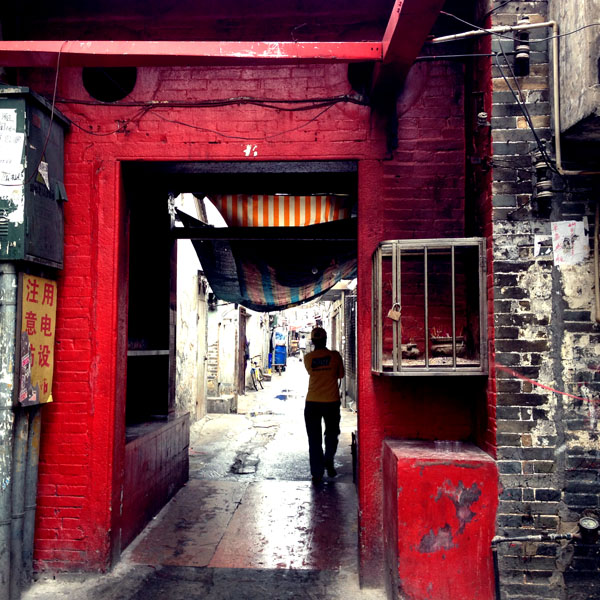
Impressions from a recent walk in Hubei, below:

This slideshow requires JavaScript.

trees for sale

Three indications that trees in Banna are up for sale. What’s more, the terms of trade are transforming the landscape.

  1. Since the 1990s, local farmers have been actively razing rain forrest to plant rubber trees. According to a local friend, it takes about 400 trees to support one family in modern style. Also, rubber trees need a lot of water and this has already changed the water table. Less obviously, this evening at dinner, another friend explained that because families can now live off their rubber tree holdings, they’ve stopped traditional cultivation. Entrepreneurial farmers are claiming this fallow land by moving in and planting other crops.
  2. On the road from Jinghong to Mengla, I learned about mahogany — it’s a hard wood, Chinese literati have filled their homes with mahogany furniture for centuries, and there is so little left in Yunnan that Chinese entrepreneurs are harvesting mahogany in neighboring Laos.
  3. This afternoon, I visited the sky tree park, and walked one of the highest treetop rope corridors in the world. High end eco-tourism in a small bit of rain forrest that has been cut off from remaining bits of rain forrest. Indeed, one of my companions mentioned that these rain forrest islands are too small and so the Central and Local governments are investing in building connections between these islands so that the animals have enough room to roam and reproduce.

Impressions of a day in the trees, Mengla, Xishuangbanna, Yunnan, just northwest of the Laotion border.

This slideshow requires JavaScript.

mountain retreat

Enlightenment is where we find it. Today, the mountain village of Zhanglang, Menghai County, Xishuangbanna, Yunnan. Impressions, below.

This slideshow requires JavaScript.

impressions of floating color

飘色 (literally floating color; piaose) is a wonderful South China tradition. This past month, I’ve had the privilege of helping organize an updated and modernized version of piaose, working with artist Momo Leung (梁美萍), Tan Yuanxing (谭源兴),  and Tracy Lee of CultaMap (香港文化意图). Today, we tried on the costumes and put the girls up on the float. The story is fairytale happy — a flower princess and her froggy prince.

This slideshow requires JavaScript.

WoWorldly desires

Window of the World opened in 1984, on the auspicious day of 6.18 (June 18). Yesterday, I visited WoW with Constant Dullaart, one of the residents in this years OCT Art Residency. The featured image for this post is a snap of us in front of Niagara Falls.

This is the first time I’ve visited WoW since 1997, and was impressed by two of the new installations — a plane ride trip through the United States (installed 2004) and a toy train ride through mountainous Europe (June this year). The plane ride uses IMAX technology and moving seats to give the impression of flying coast to coast on a double wing plane. At each landmark, white Americans wave to visitors, yelling, “Welcome to the United States”; in watery areas, visitors are lightly spritzed with water. The toy train is less high-tech, but more popular with young children. According to one of the friendly staff members, these rides are part of plans to shift WoW entertainment from viewing miniature landscapes to interactive rides and activities; I’m thinking WoW goes Epcott.

I was struck not only by the yearning for elsewhere manifest in the WoW installations, but also by the continuing nostalgia for a particular kind of elite life. Tourism as an activity of early 20th century elites continues to shape built forms of this yearning. (Or perhaps we experience nostalgia in search of an object?) This neo-liberal appropriation of colonial forms of pleasure was also been reproduced at Shekou’s Seaworld, circa 1984, where the plaza houses western consumption in quaint buildings and the landlocked Shining Pearl.

Seaworld was one of the first efforts to materialize Chinese yearnings for the better (relentlessly global) life. Nevertheless, by the early 1990s, when WoW was built and developers put up European style estates (with appropriate tributes to Versailles excess), Shenzhen grappled to implement neo-liberal economic policies without neo-liberal political changes. The political-economy of both early Shekou and 1990s Shenzhen were reminiscent of early 20th century capitalism, when all sorts of material wealth began to appear, but only a few people were positioned to enjoy it. Or more to the point, perhaps, only a few elites had both the leisure and resources to enjoy it, including romantic alpine train rides and virtual plane rides on double wing planes a la the Wright brothers.

The fantasy life infusing representations of the early 20th century high life — the fashionable world — were a fixture of 1990s Shenzhen architecture. Seaworld and WoW, for example, were conceived and built in the post Tian’anmen era, when “European-style” housing estates were also popular, including OCTs upscale Portofino. In fact, throughout Shenzhen, but especially along Shennan Center Road, the mini-fascades that wrap WoW and Seaworld dreams have been enlarged in themed real estate developments, where many of Shenzhen’s solidly middling middle class still live and to which many migrants aspire.

Yesterday morning while waiting for Constant, I stood at the subway exit that is located beneath the Jiang Zemin inscribed glass pyramid and watched ticket scalpers approach tourists. The tourists spoke accented Mandarin, and had organized themselves into small groups of carefully dressed visitors. They examined the pamphlets, considered their options, and then opened their umbrellas to embark a rainy day of exploration. Those I later saw again within the park seemed to be enjoying themselves; I certainly enjoyed the toy train and virtual plane rides.

In recent years, of course, Shenzhen’s vision of the world has gone SciFi glassy — steeled if you will — against the imaginary onslaught of encounters with alien lives. However, that kind of elite consumption does not resonate with the same visceral pleasure of early 20th century elites enjoying both their traditional privileges and the mass produced delights of a new era. I’m trying to figure out why. Guess du jour: we want elite agency, but we want it as pleasure,in the play of tourism and leisurely meals, for example, rather than as the high stress, overwhelmed and overwhelming agency that seems to characterize elite life on the ninety-first story of a 21st century glass tower.

Postcards from my Alpine excursion, below:

This slideshow requires JavaScript.
inscribed dongguan

Unlike Shenzhen, which has managed to disassociate itself from its rural past, Dongguan continues to be considered a market town, population and exports, notwithstanding — provincial in all condescending senses of the word. Unfortunately for folks in Dongguan, urbanizing strategies to overcome the stigma of cultural boorishness are often the problem. The Lamwa (联华国际) development, 星河传说 (Milky Way Legend), for example, is located in Dongcheng District, Dongguan Municipality’s aspiring middle class district, where English inscriptions, including a Cambridge education kindergarten are all part of local efforts to rebrand the city. It feels, however, like 1990s Shenzhen, before millennial skyscrapers and creative industries replaced industrial parks, creating Shenzhen urbanity and the concomitant nostalgia for urban villages. Impressions of Milky Way Legend’s high culture pretensions, below:

This slideshow requires JavaScript.

as if it never was

This slideshow requires JavaScript.
re-en-act by liu shiyuan: the performance of appreciation

Liu Shiyuan (刘诗园) plays with static representations of performance. However, her understanding of performance skirts the edge of performativity studies, veering away from the idea of representing cultural scripts toward an awareness of how the act of appreciating a work of art requires an imaginative re-enactment of a creative moment.

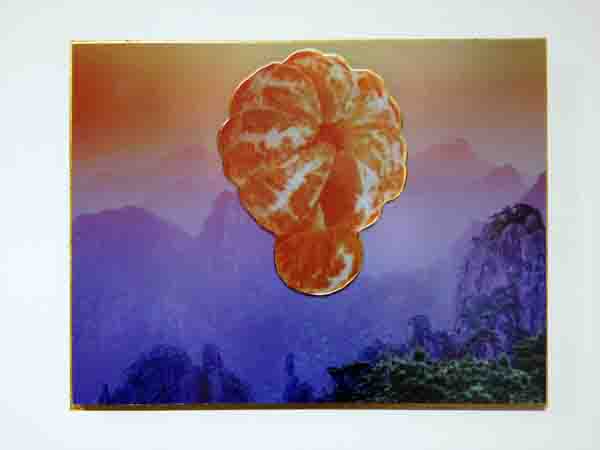
In her open studio at the OCAT Contemporary Art Terminal, for example, she has designed a viewing space as a stage. Moreover, this stage is an extension of her living and work space. In order to view her work, the visitor must first enter her living area, climb onto the stage and begin the performance of appreciation. This stage has three walls. On the two opposing walls, she has hung two sets of images. In the first, small set, she downloaded and printed images from a google search — keyword “cliche” — and then applied food stickers to the images. In turn, these small images were blown-up, mounted, and given a beautiful golden edge. In terms of artistic process, these sets of images represent different moments in time, forcing the viewer to imagine the creative process in order to understand the work. In between these two sets of images, and displayed against the third wall, over saturated prints of jewels have been elegantly displayed, a lovely distraction between the creation of one set of images and subsequent transformation into another set.

Structured movement along the stage from the three moments constituting this small, but insightful installation allows the viewer to become aware of herself as a subject who surfaces the internet, precisely because Liu Shiyuan’s staging is so exact. She has isolated the elements of an highly idiosyncratic google search in such a way that the ritualized and hence common aspects of this process are available for the viewer’s contemplation. By focusing on the performance of appreciation Liu Shiyuan communicates something about the shared nature of everyday life even when the internet seems to alienate us from each other. More interestingly, her work makes explicit the interdependence of artist and viewer in order make art happen.

Liu Shiyuan is currently finishing her residency at the OCAT Contemporary Art Terminal. Impressions of an afternoon in her studio, below.

This slideshow requires JavaScript.

tangtou research begins!

After many months of waiting and hoping and wishing (and yes research is often an overplayed love song), the CZC Special Forces have begun our research in Tangtou, Baishizhou. Yesterday morning and afternoon, we began a survey of the buildings.

This slideshow requires JavaScript.

shenzhen bay coastline, oct 27, 2012

I wandered to the Shenzhen Bay Park, tracking the construction and commodification of the new coastline. Land reclamation has brought views and parks, but I noticed that children and dogs still want to get their feet wet. Impressions, below.

This slideshow requires JavaScript.