I have been applying for a grant. The US based foundation asks for a CD-rom of work samples, while it is still illegal in China to send CD-roms overseas (domestic mailing no problem.) Here’s the thing. It is perfectly possible to send mega-files from China anywhere in the world, even without a VPN. It’s also possible for foundations to store information on clouds and have a protocol for deleting extra information after a round of submissions. But instead of a simple information transfer, I’m stuck between two outdated systems for archiving (or not) information. Continue reading
Tag Archives: exegesis
礼貌 and 文明: what’s the difference?
This is an open question to all speakers of Chinese: what’s the difference between 礼貌 and 文明? My sence is that 礼貌 are practices of appropriate intimacy, while 文明 refers to practices for navigating amongst strangers. In turn, 礼貌 would map onto the moral territory of 脸, while 文明 is about presentation and being seen, hence mapping onto 面子. Am I wildly off, or have I stumbled into a difference that makes a difference? Thoughts?

jet lagged
Just back from the U.S. and the body rebels. Jet lag forcefully reminds us that the body and its functions are not under “my” control because if so, this nauseous compulsion to sleep would not creep over “me”. Inquiring minds want to know; who laid down? Continue reading

harmonized
While in Tianjin a friend said to me that she wanted to forward one of my posts about the Hong Kong protests to her WeChat circles, but was afraid of being “harmonized” (被和谐掉) — a euphemism meaning “to be arrested for political activism”, or as Orwell might have said, the crime of speaking one’s position. The expression ironically activates Xi Jinping’s relentless calls for social harmony through a return to Chinese values, that might be otherwise expressed as “shut up and do what you’re told” much as Lee Kwan Yew deployed Neo-Confucianism in his pursuit of a well ordered managed Singapore. Continue reading

rural construction: can law serve china’s peasants?
While in Xi’an, I once again visited the Terracotta Soldiers in Lingtong, once upon a time center of Qin power. The First Qin Emperor (秦始皇 ) installed this death monument during his life. This seems to have been the way of ancient Emperors and Pharohs — a longing to control everything, as if making the world in our own image was (a) possible and (b) a means of achieving immortality. However, we don’t really know what the mass grave meant to him because we haven’t found his grave — just indications that he wanted to be safe in death. But maybe it was a ruse to distract observers from his actual gravesite. That said, we do know that he conquered unified six warring states and became the model for those future Chinese leaders who yearned to bring everything under heaven under themselves. Personally. Indeed, the visit sparked a conversation about the meaning of 法律, its historical constitution, and whether or not law can serve China’s peasants. Continue reading
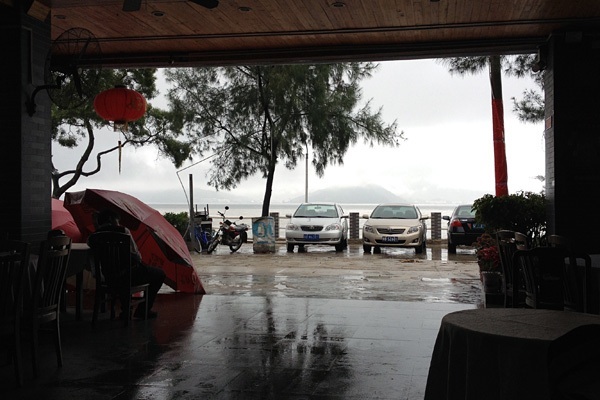
jiaochangwei, or the coastal economy
For those who have been following Shenzhen’s expansion, you have noted the correspondence between the establishment of an administrative category, the announcement of an economic sector, and the full on government led reappropriation of folk investments and small scale development.
The opposition in play is the contradiction between 官方 and 民间 I’ve translated 官方 as government led because the appropriating entity is often government appointed or a state owned enterprise, but there is diversity and even discord therein, as will become apparent below. I’ve translated 民间 as folk because it captures something of the quaint and small and outdated notion of the public that seems to operate during these transitions. Moreover, the public is itself an important sphere of government led action.
Dapeng constitutes Shenzhen’s one remaining strip of relatively undeveloped coastline. It has been a site of 民间 development. The forms of folk development, for example, have included seafood restaurants in Nan Ao, and the strip of cheap inns at Jiaochangwei (较场尾). Jiaochangwei is a coastal village, as is evident from the mash-up of various generations of what are colloquially known as “farmer housing (农民房). And yes, Jiaochangwei is technically an urban village, with an emphasis on village and nature, rather than urban a la Baishizhou). Previous large scale development has been undertaken by Vanke (万科) which opened Shenzhen’s first yacht clubs far, far from the city. Or so it seemed.
In theory the Dapeng Peninsula is a conservation area, but so was the original Mangrove Park. However, in 2011 the Municipality designated Dapeng a New District (discussed earlier). Since then, there has been all sorts of investment in roads and even a national level geological museum slash park. This has been part of a movement to encourage the development of the coastal economy, including government led real estate development, which (as in Shekou) involves infrastructural transformation and privatization of the coastline.
At the moment most of these areas are only accessible by car, but an express bus, the E 11 gets ordinary folk into the area and a subway line is being built. Impressions of Jiaochangwei, below. And yes, if you decide to go, go during the week. On the weekend, there can be road delays of more than an hour, and lines for restaurants and ubiquitous BBQ joints.
christmas in shenzhen
Yesterday on weixin, members of one of my livelier circles debated whether or not Christmas should be translated as “圣诞节 (shèng dàn jié )” or “耶诞节 (yē dàn jié )”. At stake in the debate is whether or not “Holy Birth Festival” — a literal translation of 圣诞节 — should refer to Jesus or to Confucius.
In Mandarin, 圣 (shèng) functions as both an adjective “holy” and also a noun “sage”. In contrast, 耶 (yē ) is a phonetic marker, appearing in Chinese expressions for Jesus (耶稣), Jehovah (耶和华), and the Book of Jeremiah (耶利米书). 耶 also appears in the transliterations of Yale, Jerusalem, the Church of Jesus Christ of Latter Day Saints, and Lamentations. Advocates for putting the “耶稣” back in the translation for “Christmas” had two culturally relevent points. (1) historically, Chinese have used the character 耶 to designate words and institutions from the Judeo-Christian tradition; and (2) the Chinese sage was and remains Confucius. Consequently, they believe that the expression “holy birth festival”, which also means “the Sage’s birth festival” should designate Confucius’ birthday, September 28. The Center may or may not agree with those in the cultural right, after all they recently decided to move Teacher’s Festival from September 10 to September 28 in order to honor China’s original teacher.
The 圣 or 耶 debate is a contemporary example of intellectuals attempting to rectify names (正名), a quintessentially Confucian endeavor. Confucius explained that when we clearly perceive reality we call things by their proper names. It followed that by misusing names, we muddy the perceptual waters and make it difficult for people to understand reality. Importantly, for Confucius, moral relations infused reality. Consequently, to rectify names was in fact an effort to bring the world into harmony through proscribed relations. For the Confucians there was a great deal at stake in the rectification of names — moral certainty, harmonious society and the proper administration of punishments, i.e good government. Nevertheless, the difficulty of rectifying names, even translated names and even when one holds the cultural linguistic high ground, is that language does in fact spin out of control because each of us lives and uses and experiences words and names in divergent contexts and for different purposes.
So what’s at stake in the contemporary 圣 / 耶 debates?
In Shenzhen, Christmas is an international holiday, celebrated by non-Christians. Lovers and friends exchange gifts and eat together. The shopping malls offer all sorts of discounts and there is a general sense of happy consumption without the angst of family reunions. In fact, a Shenzhen Christmas has a particular demographic — high school and college students, as well as young white-collar workers. They still go to school and must go to work, but they use the day to celebrate themselves and their non-familial relationships. In other words, Christmas and its commodification have been appropriated to celebrate young modernity.
In contrast, the older generation emphasized the winter solstice (冬至), which was marked this past Sunday with sweet rice ball soup and noodles. In the north, they ate dumplings. The solstice was not marked by the level of Christmas consumption. Certainly, the Santa Clauses, tinsel and trees, candles and presents had nothing to do with the actual gatherings that took place around family tables.
Thought du jour: At stake in the 圣 / 耶 debate may be the extent to which commodity and youth cultures overlap in these globalizing times. Indeed, the recognizable Christmas traditions — gifts and trees and cookies and candles — didn’t actually come from the early Church, which maybe why they have so happily adopted in Shenzhen.

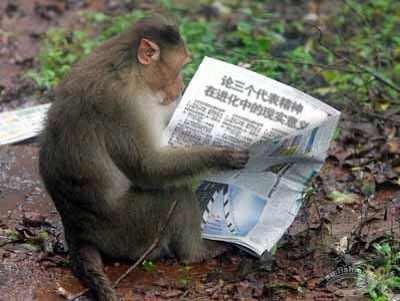

audience passivity in the yan’an talks
As preparations for the Bienalle start, I have found myself thinking again about the level of censorship over literature and art in China. Yesterday, I even went so far as to re-read the Talks at the Yan’an Forum on Literature and Art (在延安文藝座談會上的講話), which Mao began on May 2, 1942. Audience passivity and the ignorance of artists and writers were two key ideological assumptions structuring Mao’s arguments about the social functions of literature and art. Below, I have taken several key phrases in order to show the way in which the Maoist politicization of literature and art was concomitantly a disempowerment of the audience or reader of a work, even as artists and writers became tools — and I use the word deliberately — of the Revolution Party.
Mao opens the talks by greeting his comrades and outlining the social-aesthetic questions he sees facing revolutionaries: the question of standpoint, the question of attitude, and the question of the object of work. Mao’s interpretation of correct standpoint and attitude are unsurprising and straight-forward. The question of correct standpoint for Party members was unambiguously defined as being the Party’s position (對於共產黨員來說,也就是要站在黨的立場,站在黨性和黨的政策的立場). The question of correct attitude was then defined with respect to three types of people — enemies, allies, and one’s own people (有三種人,一種是敵人,一種是統一戰線中的同盟者,一種是自己人). The emphasis on “one’s own people” is important because in everyday Chinese, these are the people that one can count on no matter what. Mao then further defines “one’s own people” as the masses and their vanguard (這第三種人就是人民群眾及其先鋒隊). In short, on Mao’s reading, a correct attitude involved opposing one’s enemy, criticizing one’s allies when they were wrong, and “patiently teaching one’s own people, helping them with their burdens, and to struggle with their mistaken views in order to help them make great progress (我們應該長期地耐心地教育他們,幫助他們擺脫背上的包袱,同自己的缺點錯誤作鬥爭,使他們能夠大踏步地前進).” In turn, “our” literary and artistic works describe these struggles to overcome one’s mistaken views (他們在鬥爭中已經改造或正在改造自己,我們的文藝應該描寫他們的這個改造過程). However, when Mao turns to the long discussion of “the object of work” the discussion becomes interestingly convoluted.
The discussion opens with the line, “the question of the object of work, that is the question of who the literary work will be read/seen by (工作物件問題,就是文藝作品給誰看的問題)”. As I read it, the Mandarin defines the intended audience of revolutionary works as objects (物件) who will be given something to read/see (給誰看). In many translations of the Talks, this line is translated as, “The problem of audience, i.e., the people for whom our works of literature and art are produced”. This translation not only transforms the object of literary and artistic creativity into an “audience”, but also gives the writer and artist productive agency. However, neither of these subjectivities is implied in Mao’s language, a fact which becomes more explicit several lines later.
On the one hand, Mao contends that in Yan’an, the objects of literary and artistic work are the workers, peasants, soldiers, and cadres who are the “receivers of literary and artistic work (文藝作品的接受者)”. He emphasizes that the objects of literary and artist work in Yan’an were “completely different (完全不同)” from those in Nationalist-held Shanghai, where the primary objects were students, officials, and merchants.
On the other hand, he also stresses that “our literary and artistic workers (我們的文藝工作者)” who don’t understand the workers, peasants, soldiers, and cadres have a responsibility to learn about them. One of the more interesting examples of Mao’s designation of the object of literary and artistic work comes in this discussion of literary and artistic workers’ ignorance of the lives of workers, peasants, soldiers, and cadres. Mao states, “Literary and artistic works are not familar with the their descriptive object and product-receivers (文藝工作者同自己的描寫物件和作品接受者不熟,或者簡直生疏得很)”. In this line, we see that for Mao, “workers, peasents, soldiers, and cadres” were simultaneously the object of and receiver of descriptions. In other words, the purpose of literary and artistic work was to help the masses become self-conscious of their class position, without actually teaching them critical reading skills.
The discussion then turns to the question of education for both literary and artistic workers as well as for the masses, with the Party providing correct standpoints and attitudes for this work, which is based on Marxist-Leninism. At this moment, we see the rhetorical transformation of creative workers into tools of the State because standpoint and attitude have already been defined as being in line with the Party position.
Thought du jour: as someone who engages in literary and artistic work, I agree with Mao’s contention that many of our ideals and passions are class-determined. Where I part ways with his analysis, however, is in his characterization of audiences as passive object – receivers of creative work and writers and artists as vehicles for one standpoint and attitude on any question. It’s not only that I enjoy a good dose of whimsy in my art, but also that I have more faith in a variety of standpoints and attitudes than I do in one proscribed, formulaic interpretation there of. Indeed, I find the idea that all creative work must be immediately accessible to all audiences more in keeping with Hollywood goals than with creative exploration.
And there in lies a core paradox in doing creative work in Shenzhen: while I agree with Maoist analysis that we need to take economic inequality and class differences into account if we are to create a more just world, nevertheless, as both a writer and reader, I am nourished by a diversity of perspectives and interpretations.
are there any shenzheners?
The Shenzhen Volunteer Association claims that “If you come, you are a Shenzhener (来了,就是深圳人). The claim itself is fascinating because it not only flies in the face of traditional hometown identities, but also because it implies that those who were already here aren’t Shenzheners.
There are three main labels for people in Shenzhen: 深圳人 (Shenzhener),本地人 (local),and 外地人 (outsider). As a general rule of thumb, Shenzheners are as much a construction of ongoing municipal campaigns to generate identification with the city as they are the rich second generation who grew up here. The point is that in addition to refering to an individual’s hukou status, the label “Shenzhener” also and importantly refers to a recognizable lifestyle and aesthetic that in the US we would call “middle class consumer”.
In contrast, locals and outsiders refer to the hometowns of people who live in Shenzhen. Locals have traditional roots here (through a historic village), while outsiders came from elsewhere to live and work in Shenzhen. Technically, everyone in Shenzhen is either a local or an outsider. However, as indicated above, the category of “Shenzhener” is an ongoing social construction that transvalues local and outsider identities, usually by smoothing out differences in the second generation. Thus, the children of both locals and outsiders frequently identify as Shenzheners, even when their parents have Shenzhen household residency but continue to identify with their hometown.
The distinction between Shenzheners, locals, and outsiders points to the overlap between traditional Chinese hometown identities and the reform policies that created Shenzhen. On the one hand, Chinese people identify with their hometowns, creating identity out shared language, food, and customs, such as Shanghai or Hakka people. On the other hand, Shenzhen identity has been constructed out of the transformation of Bao’an, environmentally, socially, politically, and culturally. Shenzheners are the people who have participated in and/or benefited from that process. In contrast, locals remain identified with their natal villages, while outsiders continue to identify with theirs.
The symbols through which individuals craft Shenzhener identities are vexed by contradiction and uncertainties for three reasons. First, less than 3 million people (or 1/6) of the total population have Shenzhen hukou, which means legally most inhabitants are not Shenzheners. Second, if locals are not considered Shenzheners, it is because identity remains rooted in policy, rather than history. And third, even second generation Shenzhen residents remain emotionally embedded in hometown relationships elsewhere because their were raised by outsider grandparents.
Of course, therein lays the rub. The debate about who is a Shenzhener not only raises the question of who has rights to the city, but also the question of who is willing to be responsible for the city. To date, these questions have not been explicitly addressed, begging the question: is it enough to define a Shenzhener through how an individual has used the city (to achieve political and/or economic goals), or do we need to re-imagine the Shenzhener identity in terms of contributions to society?
 Shenzhen Noted