Liu He is one of the more active curators at Handshake 302. While we are waiting for the students to prepare their “Shake Hands with the Future”exhibition, he is using the space as a refuge for people who want 8 hours alone, without their phone. The project, “Hidden in the City” is simple. At 9:30, Liu He meets the participant at Handshake 302, makes sure they have water and understand how the toilet works (and often doesn’t) and then takes their phone. At 10:00 a.m., the participant is “on the clock”, on retreat from the city for the next 8 hours, coming off at 6:00, when the cell phone will be returned, a dinner served along with a 302 salon/ discussion about what it all means. Below a translation of Liu He’s curatorial statement for “Hidden in the City”; the Chinese version follows. Continue reading
Tag Archives: baishizhou

baishizhou: withering practices
The process of uprooting the northern section of Baishizhou has begun through withering practices–the removal of social nutrients in order to promote razing and evacuations as inevitable, necessary, desired. Continue reading

affordable housing II: more on dormitories
Yesterday I was talking with a tourist destination designer from the Tourism Division of OCT. He explained that each themepark hires approximately 1,000 workers who are housed in dedicated buildings in OCT holdings. From the mid-eighties through the mid 90s, these apartments were allocated to single workers in OCT management. However, as they moved into larger apartments, which they bought through housing reform policies, the use of the dormitories changed. As did living densities. Continue reading

piecework: replacing urban villages with chimerican dreams
So this week is going by in a raze of urban village sections (片区). It seems that given the flat out difficulty of achieving 100% sign-off on property transfer and compensation packages, government planners and their developer agents are targeting sections of urban village for urban renewal (instead of entire villages). These sections (a) border major traffic arteries and (b) have relatively simple property relations. I also heard yesterday that in Gangxia, for example, the village was subdivided into six sections and once there was 100% sign-off in a section, it went. This would in part explain the protracted raze-scape that characterized Gangxia for several years. Continue reading
walking baishizhou, again
Walked a Baishizhou yesterday and noticed the difficulty of framing one object or process–no focus possible. Or if possible only through brutal cropping and similarly abrupt naratives. How to represent the constantly shifting elements of the anthropocene?
handshake 302 in nyc: describing the economic effects of political decisions
Yesterday I participated in an afternoon workshop and gave an evening lecture on our work at Handshake 302. I learned how “Chinese” my English has become, especially when speaking of Shenzhen society! Continue reading
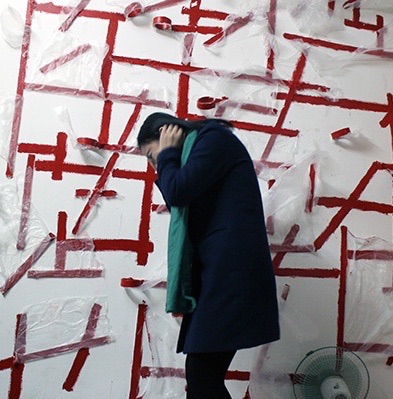
floating desires
Desire ravages Baishizhou.
Last night at Handshake 302, Fu Honghong discussed her wall, “Floating Desires (漂浮的欲)”, the fifth installation of the series, My White Wall Compulsions (墙迫症). Fu Honghong is one of the few CZC Special Forces who lives in Baishizhou. She came to Shenzhen via a rural childhood and urban university, and now works as a graphic designer in neighboring Overseas Chinese Town. On her wall, Fu Honghong wanted to map Baishizhou in terms of the desires–to find a job, to meet a life partner, to buy a house and leave–that although immaterial, nevertheless are the reason that Baishizhou exists as it does. Continue reading

handshake 302 update: my white wall compulsions, III/ threshold
This week while helping to install the next edition of “My White Wall Compulsions (墙迫症)”, Laura Belevica’s beautiful “Threshold (生死之门)”, I was struck by the beauty of collaboration within small, shared spaces. Indeed, our exploration of what can be done with the walls of an efficiency apartment has revealed unexpected vastness and implicit conversation. Continue reading

白鼠笔记/Village Hack PDF!
After several months of hard work and time off for summer vacation, the 白薯笔记/Village Hack PDF is available for download. Wu Dan designed the layout, each of the hackers reflected on their experience, and many friends contributed images to make the PDF a wonderful introduction to Baishizhou lived otherwise. The village hack was about discovering possibilities, both one’s own and those of the urbanized village. Enjoy!
village hack: Tadeas
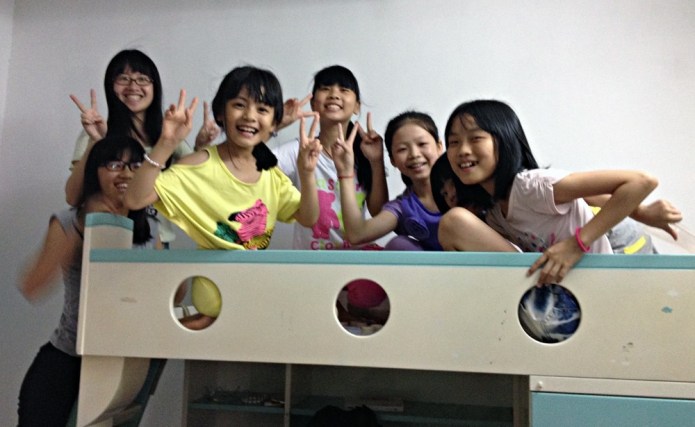
Tadeas had a lovely sharing, and his engagement with Baishizhou is fun and real. Honestly joyfully playfully real. He commented, for example, that the dark brought out all sorts of imaginary monosters, such as a ten meter snake and rats so sick they had gone bald. He then handed over the key to Huihui and Qiangqiang, who will partner up for their hack. Check out Tadeas’ colorful notes at 白鼠笔记/Village Hack. Below, impressions from the afternoon.
 Shenzhen Noted