
storefront, shennan middle road
even when you least expect it, expect it. shenzheners will find another corner to light up; even tianmian glows at night.

tianmian corner market
more neon here.


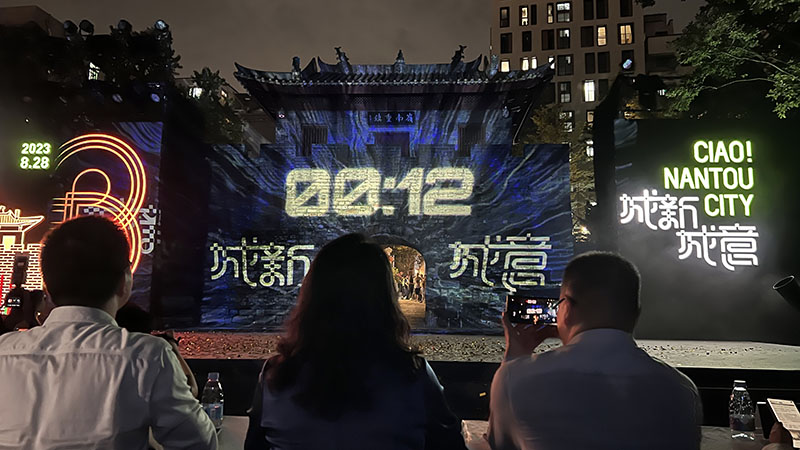

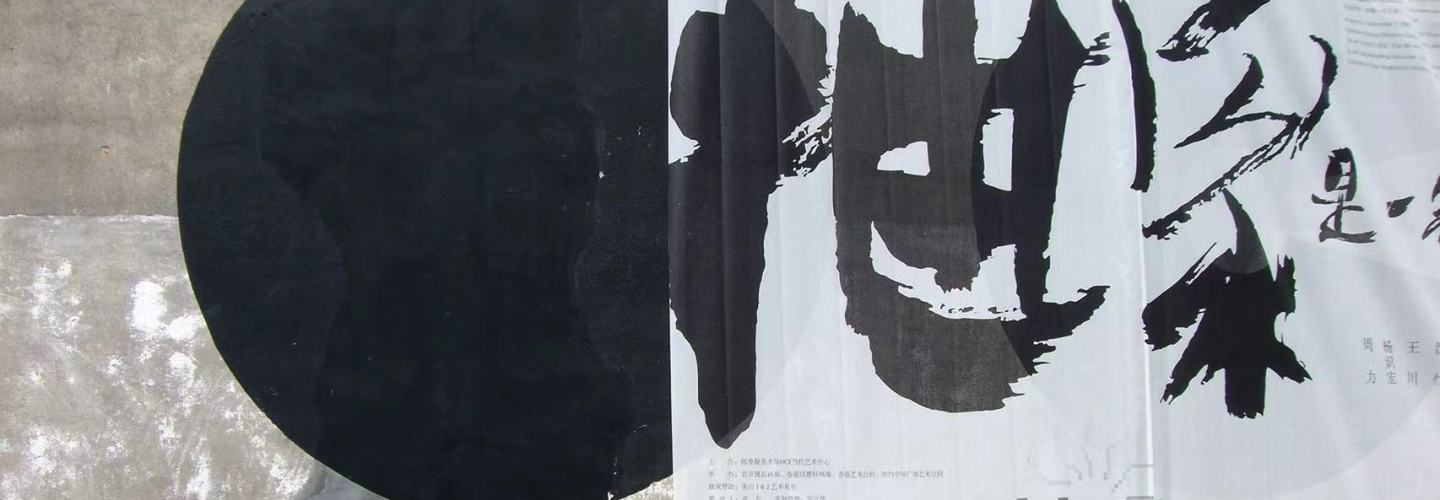
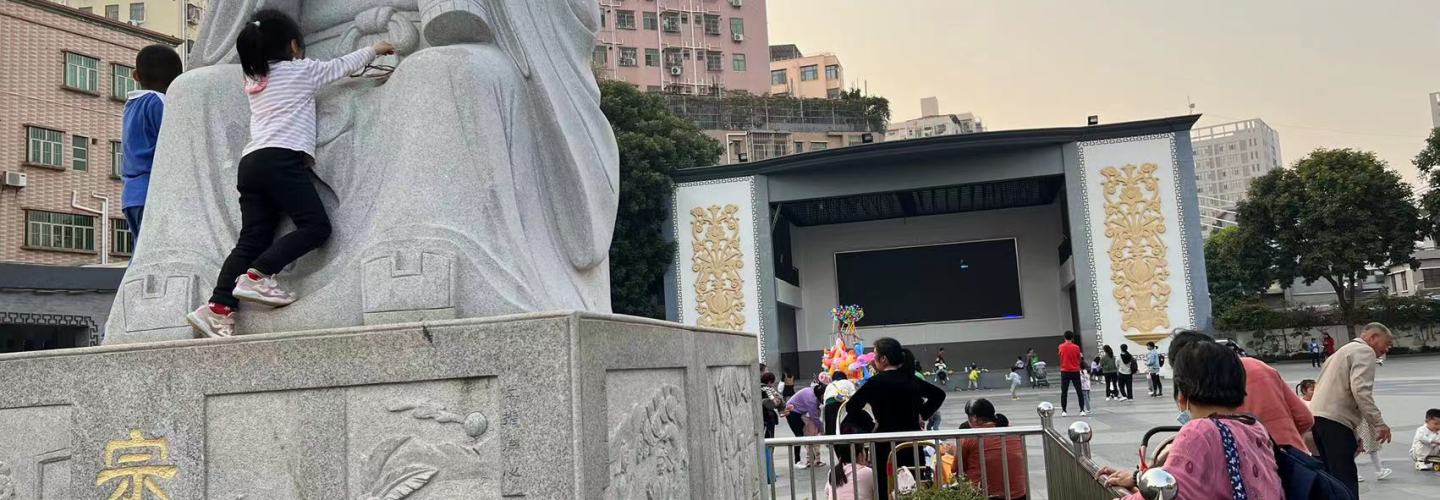
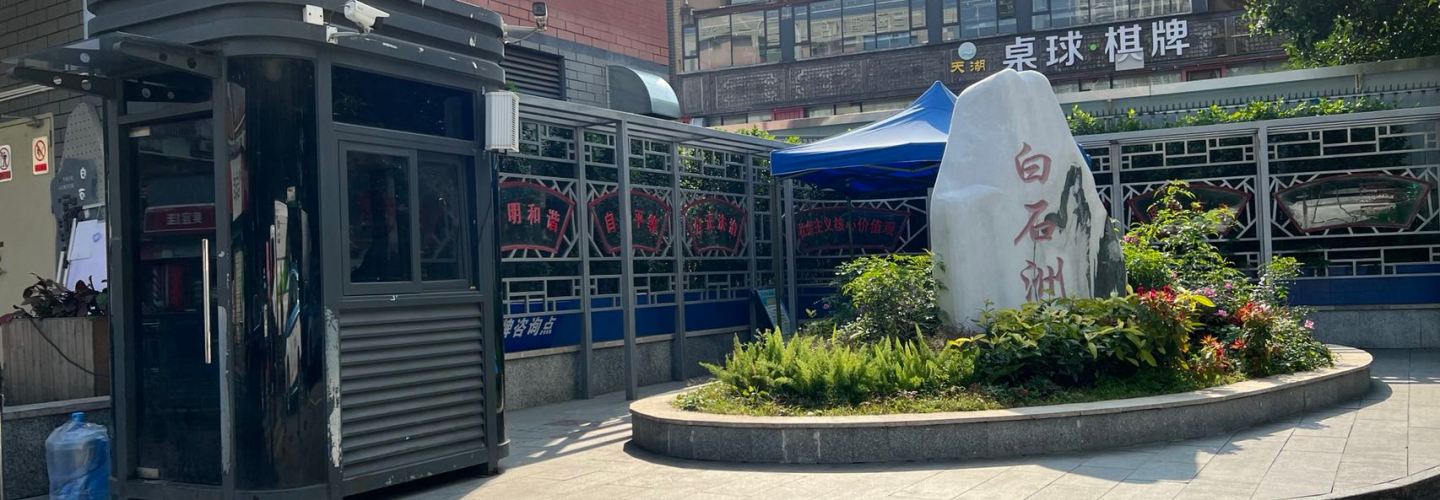

even when you least expect it, expect it. shenzheners will find another corner to light up; even tianmian glows at night.
more neon here.

silo has gone. floating lives went off better than expected, primarily because mutual goodwill enable a lot of cultural and aesthetic difference to be used creatively, rather than becoming an obstacle. that in itself was a lesson. so, i am back taking pictures of shenzhen’s odd corners, which are actually multiplying even as they are increasingly hidden in the black holes between highrise developments. the other day, i went to guankou, the remnant village located just west of the western gate into nine streets (once upon a time the entrance into the nantou yamen and hence the name “gate entrance village”).
in a parallel china, guankou was located just north of daxin brigade (大新大队), which had been the administrative center of the nantou commune (南头公社) and subsequently became the base for the nantou administrative (南头管理区)area (before shenzhen had districts, it had administrative areas, which were basically communes redeployed. in 1990, shenzhen rezoned itself into city districts–nantou became a street (街道办事处) in nanshan district). ever at the edge of western (shenzhen) wealth, guankou was one of the first industrial areas in the shenzhen special economic zone. (today is a day of using discarded language–“special economic zone” has gone the way of “brigade” and “commune”; a historic remnant visible in the landscape but no longer used in everyday conversation. i knew if i procastinated long enough, shenzhen would change enough for me to attain historical perspective! so another promissary note: an entry on “what happened to the sez?”) consequently, guankou was one of the first areas in shenzhen to be industrialized and circa 1982, guankou had factories. these factories lined “nantou old street”, that (before nanyou road became nanhai road) once linked the nantou yamen to shekou.
the architecture of these factories interests me. as does shenzhen’s limitless ability to manifest the ironies of history. at the same time that my old friend, rao xiaojun (shenzhen university college of architecture) had organized an exhibit of photographs of china’s disappearing mega-industrial structures (massive concrete and steel factories), and at the same time that shenzhen is vigorously converting laterday shenzhen factories into cultural centers, guankou still has functioning factories that look like mini concrete leaps forward.
fortunately, because shenzhen is still south china, there are twists on the concrete industrial theme: one-story houses, a central market area, and pink-tiled houses from the mid 1990s. for those, who like me are fascinated by the ongoing shenzhen explosion visit 关口 (a final aside: i’m starting to think of urbanization in shenzhen as somesthing akin to a prolonged volcano eruption. the lava just keeps oozing out, over and in between extant topography, constantly reshaping the landscape.)

this past week, i’ve been co-blogging with peter charlton from silo theater on the floating lives blog. he has inspired me to try re-presenting experiences in montage form. so below is my first montage, of the main exhibition hall in the bienniale.


today walking around the biennale grounds, i noticed a graffiti exhibition. so again, as at tianmian (and it seems that some of the same graffiti artists have been commissioned here as a there), high quality graffiti gets shown in shenzhen as art, but does not exist throughout the city, which favors overpainting everything. this version of high-concept high-art urbanism is increasingly reshaping older industrial areas in the sez (关内). it is a version of shenzhen that grows out of and confirms the priority of architecture to the city’s self-representation. it also reiterates the importance of commercial art to the kind of culture that the city sponsors at the annual china (shenzhen) international cultural industry fair . it also fits that many of the folks at the bienniale are young and hip and artistic. i’m not sure if they represent a new kind of global elite, or it’s simply the case that the young hip and artistic global elite has finally landed in shenshen. graffiti pics here

the bienniale opens tonight. well, bienniale the third. but it’s my first. i missed the previous two. i’ve been hanging out at oct loft with fat bird and silo, and these past few weeks, with gwendolyn floyd and joshua kauffman, co-founders of regional, which they define as “an interdisciplinary design and research network that performs and applies original analysis of global society, culture and commerce, uncovering and developing opportunities for profitable innovation and meaningful cultural intervention.”
their installation is called “foreground”, which was built out of bamboo. the design is derived from GIS data of a recently removed shenzhen mountain ridge. over the past twenty years, shenzhen has aggressively reclaimed land from both its eastern and western coasts. in everyday conversation this process is called “moving mountains in order to fill the ocean (移山填海).” with foreground, floyd and kauffman have respond to this transformation by using bamboo to re-construct a mountain that no longer exists. the contrast between the structure and the ground actualizes the difference between shenzhen’s pre- and post-urban topographies, creating a visible and material history for the area. more importantly, the installation enables bienniale visitors to imagine the lay of shenzhen’s land before urbanization and, in doing so, re-imagine how the city might reproduce itself in the future.
at least i hope so. one of the illusions of land reclamation and disappeared mountains is how quickly they vanish from consciousness. when i go to houhai and look out at the new landscape i have to think, and think hard, to recall something about what was once there. most of the time, however, i end up taking another round of photos and then doing a little side by side comparison. that was then, this is now.
its hard work to keep the city’s past and present simultaneously in mind. usually, i depend on the material world to do that for me. the old buildings, certain parks, particular roads–these hold my memories, which i enter by way of an evening walk. to the extent that it remains in place, shenzhen keeps my memory intact. but the city keeps getting razed. or rebuilt. or refashioned. and as the buildings collapse and new edifices rise, or factories get a facelift and industrial areas are upgraded, i forget. or rather, i loose access to memory. all that stuff are also doors to memory, and when a building gets razed, i am locked out of my past.
click for images of gwen and joshua’s work in progress.

there is a sociological approach to food. i could tell you that what’s interesting about “flavors of beijing and tianjin (京津风味)” on nanhai road in shekou (just between industrial roads 7 and 8, or diagonally across the street from garden city, where the shekou wallmart is located) is that tianjian people living as far away as in luohu and longgang will make a 1 and 1/2 hour trip just to eat a real tianjin breakfast. i could mention that at these decidely un-cantonese breakfasts, diners sit around and talk in tianjin dialect, reminiscing about life up north. i could also mention that the restaurant provides an unofficial meeting place for the tianjin hometown club (not quite an association). but instead, i want to rave about the food.
jingjin flavors serves up the most authentic tianjin specialities in the city and is well known on the chinese internet. according to the owner zhang hong, the secret to her success is the quality of her wheat products. she has employed seven tianjin cooks to make noodles, flat breads, oil sticks, dumplings, pot stickers, and bread crisps just like they do in tianjin. zhang hong believes that many of the tianjin restaurants that opened and failed in shenzhen, failed because they skimped on the wheat. “you don’t make money on wheat products, so many restaurants just made noodles or a flat bread. but anybody can do that. my long-term customers return to enjoy the tastes the remember from childhood, and that’s wheat. of course, the other dishes have to be high quality, but the real secret to gaining customer loyalty is a fragrant flat bread that takes them back to tianjin in a bite.”
for breakfast, you can order jianbingguozi (煎饼果子), soy milk with old toufu(豆浆加老豆腐), or soy milk in gravy (with a swirl of sesame paste)(豆腐垴), tianjin wontons in a claypot(沙锅馄饨), sesame flat bread(芝麻烧饼), and oil sticks (油条). go to jingjin flavors to satisfy every carb and salt urge you’ve ever had. it’s a delicious way of starting the day. it’s also a great way of discovering how some northerners are inhabiting shenzhen.
in the interests of furthering cross culinary understanding, i end with a photo of shenzhen’s latest campaign: don’t eat cat or dog meet, boycott cruel killing. stewed cat and stewed dog (separate dishes, not stewed together) are hakka specialities available in longgang. and again, i know people who will drive over an hour to enjoy the flavor of hometown food. i’ve made the drive with them and, if asked, will probably do it again. really. joys of anthropology of food are not to be underestimated!


green oasis seventh graders come from the mainland, taiwan, malaysia, and india
so, yesterday was field day at green oasis. i enjoy field day for many reasons, not least of which is that field day makes the students happy, and happy students bring joy. nevertheless, what struck me during field day was the diversity of our student body.
facts that speak to the ongoing globalization of shenzhen. 49% our students come from outside the mainland (including taiwan and hong kong); 25% come from outside greater china (india and korea being the two largest non-chinese populations). for years, people have spoken of shenzhen as a city of immigrants (移民城市). however, what they meant by “immigrant” was “from other parts of the province/country” or simply “outsiders (外地人).” now the immigration situation isn’t so straightforward. most of these students won’t become chinese nationals. however, their parents work here for companies that are clearly here for the long-term. moreover, they have chosen to place their children in a chinese school in order to insure that these children will grow up into bi-cultural (mandarin-speaking) citizens.
this model is obviously different from the local chinese model, which educates with an eye toward helping chinese students become chinese citizens. it is also a very different model from the colonial model of an “international” school, which has taught euro-american or curriculums with an eye toward going to university in the u.s. or europe. those children live in china, but are not part of china; indeed, there is no intention to make them part of china. instead, the green oasis model entails educating international children to be part of china, without becoming chinese nationals. at any rate, we now have students whose mandarin is better than their (native) russian or spanish or korean or cantonese…
in many ways, the green oasis model echoes the larger chinese model of sojourning, where people (outsiders) live in other cities, but retain hometown identities. i’m beginning to think that sojourning increasingly enables chinese people to weave foreigners into the fabric of shenzhen life. so that the questions “where is your hometown (你的老家在哪里?)” and “what country are you from (你是哪个国家的人?)” become functionally equivalent in terms of social mapping. which is to say, that for many chinese, especially students, the u.s. and korea and india are no longer as foreign as they used to be.
field day pictures, which in addition to sharing childhood smiles, also illustrate how childhood has globalized with chinese characteristics…
i’ve been thinking about the implicit methodology structuring entries to this blog. usually i go out on somewhat directed walks (where haven’t i been in a while? what’s new in shenzhen? being the two most common questions i ask myself. a third: what’s nearby that i can visit in the hour i have before a meeting…). i take pictures, i talk to people i meet, i play with the images, and then post with commentary. the commentary grows out of the infrastructures that have enabled me to inhabit shenzhen. my apartment in tianmian, my positions at green oasis and shenzhen university, the circle of friends i’ve cultivated. there is no longterm plan, rather a sense that the unfolding of the city will itself bring what is important to light.
i actually enjoy the process. and yet.
lately i have been trying to organize these thoughts into something resembling an academic presentation. re-working the pictures, re-membering the walks, and re-contextualizing the conversations present interesting challenges and ethical conundrums. it’s not so much what i didn’t ask or didn’t do; these absences seem somehow fillable. it’s rather that which cannot be printed which haunts me. thirteen years after arriving in shenzhen, i’ve learned to distinguish between what can be said and printed, what can be said and not printed, and what can’t be said, but lumbers about the conversation anyway. i am also acutely aware of the limits to my ability to make distinctions because i don’t know all that much. consequently, i’ve come to realize that much of my blog is an effort to get around or blur or stretch those borders into a different kind of understanding that may or may not fit into what i think an academic presentation “should” be…
Silo Theater has returned to shenzhen!!!! this time to create floating lives with fat bird. we have been waiting and working to create this project since song jie and yang qian first met silo at the macau fringe 2002. we will be setting up a project blog at: http://floatinglives.blogvis.com. we invite all friends to come to the site and participate in the creation. here’s a first picture of the group:

 Shenzhen Noted