
walking from coastal city, one of the large malls on the houhai landfill toward haiya, a mall built about ten years ago, i past this bit of graffiti. it does say it all.



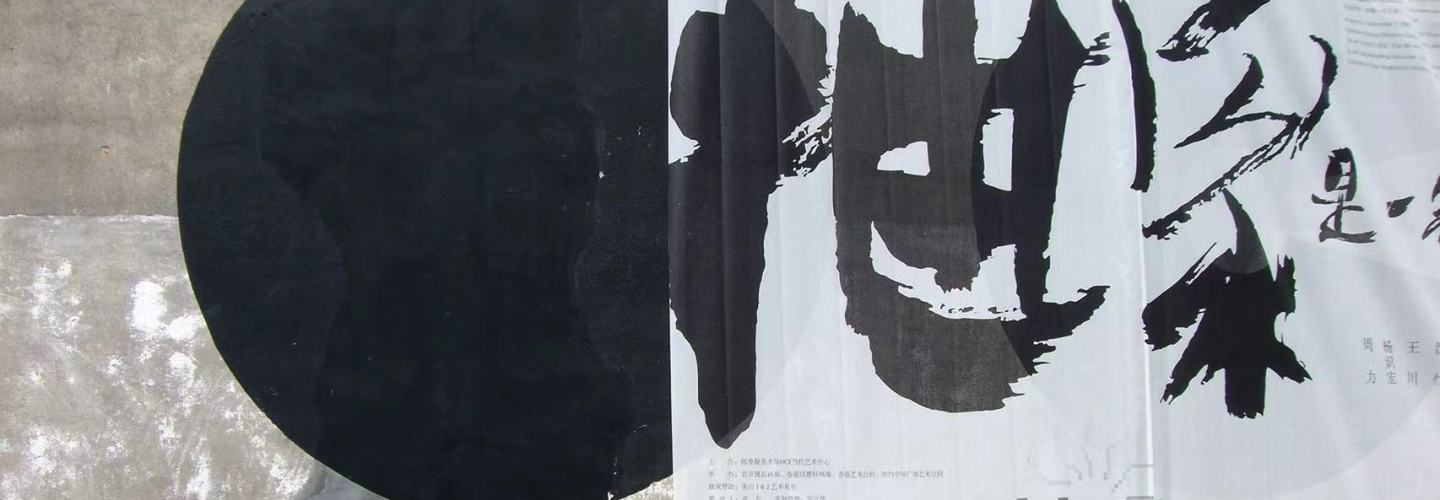

walking from coastal city, one of the large malls on the houhai landfill toward haiya, a mall built about ten years ago, i past this bit of graffiti. it does say it all.
This year marks the 30th anniversary of the China Merchants (招商局) Shekou Industrial Zone (possibly park). Shekou was established one year before Shenzhen, which celebrates the city’s thirtieth next year or the following year, depending on whether one counts from the year Guangdong approved the decision to establish Shenzhen (1979), or the Central government (1980). The SEZ border with the rest of the country wasn’t fully in place until 1986… Anyway, all sorts of commemorative events have already begun, including randomly posted pictures of Old Shenzhen, here, here and here, which are worth checking out to get a sense of the scale of change.
(Although the first set are actually from the 25th anniversary. I really do have to write about the ongoing and seemingly compulsive revisions of Shenzhen history. In a city that is constantly referred to as having no history, the historic compulsion is not only alive and well, it also shows up in advertising as “11 years of experience” as if 11 years was a long time, and of course, it is, but only in the context of thirty years, which are considered nothing in the history of 5,000 years of civilization… contradictions, contradictions…)
One of the more famous pictures from the early years is of Deng Xiaoping writing the characters for Seaworld (海上世界), here. His daughter stands to his right and, looking over his shoulder is Yuan Geng, the man who initiated many of the reforms that are today considered central to reform and opening, including: the first industrial park open to foreign investment, directly hiring and firing employees (rather than using centralized work assignments), and introducing market driven management principles (time is money, efficiency is life.
This picture is interesting for what it tells us about the political culture in which Shekou came into being as well as the kind of political and social change that Shekou once symbolized.
1. 1984 was the first time that Deng Xiaoping came to Shenzhen. He visited many places, but the two symbolically most important were Guomao (in Luohu, near the train station) and the Minghua cruise ship in Shekou. He inscribed characters for both the Shenzhen and Shekou governments. Shenzhen received the famous lines: 深圳的发展和经验证明,我们建立经济特区的政策是正确的 (the development and experience of shenzhen proves that the policy to establish an economic special zone was correct, picture of Deng Xiaoping writing inscription.) In contrast, Shekou received four characters: 海上世界 (seaworld).
2. The actual content of the inscriptions points to the differences between the early eighties Shenzhen and Shekou models of reform. Shenzhen was explicitly linked with politics. This is confirmed by the importance of Guomao, which was built as both a shopping center and an office building to house representatives from Chinese provinces, cities, and ministries. In contrast, Shekou was explicitly linked re-orienting everyday life from models of third world mutual support and mass production to capitalist trade and individualized consumption as a brief history of the Minghua and the four characters “Seaworld” shows.
The Minghua was a French cruise ship christened by DeGalle (1962). The Chinese bought it to transport engineering support to Tanzania in 1973 to build railroad in support of villigization—a form of African socialism based on the Chinese model. In 1979, then used as part of relinking Sino-Japanese relations. In 1983, the Minghua was moved to Shekou and refurnished as a floating restaurant and nightclub, where it anchored a westernized club scene.
3. When Deng Xiaoping inscribed the characters for Seaworld, he not only signaled his support of the Shekou model, he made the kinds of reforms that were taking place in Shekou a model for national development. Chinese leaders inscribe (题词) calligraphy to support organizations and policies. As of 1984, reform and opening did not only refer to administrative reorganization (as signaled by the Shenzhen inscription), but also to social and cultural reform. This is important because before 6.4 individual desires and political reform had not yet been brutally separated, so that in pursuing their dreams, young people in Shenzhen also represented a new kind of Chinese future.
4. The fascinating and ongoing politics of the smiling face. Smiling continues to be, like inscribing phrases and words, a way that Chinese leaders publicly express political support. This picture of happy leaders was a metonym for reform society: following this path will lead to a happy future. It ties into traditional paternalism, in which strict fathers only smiled when their children truly did something well.
i have been reading about ideas and efforts to renovate shenzhen, and have discovered an intense interest in historic preservation. there are several obvious examples–the chiwan tianhou temple (museum), the renovated dongmen commercial area (west of dongmen road), nantou old city, the hakka compounds in longgang, pengcheng garrison–and several more recent “discoveries”–any of the early 1980s light industry parks, remnants of older villages, a ming dynasty temple in baoan, older ancestral halls, dongmen commerce before historic renovation (east of dongmen road), 4 and 5 star hotels from the late 80s and early 90s, including the eastern pearl luxury cruise ship landlocked behind a golf practice range in seaworld. in various ways and with various degrees of success, all of these areas have been integrated into the new shenzhen.
of course, at stake is the question: what counts as history? the current effort to renovate inner city villages acknowledges that shenzhen’s only living cradles of pre-urban history are the villages, but on the other hand, what makes shenzhen “special” has been its urbanization. this contradiction means that even when village histories are chronicled and preserved, they do not resonate with shenzhen’s migrant communities. nor have i heard (note: what follows is highly anecdotal) that historic preservation in one village means anything to folks from other villages, except to encourage them to write their own histories. these histories re-write village history in terms of urbanization and what shenzhen has done for them.
so one telos, with history becoming the search for one origin. perhaps this is where the difficulty lies in writing shenzhen history. there isn’t one origin, nor one telos for that matter. even bracketing multiple development trajectories at any one time, there is still the fact that shenzhen’s official goals for urbanization have changed with every urban plan. this means that the editorial choice for one origin becomes deng xiaoping’s decision to establish sezs, and the telos becomes whatever has been built to date. so writing shenzhen’s history becomes tracking the history of changing teloses…and this is invisible. we lurch from one state of being to another, but can’t remember what was here before, or are compelled to forget what was here, even yesterday… we are busy explaining the link between deng xiaoping and shenzhen today.
the difficulty of trying to make shenzhen’s multiple teloses visible became clear to me several weeks ago. i met with a friend to show him several years of pictures of houhai and he said, “i thought the change would be more obvious. i can’t tell which pictures were taken first.” image quality told part of the story–i’ve used better cameras over time, so the better the resolution, the more recent the picture. its true. houhai has changed, but the way its changed–reclaim land, build tall buildings–hasn’t. so signs of change include building style, height, materials, distance from original coastline, which is marked by the oldest buildings, green space (as shenzhen has become richer, landscaping has increasing relied on imported, rather than local plants). but who has this kind of knowledge, which might form the basis of some kind of historic recognition? this knowledge is excruciatingly site specific. and people like my friend who haven’t repeatedly walked the coastline, don’t see the change. they see, instead, more of the same and when i visit places in shenzhen, i often find myself relying on knowledge of other places to read the extent of urbanization…
i am tempted to compare this feeling of eternally recreated present to the scene in the matrix, where the keanu reeves character (who’s name i’ve confused with nemo the fish) figures out he’s in a computer program because of a glitch; the same woman in the same dress walks by the same building twice, and only that experience, that moment of awareness reveals change. so history writing becomes looking for these glitches that otherwise go unnoticed.
I have just returned from my trip north. The following three entries were written in Tianjin, Beijing, and Chengde, but could only be uploaded from my Shenzhen proxy. I will be away for the next three weeks. Happy summer.

This was written on July 23.
Biantong (变通): the ability to apply successfully knowledge about A to B. The two characters constituting this word—bian (变) and tong (通)—suggest an understanding of intelligence as a capacity to adapt past knowledge and experience to and thus pass smoothly through the challenges of the present. At the level of cultural history, biantong simultaneously reproduces and changes tradition, creating new worlds where vestiges of the old not only have salience, but also continue function. Visiting Chengde these past few days has helped me deepen my understanding of the establishment of Shenzhen as an instance of biantong. Specifically, Chinese Emperors and socialist leaders have continuously established new cities to initiate political change or diversify administrative s policies while maintaining stability in the capital.
Qing hegemony rested on obtaining legitimacy within both Han and non-Han ethnic communities. On the one hand, the Qing were Manchurians, but governed an Empire that was primarily Han. Indeed, in the state apparatus that the Qing took over from the Ming, Beijing signified the centrality of Han ethnic identity for state building and identity formation. As a first step to securing their hegemony, the Qing occupied the forbidden city (故宫), the former center of the Ming Empire. However, to redeploy the Ming state apparatus for their own ends, the Qing Emperors mastered Han culture, presenting themselves as the embodiment of the Mandate of Heaven. The Qianlong Emperor’s mastery of Han calligraphy and poetry forms, for example, fueled rumors that he was actually a Han Chinese, rather than a Manchurian.
On the other hand, to appeal to non-Han and non-Manchurian ethnic groups, the Qing court promulgated Tibetan Buddhism (密宗), which was practiced throughout much of the non-Han Empire (Mongolia, Xinjiang, Tibet, Yunnan, and western Sichuan in addition to Manchuria). In contemporary jargon, the Qing located “minority affairs” in Chengde, where they resided in Chengde for five months a year—from May through October. More to the point of this blog entry, Chengde enabled the Qing to place Tibetan Buddhism at the center of imperial policy, something that could not be easily achieved in Beijing, which was already built to reflect Han cosmology. Once Tibetan Buddhism had been firmly established as the court religion, it could be transferred to Beijing. For example, the Yongzheng Emperor donated his pre-ascension Beijing residence, the Yonghe Palace to Tibetan Buddhist monks.
Clearly, minority affairs not only constituted a key element of Qing administration, but also necessitated what was effectively a second capital, begging the question: how much change can be ordered from the capitol, but not implemented there? Many people, myself included, have ascribed the success of reforms in Guangdong, generally and Shenzhen, specifically as an instance of “the Emperor is far away and the mountains high (山高皇帝远)”. However, the fact that the Qing needed a second capitol to administer a multi-ethnic empire complicates this description of change from below. Instead, it seems that political change in China has also occurred because the constraints that Beijing’s bureaucracy have imposed on the Emperor can be mediated by spatial distance. In other words, the Emperor deployed and the Communists continue to biantong urban space with an eye to transforming Beijing and by extension the country.
I have elsewhere discussed Shenzhen’s establishment in terms of the Maoist policy of “important cities (重点城市)”. While in Chengde, I became aware the extent to which the establishment of the Qing’s “Mountain Resort (避暑山庄: the Chinese includes the idea of ‘summer retreat’)” enabled them to govern the Empire through means that would have been both difficult and ineffective in Beijing. Yet once in place in Chengde, these same policies could be re-imported to the capital as national policy. Suddenly, the establishment of Shenzhen appears to be well within Chinese administrative –both imperial and Maoist—history. Cultural continuity through biantong . More importantly, thinking about Shenzhen through Chengde firmly situates the SEZ’s so-called lack of history within Chinese cultural-political history. From the height of Chengde’s mountains, it seems ignorant to argue that Shenzhen doesn’t have a history. Indeed, such arguments appear to be motivated disinformation; who benefits and how when Shenzhen is described as being without history or culture?
My regrettably fast tour of Chengde included visits to Puning Temple (普宁寺), the little Potala Palace (普陀宗乘之庙; the Mandarin refers to Tibetan Buddhism as Tantric Buddhism), the Mountain Resort, and Sledgehammer Peak (磬椎峰). While there, I enjoyed the cooling beauty of Chengde’s trees.
Two Days in Beijing written on July 18 and 19
1. Embodied knowledge
Yesterday morning, Yang Qian and I came to Beijing by way of the Tianjin temporary train station, a hot, smoky, and crowded structure located in the semi-mangled space behind a Carrefour strip mall and a construction site. Two years ago, workers threw it together out of inexpensive bricks and cement; city officials designed the provisional station to be dismantled as soon as the new station opens on August 1. We approached the station along a clogged side street, walking past backed up traffic, stumbling over discarded bricks, and tripping when our suitcase wheels got stuck in a pothole. I bumped into a man who had paused to light a cigarette. We rushed through the main door, up rickety stairs, and into the airless waiting room, where several hundred people loitered restlessly.
I felt a drop of sweat run from my armpit to the crease of my elbow. Yang Qian used a tissue to wipe his forehead. A family squatted several feet away, playing cards. A cigarette dangled from the father’s lips as he considered his options. After decisively throwing down a five of hearts, he sucked deeply on the cigarette, pinched it between the index and middle fingers of his right hand, and removed it from between his lips, exhaling bluish smoke. His gaze turned to his son, who squinted at the cards carefully arranged in his hand. Two young women sashayed past us toward a concession stand. They wore sleeveless tee shirts, low-riding jeans, and spiked four-inch heels. Matching gold belts set-off flat stomachs and narrow hips. Several people slept on newspapers spread across the concrete floor, their heads cushioned on backpacks, their bodies arranged protectively over large, plastic bags. Another phone rang and I heard someone scream, “I’m at the train station, I’ll do it tomorrow.”
“Can’t be helped.”
“Tomorrow.”
The train boarded five minutes before departure. The crowd abruptly surged toward the platform door, carrying us through the narrow door, down metal stairs, and onto the sleek white commuter trains that connect Tianjin to Beijing. Our first-class tickets brought us into air-conditioned coolness. We stretched comfortably into our seats and within minutes fell asleep, only waking as the train pulled into Beijing station.
2. Spatial awareness
In Shenzhen, Tianjin, and now Beijing, I have been staying in new developments: City Square, Ruijiang Estates, and Fuli City, respectively. While in Tianjin, I was struck by the lack of amenities that have become standard in Shenzhen these past five years, including large malls, coffee shops, yoga studios, and clean restaurants. The apartments in Ruijiang Estates were large and comfortable. However, the shops downstairs were small and sold inexpensive necessities like soap and salt and beer, while the services provided were limited to standard haircuts. In contrast, the absence of inexpensive breakfasts and markets defined the Fuli City complex, where coffee shops, malls, Thai and western restaurants, as well as expensive spas and salons surrounded us. Our place in Beijing was two subway stops away from the China Television Building. Remnants of the capital’s socialist neighborhoods crumbled silently behind glass and steel towers that showcased sports apparel and Armani suits, gold jewelry and summer bright accessories, and we only discovered them by accident, when our evening walk detoured through a back alley.
Last night met a good friend at Jing Wei Lou (京味楼), a restaurant located near Zhongnanhai. We got on the subway underneath the CCTV Building station and off at Tian’anmen West (north exit), where across the street, the new National Theater shimmered in the evening haze. We walked past the red walls of Zhongnanhai and turned north at the next intersection. Traditional hutong’s still define this area, which serves China’s leaders, tourists, and locals who want authentic local flavors. Jing Wei Lou serves ordinary Beijing dishes—sesame toufu, peanut and cashew spinach, zhajiang noodles, stewed intestines, dai fish—of extraordinary flavor and reasonable price. In other parts of the city, like Fuli City, food of similar quality easily costs four times what it does at Jing Wei Lou. Indeed, in Fuli City, we often ate at chains simply because they were significantly cheaper than unique restaurants. Apparently, many leaders use Jing Wei Lou as their working canteen and so taste and price reflect market conditions.
3. Temporal consciousness
I am differently aware of time in Beijing, where I have fewer distractions than in either Tianjin or Shenzhen: no internet connection, no urge to walk around in the afternoon sun, no relatives to hang out with, no yoga studio, no prepaid service at a salon, no membership at a swimming pool, no interviews to conduct, no deadlines to meet, no books to read, no movies to watch…In Shenzhen, appointments structure my engagement with the city grows out of shuttling from my home to work to the yoga studio to a restaurant to an interview and back home to write an article or blog post. In Tianjin, family obligations organize my time. I eat breakfast, hang out, eat lunch, take a nap, watch some television with my sister-in-law, talk with my mother-in-law, eat dinner, and then go out for a movie or a coffee or a dessert with my niece. In Beijing, I still think about eating and going out and taking pictures, but there are no immediate social consequences to my decisions and so how I feel at any given moment shapes my day. Am I hungry? Bored? Thirsty? In the absence of definitive feelings, I grow lazy, flipping through my dictionary or sitting at my computer writing blog posts that will be uploaded only after I return to Shenzhen.
This afternoon a five hour trip to Chengde with a good friend and a new friend.
This entry was written in Tianjin on July 17.
These past two days, I have been in Tianjin, visiting in-laws. I also met Joel and Jessica of China Hope Live. My trip here has me thinking about how habit informs what we can see and experience. I left Tianjin more strongly convinced that there are many Chinas, not simply scattered over the country’s official territory, but also flourishing within the country’s diverse municipalities.
The first two impressions I had of Tianjin were of lack—no blue sky and not many tall buildings. Clearly, I was looking at Tianjin through eyes accustomed to seeing Shenzhen, where smog is the exception and glass skyscrapers the new norm, especially in Luohu, where I have been living. Moreover, these observations included unreflective judgments: (1) Shenzhen is cleaner and therefore better than Tianjin and (2) Shenzhen is wealthier than Tianjin and therefore more contemporary. Both judgments confirmed that my decision to live in Shenzhen was correct.
Only after a bit of acclimatization did I begin to see Shenzhen through what Tianjin might offer. In particular, one of the most important aspects of leaving Shenzhen is that it enables me to place Shenzhen within national trajectories, rather than within and against Hong Kong trajectories. This balance is one of the most difficult things to maintain when thinking about Shenzhen, which is both a Cantonese and a PR Chinese city. Histories of Shenzhen need to be written from both Hong Kong and Beijing, otherwise it is too easy to overlook either the role of policy or that of international capitalism in the construction of Shenzhen. Below are ways of thinking Shenzhen through impressions of Tianjin.
First, a literate rather than simply oral take on local history, as well as ongoing efforts to interpret that history with respect to national history. In Shenzhen, I usually hear the line “there is no history here ()” as self-serving justification for ongoing development and attempts to transfer landuse rights from village corporations to the state. However, in Tianjin the idea of no history is differently nuanced. On the one hand, Tianjin was one of the most important Chinese cities both before 1949 and during the Mao era. As in Shenzhen many important events have taken place here. On the other hand, many of Tianjin’s older residents went to school both before and after 1949. Indeed, Nankai University is located in Tianjin. These older residents can both discuss Tianjin with respect to Chinese imperial history as well as reframe the Chinese Revolution. Thus, unlike in Shenzhen, where local residents have experienced the effects of policy decisions, in Tianjin, some local residents have been recording, contemplating, and evaluating past events for over 100 years. In this sense, Shenzhen has history as a memory, while in Tianjin it is possible to use written histories to supplement oral history. Indeed, much intellectual work in Shenzhen entails documenting the present for future interpretations. Suddenly, the importance of “making history” seems more urgent in Shenzhen, and the concomitant responsibilities heavier if only because there are people writing history in Tianjin and so few of us in Shenzhen.
Second, time in Tianjin shows up the historic specificity of both forms and evaluations of globalization. In contrast to Shenzhen, where globalization is celebrated as the means of unmaking the mistakes of socialism, Tianjin’s colonial enclaves once proved the moral failures and social injustices that constituted Western imperialism. Indeed, one way to frame both Tianjin and Shenzhen history as moments in the history of the People’s Republic would be to look at the histories of these two cities as different efforts to use Western capitalism for Chinese ends. Another take would be to compare and contrast how foreign capitalists invested and inhabited these two cities. The dormitory system seems a wonderful place to begin such a study. Another would be to look at patterns of immigration. Still another might be to trace the conceptualization and construction of foreign enclaves, which have been reproduced in Shenzhen, not as concessions, but rather as neighborhoods that cater to foreign tastes, including private homes, English language schools, and leisure. Finally, one could also examine how Tianjin functioned and Shenzhen has functioned to prepare young Chinese to go abroad are remake China’s position in the world.
Third, the way that the Shenzhen experiment has and has not been picked up and redeployed outside Guangdong. While in Tianjin, I noticed the presence of China Merchants (招商集团) and Vanke (万科集团). It would be interesting to track these transformations through the presence of Shenzhen people in Tianjin, as well as Shenzhen financed projects. I know several Shenzhen architects and developers, who have projects in Tianjin. In Shenzhen, I hear about these projects, but have never visited them.
This trip has reminded me how travel helps counteract the mental numbing that all too often accompanies the repetitions of my daily routine. In the hazy light of a Tianjin morning, it seems even more necessary to organize my life to facilitate clear thinking, or if not completely clear thinking, to organize my life to make apparent the sedimentation of thought. Pictures of Tianjin index this process.
Today, after breakfast, we leave Tianjin and head to Beijing for the weekend.
I was belatedly reading “Digging a Hole all the Way to America“, an esquire article on Shenzhen, when I suddenly realized how many of the articles about Shenzhen are written by men, who don’t seem to know anything about China in general and Shenzhen in particular. Instead, the articles consist of reproducing sarcastic stereotypes about the city, without contextualization and/or documentation. So on his trip to Shenzhen, Colby Buzzell watched migrant workers, mused about his Vans being made in China, talked with foreign men in Shekou, visited Working Girl Street, compared the quality of his made in America bicycle with the made in China thank God was stolen bicycle he bought in Shenzhen, and then returned someone’s hospitality by griping about how much he dislikes karaoke. The only person who accorded respect in his article was a Chinese interlocutor who told him what he expected to hear: most young people don’t know about 6.4 and Shenzhen people only care about making money.
I’m not sure why sarcasm–or snark as the case may be–sells in the conventional media. I do know that in Buzzell’s article, sarcasm functions not only to distance the reader from Shenzhen, but also to establish his authority to write about a city he clearly doesn’t understand. Indeed, sarcasm is a rhetorical devise that excuses the author from learning about the city through more conventional routes. Why should he bother interviewing historians of the city, reading published materials about the city, arranging a visit to the factories, and hiring a qualified interpretor, for example, when the city is so obviously beneath contempt? Nevertheless, Buzzell managed to write nine pages without any sign of investigative journalism. A simple been there done that sufficed to represent China’s 4th city. It was as if the Shekou expats’ sexist racism inspired the form and content of Buzzell’s article, which in turn does little more than justify learned and continued ignorance about contemporary China.
The repetition of sarcastic tone, superficial facts, sexist comments, and the wow factor in reports about Shenzhen has me wondering what about this rhetorical mode appeals to American authors and audiences. Who do we think we are when we mock what we don’t understand? Mockery is clearly a rhetorical devise for establishing dominance and asserting one’s superiority. Indeed, it is one of the most effective forms of verbal abuse, serving to dismiss other people’s perspectives and experience by asserting one’s own perspective and experience as the absolute standard.
Sarcasm allows Americans to maintain a sense of superiority in a world that is clearly changing in ways and directions not necessarily to the benefit of the United States. Perhaps this is the point: the world is changing and we don’t understand what it means for us. What kind of world leader would China be? Indeed, a sense of fear permeates Buzzell’s and like-minded articles. It as if America cannot remain American because more and more classical Americana is made in China, generally, but Shenzhen specifically. In this reading, any Chinese success harms the United States and any sign of Chinese failure helps us; suddenly, the best defense of America becomes an uninformed offensive against Shenzhen.
Sigh.
The other day, I had lunch with two friends, Xiao Luo, an unmarried 27 year-old journalist who lives with her boyfriend, the other, Xiao Liu, a married 35-6 year-old designer, who lives with his wife and young daughter. The food was great. We were at one of Shenzhen’s “new concept” restaurants, this time new concept Sichuan, where Cantonese attention to detail and high-end ingredients meet Sichuanese delight in unexpected re-combinations of spice and chili. The conversation, however, was about dissatisfaction and stress. Both of my friends found their relationships to be unsatisfactory and stressful.
Xiao Luo struggles with insecurity in her relationship: “没有安全感” while Xiao Liu chafes under familial obligations: “压力很大”. Both attribute the problems in their relationship to gendered expectations of what a man should be. For Xiao Luo, the question is what a man should provide his partner. Materially, he should provide a home and reliable income; Xiao Liu agrees. However, he believes his wife’s expectations cannot be met. Xiao Luo said that she could understand his wife’s feeling of insecurity: you need money to send a child to kindergarten to prepare her to go to a good university abroad. Everyone knows how the cost of living is going up.
Xiao Luo also expects her boyfriend to spend quality time with her—eating meals together, going shopping together, talking about the day, and watching television . Again, Xiao Liu doesn’t disagree. However, he experiences his wife’s demands for companionship to be excessive, limiting the time he could be spending at work, with friends, and cultivating himself. Indeed, the problem is that if he were to meet his work and familial obligations, he would have little time left over for friends and self-cultivation.
In Shenzhen, successful and ambitious men are busy: they work long hours and are available to bosses and friends 24-7. These men will often go from one dinner with friends to another, or play mah johng all night. Others, like Xiao Liu have hobbies that are in fact second jobs. Xiao Liu makes documentary films in his limited spare time. Consequently, not going home is a source of friction in many relationships as wives, girlfriends, and children are last on many men’s list of priorities.
Another friend summarized Shenzhen’s relationship tension as the result of too many temptations. No one, she said, wants to stay quietly at home. Both men and women want exciting lives. The expression 男人花心,女人花钱 (men spend their hearts, women spend money) succinctly expresses what many say characterizes Shenzhen relationships. Men have many relationships and women spend as much money as they can. The problem with work and friends, however, is that women can’t complain if their boyfriends and husbands don’t come home. Work and friends are a man’s priorities. Xiao Luo agrees.
In this case, wouldn’t the best decision be not to have children? My friend immediately corrected me: all Chinese people want children. So what to do? She sighed. “In the end, the woman bears all the responsibility for taking care of the family. The men just want to wake up one day and have an eighteen year old son.” Again, why, I asked, not seeing the implicit value of children. If you don’t want to raise the child, why bother having it? My friend ignored my deliberate pig-headedness. That children are good and desired goes without saying. Instead she pointed out that what needs to be explained is why, I, who can have as many children as I want, don’t have any. I nodded meekly and followed her into the movie theater. Hancock is playing this week.
 Shenzhen Noted


