more thoughts on education


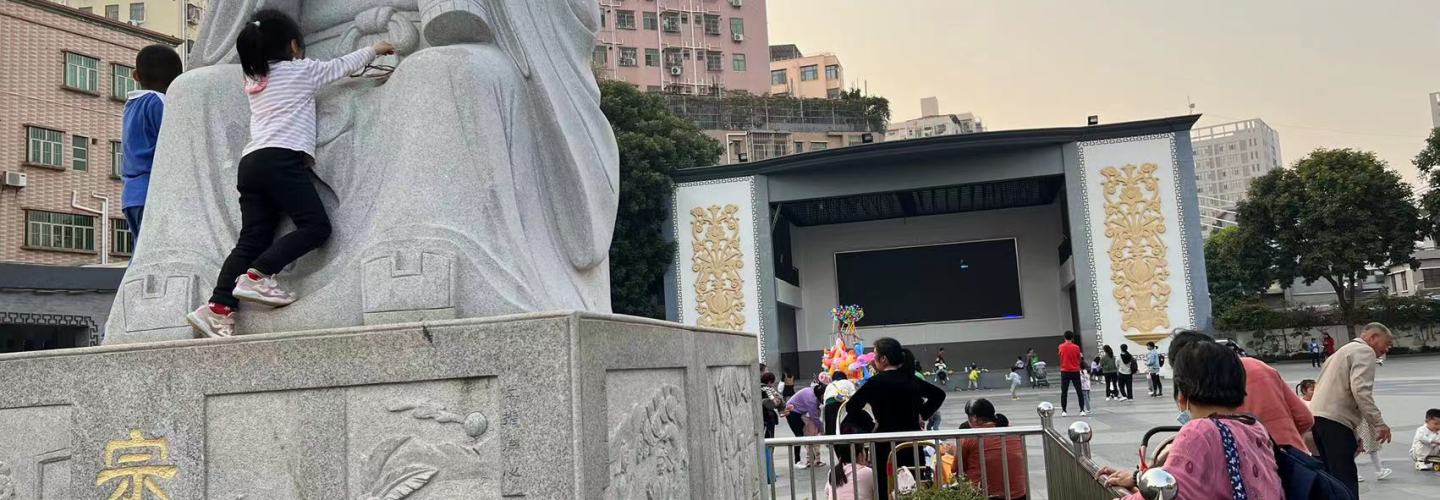
at the park

Originally uploaded by maryannodonnell

the question of what to believe is is troubling and profound, even in cities like shenzhen, notwithstanding all this capitalism with chinese characteristics. some days it feels like people only say they want to make money because that is what they think they’re expected to say. at heart, i sense that people are making money and how far they are willing to go to make that money (because yes, questions of ideology are also questions of belief) is tied up in reworked versions of what constitutes a “household (家)”. indeed, neotraditionalism and neoconfucianism are profoundly shaping (what i am told is the most feudal of chinese institutions) – early childhood education.

a few years ago a friend of mine gave me a copy of the “three character jing (三字经), a text that chinese children used to memorize as part of a traditional education. my friend told me that after her son had memorized the three character jing, he had become a better student, more filial, and overall a more considerate human being. she concluded that traditional education educated the entire person, whereas modern education was necessary, but incomplete.

i am also aware of a strong impulse toward home-schooling among many people my age. many had their children memorizing chinese classics and indeed, i bought my own recitation copy of the “book of changes”. the set came with pinyin, simplified and standard versions of the text in addition to cds of a man and girl reciting the text. the many who sold me this set told me that when children recited the classics their voices became clearer and more beautiful.

recently, the push toward remaking the self through the classics seems both stronger and more popular – in all senses of the word. a new favorite text is the “standards for being a good student and child (弟子规)”. meanwhile, an administrative assistant has left her job to take her three-year old daughter to a mother-child camp, where she will learn how to teach her daughter the classics.

it is worth noting that although students had been memorizing tang poems as part of their elementary education, the new push for “three characters” and “standards” is (a) part of grassroots pre-school training; (b) involves a moral impulse that combines education with obedience; and (c) is re-coding shenzhen’s nuclear families in confucian terms.

so i am learning to listen to chinese debates about education, debates which frankly did not interest me when i thought of them as being merely about how the gaokao (高考) has ruined the possibility of true learning. in fact, the closer we get to the june test dates, the more incessant and shrill these debates become and the lower my tolerance for parents who say, “but we had no choice [except to force our child to study ten hours a day and give up their dreams of being an artist]”. however, as i have learned to hear how questions about what and how to believe inform these debates, i have become more interested in and yes, more sympathetic to the chinese obsession with education.

there are, after all, many ways of trying to become human.

519 Happy Academy


打印

Originally uploaded by maryannodonnell

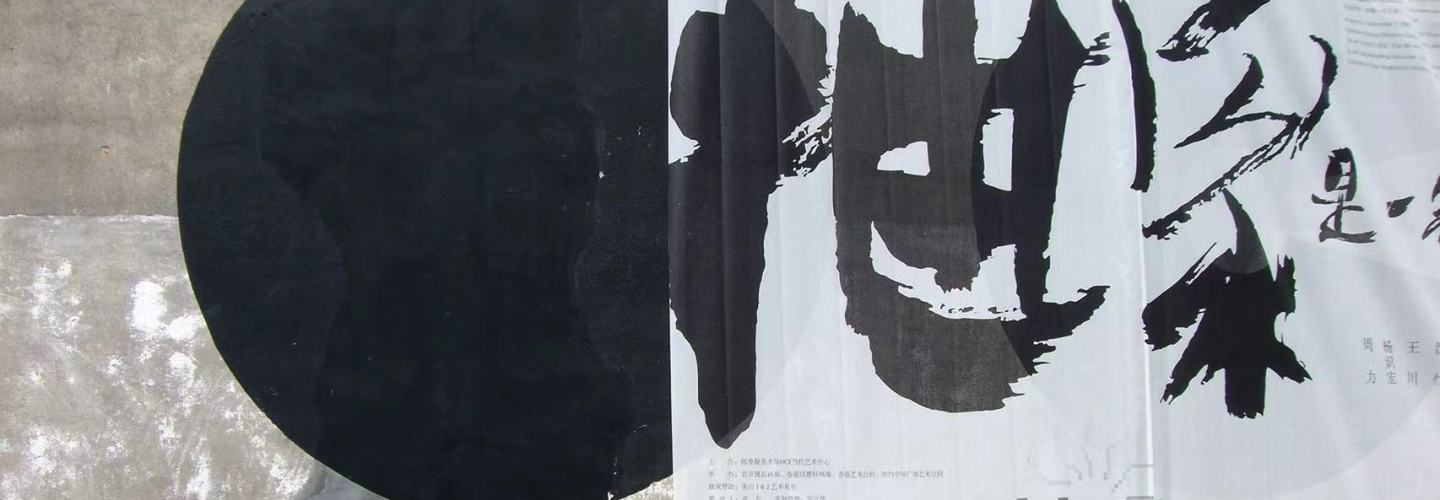
fat bird will perform “519 happy academy” on Apr 7, 8, and 11 at 7:30 in the shenzhen university new blackbox theatre (深大师范学院B座负一层新黑匣子剧场). please come!

四月7、8、11日晚上7点半在深大师范学院B座负一层新黑匣子剧场胖鸟剧团将演《519幸福学园》欢迎观赏!

Huang Liguang designed the poster.

what exactly is an urban village anyway?

Shenzhen’s urban villages confound easy categorization precisely because they are sites where Mainland Chinese distinctions between “farmers (农民)” and “city people (市民)” have been constantly negotiated and renegotiated for over thirty years.

In the 80s and early 90s, the question facing the Shenzhen government was: how to transfer collective land to urban work units (to establish urban patterns of property ownership) while providing villagers with a livelihood. The resolution to that problem took the form of “handshake buildings (握手楼)” and village level manufacturing and commerce. These villages were called “new villages (新村)” – as in “Guimiao New Village and Xiangnan New Village, for example. However, the economic success of both the new villages and the pace of Shenzhen’s growth has meant that new villages have constantly bumped up against more intensive forms of urban expansion. Consequently, since the mid-90s, the question facing Shenzhen’s government has been: how to integrate the new villages into the city. Suddenly, the government was pursuing a policy of “[urban] village renovation (旧村改新)”. Of course, the so-called “old villages” were in fact the “new villages” of the past decade. More tellingly, the “new villages” were now called “urban villages (城中村)”, an expression which might conjure images of a massive city surrounding and absorbing a small yet resistant village.

The project to renovate Gangxia [New] Village began in 1998 with a plan to construct the Shenzhen central axis along and through Gangxia. However, it was not until 2008 that the government began negotiating with residents of Gangxia Heyuan (岗厦河园片) to transfer land from villagers to city developers. By that time, Gangxia Heyuan had 580 buildings (mostly handshake buildings) and an estimated population of 70,000 people. Obviously, most of the 70,000 inhabitants were migrant workers and not Gangxia Villagers with landrights and property holdings. Nevertheless, the government had to begin a complicated process of negotiated the terms under which Gangxia Heyuan would be transferred from Gangxia [New Village / Juweihui – and there’s a whole ‘nother story told in another post] to Shenzhen City by way of Futian District.

The crux of the matter was, of course, how to define an equitable transfer because once Gangxia Heyuan became a part of the Central Axis it would cease being an “urban village” and become an “urban center”, with all the symbolic and economic capital implied. Consequently, city reps, the development company, and the Gangxia Heyuan villagers needed to work out the amount of ratio of replacement housing to actual housing and the compensation per meter of housing to which each villager was entitled. In the end, the ratio was established at 1:082 for first floor holdings and 1:088 for second story and above. Compensation was fixed at 12,800 per meter of housing space and 23,800 per meter of commercial space.

Inquiring minds want to know: just how much richer did some villagers become anyway? Well, it depended on how much housing one owned and where it was. A villager who owned one of the 580 buildings, which might have 6-800 square meters would be entitled to anywhere from 475-600 square meters of new housing and 7.5 million to 10.2 million rmb if they only owned residential space and much, much more if commercial. In total, there are figures as high as 9 billion rmb in compensation flying through the rumor mill.

Here’s the rub. All this money seems like a lot until we go back and start factoring in the 70,000 migrant workers and several thousand Gangxia villagers who had unequal access to handshake buildings less than 20 years ago. Thus, because Gangxia New Village included unequal redistributions of handshake buildings and landuse rights, some villagers are now much much richer than others. Rumor has it that one such villager had 6,000 square meters of space, while several others had 3,000 square meters. All told (in hushed voices, of course) Gangxia is rumored to have over 20 billionaires and at least 10 residents with over 10 million in property holdings.

And it doesn’t stop there. None of this takes into account how much the real estate developers are going to earn off the wheeling and dealing that re-building Gangxia into Central Axis luxury condos, high-end commercial areas, and business centers. There are a few non-villagers who will become even richer than the few Gangxia billionaires.

So yes, urban village renovation is not only creating new landscapes, but also accelerating the pace of economic polarization in Shenzhen.

If we include Maoist attempts to ameliorate differences between rural and urban settlements, we’re looking at over sixty years of concerted negotiation of Chinese identity as a debate about rural (tradition) versus urban (modernity). Such that its possible to think of the past 100-odd years of Chinese modernization as a process of rural urbanization and concomitant forms of inequality, legislated, negotiated, and otherwise.

For the curious, the Chinese web has facts, figures, and rumors: here, here, and here.

The Sea of Desire is Never Filled – presentation


claire accepted 芒种

Originally uploaded by maryannodonnell

On Mar 7, 2010, I presented the “Sea of Desire” cycle of poetry and images at the Inheritance-Shenzhen art space in Baishizhou.

The performance was designed to encourage interaction between the audience and the works; indeed, i hoped that the images and poetry would encourage reflection on land reclamation in houhai. I am grateful to all who came and participated.

The performance and presentation were quite simple. Four images (迁海,芒种,塘,and 天) were laid on a table with calligraphy pens and markers. Members of the audience were asked to read the poems, alternating between the English and Chinese versions. When the reading concluded, the audience was invited to respond to the poems and images directly on the images. At the end of the day, i dedicated and signed the images over to four members of the audience. The four recipients will now grow each image-poem into a new work of art. Images and recipients, here.

The poems.

The Sea of Desire is Never Filled

I.

You ask what came before –

Before Backwaters were reclaimed,
Before Reforms unmade the Revolution,
Before Shenzhen Market was peacefully liberated,
Before South China Sea huaqiao built the Illustrious Ancestor School,
Before Li Hongzhang established China Merchants and Lin Zexu’s disgrace,
Before the Red Feather Barbarians occupied Tiger’s Gate,
Before gentle waves delivered Zhao Bing’s unblemished corpse to Tianhou at Chiwan,
Before divisions and revisions of prefectures and counties, villages and saltfields, oyster racks and pearls,
Before rope figures – delicate exemplars of the Middle Neolithic – danced on storage pots at Salt Head,

Let us be precise.

Before all this, there was what there is now – silt deposits, the twice-daily rhythm of the tide, weakening summer monsoons, phytoplankton, fish and shellfish, migratory birds, kandelia candel flourishing inflorescence, white, in ball-like clusters above the mud.

II. A Lexicon of Estuarine Desire

Spat
Cultch
Fattening ground

Brackish tides
Summer heat
Sweet discharge

Shuck
Suck
Bite
– dare I swallow?

Brackish tides
Winter cooling
Patient cultivation

III. American I wend

an unfamiliar coast, where oyster beds and buried toys, litter and despair thicken deltan arteries – the Shahe, Futian and Buji
Rivers channelized and redirected become bloated, choking runoff drains.

American I crash

on desiccated shores, which crumble as through dust I wander from Shekou east to Houhai, through western district landfill and village reconstruction
Zones appropriated and promoted do not a new world make.

American I sing

an unrequited (and yes) unwelcome dirge, when passport status trumps lament and unskilled, unclaimed teens drift in globalizing storms;
Meiguoren they say and neatly change the topic, what big guns you have.

IV.

On the edge of the known world
The previous barbarians swam and ate raw fish
Lived on boats and were forbidden land
They secured their young with ropes and threw them overboard.

Technical advances might have made it safer
– thin pipes for breathing, grease to keep small bodies warm –
But the shoals were just too deep and the harvest that uncertain

Children dove for pearls
And children were the reason
Savage, dangerous, naked like otters
They cast their offerings to the sea.

V. The Grammar of Evolution

The mind is not a mountain
Desire is not a sea

Yet each can be likened to each and in our likeness joined in thought through deeds, inherited habits of conjugation and decline –

We say, “The sea of desire is never filled.”
We also say, “Move mountains, fill the sea.”

When words become relentlessly literal
– As if language were mere talk
When metaphor becomes compulsion
– As if wishes could be commands
When articulation becomes unmediated truth
– As if poetry ought be research and design

When our lives are reduced to disfigured speech, then we level mountains to reclaim actual seas and call it progress. Full stop.

and in Chinese (translated by Yang Qian):

欲海难填

I
你是问从前有的

在填后海之前
在改革革了革命之前
在深圳虚被和平解放之前
在南洋华侨盖了“光祖学堂”之前
在李鸿章创办招商局和林则须自取其辱之前
在红毛夷占领了虎门之前
在暖的浪把完好如初赵丙送给赤湾天后之前
在郡和县,村庄与盐场,蚝架和珍珠被分离之前
在绳纹起舞盐头新石齐贮水土陶上之前

更精确一些

在着一切发生之前,原来有的就是现在有的—土壤泥积,一天两次有节奏的潮汐,越来越弱的夏季台风,浮游物,鱼和贝类,候鸟,红树开花,绚白的绣球闪动在泥土之上

II 三角洲性欲词典

蚝仔
水下蚝架
积肥区

咸的交潮
夏天的热
甜蜜的排泄物

撬縫


—敢下嚥?

咸的交潮
冬天的冷落
耐心培养

III 美国的我慢慢流

在不熟悉的岸边,蚝田,丢弃的玩具,废纸和失望堵塞了
条条支流—沙河,福田,布吉
河流治理改道变成壅淤的排水沟

美国的我撞到
干硬的岸边,细成灰,我穿过蛇口东到后海,从填海工程到旧村改新工程的尘土扬天
特区,被征用被推销但不是一个新世界

美国的我唱
一支单()是不受欢迎的安魂曲,在今天
比灵歌更动听,没有技术而无家可归的青年 泊与国际化的世界上
“美国人”他们这样改了话题,“你的抢真大”

IV

在开世界的边缘
前批野人 水吃生鱼
以船为家,无地可籍
他们用绳子拴住自己的崽儿,扔进海里

科技让这一切变得稍微安全
—呼吸器细 ,保温体油—
可海底太深而珠蚌难遇

孩子入水寻珠
孩子是入水的理由
野蛮、危险、海狸般赤裸的
野人 向大海献祭

V 进化的语法

心灵不是一座山
欲望不是一片海

语言让两个本不相联的东西在思想中结合
就如性交,遗传习惯让主语和谓语联结,名词变成形容词

我们说:欲海难填
我们也说:移山填海

当词变成无可忍受的具体时
语言好像成了扯淡
当比喻变成动机时
希望好像成了指令
当说事儿变成纯粹真现的自说 话时
诗歌好像成了科技研究和设计

当 生活 缩到没有了想象力的语言存在时,我们移山去填真正的海,为之进步。句号。

the sea of desire is never filled


seedlings

Originally uploaded by maryannodonnell

On Sun, Mar 7, inheritance-shenzhen will offer a program of artist talks given by women artists working in the PRD. We hope to generate dialogue between and about different generations of artistic work. Please come!

Artists:

Phoebe Wong – Head of Research at the Asia Art Archive
Doreen Liu – of Node Architecture
Duan Jiyuan – conceptual artist from Guangzhou
Mrs Teng – director of the Shenzhen womens society of artists
Mary Ann O’Donnell – artist-ethnographer

Time: Saturday, Mar 7, 3:30 – 6:30

Place: No 104, Block 10, Tangxia Community, Hua Xia Road
Metro: Shi Jie Zhi Chuang (C)

广东省 深圳市 南山区 华夏路 鹤塘小区 10,栋 104号 地铁: 世界之窗

population updates (of a sort)

third day back in shenzhen and i chanced upon one of my favorite conversations: speculation about shenzhen’s actual population and how these figures are generated.

based on conversations with real estate developers and housing agents, as well as published reports and blog postings, i’ve been guestimating shenzhen’s population at around 14 million. recent articles also place shenzhen’s population at 14 million, with 2 million residents with hukou and 12 million without.

according to yesterday’s cabbie, he heard a china mobile advertisement that claimed they had an audience of 16 million. to his way of thinking, this meant that shenzhen had a population of at least 16 million. he then mused that it was likely that shenzhen had “more” than 16 million. he figured: (a) anyone without hukou registration wouldn’t come to the door to respond to the census; (b) only people working at tax-paing work units can be properly counted; (c) many people have more than one child, and the extra (超生) children may be registered in other cities; (d) censors can’t actually make it to every single residence in shenzhen, so they have to depend on what people say, which means there’s error built into the system even before they begin counting; and thus (e) for the sake of a more reliable estimate, they should pad their figures by “several (几)” million.

two points: first, we don’t know how many people live in shenzhen and the rate at which people are coming to live in the city. should urban planners be aiming for 30 million by 2020 (based on the idea that the population has been doubling every decade)? second, where can we go for reliable information? is estimated audience size more or less reliable than published accounts?

reliable population data matters because it is thet basis for decisions about how many roads to build, how much water and electricity to supply, where to build schools and hospitals. in other words, a working definition of urban quality of life is at stake in this data. perhaps more importantly, there seems to be little consensus on how one might usefully guestimate all the people living outside tax-paying channels. this is an acute problem in shenzhen (and much of guangdong, more generally), where a significant majority of the population is self-employed. consequently, even as it is difficult to make informed decisions about the scale of public services in shenzhen, urban planning is made even more difficult by the fact that there has been little accounting of / for those outside the system, which leads to questions about public policy and welfare.

all this to say, urban planning questions are questions about who has rights to the city and the level of responsibility a city government has to provide a minimum quality of life for all residents; questions, that is, of what it means to be a citizen. so yes, the production of reliable population data is a question of citizenship and urban justice because equitable planning is the political expression of our commitment to each other.

go figure.

p.s. for a sense of how shenzhen’s population is represented on the english language web, i popped over to wikipedia. shenzhen was not listed in the article on chinese population and demographics. this information was based on the 2005 census, which estimated shanghai’s population at a mere 10 million! in the list of most populous cities worldwide (2009 data), shanghai had burgeoned to almost 14 million, while beijing came in at slightly over 10 million. shenzhen was again conspicuously absent from the list. nevertheless, in the article about shenzhen (once again in wikipedia), according to shenzhen’s official population (including people without hukou, but apparently not including the homeless and squatters, who have occupied shenzhen’s edges, including the areas under bridges) is listed at 14 million.

mirror, mirror – thoughts for the new year

I have been a curious lightening rod for Sino-American perceptions of each other, especially with respect to the meaning and importance of Shenzhen in all this global restructuring. I have confounded gendered stereotypes because my body signifies an elite position within global hierarchies. As a white, upper middle class American woman, I have been expected to enjoy and choose from the best that the world offers, which is apparently not to be found in Shenzhen. Or if in Shenzhen, I have been expected to stay only for the time it would take to complete a project and then return to where I belong. This past trip to the US, I discovered that my life choices had become mainstream in profound and (often) distressing ways.

The first time I went to China (1995), I stayed three years before I returned to the US. My ability to speak Chinese and decision to study cultural transformation in Shenzhen (rather than Beijing or perhaps Shanghai) shocked most inhabitants. Indeed, they consistently urged me to head north to conduct valuable research. More tellingly, when I went shopping or stopped at a telephone kiosk, venders and recent migrants (even from Beijing and Shanghai) frequently mistook me for either (a) English by way of Hong Kong or (b) Russian by way Window of the World. Once they realized that I was actually American, the same vendors immediately proposed that Yang Qian was (in order of plausibility): Japanese, Korean, Taiwanese, Singaporean, and Hong Kongese. Only with great reluctance (and then disturbingly cheerful surprise), they said, “You’re Mainland Chinese!!!” At which point, they asked where we had met in America. 

Once I started making annual trips back to the US, however, I realized that my decisions to live and study in Shenzhen were equally shocking to mainstream Americans, who had not heard of the SEZ, its importance in reforming Chinese society, or the scale of what was happening just north of Hong Kong. When I was in West Lafayette, IN, pursuing a Master’s at Purdue (circa 1990), an undergraduate student asked me what the point of studying Chinese was if I couldn’t use it to find a job. Indeed, as late as Spring 2000, members of a job selection committee at a liberal arts college asked me, “What’s so international about Shenzhen?” and then hired someone who studied urban life in Beijing.

The past five years, I have noted how more and more young international professionals are coming to Shenzhen – to work, to invest, to conduct research, and to create art. In Shenzhen, I am no longer strange, but an expected feature of the urban fabric: the foreign investor / English teacher, and also the foreign intellectual, who now appears regularly in Shenzhen’s many international events. Only in conversation, do I still manage to surprise Chinese interlocutors. Likewise, this trip, several incidents suggest how deeply aware not only of China, but also Shenzhen my U.S. family and friends have become. In Seattle, Natasha’s five-year old daughter, Roman is studying Chinese in an immersion program and could speak and write some Chinese. Meanwhile, Natasha and I brainstormed possible collaborations in Shenzhen. On the plane from Seattle to Houston, we met a young college graduate, who chatted in Beijing accented Mandarin and was constructing a multi-national life.  In Southern Pines, NC, my two-year old nephew, Emanuelle watches Nihao Kailan and enjoys saying xiexie

And yet. All this mainstreaming seems to be quickly congealing into stereotypes that perpetuate the kinds of ignorance that shaped early perceptions of my presence in Shenzhen. Most Chinese and Americans continue to believe that (a) the US offers a better life than China and that (b) the only reason one would go to and remain in Shenzhen is to become rich. The most glaring example of this kind of thinking is that those in positions to deny visas (to me in Shenzhen) and entry into the US (YQ when we come back) continue to suspect that there is something not quite right about a mixed couple, who have chosen to live in Shenzhen (rather than, for example, West Lafayette, IN). And yes, they act on these impressions. I am still not eligible for a Chinese green card because eligibility is based on investment or Chinese blood, rather than marriage. Immigration officers still bully YQ when we enter the US because we have chosen to create a life in Shenzhen.

All this to say that China and Shenzhen seem to have been mainstreamed in ways that conform low expectations – get in, make a buck, get out, rather than in ways that might encourage new ways of being global citizens. Moreover, all these bucks continue to sustain illusions of American supremacy, not only because more and more of China’s young elites bring their dreams, talents, and money to the US, but also because many who go to Shenzhen do so looking (and therefore) only finding economic opportunity. Thus, both US and Chinese officials continue to read YS and my lack of visible economic progress as suspicious activity.

I’m happy my nephew can say xiexie. I wish he was also being taught that the appropriate form of courtesy is to jiaoren – to call older people ayi and shushu, or nainai and yeye and that too many xiexies often seem overly formal (at best) or sarcastic in Mandarin contexts. Such are my thoughts as we enter the Year of the Tiger.

Hear me roar.

what’s the point of college?

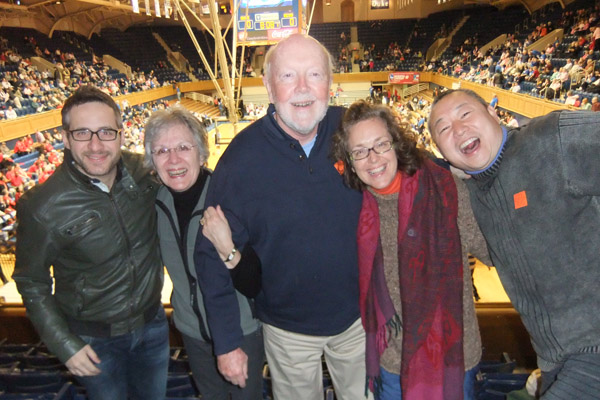
last night, went to cameron indoor stadium to watch the lady blue devils defeat the nc state wolfpack. well, we watched the first half and then returned home. mascot basketball at halftime was a bit much, even for my father who was thrilled to be there because (rumor has it) cameron is a shrine of sorts. certainly, yang qian found the pageantry fun. in contrast, nico (by way of italy) was somewhat nonplussed: how is such a display possible? he seemed to wonder and this was only a women’s game?! yes, those were students camping outside the stadium to purchase tickets for men’s home games, which do sellout. every time. i mentioned that in “utopian verses” wang anyi described her sense of alienation and acute loneliness when attending a university of iowa football game. nico nodded wisely, but remained silent.

watching a duke basketball game with two non-americans made me viscerally aware of the distance between the cultural meaning of “preparing for college” in the u.s. and china. Continue reading

coastal thinking

this past weekend, i was in seattle visiting friends and revisiting my past. yes, the older i become, the greater the twists and turns of who i thought i was and who they thought i was and the distances between all that thinking. mahsheed reminded us that scientists (of the empirically experimental sort) contend that memory is 70% recreated and 30% actual content. however, little is known about how and why that particular ratio or how and why some information is shunted onto one side of the equation or even how recreated memory is plotted… yes, this is the basis of my anthropological musings.  i’ll see your “hmm” and raise you three.

hmmmmm.

caveat given, i’ll move onto thoughts inspired while walking in seward park.

moss on fern green

walking in seward park (as it was when i walked along the salmon river, oregon a year ago), the ferns, red cedars, and douglas furs viscerally reminded me that i was in a coastal ecosystem. mud cold water seeped into my shoes, pulsing bark tempted me to raise my eyes, and a great blue herron stilled my circumnavigation of washington lake.

in contrast, while walking in shenzhen, i find it difficult to remember that we inhabit an estuary. i walk through smog and landscaped greenspace, note new buildings and speculate about economic boomings of one sort or another. i frequently read about mudflat wetland protection, the deep bay oyster industry, marine pollution and mangroves. all this to say, shenzhen’s ecological status strikes me as an abstraction, a category of thinking rather than an experience immanent in the environment itself. thus, my mind invokes “estuarine ecology” as a critical standard by which to hypothesize what might have been and imagine what could be. 

the difference is where lived – right brain or on a path at dawn. now, what to make of it?

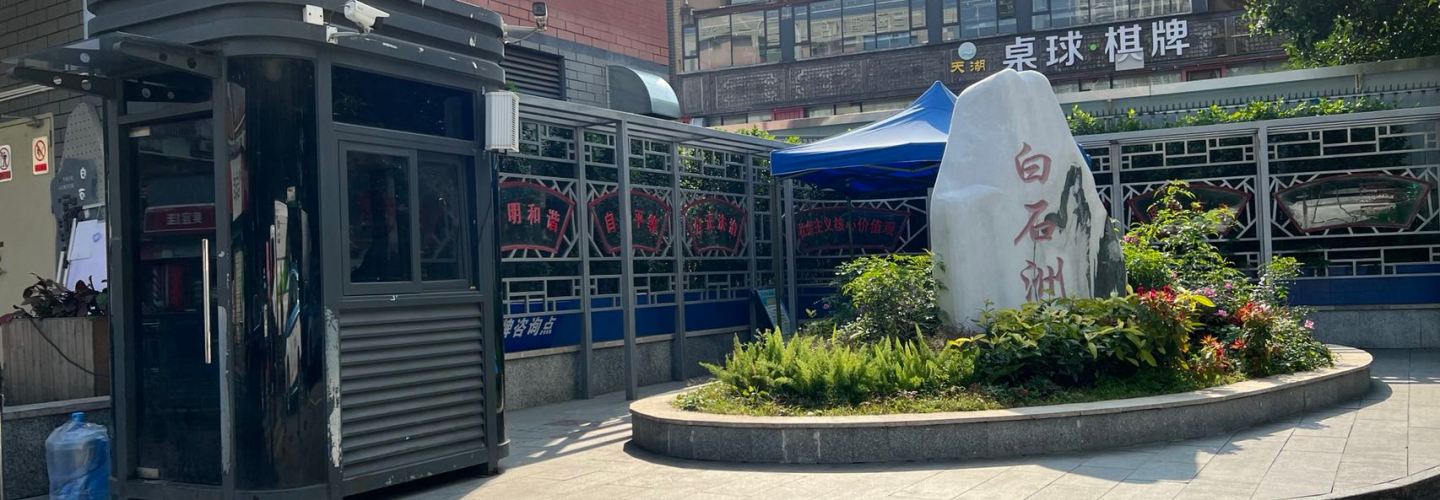
tangtou, baishizhou


tangtou old housing, new village

Baishizhou has the distinction of being Shenzhen’s “city that isn’t a city, village that isn’t a village (城不城,村不村).”

The first stop (bus or subway) after Windows of the World themepark, Baishizhou has come to refer to a 7.5 sq km sprawl of handshake buildings that was originally part of the “Shahe Overseas Farm (沙河华侨农场)”. This highly congested and irregularly built area is also the first stop for many new migrants to Shenzhen because of its central location, convenience, and lowest of the low priced housing.

Inquiring minds ask, “How did (one of) Shenzhen’s most beautifully landscaped high end residential, tourist and arts area (OCT) end up next to what is acknowledged to be one of the city’s largest slums?” Continue reading