In December 2014, the International New Tow Institute hosted the conference, “Shenzhen: From Factory of the World to World City”. Conference videos are now online.
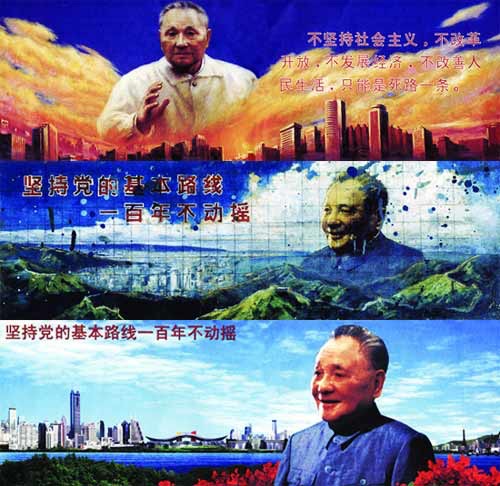
In December 2014, the International New Tow Institute hosted the conference, “Shenzhen: From Factory of the World to World City”. Conference videos are now online.

Yesterday I had the honor and pleasure of participating Shenzhen: From Factory of the World to World City, a conference hosted by the International New Town Institute. What did I learn? Continue reading
This week I am in the Netherlands to participate in a conference on Shenzhen. The conference is being held in Almere, another of the so-called new cities that has appeared in the postwar era of American style globalization. Of course, talking about Shenzhen in Almere reminds that we’ve passed through so many variations since the American century began circa 1945: the Cold War, post socialist, and now Chimerican, to deploy a lovely neologism beating at the heart of commodity chains.
Today an easy entry into Dutch cultural geography via the national museum and streets apes. First impressions: Continue reading

The problem with an issue like APEC blue is that it reads as if an authoritarian government can clean up the skies to impress visiting dignities by inconveniencing working class Beijingers and not be bothered to actually work for sustainable options. As such, this whole cleanup/mess easily slips into cultural mudslinging as if we were not talking a global economic system in which environmental quality is one of the perks of status. In such a system it makes sense that what is a “right” in one part of the system, becomes a luxury and political tool in another. Nevertheless, today I’m feeling hopeful because when we do turn off our factories and stop driving, the world heals. We just need sustainable reasons to do so. Continue reading
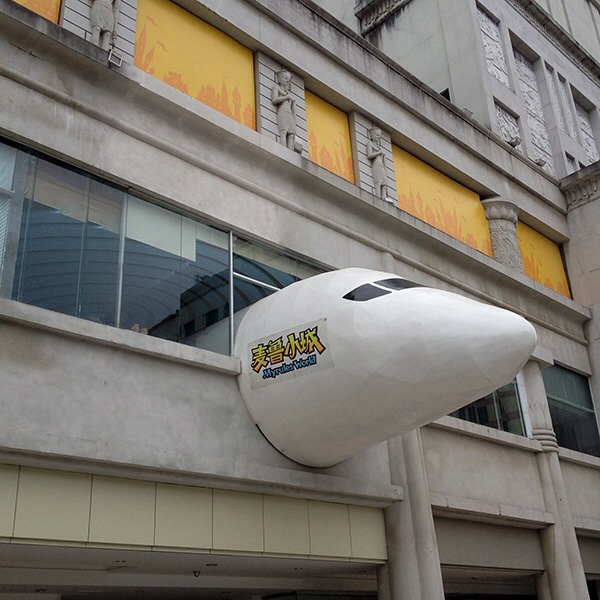
In 2009, Sam Green and Carrie Lozano made the short documentary Utopia, Part 3: The World’s Largest Shopping Mall about the South China Mall in Wanjiang, Dongguan. On November 1 and 2, 2013, I visited said mall. This post serves as a partial update. It also a brief response to the ideas of “too big to fail” and “acceptable capitalism” that haunt so many apologies for contemporary neoliberalism. Continue reading
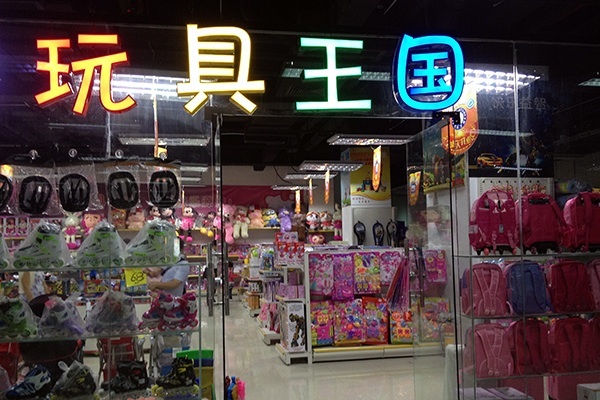
Visited the New South China Mall in Dongguan, which is undergoing a family makeover (more next post). Today, impressions of my neon romance with the semi-abandoned re-occupied playground. Continue reading

While in Xi’an, I once again visited the Terracotta Soldiers in Lingtong, once upon a time center of Qin power. The First Qin Emperor (秦始皇 ) installed this death monument during his life. This seems to have been the way of ancient Emperors and Pharohs — a longing to control everything, as if making the world in our own image was (a) possible and (b) a means of achieving immortality. However, we don’t really know what the mass grave meant to him because we haven’t found his grave — just indications that he wanted to be safe in death. But maybe it was a ruse to distract observers from his actual gravesite. That said, we do know that he conquered unified six warring states and became the model for those future Chinese leaders who yearned to bring everything under heaven under themselves. Personally. Indeed, the visit sparked a conversation about the meaning of 法律, its historical constitution, and whether or not law can serve China’s peasants. Continue reading

Located at the foot of Wutai Mountain in Xi’an, the Guanzhong Folk Art Museum (关中民俗艺术博物馆) is one of China’s more famous cultural tourism enterprises. In fact, the project launched billionaire peasant Wang Yongzhao (王永赵) into the National People’s Congress, where he has been recognized as a distinguished scholar. Continue reading
I have been showing my 12-year old niece the sites in Beijing, including the Great Wall. As we wander, I have free associated between these experiences and previous theme park experiences, most recently in Ocean Park, Hong Kong, but before that the original Disneyland in Southern California, the iconic Knott’s Berry Farm, the Jersey shore, its boardwalks and miniature golf courses, as well as several Six Flags and Disneys elsewhere. (Years ago I even visited the uncomfortably super-mini Disney in Hong Kong.)
There are, of course, perhaps more explicit connections to be made with Williamsburg, Jockey Hollow, and other historic sites that I have visited (and actually in Shenzhen I have been involved in promoting historical preservation of local sites), but. In terms of pageantry and intent to re-present the world, my mind keeps returning to Disney. Continue reading
While in Beijing, I have been reading David Campbell’s Politics without Principle: Sovereignty, Ethics, and the Narratives of the Gulf War. I am grateful that Campbell has made a pdf of this important work available online not least because as an unaffiliated intellectual who happens to be based in Shenzhen, internet access structures my encounters to academic work. One would think that US institutions would be working to make more research available to more people, but alas this is not the case. University libraries and the virtual services they subscribe to continue to function as if they had limited paper copies of books and journals –with no lending privileges extended beyond their hedges. Continue reading
 Shenzhen Noted