shekou industrial road 7: echos of jane jacobs

One of the ongoing questions of urban planning is: what are the material conditions that support community life? To answer this question, we can’t simply look around and see what has been built, but rather have to reflect on what makes human life interesting, lively and fresh.

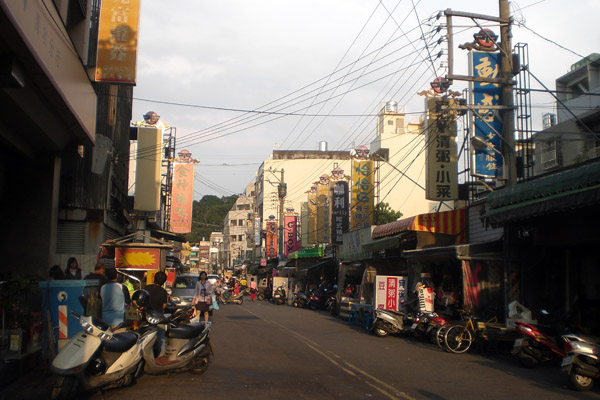
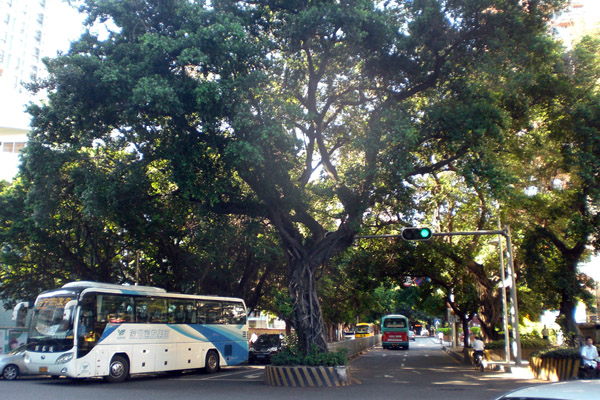
This morning I wandered Shekou Industrial Road 7 (蛇口工业7路) and realized that one of the reasons I enjoy this street is not simply the mix of residential, commercial, and industrial spaces, but also the expanse of public space and schoolyards. This public space has been created through the designation of Sihai Park and neighboring sports center, and also because the road is only two-lanes wide, with banyan trees that provide shade. Importantly, one stretch of Industrial Road 7 abuts Wanxia Village, where handshakes line-up in neat rows along one-lane roads and narrow alleys and give way to bustling urban village life.

Street life on Industrial Road 7 manifests the Chinese virtue of renqi (人气), which literally means “human air” and might be translated as “active” or “popular”. Hawkers set up stands under the trees, while elderly men practice water calligraphy on the sidewalk and pre-school children snack on steamed buns and soymilk. Window shopping (逛街) is thoroughly social as neighbors bump into each other on their way to preferred shops, or see each other’s children on their way to school. In the evening, once the sun has set and dinner bowls washed, the area becomes even more lively with families strolling and teenagers hanging out.

Admittedly, there is not much public space on Industrial Road 7. Significantly, however, many of the streets private spaces were built in the early 80s. Landscaping within residential compounds is a continuation of street landscaping, rather than planted with imported topiary that signal the end of the street and the beginning of elite consumption. More tellingly, guards do not actively prevent pedestrians from entering what are now considered low-income housing areas. Likewise, da pai dang (al fresco) mom and pop restaurants also integrate consumption into public life.

In The Death and Life of Great American Cities, Jane Jacobs documented and lamented how middle class flight from American cities to the suburbs contributed to the polarization and decay of our inner cities. In contemporary Shenzhen, a similar process is underway as the city’s middle class consolidates its identity and class consciousness through urban renewal projects and gentrification that not only result in clear razing urban villages, but also the construction of expensive malls and gated communities. The movement of people is different — the US middle class abandoned urban cores, and Shenzhen’s middle class is occupying the urban core and pushing the majority low income residents further to the periphery — but the result is the same. The unremitting blandness of these spaces announces and maintains social distinctions between the middle class and working poor, even as they homogenize differences between members of Shenzhen’s rising elite, creating an identifiable “Shenzhen” identity.

Over fifty years ago, Jacobs maintained that people like to live neighborhoods like Industrial Road 7. Moreover, she held that youngster and elders alike need accessible areas of mixed activities, cross-use of land, short blocks, mingle buildings of varying size, type and condition, and encourage dense concentrations of people. The point is to nurture marginal activities and small businesses, little restaurants and bars, as well as everything deviant, bohemian, intellectual or bizarre that make an area charming and vigorous.

I agree.

I also believe that this diversity humanizes us to the extent that we recognize ourselves in someone else’s life and consequently the wider our experience of difference, the more human we may become. In contrast, when we lay 4-lane roads without shade trees, build gated communities that isolate themselves from the street, and decide that malls, rather than parks better serve the public interest, we have proclaimed that to be human in the early 21st century is to aspire to life as a high-end mallrat.

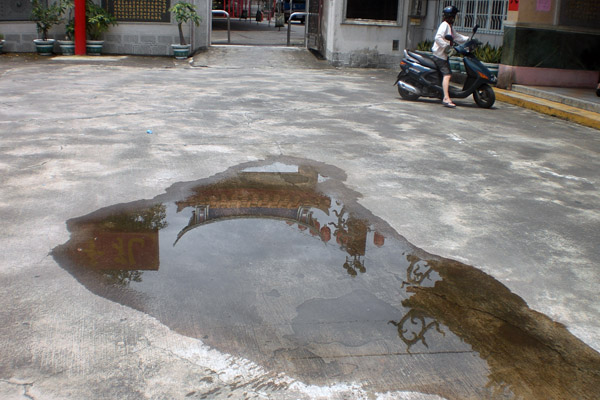
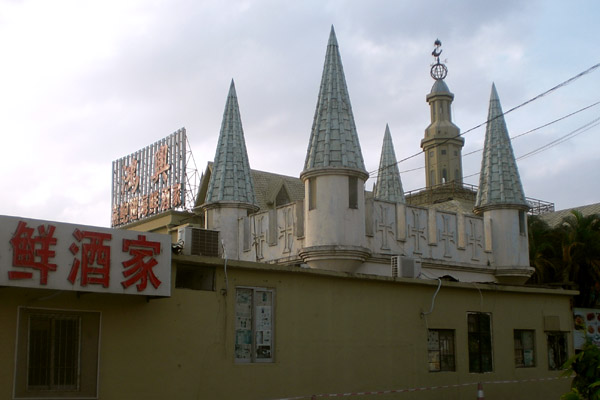
Impressions of morning walk along Shekou Industrial Road 7, from Houhai Road west to Yanshan Road.

This slideshow requires JavaScript.

roadside wedding, qingshui, taiwan

Impressions from a roadside wedding in Qingshui, Taiwan, the groom’s hometown. Over 80 tables, overflowing with lobster, shark, and other delicacies, happy wine for happy times, and repeated exhortations to have many children.

This slideshow requires JavaScript.

A stretch of Gongyi Road, Taichung

The sun today dazzles and dried up all the rain! Cicadas chirping, vibrant green on green topiary, architectural twists and turns, I walked from Gongyi Park along Gongyi Road back to home at Liming with a stop at the Wu Wei Tsao Tang (无为草堂) for tea and sesame pastry. Wow. The tea had a clean but fragrant, slightly sweet aftertaste and the pastry (well, the three of them) had a flakey, phyllo like crust with white sesame seeds and an almost liquid black sesame filling.

This slideshow requires JavaScript.

mountain town: puli

埔里 (Puli) is a small mountain town, about an hour outside Taichung. I wandered the streets, snacking and looking at the mountains. If you go, rent wheels and go deeper into the clouds.

This slideshow requires JavaScript.

lugang: of pirates and south china seas

鹿港 (Lugang) is one of the oldest port cities in Taiwan. The winding network of alleys, streets, and boulevards knits together Ming and Qing Dynasty pirates, southern Chinese merchant families, and the influx of Nationalist troops and their families. Over 200 shrines and temples punctuate these pathways, and two of the oldest temples on the island — Matzu (1725) and Longshan (1786) — are in wonderful condition because well cared for. With industrialization and GMT rule, the importance of Lugang to the island economy has lessened, with inland Taichung gaining importance as Taipei shifted cosmographic ordering on Taiwan. Consequently, the city’s layout gives an impressive sense of the urban form of South Chinese port cities during the roughly 500 years that piracy threatened trade ships, their crews and cargo. Just recently, however, Lugang has been reintroduced to world as one of Taiwan’s top tourist destinations and the site of many traditional festivals, including Double 5th (dragon boats) and Mid-autumn (mooncakes). Worth a visit. Impressions, below:

This slideshow requires JavaScript.

two neighborhoods and a soap opera plot

I continue to visit neighborhoods around Taichung. One, Liming New Village was built over fifty years ago on the then outskirts of Taichung. It was complete in and of itself, with a post office and schools, police station, library, and sports center. The other, an expensive, Japanese inspired gated community was built about twenty years ago at Da Keng, on the slopes of the Taichung’s most accessible mountain. Liming is in decline because the young people have left for jobs in Taipei, or to live in more upscale, “modern” communities. The Da Keng community never took off due to banking difficulties.

Also, I have been watching a Taiwanese soap opera with my friend’s mother. My sense of the plot line: episode 1: boy meets girl; episode 2: boy and girl fall in love; episode 3-39: their mothers fight; episode 40: some kind of reunion before the birth or the first grandchild when fighting resumes.

How do the neighborhoods connect up with the soap opera plot? An older neighborhood that looks like Liming keeps getting referenced as where the poor but honest live, while the wealthy and corrupt inhabit ornate homes like the second neighborhood. However, a friend explained that Taiwan’s middle class lives somewhere in between these two extremes, where the question is not how to make more money, but rather to reveal one’s taste by purchasing the highest quality goods (or house, in this case) without becoming consumed by work. Neighborhood impressions, below:

This slideshow requires JavaScript.

Impressions of Chingshui Market, Taichung City, Taiwan

Last night went to the night market at Chingshui, a small market under the administration of Taichung City. Once again I was reminded that history is in the making. In 1935, an earthquake flattened the town, and reconstruction gave rise to a mishmash of western and eastern modernisms, which have been further defined through later developments. Feral cats led us through winding alleyspast Japanese era housing, 60s minimalist facades on low-level row houses, and late 90s mansions. Older women burned incense at Daoist shrines and buddhist temples. We ended our tour eating savory rice ball soup, fermented tofu with garlic and pickles, oyster pancakes. Joy.

This slideshow requires JavaScript.

Camera download and what appeared

This past week, my path has taken me from Shekou through Hong Kong to Taichung. Some of the spaces and details that caught my attention, below. And yes, the headline in the pictured article really does read, “After the seizure of toxic salted eggs, one ton goes missing”:

This slideshow requires JavaScript.

honey lake: the charm of organic kitsch

Honey Park PK OCT Bay.

In the early 1980s, the Honey Lake Resort was designed as a suburban getaway for the folks working “downtown” in the city limits that conventionally ended at the Shanghai Hotel. Almost three decades later, the Resort Area has been picked apart to make room for the Urban Planning buildings and lawns, the Lake fenced, and the concrete boxy hotels, yurts, and three story castle gradually transformed into a kitschy smorgasbord of themed dining experiences. The labyrinthine alleyways in Honey Lake transform dinner into a proper urban adventure, where the creativity of our neighbors offers unexpected worlds.

This slideshow requires JavaScript.

accidental exhibition, thoughts on the 7th sz sculpture biennale

Co-curated by Liu Ding, Carol Yinghua Lu, and Su Wei, the 7th Shenzhen Sculpture Biennale, Accidental Message: Art is Not a System, Not a World (偶然的信息:艺术不是一个体系,也不是一个世界) has two sections, “Unexpected Encounters,” which presents the curators’ take on pivotal Chinese work from the 90s, and “What You See is What I See,” which showcases international artists with whom the curators have engaged over the past few yeas.

Liu Ding and Carol Yinghua Lu have written that their decision to juxtapose 1990s Chinese artwork with recent global artwork (including several Chinese artists who now travel on those circuits) in terms of a “secret glue” and the “mental bonds” that exist between creators, rather than needing “to be delineated according to artificial art politics and planned boundaries of the art system (exhibition catalogue page 25).” In other words, this is not an exhibition about the developments in sculpture over the past two years, or even about placing sculpture into conversation with other medium to get a sense of how digital art and video (the two strongest elements in the show) have reshaped our appreciation of what Benjamin once identified as sculpture’s yearning for immortality. Instead, Accidental Message is a celebratory catalogue of the desires, taste and experience of three people.

I actually get the curators’ urge to categorical disruption and their yearning for “unexpected encounters, chance glances, open hearts and respect for individuals (p 25)”. We all of us want to be recognized as unique personalities, creating connection through idiosyncratic gestures and resonating heartbeats. Nevertheless, I’m pretty sure I get the impulse for random hook-ups because alienated, individual and individualizing subjectivity and celebration thereof are symptoms of neoliberal political economics and I was raised in the neoliberal suburbs of New Jersey and currently reside in a neoliberal with Chinese Characteristics Shenzhen neighborhood, [1] where pleasure is derived by crafting oneself into a subjectivity that can be picked up and broadcast over diverse, global networks, unhampered by borders or culture or paychecks or jobs or even history, in short to become a “creation of serendipity and individual spirit.”

Thus, point du jour is actually quite simple. Liu Ding, Carol Yinghua Lu, and Su Wei did not randomly encounter artists and ideas, but did so within the institutional context of art schools and certification, art grants and residencies, and arts funding choices, all which increasingly reflect the ongoing privatization of art for the benefit of corporations and their shareholders.

This year’s show, for example, coincided with the decision to rebrand the Shenzhen International Contemporary Sculpture Exhibition as the Shenzhen Sculpture Biennale and hold it at the Overseas Chinese Town Contemporary Arts Terminal and B-10 gallery. OCT is a major Shenzhen real estate developer that has marketed itself through appeals to high cultural consumption, personal taste, and of course individualized pleasure. Indeed, the event also signaled the general upmarketing of OCT culture industry as an integrated component of its real estate projects. OCAT has been formally established as an independent, not-for profit art museum and as Overseas Chinese Towns (now a recognizable lifestyle brand) develop across the country, the Museum will take the lead in creating a series of art centers under the “Art Museum Cluster Program,” which the curators will take an active lead in developing.

Accidental Message runs until August 31. I enjoyed some of the pieces. I worry that taken as a whole, however, the show is not as subversive as the curators hoped, but instead exemplifies “business as usual” in Shenzhen’s push to become a player in global cultural industry. I close with impressions, below:

This slideshow requires JavaScript.

[1] In her paper Enjoying Neoliberalism, Jodi Dean provides a relevant definition of neoliberalism as “…an economic doctrine that channels state intervention toward the elimination of projects of social solidarity in favor of privatization, economic deregulation, tariff reduction, and the use of public and monetary policy to benefit corporations and their shareholders.”