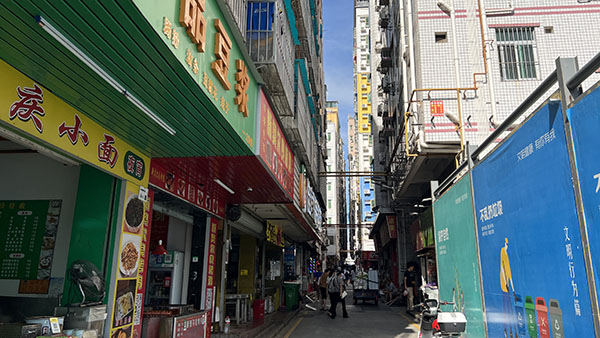
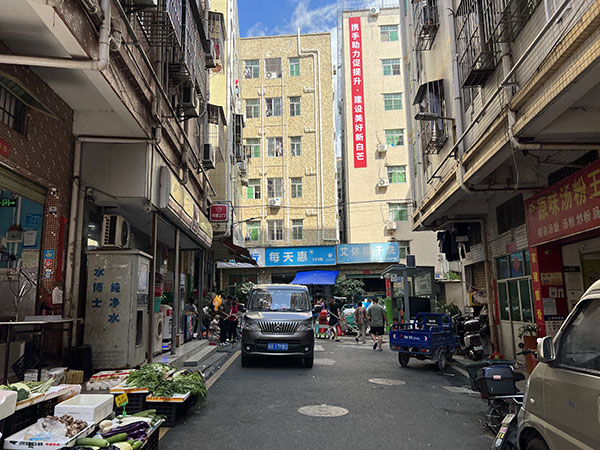
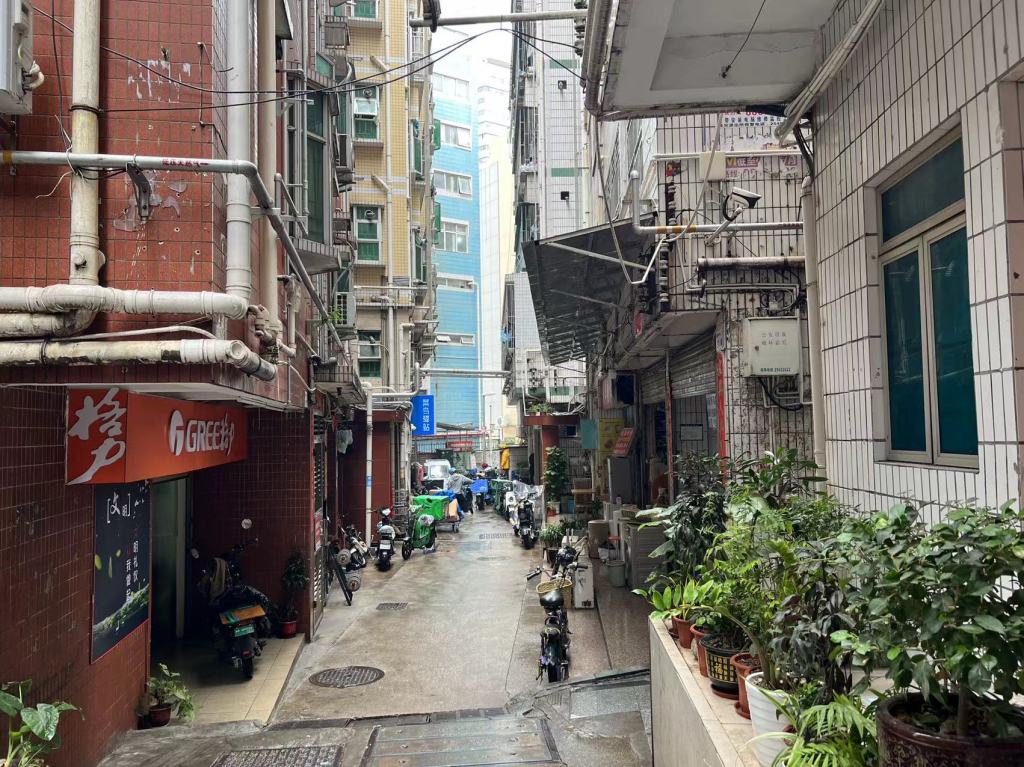
The walk from Chegongmiao to Xinzhou used to be a walk from the factories to Xiasha and Shangsha, urban villages where workers and their families lived. Then there were upgrades and a spurt of entrepreneurial redevelopment. However, this area was zoned for redevelopment before the 2018 decision to halt the demolition and redevelopment of working class neighborhoods. Consequently, during the COVID years, demolition and redevelopment proceeded, blurring the borders between high- and low-income Futian. Nevertheless, a few jagged edges remain, below:
Category Archives: photos





the cultural geography of xixiang
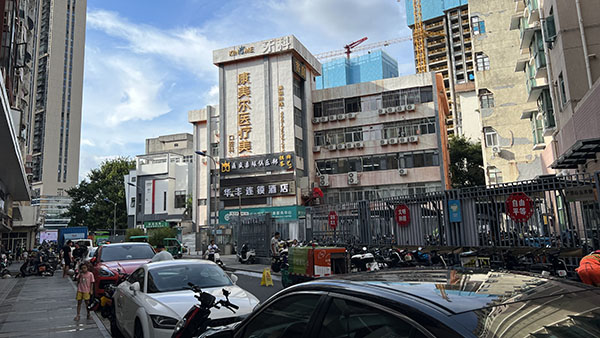
The number 1 subway line stops at Pingzhou (坪洲), which once upon a time was a sandbar near the coast of the Nantou Sea. The station is at the edge of Qianhai, but near the former center of restored Bao’an County. The county seat of restored Bao’an was Baocheng (Bao City)-Xixiang, with administrative functions in Bao City and commercial functions in Xixiang. Indeed, the layout of Bao City-Xixiang echoes the layout of Luohu-Shagbu, with a new town going up next to the older market town.
Continue readingso…luohu commercial city
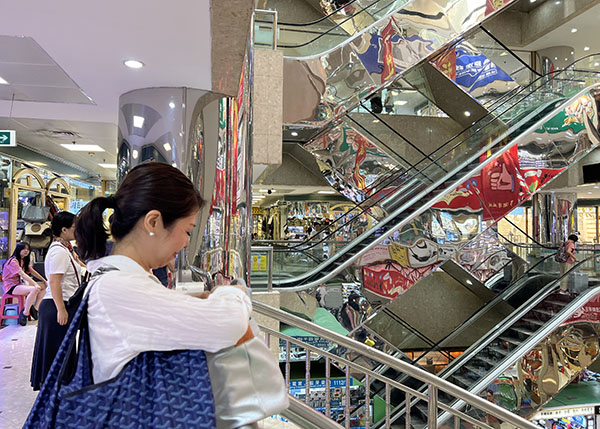
Hong Kong day-trippers are–if we chat posts are to be believed–shopping again in Shenzhen. There seem to be generational differences. The young and hip are in the malls, while the old and once-upon-a-time hip are revisiting their former haunts, like Luohu Commercial City. Maybe? Anyway, I went back to Luohu Commercial City and realized that the more things change, blah blah still the same. Or is it?
One of the things that I like about Commercial City is the 90s-naughties vibe. The entrepreneurs rent their spaces and then sell what they like. Now, admittedly, they only sell a few types of goods–glasses, dance costumes, fashion, watches, scarves and haute fake fashion–and only offer a few services–mani-pedis, massages, tooth care. But. Within these categories of pampering commodities, they sell what they like. This means that unlike the malls and many commercial streets where stores are all selling the same goods, in Commercial City, every store is a curated experience of what the vendor thinks is fashionable. And. It’s still possible to haggle. So. Fun.




peeping
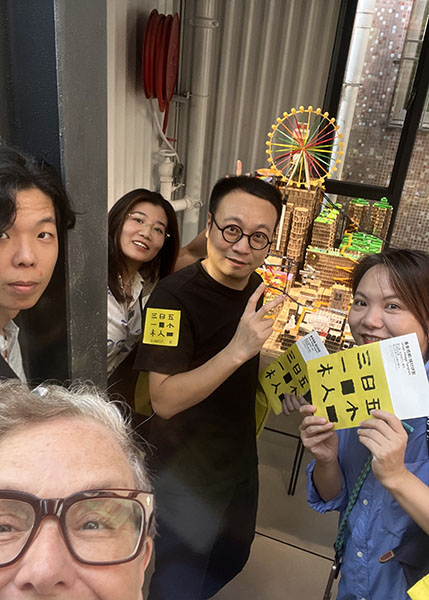
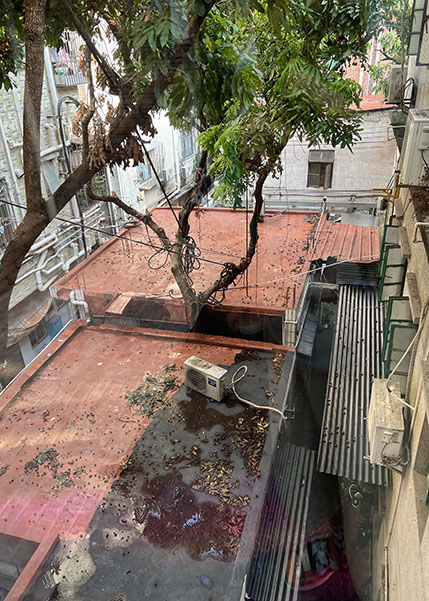
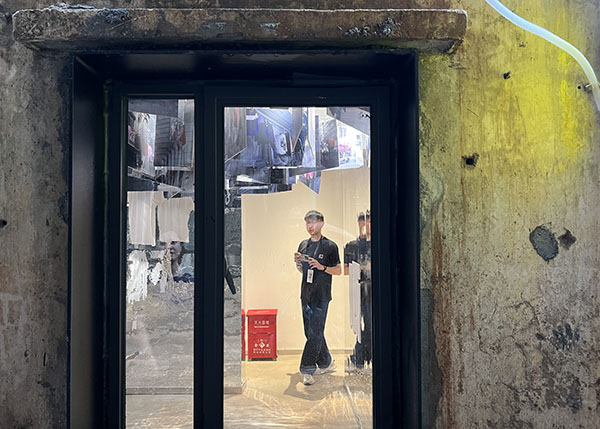
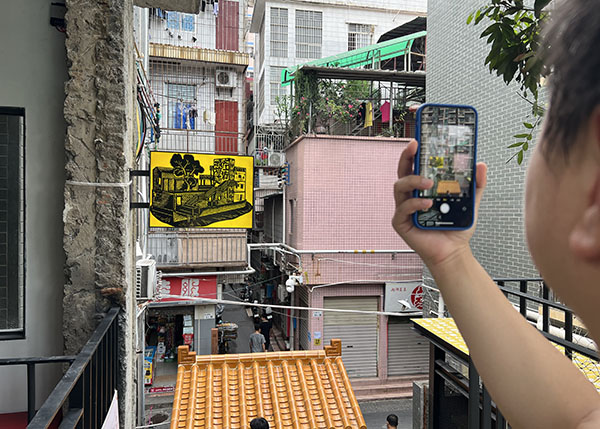
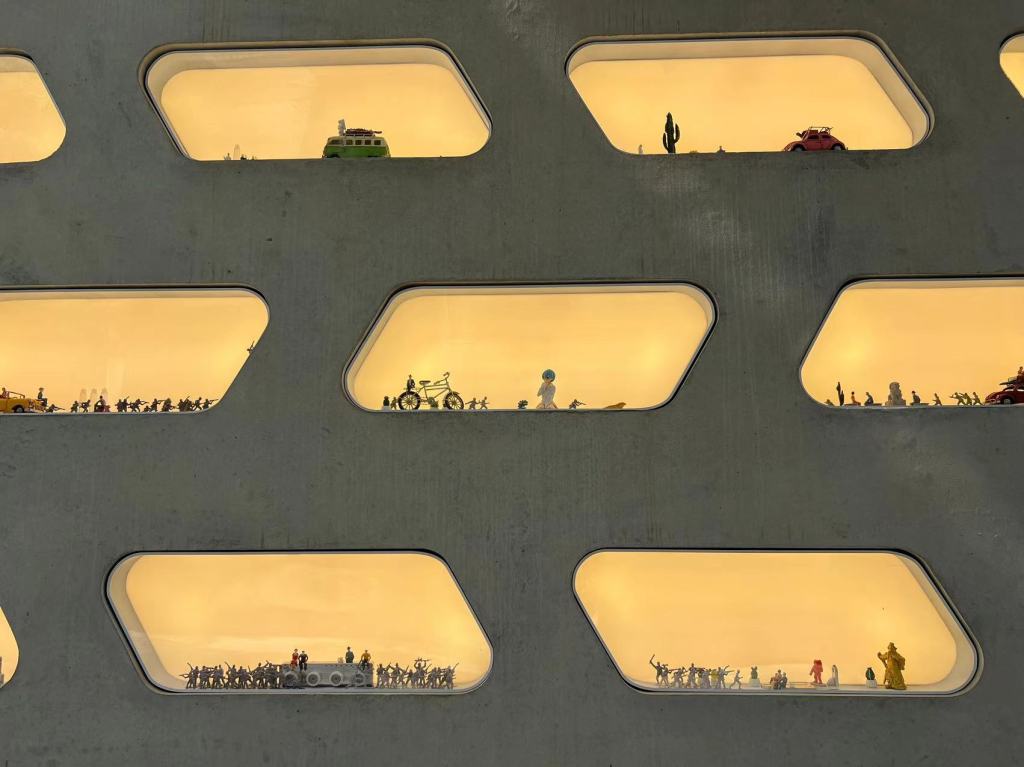
So the Nantou venue of the 2023 UABB finally opened on August 16. Rumor has it that the reconstruction of several handshakes was delayed. And delayed. And delayed. But. The results hover at the edge of critique, where showing is itself already taking a position, especially as what we can show and how it can be shown have been increasingly restricted. What I came away with was a sense of how windows function in tight, crowded spaces. We catch glimpses of our neighbors and strangers on their way, peeping across (necessary?) divides. Impressions of a walk through official biennale and adjacent spaces, below:






dongmen / laojie
If you’ve been studying Shenzhen, you know that some of the most widely circulated images of the city circa 1980 were taken by Leroy W. Demery, Jr just before the SEZ was approved. Demery uploaded the images to flickr, where they were picked up by historians in Shenzhen, including government exhibitions. In 2013, he recalled that trip in an Insider interview. He returned three years later, and although Demery didn’t leave the general area of the railway station, nevertheless he noted that it wasn’t the same city. Boom!
Continue reading
bagualing, food street
Many of you probably wonder: what happened to Bagualing, the other industrial park in Shangbu Management Zone? And it’s true, so much has been made of & off Huaqiangbei that we forget: the 1986 master plan called for two industrial parks in Shangbu and like Huaqiangbei, Bagualing changed the world as we knew it. And by we, I mean those of us born in the 60s and 70s . For roughly two decades (let’s say ≈ 1990-2010), Bagualing was the printing capital of the world–books, books, and more beautiful books were printed there. In the States, you probably encountered these books via the discount warehouses that sold cheap books either by mail or in large downtown spaces. Chez Shenzhen, especially in the naughties, Bagualing was a great place to shop and purchase a Korean manga or a French novel. Of course, architecture, design, and art books were everywhere, in every language, and could be had for 30 or 40 rmb. Good good days, no more.
Continue reading同组: unified rentals
A few weeks ago, there were protests in Baimang (白芒) Village about the new “unified rental” plan. (Perhaps “consolidated” would be a better translation?) In a nutshell: the government will become the only second landlord in a village, upgrading rentals and then renting them out, preferably to college graduates. The protests came about (as in Baishizhou four years ago) because the forced eviction notices came out in late May early June, which is test month. Students and their families were being evicted after intake for the 2023-24 school year had finished, meaning that many would not only loose their homes, but also their place in school. Also as in Baishizhou, the new plan threatens family life because there are few places where families can live together and send children to school. At the moment, the village is going through a “cooling down” period, but it seems that once school is out, the process will proceed.
Sigh.
Located in what used to be a huge swathe of lychee orchards, Baimang is primarily a residential village, where commerce is geared to the everyday needs of renters–small markets and shops selling plastic household goods. At the center of the village are old village buildings, including an ancestral hall and two towers (碉楼). These row houses are surrounded by several generations of new village housing–concrete villas and tiled handshake buildings. Once one of the second line border villages, Baimang is now within Nanshan District’s “Innovation Corridor” and offers relatively easy commutes to University Town and High Tech Industrial Park.
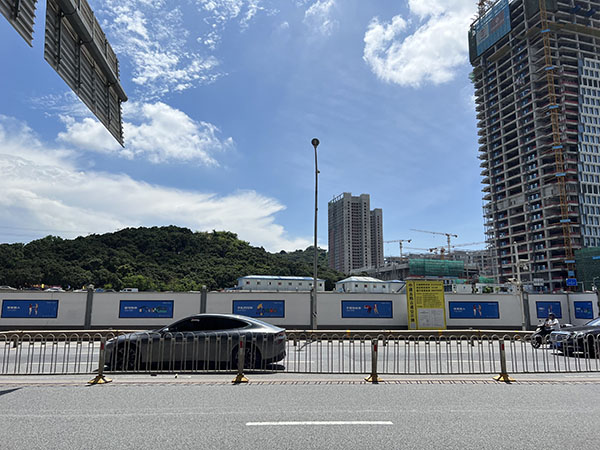


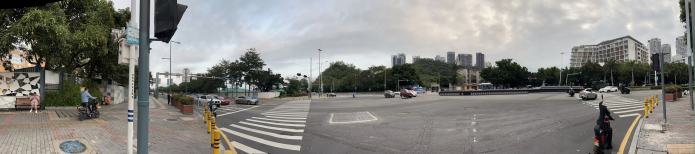
后海大道X蛇口新路 the houhai avenue X new shekou road intersection
The history of the city is underfoot and can, when the light is clear, old waters shimmer into awareness. Twenty years ago (give or take) Houhai Avenue and New Shekou Road met at a 90 degree angle. To the northeast was the entry to Dongjiaotou Port, where sand, building materials and “unauthorized stuff” were brought in. The port entry faced a gas and oil supply station, which was located at the northeastern foot of Shekou Hill, behind the hill, away from the water, where there were docks for ships to anchor.
Today, I noticed the intersection is an intersection. Both the entryway to the port and the gas supply station are under construction, as is the former dock area. The northeastern and northwestern corners of the intersection remain unchanged and thus are showing their age. In the northeastern corner is the Shekou #4 pump station, which was built as a work unit compound. In the northeastern corner is an older Shekou administrative building that looks abandoned?
Point du jour: the intersection is an uncanny reminder of the coastline that is no longer. Walking west along New Shekou Road, you enter that once-upon-a-time coastline. At Wanxia Road, you turn north to enter Wanxia Village and south to enter Fishing #2 Village. A few meters ahead is Old Shekou Street, follow it west to the Industrial Zone. Below, pictures of the intersection four corners. Imagine salt in the air, the approach of ships, and workers on bicycles navigating muddy roads…


images from cloud city
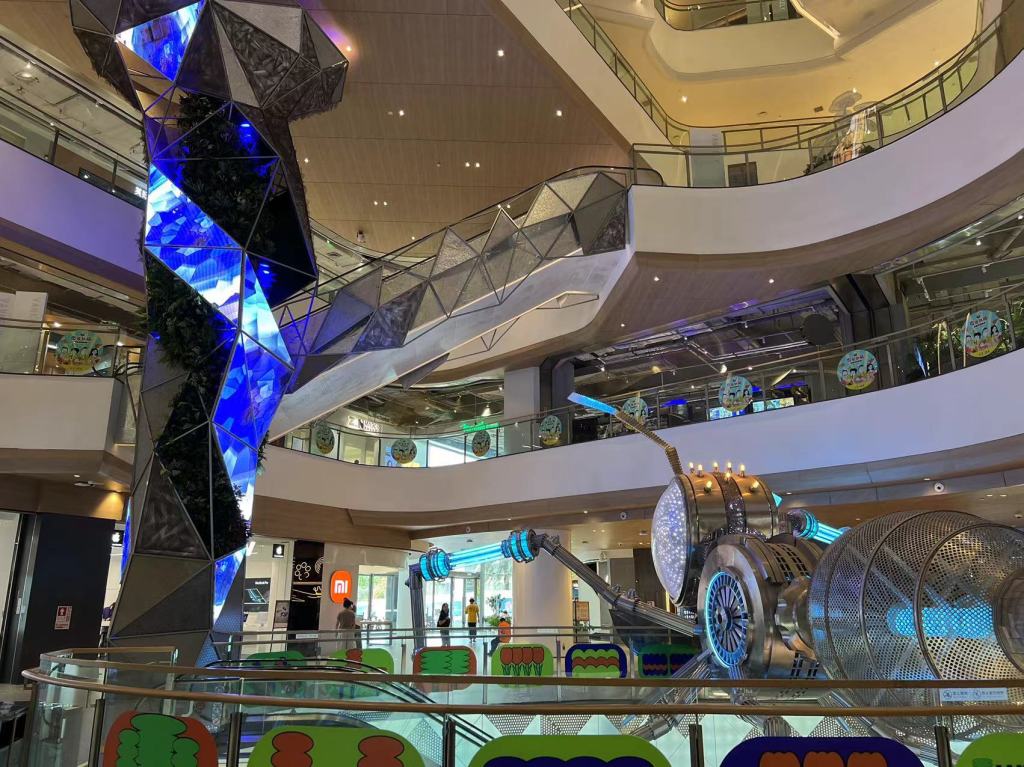
It’s been a few years since I roamed Liuxiandong (留仙洞), which was an industrial area and then (briefly) a creative area. I remember in 2006 or 7, it was so cheap to rent that artists were renting several hundred meters for a few 1000 a month. Now, however, it is cloud city, a large Vanke project that looms on the horizon like a rendering.





huangbeiling
Yesterday, I walked Huangbeiling, which is located on the eastern section of Shennan Road. Before the construction of the subway system, Huangbeiling felt like the end of the accessible SEZ; there was more beyond, but getting there required a car or plans for a day trip. Today, Huangbeiling is a major transportation transit hub, linking the downtown area to the eastern coast.

Huangbeiling still feels like a golden era urban village, albeit recovering from Covid shutdowns. The layout of the village is against and up the Wutong Mountain Range, with enough nooks and crannies for unexpected encounters: a household temple to Guanyin, a mountain park with feral cats hanging out in tree branches, and good, relatively cheap food.



Sixteen years ago, one of the earliest Fat Bird guerrilla performances was held at the Huangbeiling pet market. Dogs and cats were just becoming fixtures–like cars and branded items–of the middle class Shenzhen lifestyle. Fat Bird “rented” a large dog cage for about five minutes before security guards and village leaders appeared and asked us to leave In the video of the post-performance interview you can also glimpse what this section of Shennan Road used to be like. After the performers were asked to leave, we jumped on a bus and went across the city to Chiwan. The short performance gives a sense of both the transformation of the area, as well as the relative openness of the city at the time compared to the present moment.
 Shenzhen Noted