what just happened?

—-  国民党税多,共产党会多  (“The KMT has high taxes and the CPC has many meetings” was popular description of the difference between the Nationalists and the Communists during the War Against Japan. )

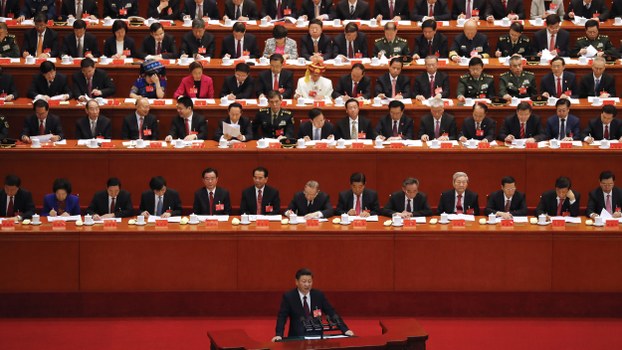
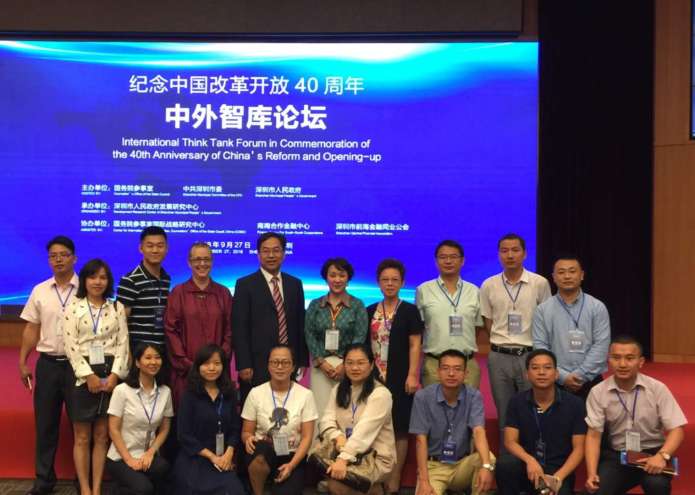
On the morning of September 27, 2018, I attended the ten (!) keynote addresses of the International Think Tank Forum in Commemoration of the 40th Anniversary of China’s Reform and Opening-up (and yes, as far as I can tell, Shenzhen has shifted its translation of “reform and opening” to “reform and opening-up”). The Counsellor’s Office of the State Council and the Shenzhen Municipal Committee of the CPC and the Shenzhen Municipal People’s Government hosted the event, which was organized by the Development Research Center of the Shenzhen Municipal People’s Government. So a big deal. And there I was in the midst of all those policy advisors wondering, what’s actually going on here?  Continue reading

more on urban villages from the V&A

Just recently, I stumbled upon me, Fu Na and Huang Weiwen talking about urban villages. The video was part of Unidentified Acts of Design, an exhibition and series of eight films. The films are worth checking out again, if only because the city has already changed. To find out more about the V&A’s work in China vam.ac.uk/shekou

longling: where the children are…

The second station on the Chinese side of the Kowloon-Canton Railway, Buji was an important Hakka market town that during the early years of reform was a center of manufacturing. Today, Buji is a street office (办事处) with an estimated population of over one million. Most Buji families live in an urban village and their children attend minban (民办) schools. A minban school is owned and operated by private companies, filling educational needs that are not met by the public school system. Elite minbans tend to be international and position graduates for university abroad. However, the most common type of minban school in Shenzhen is the urban village minban, which has been set up to educate children who are ineligible for a public education. The most common reason for being ineligible for a public education are hukou related; often families are not long-term residents of the city, which means their children are only eligible for public education back home, or the child was born outside the family planning policy and the parents cannot afford the fines to send the child to public school.

Continue reading

what water did you drink?

On Tuesday, September 11, 2018, Handshake 302 sent out a call for fifteen participants to join the first chapter of “Urban Flesh and Bones: Rediscovering Shenzhen’s Cultural Geography” series of walking tours. This chapter is called “What water did you drink?” and looked at how infrastructural relationships–pipes and container ports, for example–have replaced more immediate relationships–wells and small docks–in the local cultural geography. Kind of esoteric topic for a walking tour, but in less than an hour, the event was already completely booked! Who knew Shenzhen residents were so interested in esoteric takes on the city’s cultural geography? By Thursday afternoon, however, we were worried, would super typhoon Mangkhut land on Saturday, forcing us to cancel the event? However, the weather gods were with us, and Saturday morning was bright sun and blue skies—a perfect day for exploring the Shenzhen’s cultural history from the perspective of “water.” Continue reading

five years at handshake 302

If you’ve been following us, you know that we’re celebrating our fifth anniversary. For a sense of what we’ve done and how we’ve changed, please download our latest pdf, 握手302介绍2018.

was it ten years of catastrophe or ten years of difficult exploration?

I just read on we chat that all of the new history text books that were issued this semester were recalled without explanation. This was interpreted to mean that criticism of changing references to the Cultural Revolution as “the ten years of catastrophe (十年浩劫) to the ten years of “difficult exploration (艰幸探索)” had successfully pushed back Xi Jinping’s attempt to revise history. At any rate, students were told to go borrow copies of last year’s history books, while the new books are recooked.

shekou car free festival

So it’s that time of year when Shekou celebrates its still walkable neighborhoods with a car free Saturday. In addition to promoting environmental awareness, the festival includes games and food and a parade. This year, Handshake 302 worked with Shekou Primary School #1’s after school art club to design and make large puppets to carry from Seaworld to the Sanyo / E-cool area and back again. Below are pictures from the three-days of happiness that was making giant puppets with 8 and 9 year olds.

This slideshow requires JavaScript.

坑梓: what to do with all this history?

Outer district urban villages generally comprise four sections–the historic village settlement, the new village settlement, a commercial center, and an industrial park. As in the inner districts, in the outer districts demolition and forced evictions have transformed new villages even as mandated deindustrialization and participation in the creative economy have reshaped industrial parks. However, the question of what to do with the historic settlements is much more acute in the outer districts, especially in Kengzi (坑梓) and Pingshan (坪山), where large Hakka compounds have been condemned, but not scheduled for preservation. Up until five or six years ago, the compounds were still occupied and collectives managed them as rental properties. Today, however, although sections of the compounds have been opportunistically repurposed, nevertheless, the overall sense is increasingly one of ruin, as if we were waiting for the compounds to collapse and solve the problem of surplus history for us. Impressions from two of the Huang family compounds in Kengzi, below.

This slideshow requires JavaScript.


guns and drugs?

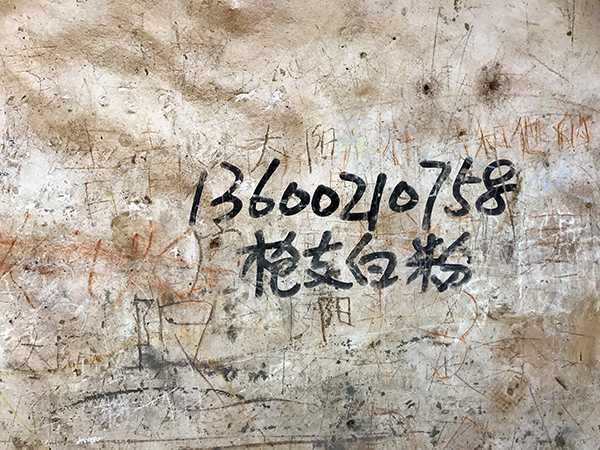
Came across this message while wandering in Kengzi (坑梓). Signs of anxiety and that all is not well. It also has one thinking about the latest efforts to combat “dark and evil forces.” After all urban villages remain relatively independent…

what are the forces of dark evil?

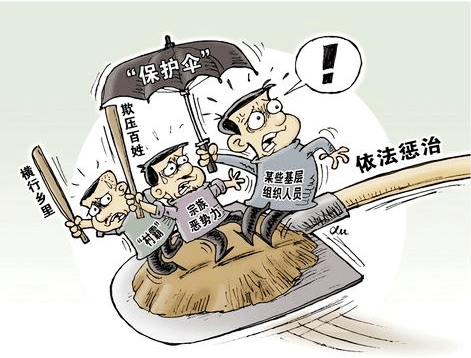
So there actually is an office dedicated to “sweeping away black and removing evil (扫黑除恶办)” office in the Shenzhen Government and they’re sending text messages to my phone. The program aims to forward the spirit of Xi Jinping’s vision for society. My problem is that I don’t actually know what groups and or behaviors the phrase “黑恶势力 (forces of dark evil?!)” refers to. On the face of it, it might be corruption, but then again, the full title of the program is “扫黑除恶专项斗争 (a special struggle to sweep away black and remove evil)” which, of course, gives rise to all sorts of CR alarm bells, especially because we’ve been given telephone numbers to report on the evil forces in our midst. But who are they? In the cartoon, for example, the target seem to be village heads and rooting out traditional alliances. According to Baidu, the project is targeting gangs and triads. And if this is in fact the case, what are they doing in my middle class neighborhood? Am I living next to gang members? So its hard not to feel that the program seems less about “using law to govern (依法治国)” than it does about the increasing militarization of society.