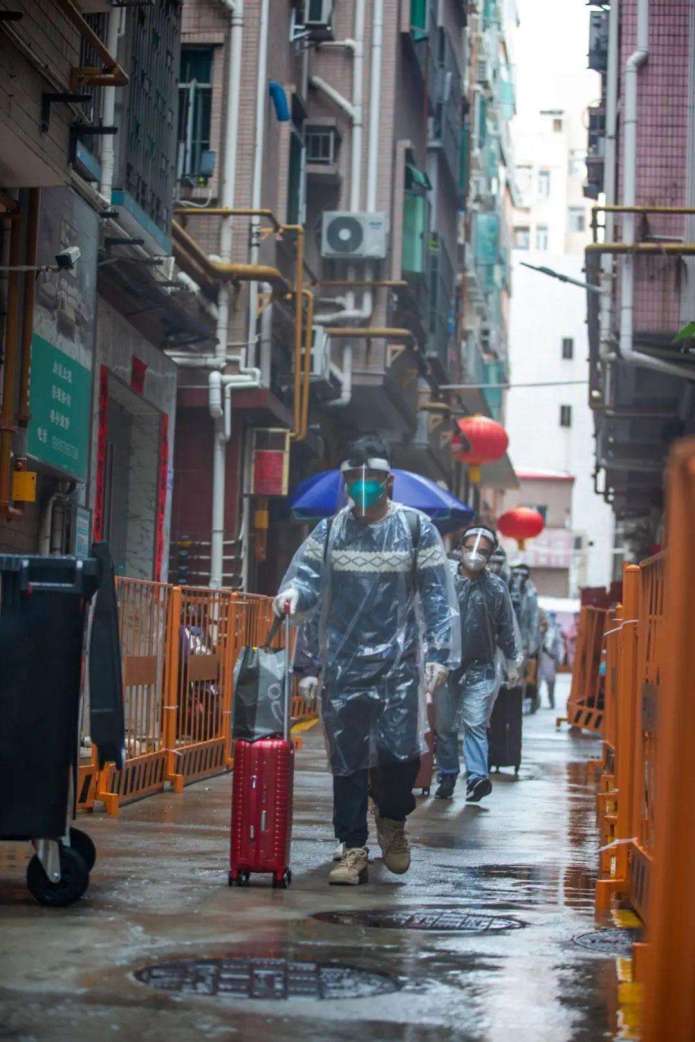
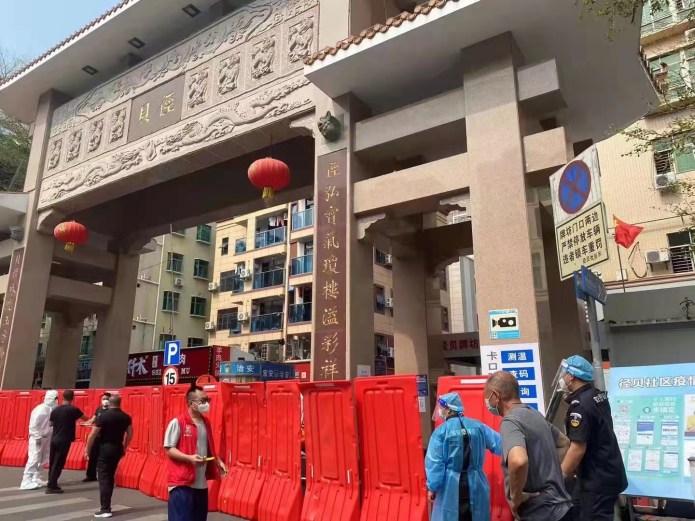
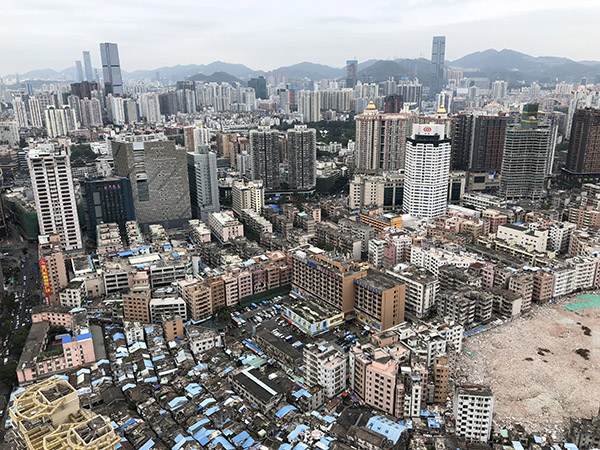
what kind of public space is the city of shenzhen?

I think about this question, a lot. Because there are two ways of being public: providing public services and allowing for critical public spaces. Sometimes, when my mind drifts into thoughts about chimerica, I wonder if the US has critical public spaces because it refuses basic public services to many of its people, while China lacks robust critical spaces because its so busy trying to secure public services for its residents, urban and rural. Priorities, right? Anyway, thoughts below (full citation: The Emerging Public Realm of the Greater Bay Area, Miodrag Mitrašinović and Timothy Jachna, eds., Routledge, 2021, chapter 7.):
zero new cases (enjoy the moment)

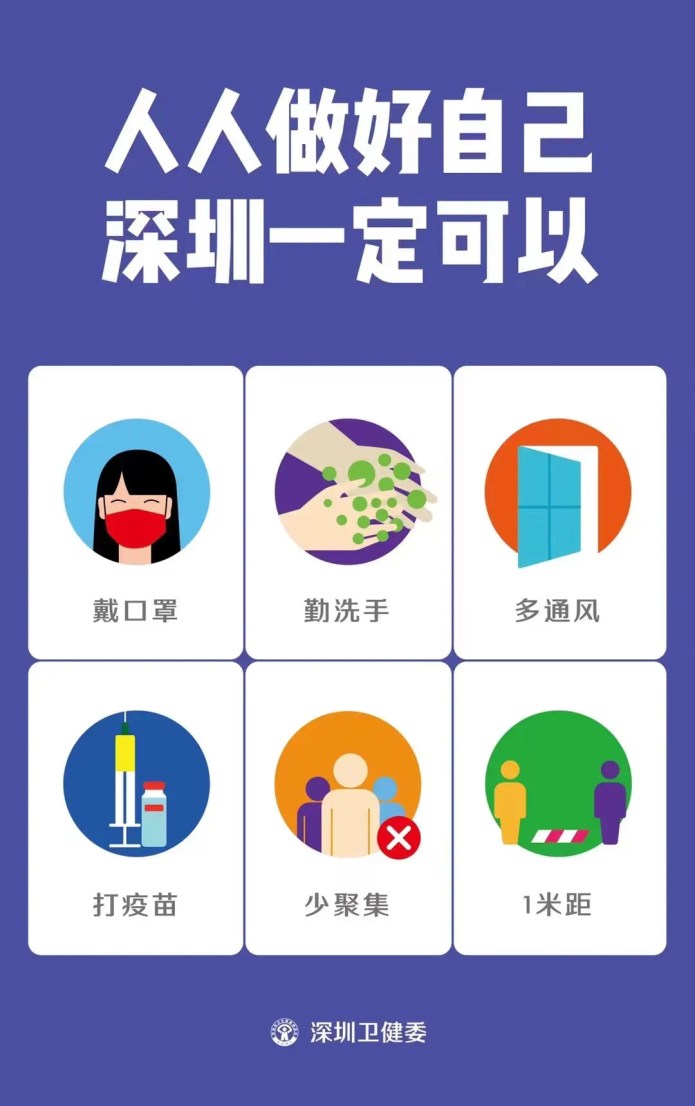
Yesterday, April 4, Shenzhen announced that there had been zero new cases of covid in the city. The poster reads: If everyone is their best self, then Shenzhen will definitely succeed! In addition to maintaining basic public sanitation, no large gatherings, which means most commerce isn’t going to pick up anytime soon, especially as its still 2 tests every three days (三天两次 every other day). Middle and high schools are scheduled to reopen on April 8, and they will announce elementary school re-openings then. Possibly next week. But, no gatherings and that’s what people do. Meanwhile, Futian held a gratitude ceremony for volunteers from other districts who came to help manage the crisis (and yes, political crises are crises). They were photographed holding a banner that said, “The people of Futian thank you!” So it looks like Futian is thanking the city, not the volunteers holding the banner. But that’s a personal quibble.

As an aside, yesterday I experienced a twinge of Shanghai envy. Apparently, the neighborhood management office of a large residential estate required residents to sing patriot songs together. Instead, they gathered in their windows and on balconies as scheduled, but collectively shouted, “fuck you neighborhood management (傻B居委会)!” So yes, I wanted to be collectively expressing frustration with zero-Covid policies. Click to view.

virtual concern: shanghai city and jilin province

First, Xi’an and then Shenzhen, now Shanghai and Jilin. Although if you’ve been following the covid situation in Shanghai, odds are that’s how you’ve heard about the covid situation in Jilin–as an addendum, a postscript, a by the way this also happened elsewhere throwaway line at the end of a news report. From what I can gather, the Shanghai government has lost control of the covid situation and the military police 武警 have been called in to restore order. I have seen pictures of infants who have been separated from their parents, sleeping five or six to a crib; I have seen video clips of people breaking through cordons, although it is unclear where they are going; I have seen snapshots of international brand shopping bags, (including Maotai), hanging from doorknobs in compliance with the delivery of corona self-test kits to families, and; I have seen seen videos of the arrival of military police troupes dressed up in hazmat suits. As for Jilin, I haven’t seen that much. Apparently, the province’s major (Changchun and Jilin) and minor cities are in the “development stage” of the outbreak, which means it’s spreading. I’ve also read that there are huge numbers of asymptomatic cases and that the cold weather (I’ve seen pictures of workers bundled up in winter coats beneath their hazmat suits, dodging snowflakes as they motorbike to their next station) make it difficult to conduct tests and deliver food.

Here’s the rub: I have limited means to evaluate what’s happening in Shenzhen, let alone cities that I haven’t visited or only infrequently visit. How can I evaluate what these unknowable events mean for me personally, Shenzhen specifically, and China more generally? So that’s what today’s post is about: my experience of the Chinese virtual public sphere.

Continue reading

how do shenzheners map covid elsewhere?

A friend from northern China once said (and I’m paraphrasing a long ago memory of Shenzhen, circa 1995), “If you want to see Chinese culture, go to Beijing, Xi’an or Shanghai. Even Tibet has more culture than Shenzhen.”

Her pointed point was: if you’re doing cultural anthropology (and I was!), go to a Chinese city with actual culture. Even the ethnic minorities have culture. Shenzhen, not so much. In fact, she also explained that Taiwan felt more ‘Chinese’ than Shenzhen did. When asked to elaborate, she explained that in Taipei, she had been able to speak Mandarin. In contrast, in Guangdong it was difficult to find people who willingly spoke Mandarin, let alone fluently.

Of course, nearly thirty years (!!!) later, Shenzhen has come to represent China in ways that Beijing, Xi’an and Shanghai do not. Moreover, Shenzhen is often held up as the most open of the first-tier four (Beijing, Shanghai, Guangzhou and Shenzhen). Shenzhen isn’t China’s past, my friends assure me, but its future, which is why, Shenzhen’s response to Covid-elsewhere is worth noting. How are Shenzheners positioning themselves and their city vis-a-vis perceived failures of Covid management in Shanghai?

Continue reading

the village hack residency

Long ago, when Handshake 302 was in Baishizhou and Baishizhou was the city’s most icon urban village, we ran a residency program. The first iteration of the residency was “Village Hack.” Several years ago, I reflected on the program and what it taught us about how Shenzheners were formed (paper can be downloaded, below).

Continue reading

the new normal?

Shenzhen’s zero-Covid management system has been integrated into online maps of the city. Searching for “Shangsha Village” on my Gaode Map app (高德地图). On the map, three classes of lockdown have been clearly marked in a modified traffic light system. Red is for Locked down, no entry no exit (封 不进不出); Orange is for Control, only entries no exits (管 只进不出), and; Yellow is for Prevention a corona test is necessary for entries and exits (出入需核算).

Continue reading

tangyan, shangsha: civilized relocations

If you’ve been following the 2022 omicron outbreak in Shenzhen, then you’re aware that Tangyan Village, Shangsha (上沙塘宴村) has been one of the city’s hotspots, continuously generating positive test results. Indeed, since human factors in transmission have been controlled, the next hypothesis is environmental factors. Consequently, on March 17, 2022, the Futian Command Center (福田区新型冠状病毒肺炎疫情防控指挥部) notified residents of designated buildings in Tangyan that they would be relocated for 14 days quarantine and observation (notification #84 第84通告). While residents are quarantined, their building, its water mains and the surrounding area will be disinfected.

Continue reading

what to make of covid videos?

One of the most difficult things to figure out is what to make of video clips on WeChat. Whoever took the time to take out their cellphone and film these moments, clearly thought that they reveal some truth about Shenzhen under lockdown. But here’s the rub: these clips often circulate without captions, as if the content was self-explanatory. When they do have captions, these videos are still difficult to understand because its difficult to know who the protagonist and antagonist are. Who should we sympathize with? Who should we condemn? However, unless I actually know the person who produced the video clip, there is no way to confirm who filmed the video and why, when it was filmed, what provoked it and what came next. I watch a clip, thinking, “Now I understand.” But what I’ve understood slips away the moment I click on the next post. Indeed, the lack of third party confirmation haunts all Covid posts on Shenzhen social media, especially because there are few ways to actually visit sites and ask. We have puzzle pieces, but no way of knowing what box they came from or even if they’re part of the same puzzle. The city seems more ephemeral than ever.

So, some videos that feature Covid management teams in hazmat suits. Make of them what you will:

Continue reading

the urban planning imaginary: lessons from shenzhen

Many years ago (and it was a different world), I interviewed HUANG Weiwen about Shenzhen’s urban planning imaginary. The year was 2016, and there was a general hope that urban villages might come of age and transform the city for the better. Anyway, here’s the article.

wtf shatou?

Shenzhen’s citywide lockdown has come to an end. Kind of. Last night, there were countdowns to midnight, firecrackers set off at village gates, and then people charging out. I’m not sure where they were going at midnight, in a city that was still primarily closed. But there were thousands celebrating in the streets outside their gates. The expression for this rush is ‘冲鸭,’ which literally translates as ‘charging ducks,’ but translates as ‘go for it.’ In fact, it has been a week of poultry metaphors, as a new phrase on the web is 叮咚鸡 (dingdong ji), which is a pun for the expression ‘wait for further notification’ that ended ever. single. covid announcement. I’m not sure where the expression came from (I’ve seen debates that the original is Cantonese, but no confirmations), however, chickens are running rampant through Shenzhen memes.

Continue reading