the shenzhen-guangdong model is xi jinping’s road to recovery!

.. and it’s official! Xi Jinping’s road to recovery is the neoliberal policies of Shenzhen and Guangdong.Yes, the first signal of whither Xi Jinping is pointing to Shekou, by way of the second of Shenzhen’s top ten concepts.

If CCTV is to believed everyone is enthusiastically studying the spirit of the 18th national people’s congress. Xi Jinping and friends have charted a road to recovery that sounds exactly like Yuan Geng, 1992, except of course in English, where the translations have missed the historical citation.

Xi Jinping, 2012: 空谈误国,实干兴邦 (Empty talk is useless, only hard work can achieve the revival of a nation).

Yuan Geng, 1992: 空谈误国,实干兴邦 (Empty talk endangers the nation, practical work brings prosperity).

Not surprisingly, Xi Jinping’s “it’s the economy” moment parallels Yuan Geng’s. Yuan Geng first decried empty talk in response to Beijing educators who claimed that Shekou youth were gold diggers (Shekou Storm 1988). First time round, empty talk actually supported alternative voices. However, Yuan Geng made empty talk an official Shekou slogan response as part of Deng Xiaoping’s 1992 Southern Tour in an effort to silence critics about the June 4th Incident, returning the focus of reform to economic growth. Second time round, empty talk seemed to mean “suck it up and get back to work”.

So here we are. Again. And inquiring minds want to know: is Xi JInping talking the talk of 1988 or the talk of 1992?

Personally, I’m thinking we’re still caught in the post 6.4 quagmire. Xi Jinping’s less talk, more action comes in the aftermath of the Bo Xilai incident and the demise of the Chongqing Model, which included the call for a return to collectivist economic policies a la Mao Zedong. Speculation du jour: Xi Jinping’s road to recovery is probably the continued silencing of progressive voices for social liberalization in favor of rising GDP, or the “steady at 7 (经济保7)” policy, a reference to China’s decision to continue to grow the GDP at 7% annually.

top ten concepts of shenzhen

On November 28, I participated in a symposium to celebrate the English language edition of Top Ten Concepts of Shenzhen (深圳十大观念 for Chinese i-pad version).

The production, organization and publication of the Top Ten have been very Shenzhen, so to speak. The Publishing House of Shenzhen Press Group (深圳报业集团出版社) created an online website, where people could vote for the slogans and campaigns that they though best represent the city’s history. These slogans and campaigns were then re-presented (re-issued?) as concepts that epitomize Shenzhen’s values and way of thinking. Thus, in his preface, Guangdong Provincial Committee Standing Member and Shenzhen Party Secretary, Wang Rong, “[T]he top 10 concepts are the concrete manifestation of the era’s zeitgeist and a vivid imprint of the reform and opening-up program.”

The ideological slippage from political slogans and campaigns to civic values and zeitgeist interests me because it points to Shenzhen’s simultaneously fraught and co-dependent relationship with Beijing. On the one hand, experimentation in Shekou and early Shenzhen legitimated ongoing policy debates in the Chinese capital. On the other hand, the Shenzhen model, specifically and the Guangdong model more generally continue to be at slight odds with the rest of the country. Specifically, Shenzhen continues to advocate a managerial approach to governance, promoting not simply business, but also entrepreneurship and a vibrant grassroots economy.

Two of the slogans did, in fact, challenge prevailing political currents and concomitant power structure. Yuan Geng provided the two most obvious examples — “Time is money, efficiency is life” (1981) and “Empty talk endangers the nation, practical work brings prosperity” (1992). The first was a clear challenge to the Maoist planned economy. The second not only expressed Shekou’s ongoing support of Reform policies, but also the industrial zone’s continued advocacy of talented young people with alternative ideas. The Top Ten discussion of “Empty talk” introduces the history of the Shekou Storm. At the time, Yuan Geng emphasized that while Beijing officials blathered on about ideology, Shekou youth were building the future. The decision to erect the “Empty talk” billboard in the aftermath of the June 4th Incident was especially telling because Shekou actively hired transferred hukou of intellectuals who had been sidelined for their support of students.

Nevertheless, thirty years later, those same slogans uncannily echo neo-liberal values throughout the world. “Time is money” quickly looses its oppositional potential when we remember that in Shenzhen, workers’ wages have not kept up with the price of housing; many white-collar workers are also unable to purchase homes. Likewise, “Empty talk” no longer seems  an effort to protect those with alternative ideas as it does the instruction to “suck it up”. It is therefore unsurprising that concepts 3-10 express the municipality’s ongoing efforts to promote neo-liberal neo-confucianism. More to the point, these concepts clearly resonate with Wang Yang’s call to deepen and extend neo-liberalism not only in Guangdong, but also throughout the rest of China.

I’m thinking that it is thus best to read the Top Ten as a list of double-edged swords. As political campaigns and slogans, the concepts reflect contemporaneous power games. “Shenzhen embraces the world”, for example, was a blatant attempt to justify outrageous spending on the 2011 Universiade, while “You’re a Shenzhener once you come” is the self-serving motto of the Shenzhen Volunteer Association; what exactly does it mean that everyone is a Shenzhener when less than 1/5 of the population has a Shenzhen hukou? However, when understood as exemplars of civic values and a city’s zeitgeist, the concepts illuminate cracks within the power structure and spaces for alternative practices, both in business and everyday life. Indeed, it would be wonderful if these slogans/values might in turn reshape Shenzhen’s neo-liberal juggernaut, creating spaces for legitimate political opposition and open debate on whither the next thirty years of reform.

The top ten concepts are: Time is money, efficiency is life; Empty talk endangers the nation, practical work brings prosperity; Dare to become the world’s first; Reform and innovation are the root and soul of Shenzhen; Let Shenzhen be respected for its enthusiasm for reading; Innovation encouraged and failure tolerated; Fulfilling the cultural rights of citizens; The fragrance of the rose lingers on the hand that gives; Shenzhen embraces the world; and You’re a Shenzhener once you come here.

China Daily and Shenzhen Daily coverage of the symposium online.

egalitarian architecture

One of the more interesting architectural continuities between Maoist Tangtou and Handshake Baishizhou is the ideology of egalitarianism (平均主义).

When Tangtou villagers first came to Baishizhou in 1959, they gave up their rural status and became members of the Shahe Farm (沙河农场). As members of the Farm, their hukou status was “non-rural (非农)”. This meant that they had rights to socialist welfare benefits, including housing, a salary, a rice allocation, and education for their children. In turn, they gave up their land rights. All this, even though they continued to do agricultural labor. Thus, as a architectural typology, Tangtou’s flat houses were not rural buildings — traditional or modern — but rather socialist dormitories.

According to the Maoist planned economy, non-rural members of socialist work units were entitled to dormitory housing, or “one houselhold, one room (一户一间)”. Within these dormitories, all facilities were the same — the same size sleeping and communal areas, the same number of windows, and the same access to the collective canteen and outhouses, differences in family size, notwithstanding. This type of dormitory construction was the architectural manifestation of a larger egalitarian ideology.

Of course, architectural egalitarianism was relative to regions as well as local resources. For example, the dormitories that Tangtou villagers built in Baishizhou were one story structures made of cement admixtures, wooden beams, and Hakka technology. After the canteen system broke down, families constructed small stoves outside their front doors, but continued to share nearby outhouses and wells. In contrast, dormitories in cities ranged from buildings of stacked, one-room efficiencies with a bathroom at the end of the hallway to buildings of multiple room apartments. In the colder northern cities, the decision to turn on and off central heating for everyone in a dormitory was an extension of this theory as was the decision not to provide central heating to dormitories south of the Yangtze River.

The construction of urban villages in Shenzhen has been an extension of architectural egalitarianism in the post Mao era. All handshakes were built on plats of 10 X 10 meters. To insure equal access to sunlight, there is a mandatory distance of 3 meters on the east-west axis between buildings and a distance of 8 meters on the north south axis. This mandated layout is the basic grid of an urban village. Moreover, when juxtaposed against older settlements, including rural dormitories like Tangtou or village settlements at Hubei, for example, the layout of a handshake settlement extends and often further rationalizes the egalitarianism of the previous layout.

This form of development has brought with it two urban planning conundrums:

  1. The 10 X 10 grid, with its mandatory distances of 3 and 8 meters between buildings pre-empts the efforts to put in adequate roads. 3 meters is small enough that handshakes have grown closer together — albeit without touching — on the east-west axis. At the same time, 8 meters is only wide enough to accommodate one traffic lane, which often gets jammed during deliveries or when too many motorcycles dart through.
  2. Public space and access to main roads is at a premium within the settlements. At Tangtou, for example, the large basketball court in front of the 59 dormitories is the one large space, where children and older people can meet outside. At night this area becomes a night market with more business than those areas in the Baishizhou alleys. Likewise, the roads that connect Baishizhou to Shennan Road are also the most profitable because they have storefronts in areas with large numbers of pedestrians.

The ongoing ruralization of Tangtou (and other urban villages  neighborhoods) has had paradoxical ideological effects. On the one hand, thinking of Tangtou as rural empowered Tangtou residents to make handshake land grabs. On the other hand, thinking of Tangtou as rural continues to justify the exclusion of Tangtou residents from discussions of future development, differing to the expertise of “urban” intellectuals and authorities. Moreover, the urban planning problems presented by Tangtou are considered effects of “rural” and “traditional” thinking. However, Tangtou is as “rural” and as “traditional” as Greenwich Village, NYC. The current built environment of Mao-era dormitories and post Mao handshakes is itself a product of non-rural socialism, first as the Shahe Farm and then as the Shenzhen Special Economic Zone.

And there’s the rub: what does it mean that “rural” and “traditional” Tangtou Baishizhou has come to represent all that is good and problematic about Shenzhen’s “urban villages”?  More generally, what are we to make of Maoist egalitarianism — both its continued appeal to the broad masses of Chinese people and its problematic manifestations — when we confuse it with a Chinese past that never happened?

impressions of floating color

飘色 (literally floating color; piaose) is a wonderful South China tradition. This past month, I’ve had the privilege of helping organize an updated and modernized version of piaose, working with artist Momo Leung (梁美萍), Tan Yuanxing (谭源兴),  and Tracy Lee of CultaMap (香港文化意图). Today, we tried on the costumes and put the girls up on the float. The story is fairytale happy — a flower princess and her froggy prince.

This slideshow requires JavaScript.

WoWorldly desires

Window of the World opened in 1984, on the auspicious day of 6.18 (June 18). Yesterday, I visited WoW with Constant Dullaart, one of the residents in this years OCT Art Residency. The featured image for this post is a snap of us in front of Niagara Falls.

This is the first time I’ve visited WoW since 1997, and was impressed by two of the new installations — a plane ride trip through the United States (installed 2004) and a toy train ride through mountainous Europe (June this year). The plane ride uses IMAX technology and moving seats to give the impression of flying coast to coast on a double wing plane. At each landmark, white Americans wave to visitors, yelling, “Welcome to the United States”; in watery areas, visitors are lightly spritzed with water. The toy train is less high-tech, but more popular with young children. According to one of the friendly staff members, these rides are part of plans to shift WoW entertainment from viewing miniature landscapes to interactive rides and activities; I’m thinking WoW goes Epcott.

I was struck not only by the yearning for elsewhere manifest in the WoW installations, but also by the continuing nostalgia for a particular kind of elite life. Tourism as an activity of early 20th century elites continues to shape built forms of this yearning. (Or perhaps we experience nostalgia in search of an object?) This neo-liberal appropriation of colonial forms of pleasure was also been reproduced at Shekou’s Seaworld, circa 1984, where the plaza houses western consumption in quaint buildings and the landlocked Shining Pearl.

Seaworld was one of the first efforts to materialize Chinese yearnings for the better (relentlessly global) life. Nevertheless, by the early 1990s, when WoW was built and developers put up European style estates (with appropriate tributes to Versailles excess), Shenzhen grappled to implement neo-liberal economic policies without neo-liberal political changes. The political-economy of both early Shekou and 1990s Shenzhen were reminiscent of early 20th century capitalism, when all sorts of material wealth began to appear, but only a few people were positioned to enjoy it. Or more to the point, perhaps, only a few elites had both the leisure and resources to enjoy it, including romantic alpine train rides and virtual plane rides on double wing planes a la the Wright brothers.

The fantasy life infusing representations of the early 20th century high life — the fashionable world — were a fixture of 1990s Shenzhen architecture. Seaworld and WoW, for example, were conceived and built in the post Tian’anmen era, when “European-style” housing estates were also popular, including OCTs upscale Portofino. In fact, throughout Shenzhen, but especially along Shennan Center Road, the mini-fascades that wrap WoW and Seaworld dreams have been enlarged in themed real estate developments, where many of Shenzhen’s solidly middling middle class still live and to which many migrants aspire.

Yesterday morning while waiting for Constant, I stood at the subway exit that is located beneath the Jiang Zemin inscribed glass pyramid and watched ticket scalpers approach tourists. The tourists spoke accented Mandarin, and had organized themselves into small groups of carefully dressed visitors. They examined the pamphlets, considered their options, and then opened their umbrellas to embark a rainy day of exploration. Those I later saw again within the park seemed to be enjoying themselves; I certainly enjoyed the toy train and virtual plane rides.

In recent years, of course, Shenzhen’s vision of the world has gone SciFi glassy — steeled if you will — against the imaginary onslaught of encounters with alien lives. However, that kind of elite consumption does not resonate with the same visceral pleasure of early 20th century elites enjoying both their traditional privileges and the mass produced delights of a new era. I’m trying to figure out why. Guess du jour: we want elite agency, but we want it as pleasure,in the play of tourism and leisurely meals, for example, rather than as the high stress, overwhelmed and overwhelming agency that seems to characterize elite life on the ninety-first story of a 21st century glass tower.

Postcards from my Alpine excursion, below:

This slideshow requires JavaScript.

inscribed dongguan

Unlike Shenzhen, which has managed to disassociate itself from its rural past, Dongguan continues to be considered a market town, population and exports, notwithstanding — provincial in all condescending senses of the word. Unfortunately for folks in Dongguan, urbanizing strategies to overcome the stigma of cultural boorishness are often the problem. The Lamwa (联华国际) development, 星河传说 (Milky Way Legend), for example, is located in Dongcheng District, Dongguan Municipality’s aspiring middle class district, where English inscriptions, including a Cambridge education kindergarten are all part of local efforts to rebrand the city. It feels, however, like 1990s Shenzhen, before millennial skyscrapers and creative industries replaced industrial parks, creating Shenzhen urbanity and the concomitant nostalgia for urban villages. Impressions of Milky Way Legend’s high culture pretensions, below:

This slideshow requires JavaScript.

aging in tangtou, baishizhou

This past week I have been listening to stories from the residents of the Tangtou row houses. Here is one:

Old Xu was born on November 12, 1945. In neidi, he was an accountant on a production team and then for the village enterprise.  After the redistribution of land during the household responsibility system, he and his wife did not receive enough land to farm cotton profitably. Consequently, his three children left to work elsewhere and the land has gone fallow except for a small vegetable plot.

Two years ago, Old Xu came to Shenzhen at the age of 65 because he did not want to burden his children with the cost of his retirement. His wife continues to live back home, taking care of their grandchild.His pension is only 30 or 40 rmb a month. Together, he and his wife need 20,000 rmb annually, or about 1,700 a month to meet their expenses. In Baishizhou, he makes a living collecting and reselling cardboard boxes and other garbage. He says he can save money this way because although there’s no real profit, he makes enough to support himself and to bring a little home for Chinese New Year.

At present Old Xu lives with two other old men in one of the 25+ square meter houses. This house is one of the cheaper in the settlement, with a rent of about 600 rmb a month plus water and electricity. His share is 200 rmb a month, or roughly 5 times his retirement pension back home. A bathroom has been added to the outside of the building. Inside, the space has been divided for sleeping and simple cooking.

When I asked him how the environment could be improved, Old Xu said that old people have no place to exercise. Instead, they just sit around talking, but that was the fastest way to an unhealthy old age! Old Xu also admitted that he was lonely because except for his roommates, he didn’t know anyone in the area. He then shrugged and asked rhetorically, “What can be done? If I go home, I can only become a burden for my children.”

the 18th npc: princelings and the jiang gang

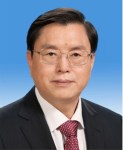
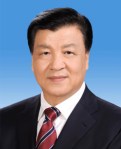
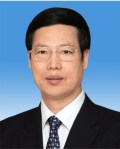
This afternoon at lunch, the new members of the Central Politburo Standing Committee of the Communist Party of China trundled out, in order: re-elected members Xi Jinping (习近平) and Li Keqiang (李克强), and newly elected members, Zhang Dejiang (张德江), Yu Zhengsheng (俞正声), Liu Yunshan (刘云山), Wang Qishan (王岐山), and Zhang Gaoli (张高丽). Other than the fact that the Standing Committee members rank number 1-7 in the country, we also know that they overwhelmingly represent the Princeling Party and the remnant strength of Jiang Zemin’s power base (Liu Yunshan and Zhang Gaoli). For those of us in Guangdong, we also learned that Wang Yang will remain in Bejing as a vice-premier, with a very good chance of becoming a standing committee member in the 19th national people’s congress. Pictures of Chinese top 7:

as if it never was

This slideshow requires JavaScript.

re-en-act by liu shiyuan: the performance of appreciation

Liu Shiyuan (刘诗园) plays with static representations of performance. However, her understanding of performance skirts the edge of performativity studies, veering away from the idea of representing cultural scripts toward an awareness of how the act of appreciating a work of art requires an imaginative re-enactment of a creative moment.

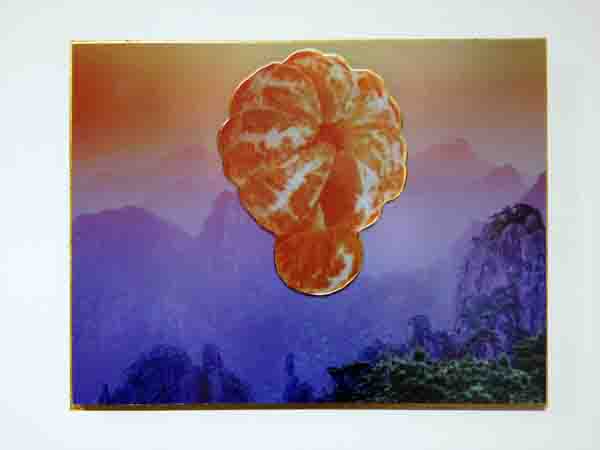
In her open studio at the OCAT Contemporary Art Terminal, for example, she has designed a viewing space as a stage. Moreover, this stage is an extension of her living and work space. In order to view her work, the visitor must first enter her living area, climb onto the stage and begin the performance of appreciation. This stage has three walls. On the two opposing walls, she has hung two sets of images. In the first, small set, she downloaded and printed images from a google search — keyword “cliche” — and then applied food stickers to the images. In turn, these small images were blown-up, mounted, and given a beautiful golden edge. In terms of artistic process, these sets of images represent different moments in time, forcing the viewer to imagine the creative process in order to understand the work. In between these two sets of images, and displayed against the third wall, over saturated prints of jewels have been elegantly displayed, a lovely distraction between the creation of one set of images and subsequent transformation into another set.

Structured movement along the stage from the three moments constituting this small, but insightful installation allows the viewer to become aware of herself as a subject who surfaces the internet, precisely because Liu Shiyuan’s staging is so exact. She has isolated the elements of an highly idiosyncratic google search in such a way that the ritualized and hence common aspects of this process are available for the viewer’s contemplation. By focusing on the performance of appreciation Liu Shiyuan communicates something about the shared nature of everyday life even when the internet seems to alienate us from each other. More interestingly, her work makes explicit the interdependence of artist and viewer in order make art happen.

Liu Shiyuan is currently finishing her residency at the OCAT Contemporary Art Terminal. Impressions of an afternoon in her studio, below.

This slideshow requires JavaScript.