the thing about egalitarian ideologies

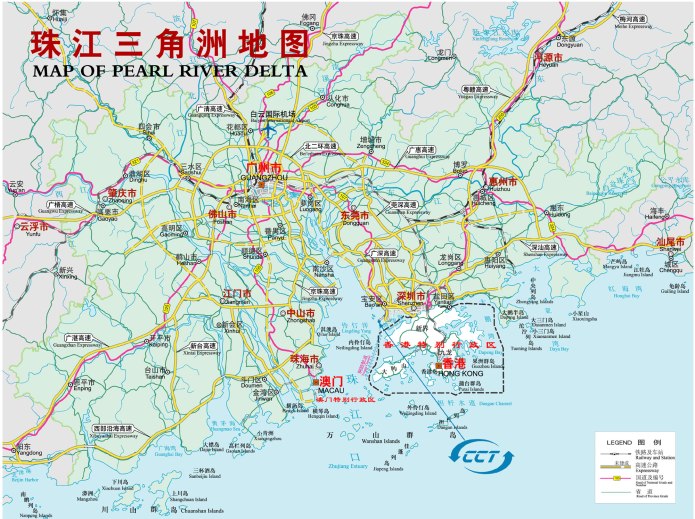
is that very unequal material living environments have to be made to look, well, equal. This is why the current Chinese government focus on growth rates, rather than actual GDP figures matter. With mandated growth rates, every city looks like they’re growing (more or less) equally, while others don’t look like they are stagnating. However, when the actual GDP figures for, let’s say, the Pearl River Delta cities are compared, what we see is that three cities–Hong Kong, Guangzhou, and Shenzhen–completely dominate the region, even as collectively the 9 PRD cities are estimated to account for 70% of Guangdong’s GDP (and only 30% of population). Moreover, given that sub provincial Shenzhen can’t (yet) officially have a higher GDP than provincial Guangzhou, we have know way of knowing if Shenzhen is in fact earning less than Guangzhou.

Provocation du jour: government growth rate targets directly impact a functionary’s ability to rise within administrative ranks, even as the business of Shenzhen remains, well, profitable business. Inquiring minds want to know: is this a contradiction between the people, or a meaningful crack between the government and its residents (居民)?

业绩 is calculated in terms of GDP percentages!!

I’ve been searching for 2014 GDP statistics for cities in the PRD. One would think that would be easy. But it’s not. The reason, I’ve discovered while jumping from city website to city website is that targets are set in terms of growth rates, rather than the actual GDP figure. In turn, government websites tend to publish growth percentages (to advertise that they’ve hit their targets), rather than rawer data. So, my a-ha moment du jour.

military installations in the south china sea

Victor Robert Lee presents satellite images and analysis of China’s New Military Installations in the Spratly Islands. His conclusion is that China is creating bases out of land formations reclaimed on top of coral reefs. Sad images, sad thoughts, and ironic resonances with The Fable of Donkey Island and Piggy Island. I’m especially distressed by the ongoing connections between booming economies and actual bombs.

sunday afternoon in dafen

Dafen is now a destination, with artists posing as painters, and visitors posing with paintings. Meanwhile, the subway is open and many of the new developments are opening and real estate is booming, so that it’s now difficult to find the painting village–it’s a sinkhole in the midst of rising towers. Impressions, below:

This slideshow requires JavaScript.

gentrification in baishizhou

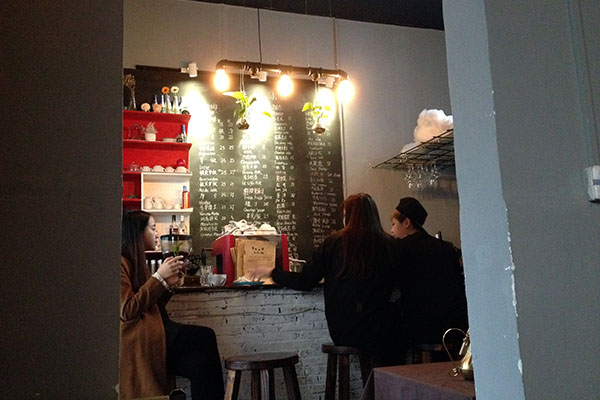
Here’s the thing about urban renewal in Shenzhen; it takes time. Consequently, although withering practices can be sensed in Baishizhou, nevertheless, day-to-day it all seems like the hustle and bustle hasn’t changed. Indeed, the neighborhood continues to experience low-level gentrification. There is, for example, now an independent coffee shop in Baishizhou, while outside on Shahe Road, individual upgrades continue. So photos from the coffee shop and ongoing upgrades suggest that even if young people in Baishizhou aren’t exactly hanging out and playing sports, nevertheless, there even low-income residents engage in leisure activities and consumption, which in turn points to the complexity of Baishizhou’s demographics and ongoing construction of Shenzhen’s youth culture.

This slideshow requires JavaScript.

yumin village: changing meanings of “farmer housing”

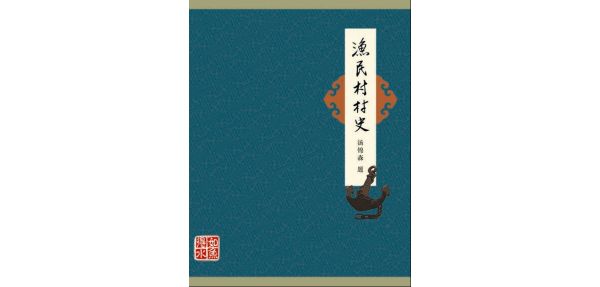
Just recently got my paws on “The History of Yumin Village (渔民村村史)”. Yumin Village, of course, was the village that Deng Xiaoping visited in 1984, during his first inspection trip to the SEZs. Xi Jinping followed up with a visit in 2012. So yes, this village has played an important symbolic role both in the ideological construction of post-Mao society and in representations of  pre-reform Shenzhen Bao’an County. What struck me as I flipped through the pages was how this transformation can be readily represented in the changing typology of “farmer housing (农民房)”. Continue reading

an interim project at handshake 302: 隐于城

Liu He is one of the more active curators at Handshake 302. While we are waiting for the students to prepare their “Shake Hands with the Future”exhibition, he is using the space as a refuge for people who want 8 hours alone, without their phone. The project, “Hidden in the City” is simple. At 9:30, Liu He meets the participant at Handshake 302, makes sure they have water and understand how the toilet works (and often doesn’t) and then takes their phone. At 10:00 a.m., the participant is “on the clock”, on retreat from the city for the next 8 hours, coming off at 6:00, when the cell phone will be returned, a dinner served along with a 302 salon/ discussion about what it all means. Below a translation of Liu He’s curatorial statement for “Hidden in the City”; the Chinese version follows. Continue reading

Chinese Tourists and Six Uncivil Behaviors – 文明

Uncivil tourists and a call to post “act civilized” announcements in Chinese outside of China. The post has me thinking about 文明 both as a technology of regulating relationships between strangers and as Ann Anagnost’s early work on “civilization” as a means of regulating the bodies of peasants so that they might be mobilized more easily for post-Mao politics (see the prescient National Past-Times: Narrative, Representation, and Power in Modern China, an anthology of essays published during the early and mid 1990s), begging the question: just who benefits from 文明?

xiaoru89's avatarChina IQ 中華智商

六种不文明行为将记录在案

These days, Chinese tourists have developed a bad reputation, not only abroad.  Chinese people are also tired of Chinese tourists.  “东方卫报” (dōngfāng wèibào – “The Eastern Guardian”), a Nanjing based daily newspaper, published the following article on their front page on Tuesday April 7, 2015:

出游悠着点

The heading translates to “Take it Easy on Your Outings: Six Kinds of Uncivil Behavior to Take Note Of.”  The six uncivil behaviors are listed below:

违规吸烟 (wéi guī xīyān) – smoking illegally

随地吐痰 (suídì tù tán) – spitting phlegm everywhere

争抢座位 (zhēngqiǎng zuòwèi) – to scramble for the seats

乱扔垃圾 (luànrēng lājī) – to litter garbage

大声喧哗 (dàshēng xuānhuá) – to be noisy and to make a racket

推挤插队 (tuī jǐ chāduì) – to push, shove and cut in line

Examples of the behavior:

A Chinese tourist was fined in Thailand for washing her feet in a public bathroom on Phi Phi Don island

Failed System

The incidents including Chinese tourists within China and abroad are too numerous to count, but one thing is…

View original post 393 more words

handshake 302 in the classroom

Our current project, “Shake Hands with the Future” started last week, when curator Liu He and I went to Shenzhen Middle School to talk with students about an after school project to investigate and creatively respond to the urban villages in their neighborhood. And, because Shenzhen Middle School is located right next to Dongmen, the school is also next to several of the most iconic urban villages. So very excited about what the students will bring us.

qingming ramblings

It’s grave sweeping day, and the streets were empty. So my friend and I headed out to the Fenghuang Mountain Fenyan Ancient Temple. Neither of us have been and we were curious. However, it turns out that we couldn’t get into the temple because there were too many people burning incense and all traffic was being redirected. In the middle of the only traffic jam we encountered all day (including on Guangdong 107), I jumped out of the car and took a picture of the old pagoda at the Wen Tianxiang memorial; handshakes, many, many, many migrant workers, and a touch of something ancient. My friend mentioned that during the Cultural Revolution, they were only allowed to sweep the graves of revolutionary martyrs; no sweeping family graves. Today, however, although workers had the day off, most could not go home and so they had gone to the temple or to walk the mountain paths. Then, because we couldn’t find a parking spot from which to visit either the completely restored ancient village or the temple, we headed back to guannei. On our way to Shekou, we passed the former site of the Nanyou Building; once upon a time was an important landmark but is now a building site. We reminisced about how narrow and small Nanshan and Shekou used to be, as we approached the recently erected sign for the Shekou and Qianhai Free Trade Zone at the border between Shekou and Nanshan. Reading the sign, I realized that Shekou-Qianhai is not precisely a free trade zone, but rather a pilot free trade zone, which sounds ominously unstable, with the possibility of expanding or retracting at any moment. Ramble. Ramble. Ramble.

This slideshow requires JavaScript.