sfsz: chimerica’s creative axis

Shenzhen is gearing up for the Maker Faire, and clearly there’s a bit more than hype in the mix. Seems all sorts of folks are interested in connecting to larger markets via “the Silicon Valley of hardware” — Shenzhen. Of note du jour: the Hax Accelerator Program:

How It Works: Selected teams relocate to our offices in Shenzhen, China for 111 days, where they’ll finalize prototypes and learn to scale their businesses with the help of our awesome full-time staff and extensive mentor network.

Each week, you’ll meet with advisors who will offer feedback on your team’s evolving strategy and prototypes, as well as provide valuable insight about how to scale a company in terms of manufacturing, supply chain management and distribution.

The final 2 weeks of the program will be spent refining your pitch, in preparation for our demo day showcase and launch event in San Francisco. Then it’s time to get some press, meet with investors, and (optionally) kick off a killer crowdfunding campaign!

houhai / xuefu rd

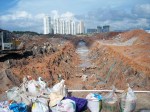
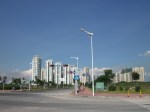
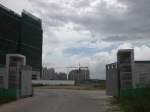
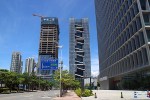
Today, I went to the Software Incubator Area and what to my wondering eyes did appear, but a landmark tried and true and watched for the past decade. It’s true and unexpected, but for years I have been documenting the land reclamation area east of Guimiao and north of Binhai (first impressions, here), and today on an errand to meet someone about the upcoming Maker Faire, I realized the road I was on–Xuefu Road–was in fact the road I had walked while documenting the emergence of New High Technology Park. Anyway, some before and after pictures:

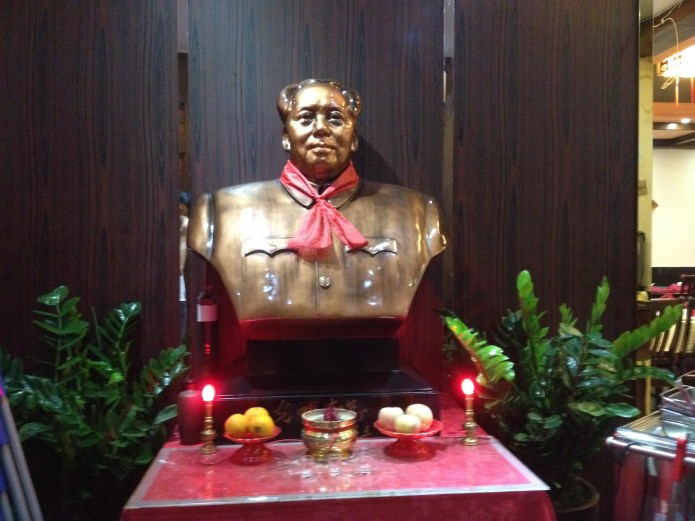
dining at mao’s homestyle restaurant

Mao’s style food is barbaric spicy Hunan food. At an eponymous restaurant (毛家菜), he and his red handkerchief occupy the entryway. There is a God of wealth in the corner. My interest in Mao’s godhead caused a bit of awkwardness with a friend, who is anti-superstition and often finds things anthropological condescending. She let me know in no uncertain terms, it would be inappropriate for me to use this image as a WeChat avatar. And then she softened the blow, “You like to use your art work. Keep doing that, everyone likes it.”

shen kong: the different faces of state capitalism

A recent article from the Epoch Times asserts that Shenzhen has surpassed Hong Kong in competitiveness because of the way Beijing has intervened in the economies of the two cities. Indeed, the establishment of the Qianhai Free Trade Zone speaks to the continued transfer of international economic functions from Hong Kong to Shenzhen through the deployment of “special” policies. This is, in fact, a solution to the one country-two systems policy that–for years–many foreign commentators ignored, when it was thought would Shenzhen become more like Hong Kong? Well, it has. And inquiring minds want to know: cui bono?

From the Epoch Times article: For the first time in a decade, Hong Kong no longer tops the list of competitive cities in China, and its due to the stifling hand of the Chinese regime, commentators note.

According to the Chinese Academy of Social Sciences’ recently released Blue Book on Urban Competitiveness—a survey of 294 China cities, Taiwan included—Hong Kong now ranks number two, falling behind its neighbor just across the border in mainland China, the metropolis Shenzhen.

The survey report claims Shenzhen topped Hong Kong, a bustling international financial hub and former British colony, because the mainland city better backed innovation—in 2014, Shenzhen government spent 4.05 percent of its gross domestic production supporting its innovation and technology sector compared to Hong Kong’s 0.73 percent.

The report also said Hong Kong’s standing was affected by last year’s student-led Occupy protests. From the end of September to mid December, hundreds of thousands of Hongkongers held three areas of the city to protest a restrictive Beijing diktat on political reform in Hong Kong (more).

handshake 302: WeChat connections

Handshake 302 has been we-chatting in Chinese for half a year now. We are now starting to offer updates in English as well. If you scan our barcode (above), you will receive updates in English and Chinese about one of Shenzhen’s most vibrant public arts projects. The updates also include information about upcoming events and instructions about how to join our events. Welcome to the conversation!

grass and flowers: dalang

Yesterday at the Dalang Youth Dream Center, we created a large mural/graffiti image on the public steps/bench. It is a two-picture work: from the front it simply says “youth”, but from the upper levels of the dormitory, it is possible to see the larger images of flowers and cartoon monsters playing in the grass. Walking the steps gives even more chances for discovery. We were amazingly lucky with the weather; just as we finished, the skies let loose a major thunder storm. Below, a slideshow that documents the process.

This slideshow requires JavaScript.

handshake with the future

opens on Sunday and students from Guangdong Xin’an Polytechnic are hard at work!

This slideshow requires JavaScript.

Hong Kong and Mainland China to Partly Open Markets for Investment Funds

How will you celebrate the 18th Anniversary of the Handover / Return of Hong Kong to Chinese Sovereignty? This July 1, 2015, China will launch the “mutual fund recognition framework” which will allow international assets managers to sell their Hong Kong registered fund products to Mainland investors. How’s that for a celebratory mouthful of globalization?

just what aren’t we seeing?

Currently circulating on WeChat news that apparently on May 20, 2015 China blocked Chinese Wikipedia, begging question du jour: just what triggered the block? (This is a serious question, if you know, please share). To date, 16 of the top 30 English language websites have been blocked.  Continue reading

making noodles, deskilling labor

When I was young, I heard Johnny Cash singing about John Henry–the American version of man versus machine. However, an informercial about the Shandong style noodle-bot (below) reminds us that we’re talking about the social organization and reproduction of skilled labor.  Continue reading