of smog, environmental and political

As the Universiade closed, Shenzhen’s clear skies and bright sun caused a friend to jokingly speculate that, “Even Heaven is cooperating with the Municipal Government [to put on a great universiade]”. Nevertheless, a mere 24 hours after the Universiade closing ceremony, the smog was back. And yes, it rained yesterday, so there were cloudy grey skies, but. The smog is back.

Alas, the smog is not only environmental. I remain unclear as to why Longgang’s “Crystal (水晶石)” stadium not only lost the opening ceremony to Nanshan’s “Silkworm Cocoon (春茧),” but also lost the closing ceremony to the Window of the World theme park. Now, I can understand moving the opening ceremony to the Cocoon because the stadium has been explicitly heralded as the perfect match to Beijing’s Nest, allowing Shenzhen leaders to deploy universiade internationalism to assert the Municipality’s position within domestic politics。 However, why move the closing ceremony from a state of the art, technically cutting age sports stadium to an aging theme park? This decision baffles me.

According to closing ceremony directory, Luo Wei, the venue for the closing ceremony was moved six times and the program was changed 45 times. He expressed dismay at the process until Guangdong Provincial Party Committee Secretary, Wang Yang (汪洋) reminded him that the Window of the World theme park boasts beautiful reproductions of famous global tourist spots and that the closing ceremony would be a huge party for all Shenzhen’s international friends to go wild.

And there’s the rub. Shenzhen’s boosterism not withstanding, both the Central Government and Guangdong Province have participated in staging the Universiade and in that shuffle, Longgang District, which remains the poorest and least developed of Shenzhen’s Districts, lost the opportunity to take center stage in an international event. Nevertheless, they’re footing the bill for constructing the Olympic Village. Such are the inequalities of “face projects (面子工程)”. Sigh.

特 – a manifesto against special privileges

More from 乌有之乡, this time an essay on “Why is creating SEZs a logical fraud? (为什么说搞“经济特区”是一个“逻辑骗局”?)” And yes, these thoughts have been expressed before, but they really do bear repeating. And then, it’s worth applying the analysis to other, non-Chinese spheres where legal exceptionalism remains the primary form of creating competitive advantage. As the anonymous author argues, governments have made it their business to help multinationals squeeze even more out of workers.

Why is Creating SEZs a Logical Fraud?

Key point: The original purpose and core intention of creating “Special Economic Zones (SEZs)” was to explore possible paths for reforming and opening China. However, the problem appeared with the character “special (特)”. If what is being created is a “special” zone, logically speaking it isn’t relevant to ordinary life. In other words, the paths that are suitable for a “special” zone are “special paths”, and not the ordinary path of reforming and opening China.

[translation note: 法律特权 literally translates as legal privilege, however, it functions analogously to the American English concept of legal exceptions — the rules don’t apply to me — and where appropriate that is how I have translated it. In most places, however, I’ve tried to stick to “privilege”.] Continue reading

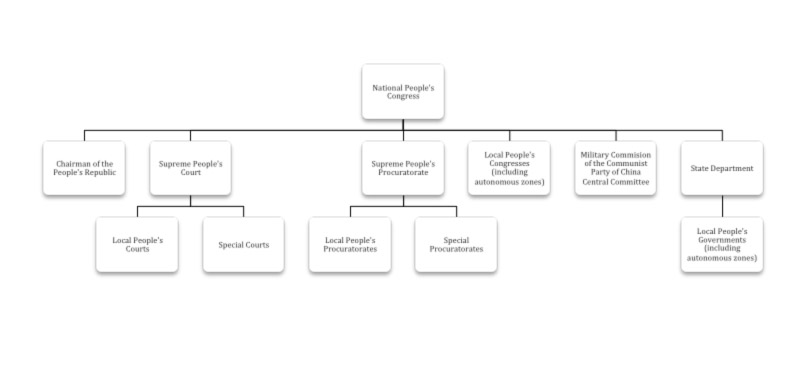
shenzhen administrative structure

I’ve been making charts to organize my thinking. Below is an organizational chart of Shenzhen, circa 2010.

Also, a simplified version of the organizational relationship between the Central government and local governments. Guangdong is the provincial local; Shenzhen is a sub-provincial city, however, as an SEZ, Shenzhen has all sorts of legal privileges that provinces and direct cities do not.

Shenzhen+China, Utopias+Dystopias Conference

Those in the Boston Area, please join us for the Shenzhen+China, Utopias+Dystopias Conference. Program details, here.

Time: Saturday, March 12, 2011, 09:30-16:30

Location: MIT Department of Architecture, Building 7: Audio Visual Theater (7-431)

Topic: In 1979 when the People’s Republic of China embarked on its current course of economic liberalization, the city of Shenzhen was created as a new model city for policy experimentation and global contact. Shenzhen’s very existence amounted to a tacit acknowledgement of the failures of socialism to provide for the communist society once promised, and a host of new institutions, laws, and opportunities were assembled alongside China’s first skyscrapers and amusement parks. Three decades later, while the promises of post-socialist plenty and international parity have been achieved in many respects, Shenzhen remains a model of China’s recent economic achievements but has also come to represent a dystopia of industrialization and urbanization. Unequal citizenship, quasi-legality, corruption, exploitation, and the rebirth of the propaganda apparatus closely accompany Shenzhen’s success and render its achievements widely questioned. The inequities brought upon by a fast-developing China is intensified outside the PRC, where growing Chinese economic strength is more often than not posed as a threat to everything from liberal democracy to environmental protection to human rights. This conference convenes scholars in humanities and social science whose newest research examines the utopian and dystopian dynamics of the Chinese reform period in Shenzhen and beyond. Employing historical and comparative perspectives in the areas of health, labor, law, art, and urbanism, we examine the historical and transnational trajectories of the enormous changes within contemporary Chinese society as represented first, in Shenzhen’s rise, and second, in the global imagination of China’s post-socialist future.

Early Forms of Shen Kong

These past few days, I have been thinking about new forms of Shen Kong integration. Shen Kong (深港) is an abbreviation of Shenzhen-Hong Kong, which is frequently used as an adjective, but may also refer to the two city area.In fact, these past few years, Shen Kong collaborations have included: a 24-7 border crossing, linking the subway systems of the two cities, loosening the travel restrictions on Shenzhen residents for visiting Hong Kong, the architecture biennial, and planning the Qianhai Cooperation Zone and the Lok Ma Chau Loop. In this post, I give a brief contextualization of Shen Kong history in order to explore how power balances have been shifting in the Pearl River Delta since 1980. Continue reading

The Lok Ma Chau Loop

In addition to the Qianhai Cooperation Zone, Shenzhen and Hong Kong have recently approved the Lok Ma Chau Loop, which will deepen integration of the two cities as well as displacing one of the few remaining nesting places for Black Face Spoonbills (黑面琵鹭) in the area. Also like Qianhai, the Loop was proposed a few years back, but only reached fruition as part of Shenzhen’s Thirtieth Year Anniversay. Three points. Continue reading

watching the SZ evening news in Tianjin

I have been watching the Tianjin evening news, but last night had the chance to watch the SZ evening news (via SZ satellite television) and the differences between program content were as interesting as the similarities. Impressions below. Continue reading

the world i want


the world i want

Originally uploaded by maryannodonnell

Hung out around Seaworld for the first time in several months and yes, encountered new world order. The path from the Ming Hua to Nvwa now winds under an elevated road, which in turn winds around the new coastline toward the Peninsula housing estates. All this change is being promoted under the slogan “the world I want”, not that moi was asked. The planned changes are extensive, involving park space, high end consumption, and more mega-rises. I suspect all will be quite beautiful, albeit increasing exclusive, for the Universiade.

In vaguely related news (or, how ongoing property speculation might impact my life should we ever get around to buying a condo), I realized that given what we pay in rent, it would take us one year to buy one square meter of our current apartment. Given the size of my apartment, it would take over 90 years for us to buy it at current prices. However, property use rights in Shenzhen are for 70 years from when a building first went on the market. All this means that we would be dead and/or loose property rights before we ever got around to paying off our mortgage.

And we are not alone.

Housing in older parts of Shekou remains relatively cheap (under 20,000 per square meter) because it is inconveniently distant from the city. However, I also rode the new subway line from Yuehai station to Coastal City, which means faster, more reliable access to Shekou and ongoing land speculation. Moreover, housing within the Yucai school cache is as expensive as housing near Shenzhen Experimental and Shenzhen School, and for the same reason: only four schools in the city consistently get students into top high schools and then top universities.

Yes, yes, yes, Shenzhen is going to have to deal with the visceral disconnect between housing costs and salaries. So, here and here for speculation about why prices will continue to rise in 2011 despite the real call to control the housing market. Here for an English walk down memory lane when five years ago Zou Tao organized an internet boycott of Shenzhen’s then (already) too expensive housing. To get a sense of prices for new and second hand homes, today, visit aifang. Note that the “cheaper” homes are located in Baoan, Longgang, Dongguan and even Huizhou! And yes, subway construction continues apace.

In the Name of Shenzhen Bay

The Shenzhen Bay Fringe Festival begins on Saturday, December 4 at 3 pm with a three-hour parade. The parade route spans from the Poly Theatre in the east to the Wenxin Park Plaza in the west (behind the Nanshan Book City). Should be fun. Also, please note that during workdays, most performances and screenings will take place from 7:30 on.

For Fat Birders, there will be two outdoor performances. The short playAnimals in Motion: Flashing Animals (动物在行动之”快闪动物”) shows on Sunday, December 5 at 4 p.m. on the Shenzhen Bay walk. The second is an ongoing performance piece (5-11 Dec) – Animals in Motion: One Cat, Six Days (动物在行动之”一猫六日”) that takes place throughout Coastal City.

In the meantime, in the spirit of the hopeful creativity, I’m posting a translation of Yang Qian’s thoughts on the Fringe; the Chinese original follows.

In the name of Shenzhen Bay
Yang Qian

During the Pliocene Epoch, over 5,300,000 years ago, black-faced spoonbills already took refuge in the mangrove forrest that grew in the deep and tranquil swamps of Shenzhen Bay. Over the past few decades, the ongoing reduction of the wetlands necessary to their survival, the increasing smog of their skies, the beautiful neighborhoods incesently clammering on their coast, towering glass skyscrapers and the shocking honks of traffic have made it nearly impossible for them to nest and breed here. Nevertheless, spoonbills continue – now as before – to take wing at sunrise and return to their nests at dusk. Like a group of society-forsaking hermits, their hidden but unhurried observation bears witness to and records each and every human action.

The nine days from December 4 to 12, 2010 may bring a sense of prosperity to the human residents of Shenzhen Bay because this is where the first Shenzhen Bay International Fringe Festival is being held. These days, it is more and more difficult to find situations which might be described as prosperous, nevertheless I feel that for this arts festival, we can boast a little.

The first Fringe Festival was held in Edinburg in 1947. It’s purpose was to celebrate and generate conversations about alternative theatre. Today, the Edinburg Fringe remains the world’s most famous and largest Fringe Festival. The word “fringe” refers to the decorative edge of a garment, consisting of hanging threads or cords. In the context of the arts it refers to art that is non-official, alternative, and non-commercial. Throughout the world, many countries and regions have their own Fringe, when residents get crazy happy and artists flaunt their brilliance and creativity.

During the first Shenzhen Bay International Fringe Festival, several tens of thousands of people will participate in the arts parade, independent films will be shown, cutting edge music and theatre will be performed, and performance artists and animal protection supporters will protest animal cruelty. The organizing principals of all this celebratory play are collective participation and individual creativity, equal dialogue and free expression.

In addition, I hope that people will be pleasently surprised to discover that the arts may change one’s habitual understanding of “ecological geography”. The first Shenzhen Bay International Fringe Festival takes place at Coastal City and the surrounding area. For the past three years, this luxury shopping mall has been the destination of upscale consumors. However, during the Fringe, the focus is not anxiously desired namebrand goods, even as the conversation is not about getting a good deal. In an era of ascending consumerism, securing a free space is a battle of life and death. In contrast, during the Fringe business defers to the people, and if even for a few days, this breathing space is the kind of prosperity worth lauding.

Finally, I cannot but comment that in practice the themes of this year’s Fringe – environmental conservation, low carbon life styles, and ecological safety – are but impotent and empty talk.

To understand the scale of Shenzhen’s environmental transformation, the most direct method is to visit the NASA website and download satelite photos of the Nantou Peninsula. From 1997 to 2002, in the short span of five years, the area of the peninsula doubled in size. What was the corresponding increase in population? How much arable land was eliminated? How many wild animals and plants were lost? Who knows the answers to these questions? More to the point, who can tell us what the short and long term cumulative effects of industrialization are and will be?

Presently, the phrases “environmental protection,” “low carbon lifestyle,” and “ecological safety” are on everyone’s lips. However, when we say one thing and do another, even putting the rights, safety, and protection of consumers above those of our world, then of course we become even more hypocritical and destructive.

A sense of prosperty flourishes when we face the world with dreams and hope and live with respect and freedom. It does not grow ignoring and fearing painful and lingering death – of ourselves or of the natural world. The most valuable aspect of the Shenzhen Bay Fringe is that it provides us with an opportunity to reflect on the true meaning of prosperity. Whether or not a fringe festival celebrated in the name of Shenzhen Bay will maintain its honor and sence of well-being is not simply dependent on Shenzhen’s GDP, but more importantly depends on the future condition of the Bay itself. If human beings act in the name of place and are to do so without shame, it must be done in such a way that also benefits black-faced spoonbills and painted snipes, spoiled and abandoned pets. May all that consitute the Shenzhen Bay prosper!

以深圳湾之名 杨阡

在深圳湾僻静幽深的泥沼里,530万年前的上新世也许就已经存在的黑脸琵鹭藏身红树林间。尽管最近的几十年里,它赖以生存的水面越来越小,尽管它鼓翼飞翔的天空越来越朦胧,尽管漂亮的邻居彩鹬一直抱怨岸边,高耸的镜子和震天的喇叭让它无法安心养育雏鸟。黑脸琵鹭还是一如既往地凌晨起飞,黄昏归巢。犹如离群索居的隐士,躲避着人群又从容不迫地观察着、记录着人类的一举一动。

2010年12月4日到12日这九天,对生活在深圳湾周围的人或许是幸福的日子,因为这里将举办首届“深圳湾国际艺穗节”。幸福这个词在今天越来越难得有用得上的地方了。但这个艺术节,我觉得多少值得这么自夸。

世界上首次“艺穗节”(Fringe Festival)是1947年在英国的爱丁堡举办的,主要是边缘戏剧表演和交流的艺术节。至今爱丁堡戏剧节仍是世界上最享有盛誉的也是规模最大的“艺穗节”。艺穗的“穗”(Fringe)原意是指我们穿的衣服,戴的围巾周围作为装饰的穗子。引申到艺术活动就有了非官方、非主流、非商业的含义。如今世界上已经有许多国家和地区拥有自己的艺穗节。这是个民众狂欢和艺术家自由展示才华与创造的节日。

在首届“深圳湾国际艺穗节”期间,将有几万人组成的艺术巡游,有独立电影的播放,有先锋音乐和戏剧的表演,有行为艺术家和动物保护主义者对环境破坏和动物虐待发出的抗议行动等等。公共参与和个体创造,平等对话和自由抒发是这个节日的游戏规则。

除此之外,我希望人们能惊喜地发现,艺术活动其实可以改变自己习惯的“生存地理学”概念。首届“深圳湾国际艺穗节”的主场地是深圳海岸城及其周边地区。这座奢华的shopping mall建成三年来一直用高档消费主导着大众周末和平日的消遣。但是由于艺术节,那些让人望而生畏的品牌将不再是焦点,压抑的标价也不再是谈话的核心。在消费主义盛行的时代,夺回自由空间是一场生死攸关的战斗。欢呼生意向民意低头,哪怕只有短短的几天时间,这也是值得夸耀的幸福。

最后我不得不说说这届艺术节的主题——“环保”、“低碳生活”和“生态安全”——在具体的现实面前是多么无力与苍白。

如果想了解深圳的环境发生了多大改变,最直观的办法就是上美国国家航天局(NASA)的网站,下载南头半岛的卫星照片。事实上从1997年2002年仅短短的五年里,南头半岛的面积几乎膨胀了一倍。那么同样的时间人口膨胀了多少?汽车增加了多少?耕地和湿地减少了多少?野生动植物损失了多少?谁能告诉我们?更进一步,这些改变加在一起产生的近期和远期后果,谁又能告诉我们?

现在“环保”、“低碳生活”和“生态安全”正在流于口号和做作。因为这些动听的字眼在不作为的时候,甚至比提保护消费者权益还要安全、保险,当然就更加犬儒和恶俗。

幸福感产生于我们朝向梦想与希望而生的尊严和自由中,而不在逃避与屈从恐惧的苟延残喘里。艺穗节最大的价值在于提供了这个对幸福反省的机会。以深圳湾得名的艺穗节是否会延续自己的荣誉和福祉,不光仰赖深圳市GDP指数,也仰赖于深圳湾这片水域有怎样的未来。如果我们人类用一个大地的名字荣耀自己而无愧疚的话,那么让黑脸琵鹭、彩鹬还有那些关在宠物店或流浪在路上的猫狗也能分享吧!

spherical tabby

poet steven schoeder inspires me because he creates conversations across continents, cultures, and genres. moreover, his work successfully models an alternative form of globalization – attentively collaborative and wide as space.

visit his latest project with poet and artist kit kelen, this is the speech of my hands. for more prd cultural collaborations, visit the virtual publishing site, spherical tabby and read one of my favorite collaborations, in a human hand, a dialogue between steve and macau poet and painter, debby sou vai keng.