The biennale is up. Venue A, the old float glass factory has been cleaned up, but the space retains its high modern industrial charm. First impressions of the Machine Shop, below:
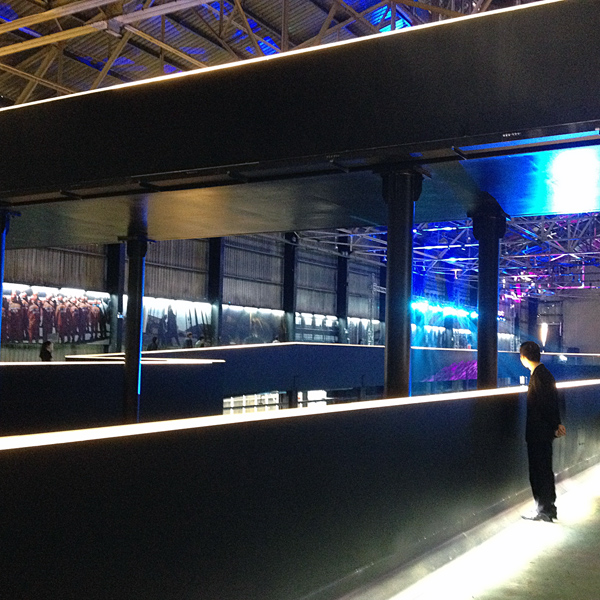
The biennale is up. Venue A, the old float glass factory has been cleaned up, but the space retains its high modern industrial charm. First impressions of the Machine Shop, below:

 A price list from the Shekou Industrial Zone Life Services Bureau, early 1980s.
Of note? Uniform prices throughout the industrial zone, although some prices were “approximate (左右)”. The reason? typhoons determined availability of food and goods. Also, prices are modified with the characters for renminbi (人民币) because at the time, Hong Kong dollars and Foreign Exchange Certificate (or waihui 外汇), a surrogate currency used by foreigners also circulated. Long ago and far away, one industrial zone, three currencies.
Not only the typeset makes this list seem like it came from another place and time. The prices seem so cheap its hard to remember that these prices were expensive relative to neidi, where monthly salaries still ranged between 20 to 50 rmb.
During the early 1980s, coming to the SEZ and/or Shekou Industrial Zone was considered hard, but nevertheless resulted in opportunities to earn more elsewhere. In fact, by the 1990s, Shenzhen and Shekou boasted a substantial wage (both white and blue-collar ) differential with the rest of the country. And today Shenzhen along with Beijing and Shanghai continues to have the highest lowest minimum wage in the country (see China Labour bulletin report).
Shenzhen’s economic success remains one of the key symbols of the success of post Mao reforms. It is no surprise, therefore that both Guangdong and Shenzhen have been central to Xi Jinping’s ongoing efforts to middle class-ify China. But. The extent to which rural China — both in the form of migrant workers and urban villages — has enabled Shenzhen’s success remains left out of these rags-to-riches scenarios.
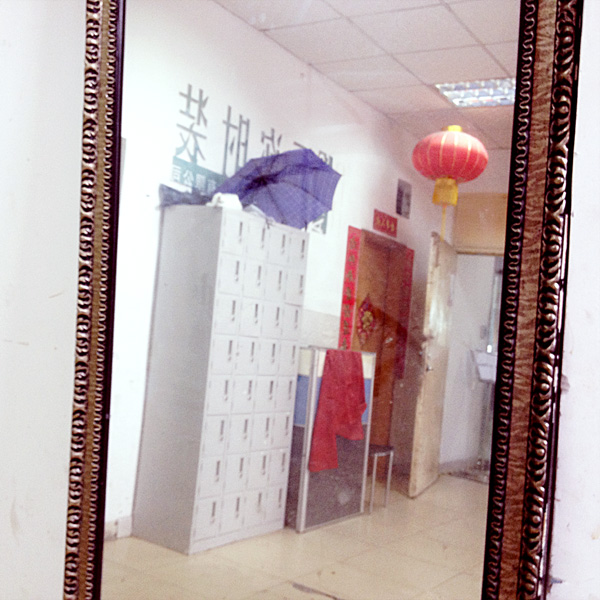
Although the City’s relentless upgrades have transformed the lay of much Shekou land, nevertheless it is still possible to find corners shaped by early 80s dreams, technology, and capital. Yesterday, I walked to the 6-story roof of one of the buildings in an old Shekou Industrial Park along New Shekou Road.

Wonderful walking tour of Shekou with Huang Weiwen, Director of the Shenzhen Center for Design. Of particular note (in no particular order):
Nanhai Road was the primary artery and all industrial parks and housing were built along that road. This road has pride of place on the original China Merchants plan for Shekou. However, on the same map, the village areas were blank. Moreover, road and infrastructure construction served to isolate, rather than integrate the villages into Shekou society. Nevertheless, public facilities such as hospitals, post offices and schools were built in the border zones between the village and China Merchant settlements.
The craze for creating material traces of a history for Shenzhen continues. Next to the Shekou wet market — which has been externally renovated with LED screens — a strip of village holdings / former factories is being converted into “Fishing Street”, where there will be restaurants and other places of consumption. The design for Fishing Street juxtaposes three different Chinese traditions: Guizhou style houses, bas relief murals of Dan or Tan people fishing history, and palm trees. The Guizhou houses were first seen in the Meillen hotel and apartments, but the style has clearly trickled down. The Dan, of course, were the people who lived on fishing boats, only coming online with land reform during the early Mao era. Before they were used as ornamental topiary, the palm trees were used locally as cash crops to make fans. This new development further deepens other murals and village museums in the area.
The most distressing change? The almost complete privatization of the coastline. The new marina includes a private road to that last stretch of leasure coastline. Indeed, residents may now access the coastline either through the Shenzhen Bay Park or window views from a highrise.
ALso, as we walked from the village areas toward China Merchants developments, I couldn’t help but notice the abandoned telephone booths — they litter the older sections of the city. Moreover, it is only when actually noticing these empty stalls that I realize there are no public phones throughout the newer sections of the city. Instead, we all carry phones (of varying degrees of intelligence.)
Impressions, below.
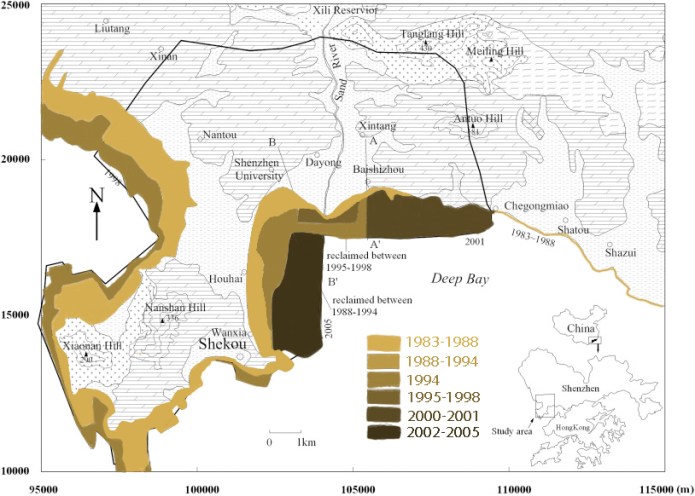
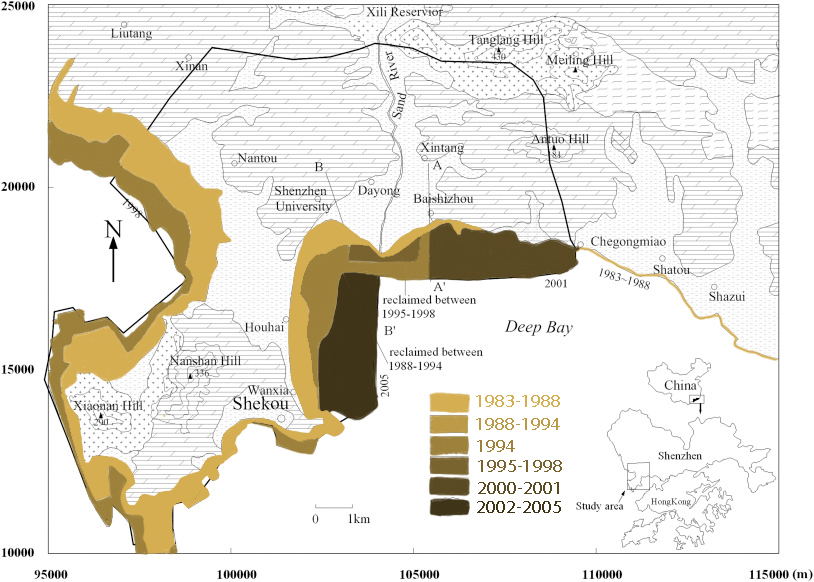
Ryoyu Kido sent me the link to Modeling the influences of land reclamation on groundwater systems: A case study in Shekou peninsula, Shenzhen, China, which includes a map of land reclamation around the Nantou Peninsula, 1983-2005:
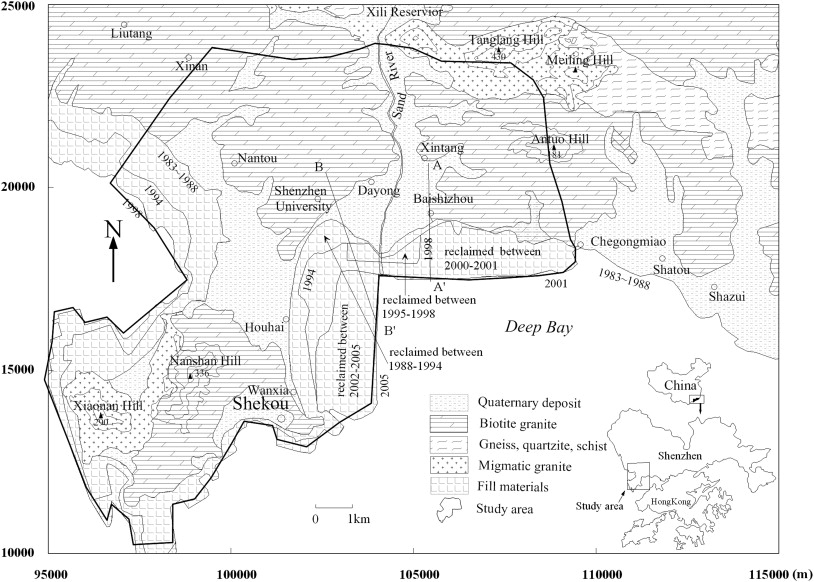
I colored in the boundaries to give a sense of the progression of land reclamation in in the Qianhai and Houhai areas of the Peninsula:
The tags land reclamation and Shekou bring much of this change into cultural perspective.

This afternoon, the old coast that was Dongjiaotou Port abruptly became visible. Until as recently as 10 years ago, Dongjiaotou had been a small port for shipping building materials — sand and bricks and tiles — from other Delta cities to western Shenzhen. However, land reclamation has overtaken the area behind the small mountain. Along the new coastal sidewalk, fishermen and their wives held a remnant market and then, suddenly, the road turns onto Nanshan District’s upscale neighborhoods. Impressions of a shifting landscape, below.

Anyone who has crossed from Shekou to Tun Mun via the Shenzhen Bay Western Corridor Bridge has seen the clear line that demarcates the Shenzhen-Hong Kong borridor. South of the border are floating oyster beds. North of the border, it has been illegal to raise oysters since 2006. However, at the remnants of what was once Shenzhen Harbor, those oysters are sold by the men and women who raise them — all of whom live in Shenzhen. Today’s impressions from a walk that stretches from the upscale neighborhoods of the Peninsula Estates and the Shenzhen Bay Park to the impromptu docks, where oysters were being unloaded and sold, along with a yellow fish.

The Yaopi float glass factory hovers at memory’s edge, abandoned to ideology and chance encounters.
In 1987, the Shekou factory represented the highest level of float glass technology production in China. Today, it evokes nostalgia for the heroic romance of early industrial manufacturing. And that’s the rub. Even before it was built, the technology and mode of production used at the factory had been downgraded in terms of added value. In terms of global competitive advantage, Yaopi had been outdated even before it was built. Perhaps more telling of the ideological structure that ranks advanced and backward nations with respect to production capacity, the Yaopi factory elicits comparison with the Terracotta soldiers in Xi’an. This unhappy comparison relegates Shenzhen’s modernization efforts to the ancient past, even as it confers uncanny modernity on the First Qin Emperor’s army, which of course was mass produced on low-tech, but large-scale assembly lines.

This morning while touring an abandoned factory in Shekou, I encountered massive orange tubes. By themselves somewhat uninteresting, yet arranged beneath a banyan tree suddenly transformed into art. And that seems the way of it. As a new friend commented recently, “In a city, despite the buildings, ultimately the trees speak to the human soul.”
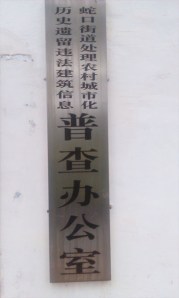 Seriously. There is a Shekou office called the Shekou Subdistrict Census Office for Information on the Handling of Illegal Buildings Leftover from the History of Rural Urbanization. But the signage is well balanced. And think of the cocktail party conversations this business card could spark!
 Shenzhen Noted