shenzhen administrative structure

I’ve been making charts to organize my thinking. Below is an organizational chart of Shenzhen, circa 2010.

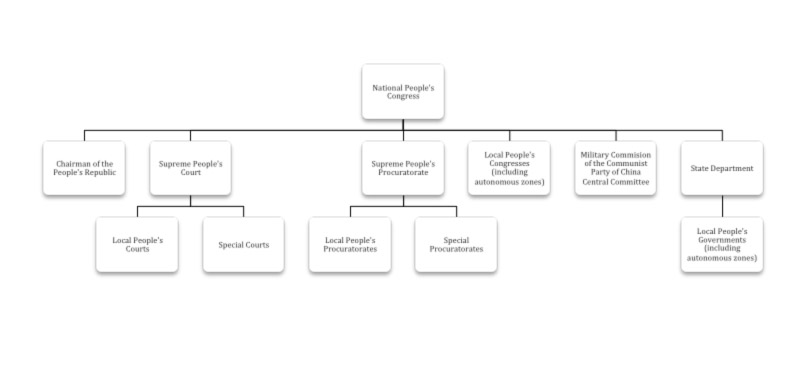
Also, a simplified version of the organizational relationship between the Central government and local governments. Guangdong is the provincial local; Shenzhen is a sub-provincial city, however, as an SEZ, Shenzhen has all sorts of legal privileges that provinces and direct cities do not.

fun links

busy weekend that brought me to three folks doing interesting work in shenzhen. descriptions and links below.

Liang Xiaoling (梁小铃) has collected artifacts stored and hidden away in Hakka homes. These items are now on display at the Dawan Hakka Compound in Pingshan. Built in 1791, the Dawan compound, like others throughout Shenzhen´s Hakka areas is square, rather than round as in Meixian and into Fujian.

Huang Yu (黄宇) has opened 荒野, a fun bookstore located just outside the Shenzhen U gate into Guimiao. The space is part of the renovation of Guimiao´s factories into shops and cultural spaces.

Yao Xu (姚旭) a Shenzhen based filmmaker, who (in addition to his work with Courier Media makes documentaries about Shenzhen´s forgotten – beggars and street people. His most recent film is ¨Master Xia´s Funeral (夏爷的葬礼),¨ a biography of Guo Zhicheng, who ended up living under one of Shenzhen´s bridges after living through the Japanese War, the Chinese Civil War, jail time for political dissent and then again after a cultural revolution struggle session, and opening a restaurant that failed.

New Districts defined!

brief post on shenzhen´s ongoing redistricting because i know what´s ¨new¨ about shenzhen´s two new districts (新区), guangming and pingshan.

shenzhen´s two new districts are not ¨districts¨ in the strict sense of the word, instead they have all the economic power of shenzhen´s other 6 districts, but none of the political power. unlike yantian, luohu, futian, nanshan, longgang and bao´an districts, guangming and pingshan do not have the four administrative organs that define china´s government — the chinese people’s political consultative committee (政协), a district court (区级法院), a district congress (人大), and a procuratorate (检察院). nevertheless, the new districts do have the power to develop and implement economic plans.

if this sounds familiar it´s because this is how shenzhen began — an administrative unit betwixt and between beijing (politics) and guangzhou (economics). in order for guangming and pingshan to become politically viable districts, shenzhen municipality will have to petition the central government to change the government structure. however, that petition may be beside the point if the point is to develop these areas as quickly as possible, especially as many ¨political¨ decisions get framed as ¨economic policy¨ issues. moreover, in keeping with the plans can´t keep up with change ideology that permeates shenzhen decision-making, it may simply be easier to grant economic independence to an area and worry about political independence when and if the time comes.

redistricting – guangming and pingshan xinqu

i try to keep apace of the changes, but alas, shenzhen redistricts and i find out about it after the fact. guangming new district was carved out of baoan and pingshan was carved out of longgang. thus shenzhen now has 8 districts: within the gate (guannei or the old second line, erxian) nanshan, futian, luohu, and yantian; outside the gate (guanwai) baoan, guangming, longgang and pingshan. see map.

this redistricting seems to be a return of the repressed because during the mao years guangming and pingshan were communes. of course, all shenzhen’s districts were once upon a time communes and so the city’s administrative history might be thought of as tweaking and reshuffling extant divisions upon revisions of a traditional world order. more to the point is that this redistricting speaks

  1. to shenzhen’s loosely planned uneven development (some places in shenzhen really are noticeably poorer than others, which is interpreted as intended-by-the-governmenet-to-be poorer than others, thus requiring explicit recognition through the establishment of a new administrative district. first case – yantian) and
  2. to the city’s growth (it really is too big for simple administrative bureaucracy).

a simple point of nomenclature: i don’t understand why guangming and pingshan are “new districts (xinqu)”, rather than districts (qu). it may have something to do with actual rights and responsibilities of the new district government as being distinct from other district governments (in terms of taxation and what not), but i don’t know. or, thinking from the analagy of new villages (xincun versus cun), i hypothesize that new districts are a variation of a past government, with status change and thus the right to transform whole chunks of the political-economy. thus for example, guangming was a zhen within baoan, just as pingshan was a longgang zhen, which were subseequently elevated to neighborhood (jiedao) as part of the 2004 rural urbanization movement. but again and alas, i’m not for sure.

cutting to the chase, i ask: does anyone know the reason for why xinqu rather than a plain and simple qu? please tell.

Ruins


tryst
Originally uploaded by mary ann odonnell.

Another online publication. This time, photos primarily from a Hakka compound in Pingshan, Longgang District Shenzhen. “Ruins” are up in the January edition of Tryst. To visit the most recent edition, please go to http://www.tryst3.com and enjoy.