The Foreign Policy series “China’s Left Behind Children,” by freelance journalists Deborah Jian Lee and Sushma Subramanian followed the migrant worker Huang Dongyan, who left her daughter back home to work in Shenzhen. Her relationship with her daughter remains fraught and teeming with unsatisfied yearnings. In response, Huang, decided to raise her son in Shenzhen instead of leaving him in the countryside with his grandmother. The two articles are well worth reading, here and here. Of note is the continued relevance of hukou in the lives of migrant workers, especially with respect to receiving an education.
Tag Archives: hukou

轮侯制: economizing moralities
In the United States, we make an economic distinction between “needs” and “wants”. We teach children (here, here, and here, for example) to recognize and manage the difference between their needs and wants. Subsequently, we re-code these management skills in terms of individual ethics — good people recognize their needs and wants, and then make rational choices to live within their means. In contrast, bad people make irrational choices based on uncontrolled desires that lead to debt and bankruptcy.

The flip response — “one girl’s need is an aging man’s want” — to this statement merely confirms the underlying double bind of this economizing morality. In this financial literacy exercise, for example, only the social facts of suburban car culture, supermarkets, and fast food restaurants conspire to make white bread, bottled water, and a tent vacation “needs” in contrast to the “wants” of a bicycle and a pizza. What if our built environment depended on bikes for transportation? What if we were homeless and the best we could cobble together was a tent made of discarded plastic and corrugated steel? In these situations, the economizing morality is to recalibrate our personal needs and wants rather than to challenge the inequality that poses this choice as reflecting real world conditions.
All this to say: the economizing morality of individual needs and wants is the elementary school version of neoliberal ethics.
I’m thinking about individual needs and wants and neoliberal immorality for two interrelated reasons. At the level of urban planning, given the prime location of urban villages and the lack of developable plats in Shenzhen, the villages were targeted for redevelopment (or renovation — 更新 as a verb). In turn, the need for neighborhoods for the working poor has been recoded as the need for individuals with Shenzhen hukou to find affordable housing. A shift of hand, and the debate ceases to be about communities and becomes one of individual economies. Moreover, convenience, access to schools and social infrastructure, as well as economic opportunities are concomitantly transvalued as wants to be satisfied through economizing.
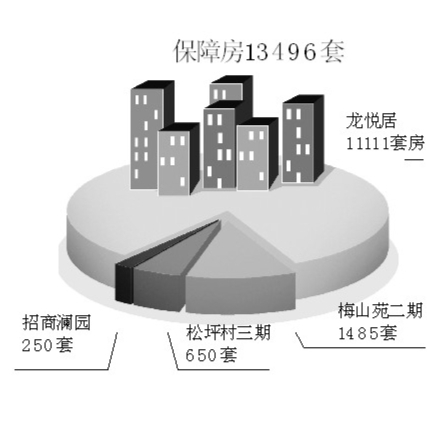 On January 31, 2013 for example, the Municipality made available 13,496 units of public housing. Of that total, all are located in the outer districts (guanwai) and the majority (11,111) are located in Longgang, roughly 35 kms from the city center. To allocate these units, Shenzhen will be testing what is known as the 轮侯制 or “revolving wait system”. Basically, this system entails meeting conditions, including hukou status, time in Shenzhen, and maximum income to apply for a residence. When any of these conditions change, the family has to move out of the unit, thus opening it for another. The family also has to find another place to live.
In Shenzhen, those opposed to urban renovation projects have been reminding the Municipality out that urban villages like Baishizhou already provide low-cost housing and small scale economic opportunities for working poor families. Moreover, the given the Municipality’s demographics 13,496 housing units are sufficient to absorb displaced populations only when those with hukou may apply. Point du jour: locating public housing far from urban centers only makes moral sense (cents!) in a world in which individual economizing ideologically justifies disrupting neighborhoods for the working poor in order to pave the way for developers. And yes, this is just more evidence that China and the United States really are the same country.
dec 2012: more hukou rumors
According to a knowledgeable friend, Shenzhen’s latest census results indicate that the city’s population has breached 17 million. However, the number of residents with hukou remains between 2 and 3 million. In other words, although the population continues to grow and despite liberalizing hukou regulations, nevertheless, the hukou population has remained relatively static.
What’s going on?
Another at the table said that although the regulations had been liberalized, nevertheless, applications had bottle-necked at different ministries and offices. The common denominator seems to be that its not enough to have fulfilled the requirements, but one must somehow exceed those requirements, offering something that will enhance Shenzhen’s statistical profile.
This rumor echoed similar rumors that I have heard about education. Although Shenzhen schools are required to admit waidi (outside) students in their cachment area, nevertheless, schools often refuse to admit these students unless they are incredibly talented and likely to produce results. Importantly, people emphasize that its not possible simply to buy one’s way into a school because teachers’ salaries and school rankings are at stake — no one wants to waste their time on students who will drag down class and school averages.
The general point seems to be that simply having money isn’t enough to buy one’s way into Shenzhen; one must also add cultural value to get in with the in crowd.

top ten concepts of shenzhen
On November 28, I participated in a symposium to celebrate the English language edition of Top Ten Concepts of Shenzhen (深圳十大观念 for Chinese i-pad version).
The production, organization and publication of the Top Ten have been very Shenzhen, so to speak. The Publishing House of Shenzhen Press Group (深圳报业集团出版社) created an online website, where people could vote for the slogans and campaigns that they though best represent the city’s history. These slogans and campaigns were then re-presented (re-issued?) as concepts that epitomize Shenzhen’s values and way of thinking. Thus, in his preface, Guangdong Provincial Committee Standing Member and Shenzhen Party Secretary, Wang Rong, “[T]he top 10 concepts are the concrete manifestation of the era’s zeitgeist and a vivid imprint of the reform and opening-up program.”
The ideological slippage from political slogans and campaigns to civic values and zeitgeist interests me because it points to Shenzhen’s simultaneously fraught and co-dependent relationship with Beijing. On the one hand, experimentation in Shekou and early Shenzhen legitimated ongoing policy debates in the Chinese capital. On the other hand, the Shenzhen model, specifically and the Guangdong model more generally continue to be at slight odds with the rest of the country. Specifically, Shenzhen continues to advocate a managerial approach to governance, promoting not simply business, but also entrepreneurship and a vibrant grassroots economy.
Two of the slogans did, in fact, challenge prevailing political currents and concomitant power structure. Yuan Geng provided the two most obvious examples — “Time is money, efficiency is life” (1981) and “Empty talk endangers the nation, practical work brings prosperity” (1992). The first was a clear challenge to the Maoist planned economy. The second not only expressed Shekou’s ongoing support of Reform policies, but also the industrial zone’s continued advocacy of talented young people with alternative ideas. The Top Ten discussion of “Empty talk” introduces the history of the Shekou Storm. At the time, Yuan Geng emphasized that while Beijing officials blathered on about ideology, Shekou youth were building the future. The decision to erect the “Empty talk” billboard in the aftermath of the June 4th Incident was especially telling because Shekou actively hired transferred hukou of intellectuals who had been sidelined for their support of students.
Nevertheless, thirty years later, those same slogans uncannily echo neo-liberal values throughout the world. “Time is money” quickly looses its oppositional potential when we remember that in Shenzhen, workers’ wages have not kept up with the price of housing; many white-collar workers are also unable to purchase homes. Likewise, “Empty talk” no longer seems an effort to protect those with alternative ideas as it does the instruction to “suck it up”. It is therefore unsurprising that concepts 3-10 express the municipality’s ongoing efforts to promote neo-liberal neo-confucianism. More to the point, these concepts clearly resonate with Wang Yang’s call to deepen and extend neo-liberalism not only in Guangdong, but also throughout the rest of China.
I’m thinking that it is thus best to read the Top Ten as a list of double-edged swords. As political campaigns and slogans, the concepts reflect contemporaneous power games. “Shenzhen embraces the world”, for example, was a blatant attempt to justify outrageous spending on the 2011 Universiade, while “You’re a Shenzhener once you come” is the self-serving motto of the Shenzhen Volunteer Association; what exactly does it mean that everyone is a Shenzhener when less than 1/5 of the population has a Shenzhen hukou? However, when understood as exemplars of civic values and a city’s zeitgeist, the concepts illuminate cracks within the power structure and spaces for alternative practices, both in business and everyday life. Indeed, it would be wonderful if these slogans/values might in turn reshape Shenzhen’s neo-liberal juggernaut, creating spaces for legitimate political opposition and open debate on whither the next thirty years of reform.
The top ten concepts are: Time is money, efficiency is life; Empty talk endangers the nation, practical work brings prosperity; Dare to become the world’s first; Reform and innovation are the root and soul of Shenzhen; Let Shenzhen be respected for its enthusiasm for reading; Innovation encouraged and failure tolerated; Fulfilling the cultural rights of citizens; The fragrance of the rose lingers on the hand that gives; Shenzhen embraces the world; and You’re a Shenzhener once you come here.
China Daily and Shenzhen Daily coverage of the symposium online.
population and hukou update, 2012
The decision to further loosen hukou requirements is once again front page news in Shenzhen (南方都市报). Interestingly, however, the municipal hukou system is only one reform target. Yesterday, the Municipality released its 2012 Reform Targets, which like hukou reform seem to be about rationalizing public administration, and include centralizing the City’s pension, philanthropy, credit, and prison systems. Nevertheless, hukou reform captured the headlines. Why?
Simple answer: Despite the fact that the children of both early migrants and Baoan locals, as well as the children of long-term residents now claim Shenzhen identity, nevertheless, the majority of the population does not have a legal claim to the Municipality, let alone an emotional sense of belonging. Indeed, the City’s statistics noticeably do not mention uncounted members of the floating population.
According to recent statistics, Shenzhen’s official population is now 15.1 million, of whom only 2.3 million have Shenzhen hukou. The Municipality’s other 12.8 million are in various states of limbo, which range from those who have overstayed a temporary residence permit through workers who have enough points to apply for a hukou to graduate students at Shenzhen’s University Town, who will be given hukou along with their diploma.
Nevertheless, even if we don’t know how many inhabitants actually identify themselves as Shenzheners, we do know that the Municipality is vigorously promoting the slogan, “If you come, you’re a Shenzhener”. To give a sense of how the Municipality strains to graft a sense of place onto deterritorialized bodies, I offer a loose translation of a recent bit of musical propaganda, the song, “If you come, you’re a Shenzhener (来了就是深圳人)” sung by Xu Qianya.
If You Come You’re a Shenzhener
(chorus) Wherever you’re from, you’ll hear your hometown language; It’s hard to distinguish between elsewhere and hometown; Wherever you’re from, this city opens its doors to you; If you come, you’re a Shenzhener; The earth has dreams to be harvested; The heart expands; Shennan Road is like a production line; Producing Spring after Spring; Clouds search for green mountains, mountains search for clouds; People seek opportunities, opportunities seek people; Heroes populate this world; You and I have the same heart; repeat chorus
Rap: There’s an immigrant town; Inhabited by youth and their dreams; Our latitute is 22 degrees north; Here a handshake means something; Here smiles last a little longer; Every day is young; The heart expands; Shennan Road is like a production line; Producing Spring after Spring; Clouds search for green mountains, mountains search for clouds; People seek opportunities, opportunities seek people; Heroes populate this world; You and I have the same heart; repeat chorus ad nauseum.
Lyrics:
不论你从哪里来 都能听到乡音,异乡和故乡很难分,不论你从哪里来 这座城敞开门,来了就是深圳人,土壤有梦多收获,胸襟开放多风云,深南路像一条流水线,流过青春又青春,云找青山山找云,人找机缘缘找人,天地间苍茫千万里,你我相知一颗心,不论你从哪里来 都能听到乡音,异乡和故乡很难分, 不论你从哪里来 这座城敞开门,来了就是深圳人
RAP:有一座移民之城,住满着青春和梦,这里刮着北纬22度季候风,这里的握手比较有力,这里的微笑比较持久,这里的每天都年轻,土壤有梦多收获,胸襟开放多风云,深南路像一条流水线,流过青春又青春,云找青山山找云,人找机缘缘找人,天地间苍茫千万里,你我相知一颗心,不论你从哪里来 都能听到乡音,异乡和故乡很难分,不论你从哪里来 这座城敞开门,来了就是深圳人 (Repeat)
1995-2005: Keywords in Shenzhen real estate
Much of Shenzhen’s informal history is, unsurprisingly perhaps, being written on blogs and weibo. However, websites dedicated to real estate, ranging from analysis to agency offerings are not usually considered to be history writing. Nevertheless, these websites provide insite into the negotiation of value as people transform labor and desire into homes and family life. To give a sense of the historical content of these websites as well as how they produce knowledge about the city, I’ve translated a sampling from a real estate purchasing and rental keywords post by 王猴猴.
Just an editorial note: when reading these keywords it is important to hear what has not been said. Policy criticisms and social problems remain implicit in Wang Houhou’s explanations and evaluations. I have thus added a few exegetical notes, which do not exhaust possible interpretations, but rather point to other readings. I encourage readers to add their own interpretations and thereby enrich the keywords.
盘点1995~2005深圳地产十年关键词 Inventory of Shenzhen Real Estate Keywords, 1995-2005 (Wang Houhou)
1995 购房入户 (Buy a house, get Shenzhen hukou) In order to stimulate citizens to purchase homes and also to further economic development in a slow house market, Chinese local governments promulgated real estate development policies and measures. The prime example of these policies came in 1995, when the Shenzhen government approved a measure that allowed anyone who bought a house outside the second line [in Baoan or Longgang District] was eligible for three Shenzhen hukous. [In 1995 Baoan and Longgang were still under rural administration and the Second Line was still enforced. Consequently, this law stimulated building at Second Line checkpoints, notably Buji and Meilin, where people could buy a Shenzhen hukou and still get to work easily.] Continue reading
cleaning up Shenzhen: were there more than 80,000 dangerous people in the city?
The published facts demand interpretation:
According to reports, as of April 6 in the “One Hundred Days Movement”, municipal police have gone out 284,000 times; they have made over 330,000 inspections of rental housing, 32,000 inspections of internet bars, 60,000 inspections of tourist agencies, 20,000 inspections of clubs, and 40,000 inspections of other spaces. As a result, over 2,300 landlords have been penalized [for infractions] and over 1,180 illegal internet bars, travel agencies, and other spaces have been closed, effectively cleansing areas that have had difficulty insuring public safety.
据悉,截至4月6日,在“百日行动”中,我市警方共出动警力28.4万人次;检查出租屋33万余间(次)、网吧3.2万余家(次)、旅业6万余家(次)、休闲娱乐场所约2万家(次)、其他场所4万余家(次);处罚出租屋主2300余人,停业整顿、取缔黑网吧、旅业及其他场所1180余家,有效净化了社会治安难点地区。 Continue reading
shenzhen hukou update
On August 3, following the Guangdong Provincial Government’s decision to initiate a point system to determine hukou eligibility, Shenzhen announced that an addition 4,600 household residences would be available for rural migrant workers. Shenzhen has been loosening its requirements for educated and skilled workers from other cities, but allowing rural workers to transfer hukou directly to Shenzhen (rather than first to another city and then to Shenzhen) is new.
I’m interested to see how these 4,600 migrant workers are chosen and a complete list of the point system. Older criteria included gender, age, level of education, hometown, and local sponsorship. The first major change was, of course, allowing individuals to apply themselves, rather than through a work unit. Also, I’ll be interested to see how marital status plays out in the allocation of these hukou. After all, if these hukou are given to married individuals then the actual number of new Shenzhen residents could be over 14,000 people.
And yet. All this counting of people seems oddly ineffective. In Shenzhen, the population continues to burgeon beyond all attempts at urban planning. I don’t think that giving hukou to (even) 14,000 people will change the reality that Shenzhen does not have enough hospitals, schools, and affordable housing because hukou figures woefully under represent the city’s population. Indeed, to the extent that social welfare benefits are based on hukou statistics, Shenzhen’s hukou system will continue to be a negotiation of radical inequality, rather than a way of distributing social justice.
That said, hukou debates painfully remind me of immigration debates in the United States, where the point too often seems to be cutting up extant pies, rather than attempting new recipes. We all too often forget that simply because we don’t share the same citizenship status it doesn’t mean we live on different planets and therefore don’t need to be accountable to each other. Folks with or without Shenzhen hukou, like those with or without US green cards / citizenship, all breath the same air, drink the same water, and eat the fruits of one earth. The effects of decisions to pollute a stream or educate a child cross all sorts of boundaries. Sustainable justice begins when we acknowledge that our governments need to negotiate forms of connection (across all sorts of difference) rather than merely manage forms of exclusionary privilege.
[For those with a historical bent, it’s worth noting changing boundaries between inside and outside what counts as “Shenzhen”. In September 1995, one of Shenzhen’s reforms was establishing conditions for temporary residence in the “Special Zone”. The “Special Zone” had only three districts (Luohu, Futian, and Nanshan) and did not include New Baoan County, which was still technically rural. At the time, the boundary between the Special Zone and the rest of China was a second border (二线) that was an internal border. The importance of the second border dissolved in 2003ish around the same time (2004) that the last of Baoan and Longgang Districts had been administratively urbanized and integrated into the Shenzhen Municipal Government.]
population updates (of a sort)
third day back in shenzhen and i chanced upon one of my favorite conversations: speculation about shenzhen’s actual population and how these figures are generated.
based on conversations with real estate developers and housing agents, as well as published reports and blog postings, i’ve been guestimating shenzhen’s population at around 14 million. recent articles also place shenzhen’s population at 14 million, with 2 million residents with hukou and 12 million without.
according to yesterday’s cabbie, he heard a china mobile advertisement that claimed they had an audience of 16 million. to his way of thinking, this meant that shenzhen had a population of at least 16 million. he then mused that it was likely that shenzhen had “more” than 16 million. he figured: (a) anyone without hukou registration wouldn’t come to the door to respond to the census; (b) only people working at tax-paing work units can be properly counted; (c) many people have more than one child, and the extra (超生) children may be registered in other cities; (d) censors can’t actually make it to every single residence in shenzhen, so they have to depend on what people say, which means there’s error built into the system even before they begin counting; and thus (e) for the sake of a more reliable estimate, they should pad their figures by “several (几)” million.
two points: first, we don’t know how many people live in shenzhen and the rate at which people are coming to live in the city. should urban planners be aiming for 30 million by 2020 (based on the idea that the population has been doubling every decade)? second, where can we go for reliable information? is estimated audience size more or less reliable than published accounts?
reliable population data matters because it is thet basis for decisions about how many roads to build, how much water and electricity to supply, where to build schools and hospitals. in other words, a working definition of urban quality of life is at stake in this data. perhaps more importantly, there seems to be little consensus on how one might usefully guestimate all the people living outside tax-paying channels. this is an acute problem in shenzhen (and much of guangdong, more generally), where a significant majority of the population is self-employed. consequently, even as it is difficult to make informed decisions about the scale of public services in shenzhen, urban planning is made even more difficult by the fact that there has been little accounting of / for those outside the system, which leads to questions about public policy and welfare.
all this to say, urban planning questions are questions about who has rights to the city and the level of responsibility a city government has to provide a minimum quality of life for all residents; questions, that is, of what it means to be a citizen. so yes, the production of reliable population data is a question of citizenship and urban justice because equitable planning is the political expression of our commitment to each other.
go figure.
p.s. for a sense of how shenzhen’s population is represented on the english language web, i popped over to wikipedia. shenzhen was not listed in the article on chinese population and demographics. this information was based on the 2005 census, which estimated shanghai’s population at a mere 10 million! in the list of most populous cities worldwide (2009 data), shanghai had burgeoned to almost 14 million, while beijing came in at slightly over 10 million. shenzhen was again conspicuously absent from the list. nevertheless, in the article about shenzhen (once again in wikipedia), according to shenzhen’s official population (including people without hukou, but apparently not including the homeless and squatters, who have occupied shenzhen’s edges, including the areas under bridges) is listed at 14 million.
计划赶超变化–a new era in Shenzhen development
赶 is often translated as “to overtake”, but can also mean “to drive away”. It first appeared in Chinese political discourse in 1957 when Mao Zedong responded to Nikita Khrushchev’s statement that “the Soviet Union would overtake the United States in 15 years” by saying that “In 15 years the PRC would overtake England”. In 1958, Liu Shaoqi supported the Great Leap Forward with the idea of “Surpassing England and overtaking the United States (超英赶美)”. Indeed, in Shenzhen’s previous incarnation as Baoan County, there once were two communes named Surpass England and an Overtake America, respectively.
In many of the online interpretations of 赶英超美 (here and here, for example) Reform and Opening (改革开放) is offered as the correct policy for achieving surpassing and overtaking. This scenario is one way of understanding both the importance of Shenzhen (first and largest experiement in reforming and opening the planned economy) and why it is often experienced as “not Chinese”. Indeed, residents have often asked me how similar the United States and Shenzhen are.
赶 reappears in Shenzhen popular discourse in the late 80s and early 90s in the expression “plans can’t keep up with change (计划赶不上变化)”, which comments sarcastically on the governments inability to implement its urban plans. In Shenzhen, for example, the overall plans have been done in 15 year bursts. This has meant that what is planned isn’t built for years. More often than not, village developers and others have taken advantage of this situation to errect their own buildings. Thus, in the 90s, I frequently heard the expression “计划赶不上变化” to explain this situation.
During the 80s and 90s, de facto independence from government plans in Shenzhen resulted in a kind of pioneering exuberence that was often called “the Shenzhen spirit (深圳精神)”, but also found expression in slogans such as “little government, big society (小政府,大社会)” that moved with Shenzhen mayor Liang Xiang to Hainan in 1986 and which continues to inspire debates about changing the relationship between the government and the people (here, here, and here).
However, in conjunction with urban village renovation [administratively located in “Urban village (old village) renovation offices (城中村(旧村)改造办公室)],the government has recently begun razing buildings that were erected on these unused sites, justifying their actions (with or without compensation depending on various) with respect to the plan. This means that Shenzhen may have entered a period of that could be called “plans overtake change (计划赶超变化)”, whereby neighborhoods of several years are being razed to make way for roads and other public infrastructure (the subway) that have been planned for years.
I am interested in how “plans overtake change” because it describes several of the important contradictions that over time have taken root and flourished in Shenzhen.
 Shenzhen Noted