dragon boat festival preparations

This past week I have been in Shuiwei learning to wrap zongzi (粽子) for the upcoming Dragon Boat Festival. What is apparent is not simply the re-invention of tradition, but also the unpaid work that women do to create that solidarity. The zongzi making takes place over 10 days—two prep days and then 8 days of wrapping and boiling. The hours are long: 6:30 a.m. to midnight or later. Of note: Continue reading

ideal subject positions (by the numbers)

The current stock market frenzy has people dreaming about more than free lunches. The following adverts are from Money Daddy (钱爸爸), an online trading / investment platform based in Shenzhen. Of note? In addition to the pyramid scheme promises of rapid wealth, the site address plays with both “rich daddy, poor daddy” ideology and Cantonese numerology, where the number 8 is a homophone for the character for father and can also represents the character for “get rich”.

Translations of Money Daddy advertisements show “ideal” middle class Shenzheners enjoying their high returns. The underlying anxiety point is actually quite simple: if you’re earning an honest living in any of these jobs (including an ordinary bureaucrat), you’re not earning enough for carefree spending. And carefree spending is, of course, the site where the self is being constructed as “macho”, “successful”, “loving”, “sexy”, and “independent”, respectively. Continue reading

my white wall compulsions: paint it black (I)

On Friday, October 3 at Handshake 302, we held the first salon for My White Wall Compulsions (墙迫症), “Paint It Black”.

The artist team for the first wall comprises Liu He (刘赫) and Wu Dan (吴丹), both under 25 and both curious about art and its possible articulations with and through society. Liu He is a second generation Shenzhener, whose parents came to build the SEZ before he was born. Wu Dan came to Shenzhen last year, a first generation migrant just out of college. During their first salon, Liu He talked about his anti-inspiration for “Paint It Black”.

This past summer, Liu He took time off from work to travel to some of the less travelled neidi cities. In one of the cities, he decided to take a job at a karaoke bar in order to see what it would be like to do day work (打工). He got a job as a procurer of Karaoke Bar princesses (and at the bar where he worked, hostesses who worked private rooms were so-called). The job included a three-day training session, in which the trainer was as enthusiastic and self-determined as a multi-level marketer. And in fact it turns out that procuring worked a lot like multi-level marketing–the more young, pretty women the procurers brought in, the more money they made.

Liu He left after a few days without recruiting any young women because “he couldn’t get past the moral issue”. Of the 30+ young men who had joined him for training, 12 decided to stay and work the job. Of that twelve, three were 16 years old. According to Liu He, the trainer insisted that once he stopped worrying about ethics, he could talk to pretty women and get rich. In fact, that seems to have been the point of the training: to overcome the young men’s repugnance to pimping and replace it with self-justifying desire for money and everything it buys.

The story ignited debate about what it means to leave one’s hometown and make one’s way in the world. There were two main positions, both pulsing with anger, sadness, and faintly, despair. The younger participants wanted a more honorable way of making a living, to live in such a way that they wouldn’t have to make the kind of choice that Liu He walked away from. The older participants, especially those who had worked their way out of a rural area, expressed that young people didn’t understand what was necessary in order to secure a better life for one’s children.

These two positions took a different relationship to the young pimps. The young people saw themselves and their choices in the decision to procure princesses. The older people saw the choices they had made so that their children would be protected from making those choices. No one saw themselves as a princess, a blind spot that not only hints at how gendered inequality shapes job opportunities in China, but also how difficult it is to truly see the most oppressed. After all, the young men’s decision to pimp or not to pimp still implied some kind of agency. It would have been more difficult to focus on the conditions that make young, rural women the cheapest and most convenient labor in manufacturing and service throughout the economy, even as women are markedly absent from positions of social influence and power.

Friday, October 10 at 19:00 the conversation continues when Liu He and Wu Dan present their finished wall.

This slideshow requires JavaScript.

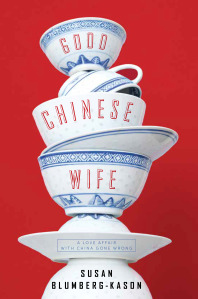
Book Review: Good Chinese Wife

A fellow Shenzhen expat has reviewed Susan Blumberg-Kason’s memoir, Good Chinese Wife. I am also a 中国媳妇 and find myself distressed by the suffering and self doubt that characterized her relationship with her ex-husband. In fact, Blumberg-Kason’s anxieties and willingness to give her husband the benefit of the cultural doubt resonated uncomfortably. I believe that one of the biggest challenges for women abroad is to find the confidence to trust our experience and say, “No more of this shit.” Another Shenzhen expat, Rose writes about her experiences navigating the gendered cultural divide is , who blogs at China Elevator Stories.

Ray's avatarRay-Comics

 Cover

szdaily.sznews.com/html/2014-09/16/content_3005971.htm

“GOOD Chinese Wife” is a new memoir published by Sourcebooks, and is a poignant tale expats should enjoy about the overlap of China and the West. Susan Blumberg-Kason details her unfortunate marriage to a Chinese music scholar, as they meet while studying in Hong Kong and then travel to his hometown in Hubei Province before eventually settling in San Francisco, California.

The central question posed by their troubled relationship is whether their differences were due to culture or personality. Interracial marriages may have some problems, but are certain individual defects masked by the excuse of culture?

As their relationship begins, Blumberg-Kason appreciates her future husband’s background. She studies Mandarin as a postgraduate in Hong Kong in the early 1990s, and stays there through the time of the handover in 1997, and for a reader familiar with South China it can be very interesting to compare that time with…

View original post 559 more words

distracted

image

Came across this advertisement: in the future your body will be in a meeting your mind will be in the front row of a fashion show

How to think about this figuring (and I use the word deliberately) of body/mind split?

I have, of course, attended meetings where the point is to show one’s face rather than to actually participate in organized discussion aimed at coordinating action toward some shared goal. In fact, most meetings veer into the irrelevant for all too many participants. I have also watched participants answer their phones during a meeting. That said, however, this is the first time I have seen an advertisement that advocates overcoming the inevitability of meetings through better virtual connections someplace else. After all, I assume that the mind at the catwalk is fantastically dressed, rather than actually clothed in haute couture.

Today, I’m distressed by the idea that distraction is presented as an acceptable way of supplementing/ making bearable the gendered division of labor. Let me count the ways:

1) distraction okay because female admins not part of the meeting;

2) distraction inevitable because there are no alternatives to shaping meeting attendance and participation offered;

3) distraction defined through watching rather than participating in design or wearing a dress elsewhere;

4) distraction facilitated by technologies that allow one to go virtual shopping, which in turn keeps one in debt and less able to refuse alienating work.

Question du jour: how beneficial are technologies that intensify human tendencies to distraction? This advertisement seems uncannily like using a television to babysit. But worse. Sigh.

what is a nuclear family?

This past week, I joined a wedding tour to Bali, which brought the immediate families of the bride and groom, as well as several friends together on a four-day tour. The wedding was held at the Bulgari Villas, where the bride and groom stayed while the rest of us stayed at a nearby golf club. Apparently, given the high cost of wedding photos, many newly weds choose to combine their honeymoon with a proffessional shoot. What I didn’t realize was that a shoot could also include a wedding ceremony and invited guests.

Of random note: (1) we were not the only such tour, and a multiple sites encountered well-dressed and manicured brides with their respective posses; (2) there were other Chinese tours taking the same route as we did. In fact, the majority of tourists at all the sites we visited we Chinese, and many of the Balinese staff had learned some Mandarin; (3) friends I have told about the trip commented that it was expensive, but agreed that it was difficult not to spend an exorbitant amount on a wedding; (4) traveling together gave the two families an opportunity to get to know each other and take delight in the couple’s happiness; and (5) the distance between the two generations was clear.

The 30-something couple clearly enjoyed Bali, its exotic locales, and the frisson of non-Chinessness. In contrast, the parents seemed somewhat bewildered by this format. They understood a honeymoon and photos, but not quite how the intentional reworking of tradition had become so popular. I’m speculating that these more private weddings represent and deepen the ongoing nuclearization of Chinese families that is so prominent in Shenzhen.

In the US we understand the nuclear family to comprise two generations–parents and children. In China generally, and Shenzhen particularly, the nuclear family comprises three generations–grandparents, parents, and children. In other words, the the rationalization of the family unit points to the historic organization of paid and unpaid labor in the US and China, respectively. In the ideolized US, fathers worked and mothers kept house. This trend was explicit in the forced redomestication of women in the post WWII era, when a man’s income was expected to provide for his dependents. In contrast, in idealized China grandparents provide childcare and housekeeping services while both parents work. This is necessary because individuals (except in the case of the uber-rich) can’t afford to purchase a house, needing combined incomes to meet mortgage payments. In a chicken egg moment of cultural difference, US American families emphasize the bond between husbands and wives, while Chinese families emphasize the bond between parents and children.

Though du jour, Americans highlight sexuality as an important foundation of family life because sleeping together secures the primary bond of the US nuclear family. Similarly, Chinese celebrate eating as an important foundation of family life because dining together reinforces the primary bond of the Chinese nuclear family. This difference can be read as “cultural” and some, like my friend and her husband are deploying “western culture” (i.e honeymoon and romance) to re-imagine the ties that bind the “traditional” Chinese family.

PS: This past month I have been busy over at Village Hack, the latest project at Handshake 302. The last Hacker was Yin Xiaolong, an artist who does most of his work online, through social media documentation of social concerns. While at 302, he engaged in copy painting, photography, and a leave-taking performance piece that included shaking hands with neighbor/strangers. Meanwhile, the concession grows that our three young neighbors are the most interesting and interested of our interlocutors.

the winners of the mistress awards have been announced!

The results of the “National Awards for Mistresses (全国包二奶大奖赛)” spoof the time and money and presumably effort that some of China’s leaders have expended on accumulating mistresses. The results indicate that many have crossed that fine line between peforming masculine virility and paradoy, which in turn slides into corruption charges because no one actually believes these old men are achieving sexual satisfaction, let alone satisfying their young mistresses — the numbers are just too high. Indeed, the results seem more like baseball cards than gossip; we’re trading statistical representations of performance, rather than vicariously participating in the realization of desire (or actually enjoying a sunny afternoon game). I’m also wondering about how many of these leaders were simply pimping their way to business deals and higher political ranking because these statistics are invariably linked to corruption charges and convictions. Consequently, when available I’ve also linked the offenders’ names to English language reports about these cases.

Results of the National Mistress Awards

1. Quantity Award: Jiangsu Province Department of Construction, Xu Qiyao Director, Xu Qiyao (徐其耀) who has had 146 mistresses;

2. Quality Award: Chongqing Municipal Party Committee Department of Propaganda Director, Zhang Zonghai (张宗海)for having kept 17 beautiful co-eds in five star hotels;

3. Scholar’s Award: Hainan Province Textile Bureau Chief Li Qingshan (李庆善) for his collection of 95 sexual diaries and 236 illustrated guides;

4. Youth Award: Leshan Mayor Li Yushu (李玉书 Sichuan Province) for keeping 20 mistresses between the ages of 16 and twenty;

5. Management Award: Xuancheng Municipality Party Secretary Yang Feng (Anhui Province) for using his MBA to effectively manage 77 lovers;

6. Expense Award: Shajing Credit Union Manager Deng Baoju (邓宝驹 Bao’an District, Shenzhen), also known as the “5 mistress youth” for spending 18.4 million yuan over 800 days on mistresses, this averages to 23,000 perday or almost 1,000 per hour;

7. Solidarity Award: Zhouning County Head Lin Feilong (林龙飞 Fujian Province) for organizing a dinner for 22 mistresses and awarding a 300,000 prize for best mistress;

8. Harmony Award: Lingao Municipal Administration Chief Deng Shanhong (邓善红 Hainan Province) for having 6 children by 6 mistresses and a wife who says she doesn’t believe the gossip;

9. Effort Award: Hunnan Province Telecommunications Bureau Chief Zeng Guohua (曾国华) for guaranteeing that before he turns 60, he will have sex three times a week with each of his 5 mistresses.

what is the party’s benevolence?

In news broadcasts and interviews, old peasents frequently evoke “the Party’s benevolence (党恩)” to explain their lives. Young and hip urbanites hear these interviews as more evidence that old peasents are the dupes of corrupt officials. However, when I take the time to listen to an old peasent’s life history, it’s clear that more often than not, these peasents did benefit from the establishment of the People’s Republic.

Yesterday afternoon at the Dalang Culture Center, for example, I helped conducted interviews with Uncle Chen and Aunt Zhang for an oral history project. Both Uncle Chen and Aunt Zhang were both born into peasant families in 1930 and 1940, respectively. Auntie’s family owned three single-story houses, while Uncle had left home early because his family did not have room for him. Auntie mentioned that at the turn of the last century, her grandparents went to Singapore to work. Her mother was “brought home” as a child bride for her father. In contrast, Uncle did not mention his family except when asked about how poor his family had been, he remarked that two of his sisters had been sold to strangers, but where they ended up was unclear.

As a poor man, Uncle could not afford to marry. Instead, he went to find work in Hong Kong. In 1951, Uncle became sick and returned to his hometown, where he could recieve care. In 1952, although he had a sporadic education, Uncle was able to secure the documents necessary to join the first test for admission to the Bao’an Normal School. He passed the test and was admitted to an elementary school teachers program, which was located in the Nantou High School building. Teacher Chen emphasized the extent to which his current wellbeing was a result of the Party’s benevolence. He was assigned to teach at Langkou Elementary School, where he met Auntie.

As a young girl, Auntie stayed at home and helped her parents. However, when she was 10 years old, Auntie began attending Langkou elementary school because her father asked the school principal to allow her to bring her brother. 10 year-old Auntie strapped her brother to her back and attended classes. At lunch time she fed her brother a bottle of condensed milk that had been thinned with water. Several years later, she carried her sister to school. Altogether, Auntie carried her siblings for six years. At the end of elementary school, Auntie tested into middle school, where she studied elementary education. Auntie emphasized that her teachers like her because she was a good student. Moreover, her younger siblings were well-behaved and didn’t cry during classtime.

After Auntie graduated from middle school, she married Uncle, who was still teaching at the village school. Auntie’s mother exhorted her to marrie Uncle because he “could do anything”. Uncle could not give Auntie any presents for the marriage. However, he did have housing at the elementary school, where Auntie was also hired to teach first and third grade. The school was located near Auntie’s parents’ house. Auntie did not attribute any of her life history to the Party’s benevolence, but rather emphasized her family background and her mother’s words.

Implicit in Uncle and Auntie’s simple story were the gendered contours of rural poverty in South China, where one of the most important events of a lifetime was to continue family lines through marriage and children. Uncle and Aunt were born into South Chinese villages, where bringing in wives or selling out daughters was a common practice before 1949. However, they married 10 years after the establishment of the People’s Republic, when some policies had already restructured traditional social structures. Auntie married because her family could afford to give her an education, but not to keep her at home. In contrast, Uncle had delayed marriage until he could afford a family, which was a direct result of attending teaching school. He described that opportunity — and all that followed, a job, a house, and eventually a wife and children — as an expression of the Party’s benevolence.

carry the purse, gentlemen!

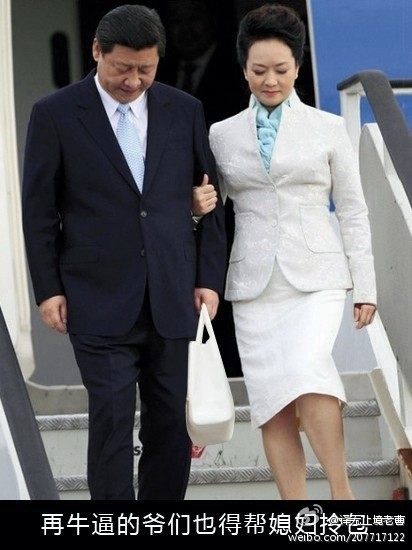
5198cc4ejw1e326t05m2gjMeme du jour: Even the most impressive have to carry their wife’s purse (在牛逼的爷们也得帮媳妇拎包).

Yes, it’s true. Xi Jinping carryies wife, Peng Liyuan (彭丽媛)’s purse and the Chinese internet is gleefully sharing the news. I know that many westerners-in-China have been disconcerted by the fact during a Chinese courtship, men carry their girlfriend’s purse. After marriage,  many men — especially those “caring alpha” types — carry their wife’s purse. And now Xi Jinping and Peng Liyuan have brought this bit of intimacy to the international scene.

My friends have been thrilled by Peng Liyuan’s performance as China’s First Lady. Now, they’re ecstatic that she’s reminding their menfolk about what it means to be a gentleman.

as if it never happened…

So, after a long silence, I return to The Great Transformation (沧海桑田:深圳村庄30年) and the ongoing composition of an official history for Shenzhen’s villages.

This official history begins with poetry. Located on Shenzhen Bay coastline, Shazui Village was established over 900 years ago. Villagers were surnamed Ou and their ancestors immigrated from Pingyang, Shaanxi via Shaoguan in northern Guangdong. At first, Shazui specialized in harvesting sea salt. However, over time the water became sweeter and it was no longer possible to making a living harvesting sea salt. According to Shazui oral history, village ancestors then started fishing and expanded village holdings inland, planting lychee orchards and rice paddies. The village’s history was recorded in poetry and couplets that villagers transmitted orally. For example, a seven-line poem that traced the history of the migration guaranteed hospitality between communities that shared the Ou surname.

金陵被乱始南辕    Chaos during the Jinling era forced the southern migration

唯有祯昌百代传    Only luck has been inherited by a hundred generations

一举汀州二细滘    The first stop was Dingzhou, the second Xijiao

三子石壁四陈村    The third stop was Shibi, the forth Chen Village

自从棉圃而交广    Leaving northern cotton fields, they entered Guangdong

世起堂梁厉宗元    The ancestor re-established the family

支派不拘分欠别    And new branches were established

明溪桥内祖根源    The ancestral well is by the Ming Creek bridge

In 1943, over 40 of Shazui’s less than 400 villagers died during a drought. This history was recorded in the following verse, “Thousands remember, ten thousands remember that in the 33rd year of the Nationalist era, a dollar bought 10 grams of rice (千记万记,记得民国三十三,一元买米三钱二).”

Subsequently, the official history of the transformation from socialist to capitalist collective begins with creative appropriation of the household responsibility system. In 1978, Shazui took advantage of easing policies to introduce a hybrid form of collective production, selling surplus vegetables and fish both in Shenzhen and in Hong Kong. One person from each family could join a voluntary association of 10 people. Each group gave 100,000 rmb to the collective, and then divided the profits amongst association members. Leaders were not permitted to join an association, however, any laborer could join an association. Within five years, many Shazui villagers had become rich and by 1983, Shazui villagers had put up new homes on their 30 m2 Mao-era plats. The villagers then decided to plan Shazui New Village, putting up handshakes as well as collective property, including factories.

Building the factories further transformed village organization, as the village secretly formed a limited stock-holding company. In 1984, Shazui leaders asked each villager to invest 10,000 into the factory zone. At first, villagers refused and leaders hoped to borrow 5 million from a bank. However, at the time, banking restrictions were strict and villages did not have an opportunity to secure finance capital. Instead, village leaders went back to the village with the following proposal: each villager would invest 10,000. Over the next three years, the village could use this capital to grow its industry. Beginning in the 4th year, the village organization and village investors would split profits 40-60. In the eleventh year of operation, the percentage would reverse, with the collective receiving 60% of the profits and villagers sharing 40%. At the end of this second decade, all profits from the collective enterprise would go to the village.

As of 1985, the new village occupied an area of 6.3 km2 and had earned commendations from Shenzhen Party Secretary and Mayor, Liang Xiang. Many villagers secured plats (宅基地) of 300 m2, three times larger than the area that would be formally recognized by the Shenzhen Government in later years. Moreover, the village also had to put in roads that would be wide enough to connect the village factories to cross-border shipping points at Wenjingdu. Indeed, although Shazui was only five kilometers from the Luohu border, until the new roads were laid, it took one hour to travel from Shazui to the Luohu. And this is where the official story ends until it jumps twenty years to a village cleanup and environmental upgrade.

What happened during the twenty years that the official story skips? In the years between 1985 well into the new millennium, Shazui went from being an enterprising village to Shenzhen’s most infamous second wife village. Village investment in planning and construction meant that relative to the surrounding area, Shazui New Village was a cheap, convenient, and comfortable place to live. Investors and visitors took up residence in Shazui and villagers opened restaurants, discos and bars. By the early 1990s, the collective was itself promoting the shift to a sex-based economy building hotels, restaurants, rental properties, and spas. This history cumulated with the infamous public shaming of Shazui prostitutes in 2008.

And there’s the rub: if we are to talk about the transformation of Shenzhen’s villages from poor rural settlements into neighborhoods for the working poor, we aren’t actually talking about what the villagers alone were up to. We’re actually writing the history of global capitalism and its rebranding by ambitious governments. Suddenly, Shenzhen’s villages become the quintessential rags to riches story. Or to quote Mark Ravenhill’s observation in Shopping and Fucking: Making money is barbarous, but having money is civilization.