upgrading the shenzhen environment

shenzhen’s recent decision to neonize the city prompts today’s entry.

from 2006 through 2008, the city plans mto upgrade the investment environment, which includes upgrading the living environment: cleaning up rivers, planting more trees, building recreational bike trails (in overseas chinese town), giving old buildings a fresh paint job, and generally making shenzhen look better. the city’s decision to redefine the investment environment in terms of quality of life points to a shift in values that relative wealth has brought. it may also reflect shenzhen residents’ concern for their children, who will not be moving back to their parents’ hometowns. over the past few years, there people in government and society who want to do more than just make money in shenzhen seem to have been increasingly influential. they want to make shenzhen into a nice place to live and many of their projects reflect this goal, rather than bottom line economic thinking for which the city has been famous. as part of larger historical trends, the new ascendance of socially conscious may indicate a larger shift from viewing shenzhen as a place of transit to making shenzhen into a “hometown”.

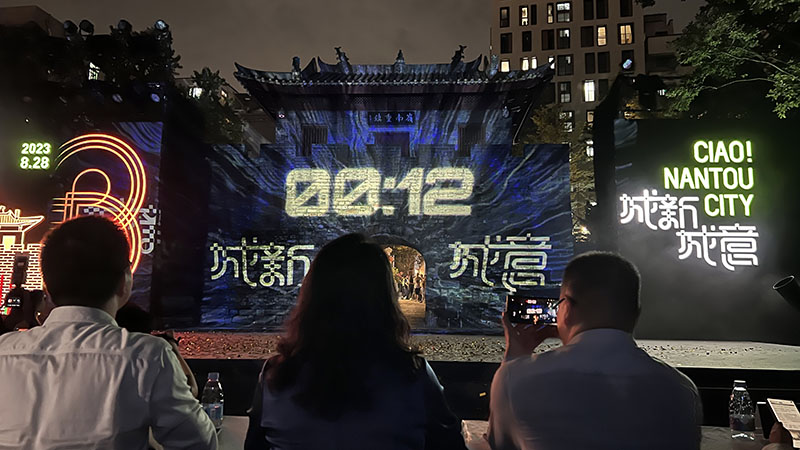
nevertheless, being shenzhen, there is always an over-the-top moment. one of the more iconic decisions of upgrading the environments has been to encase old (read: too expensive to raze) buildings in neon tubes, so that at night, five story neon walls project computer generated images. some of these neon walls extend 12 stories into the nighttime sky. during the day, the buildings just look caged. unfortunately, my camera isn’t high-tech enough to take pictures of the new designs. however, the government assures us that all the lighting is environmentally friendly, again, in keeping with shenzhen’s drive to upgrade the investment environment.

baoan district: new and improving


rubble, baoan district

yang qian teaches acting to dance students at the baoan district art center; saturday i went with him. while he taught, i tracked new and improving baoan, which lives very differently from “shenzhen”, or the area that is still technically the sez, even though the second line no longer functions. basically, the district is razing the remnants of factory areas and old villages, to be replaced by upscale housing developments. pictures of the rubble, here.

tianmian under wraps


factories under wraps, alley detail

as part of the push for an economy based on “culture”, the city has chosen tianmian’s factory area to be a center for industrial design. so factory buildings from the mid 80s are now being upgraded to office space. some “before” pictures. when the new look is revealed, i’ll post “after” pictures.

海田路: rough edges


development

haitian road (海田路) is one of the short, but not narrow roads that run north-south (perpendicular to shennan road) within the expanding city center. with the completion of the new city hall, library, concert hall, as well as much of the environmental landscape around the city center, nearby construction has begun to smooth out the rough edges, those remnants of previous development. of course, many of the tall office buildings on nearby shennan road have been completed as have nearby residential areas. few rough edges remain.

sometimes i feel like i’m doing salvage anthropology of disappearing factory districts in shenzhen. sometimes, it seems like i’m simply trying to keep up with the change. sometimes, i just want to remember where i’ve been, when those places just keep vanishing. what happens to memory when nothing remains as it was? not that it was what i thought, but those buildings nevertheless anchored my thinking, placed limits on what might otherwise drift away. and then where would i be? while walking from the city center toward tianmian, i happened to walk down a bit of haitian road and took 4 pictures of razed buildings, which now form the protective wall around a new construction site. i have an idea of what used to be here, but can’t say for certain.

后海新村: more houhai, again


houhai tianhou

saturday morning, houhai new village, where the houhai tianhou once gazed out on houhai harbor and now sits back from houhai road, among shade trees and handshake buildings, her view blocked by cars and housing developments. those pictures, here.

also, at some point when i wasn’t paying attention, nanyou and chuangye roads became nanshan road. on my 2004 map, the road has the old names, which mark the border between nanyou and shekou neighborhoods. my 2006 map has the new names. i’m looking for a 2005 map to see when the change happened. interesting because it points to the continuing subordination of shekou to nanshan district. once, long ago, shekou was directly under the central government, and was only brought under district control in the early 1990s. but then again, the district system only came into play in the mid-1990s, but that’s not the story i’m telling here. nevertheless, i did wander past the old nanyou building and take a picture of it. again, interesting for its mid-1980s state of the art, both architecturally and in terms of landscape. (nanshan road runs parrallel to houhai road, and before the completion of the binhai expressway was the main road connecting the nantou peninsula to shenzhen by way of shennan road.)


nanyou building, shenzhen state-of-the-art, mid 1980s

second random thought of the houhai village walk. shenzhen is full of buildings from the late 1980s and early 1990s that have never used air-conditioner casings. the casings, attached to the buildings and located next to windows, were designed for small air-conditioners. presumably, once shenzheners could afford air-conditioners, they went for the bigger, better, colder variety. so empty casings and air-conditioners variously attached to the sides of buildings. as part of the beautify nanshan campaign, these randomly placed air-conditioners are now being caged.


never-used air-conditioner casings

福华路:manifest history


generations: alley connecting shennan and fuhua roads

walking along fuhua road toward the shenzhen traditional chinese medicine hospital, i suddently realized that in shenzhen history appears as absurd and often surreal juxtapositions of architectural styles. almost thirty years (actually 27, and yes, in shenzhen we count) into reform, it is possible to identify “eras”, which often came and went in less than five years. architectural examples from every era still stand, although some are being spruced up, and others have been razed, to be replaced by bigger, taller, and always more expensive structures. rarely do any of the buildings, let alone a street or neighborhood, seem to have been designed according to a common plan. the disorientation i feel when walking along roads like fuhua, which were built in the 1980s and early 90s and no longer fit into shenzhen du jour echoes the abrupt sensation of entering another city i have when turning from an upscale boulevard into a new village. fuhua was paved at a time when streets comformed to the lay of the land. shops and lowrise buildings therefore stand both above and below street level, the hills that once defined futian’s lychee orchards still beneath our feet. in visceral contrast, after 1995 it’s all flat lines. manifestations of shenzhen history, here.

月亮湾: remnants


gate, nanyuan village

the nantou peninsula juts into the pearl river delta just above hong kong. the houhai land reclamation project takes place along the southern coast, stretching east toward mangrove natural preserve. historically, the southern coast was unprotected from taiphoons and pirates, and so the nantou villages huddled along the yueliang harbor (月亮湾) on the northern coast of the nantou penisula. each village had it’s own pier, where fishing boats anchored. a narrow road that stretched from the county seat at nantou market (today “nine streets”) to shekou linked each village to its neighbor, and then curved around nanshan mountain toward shekou and then chiwan. the road was divided up by gates, which were once locked at night, but now stand as reminder of previous loyalties and social worlds.

in the eighties, after village lands had been appropriated (征用) by state and newly established shenzhen ministries, the villages were left with plats of land(宅地) for each male villager, his sons, and grandsons as well as land for collective economy. this land became the basis of the new villages. now, in nantou, this system of giving out plats to people with extant land as well as to their sons and grandsons, who had not yet built homes, resulted in a particular landscape. on the one hand, there are identifiable sections of new village of colorfully tiled 3 to 8 story buildings. these areas were built on farmland, which was planned in that each eligible villager received exactly one hundred sq meters. pressed up against each other, these buildings occupy all of the space, except for a narrow alley in between each building. indeed, they are so close, neighbors can reach across the alley and shake their neighbor’s hand. on the other hand, there remain old buildings, which the owners have not yet razed and replaced. these buildings are now used for commercial storage or as small workshops.

the new villages as did the old villages, once nestled along yueliang wan. the point of this entry is simply that yueliang harobor has now been successfully reclaimed. the first street, which winds along the former coast is called, ironically enough, qianhai road (前海路). another, larger road yueliang harbor road now stretches along the much straightened coast. as the harbor has been filled, the villages have been surrounded by upscale housing developments, creating familiar “basins” on nantou. specifically, the city has surrounded the countryside, hidden it from view.

south of the nantou penisula villages, cars rush along nanxin road toward five-star hotels and 30-story condo buildings. north of the villages, cars speed home on qianhai road. indeed, for several years now, nantou has been considered a white-collar haven. inside the villages, shenzhen’s original residents live on one floor of their handshake homes, renting the rest of the space, including old buildings to migrants, who can’t afford to live on either nanxin or qianhai roads. within the narrow alleyways of the new villages, original shenzhen peasents and rural migrants from the rest of china have recreated rural chinese markets within the belly of shenzhen’s capitalist beast. i walked east from nanyuan village toward guimiao road, passing through nanyuan, beitou, xiangnan, and duntou villages. contradictions posted here.

only four years ago

Saturday, all day, dreary clouds flattened Shekou grey. Trucks rumbled through landfill dust, which coated pedestrians and fengshui trees, parked cars and potted plants. I walked to the Dongjiaotou Port Area (东角头港区), located on the eastern edge of Shekou, where once upon a time, workers unloaded building materials shipped from Foshan and Shunde. Only 4 years ago, I photographed fishing boats berthed where today the Peninsula residential development rises in the shadow of the western corridor bridge, which will link western Shekou to Hong Kong. Yes, these were the fishing boats that used to supply Shekou’s fresh seafood restaurants (大排挡). And yes, the Peninsula is part of the move to gentrify Shekou. I’m not sure if it’s the weather, the inevitable dust, the scale of the change, or D all of the above that has me feeling bereft, but today, I didn’t want to look. Below, two views of Dongjiaotou, one circa 2003, the other circa 2007. More comparisons, more dust, and a few detours into Old Shekou side streets, here.


fishing boat harbor, dongjiaotou west (facing nanshan), 2003


new road, dongjiaotou west (facing nanshan), 2007

stem cell therapy in nanshan

what we don’t know about where we live.

it turns out that nanshan hospital, yes the nanshan hospital where i went for chinese medical treatments in the late nineties, the same nanshan hospital located just up the street from shenzhen university, where i lived and taught for years, is a center of stem cell therapy. indeed, it seems they recruit patiants abroad for treatments that they can’t get in their own country. an articlein businessweek introduces the controversy surrounding the work. or you can check out the shenzhen beike biotechnology website.

i’m sitting here stunned. not by my own ignorance, which increasingly feels like my most loyal companion, nor even by this version of shenzhen’s rush to an international future, which has been the city’s raison d’tre for over 25 years now, nor even, truth be told, by the ways the beike company seems to be exploiting these stories; testimonial advertizing is one of the traditions of my native land. no, i’m simply stunned. i don’t know how to comment on these stories, their existance, they way they circulate, how they are used. i’m grasping for a theory to explain what seems to be happening and the theory isn’t coming, or isn’t there to call up.

perhaps i just don’t know where to draw the ethical line. i don’t know if i’m for or against untested therapy. if for it, i know i’d support universal access, rather than letting the market determine access. if there’s not enough money or stem cells for everyone who needs treatment to get it, does that mean the treatment should be stopped until equal access is possible?

in the meantime, i turn to the comforts of close reading. one of the more fascinating aspects of this whole process is the role of the internet. patients have blogged and blog about their experiences, including pre-treatment conditions, what the treatment is like, and post-treatment improvements/regressions. the stories themselves are moving–from hopelessness to hope, and the courage that moves them. and yet. i’m stunned.

you can find a blogroll of these testimonial blogs at the beike site. i first stumbled upon these blogs through richard’s venture, a new blog. many of the patients use blogspot, which is blocked in the mainland, but if you’re reading this and in the mainland, you know how to get around the firewall. if not, does anyone know of chinese-language sites about beike? or is it a company that is designed to bring foreigners to china, kinda of like the adoption centers in guangzhou? another international practice that leaves me stunned.

赤湾天后宫:vexed tradition


tianhou brigade

In 2004, the Tianhou Museum and the Nanshan Mazu Culture Research Association edited a volume of couplets and poetry that had been written in honor of the Tianhou. There were two first place couplets:

赤湾伊始,敞帮门,发舟旅,西洋七下,铺开海上丝绸路;
天后岂终,携郑坚,邀邓公,南洋千寻,赢得人间锦锈春。(作者:种显泽)
(In the beginning, Chiwan opened its gates, sent out Zheng He’s ships to the four oceans, establishing the maritime Silk Road;
In the end, Tianhou lead Minister Zheng, greeted Lord Deng, a southern port of 1,000 miles, earning a brilliant spring. by: Zhong Xianze)

赤湾旭日膦人精,
天后慈云笼海疆。(作者:吴北如)
(Chiwan dawns, looks toward humanity,
Tianhou’s benevolent clouds cover the seas. by: Wu Rubei)

These two poems illustrate the contradiction between official culture and local belief that enables the Chiwan Tianhou Temple to operate. Legally, the Temple grounds constitute the Tianhou Museum, where the Nanshan Mazu Culture Research Association is based. Specifically, in Shenzhen, the largest and most public temples are officially museums and research centers. However, the contributions and activities of believers sustain the spaces as temples, especially on important holidays. Thus, in the first poem (and it was actually the gold first prize, the second poem was the silver first prize) emphasizes the Temple’s political importance, linking the voyages of the Ming eunich Zheng He to the open policies of Deng Xiaoping. In contrast, the second poem celebrates Tianhou’s divine benevolence.

Helen Hsu and others have written about the post-Mao resurgence of tradition throughout Guangdong. In Shenzhen, this resurgence has taken an interesting twist precisely because even though there are locals working to promote Tianhou, the museum and research association have been headed by immigrants from northern cities. Consequently, the two poems don’t only manifest a contradiction between “official” and “unofficial” culture—although many westerners like to paint Chinese public life in terms of an opposition between the Party and everybody else—but also between urban and rural belief systems, as well as northern and southern traditions. For most of the museum and research staff (and there are fewer then there were when I first went to the museum in 1997), allowing people to burn incense is a concession to local superstition. And yes, northern urban attitudes about Guangdong traditions can be as condescending as it sounds. Publicly, however, they take the route of the first poem, understanding Cantonese history and traditions within the scope of imperial China. At the same time, the few believers I’ve talked to, follow the route of the second poem, focusing on belief, and remaining quiet on the issue of national politics.

That said, there’s enough history at Chiwan’s Tianhou Temple to satisfy everyone, unless of course you don’t care about either imperial history or Tianhou’s benevolence. The temple was built at the end of the Song Dynasty, but achieved national prominence during the Ming Dynasty, when the Minister Zheng He led his famous maritime voyages to establish a maritime trade routes. During the second expedition, he and his crew ran into inclement weather of the coast of the Nantou Peninsula. Zheng He promised to restore the temple in return for Tianhou’s help in surviving the storm. She did help him and in the 8th year of the reign of the Yongle Emperor (1410), the Chiwan Tianhou Temple was restored.

The fame of the Chiwan Tianhou’s benevolence spread throughout the country and throughout the Ming and Qing Dynasties, believers—both official and unofficial, northern and southern, but all predominantly sailors or fishermen—continued to restore and add to the temple. At the beginning of the Nationalist era, Chiwan was the largest Tianhou temple in Guangdong with over one hundred and twenty buildings in the complex. Once the communists liberated Bao’an County (Shenzhen’s territorial precursor), the PLA moved into the facilities. In 1959-1960, many of the wood, tiles, and bricks from the temple were used to construct the Shenzhen Reservoir. It was only in 1992, that the recently established Nanshan District government began to restore the temple. The museum was officially opened in 1997 as part of efforts to prepare for the return of Hong Kong to Chinese sovereignty. It was, as many said at the time, recognition of the common cultural origins of Shenzhen and Hong Kong.

This weekend was the first time I had been back in a while. Not a believer, I chafe at paying the 15 rmb museum entrance fee, when the museum isn’t all that great. However, the changes suggest that elegant political poetry notwithstanding, the believers have slowly taken over and there may be times when visiting Tianhou is worth the price of admission. There are now monks on duty, telling fortunes and instructing people how to pray. There are rooms filled with multiple castings of the same god, where believers light incense. And one of the museum exhibition rooms has been turned over to photographs of important religious events at the temple, the largest being Tianhou’s birth on the 23 day of the third lunar month (this year, may 9). Indeed, the photography seems much in the spirit of the poetry competition: the museum staff’s attempt to get control of the space back, this time through public cultural events.

According to the Xin’an County Gazetteer, the Chiwan Tianhou Temple once held pride of place in the eight scenic areas of Xin’an (Bao’an County’s name during the Ming and Qing Dynasties). The other seven were: 梧岭天池,杯渡禅宗,参山乔木,卢山桃李,龙穴楼台,螯洋甘瀑,玉律汤湖. I don’t know what or where most of those sites are (although wuling must mean the wutong mountains in the east) and look forward to mapping them. However, what’s interesting here is the way historic records follow names rather than places. History as documentation and re-inscription with a vengence. In 1983, when the SEZ was established as administratively separate from New Bao’an County, all of the history from Bao’an county moved into Bao’an, even though most of that history had taken place in (what is now) Nanshan District. Chiwan, Shekou, and the County Seat at Nantou were the important historical sites. However, to find out pre-reform information on them, one must cross the second line into (what is now) Bao’an District and head to the Bao’an District Library. I remember talking with the editor of the last ever Bao’an Gazetteer. He did his research and oral history throughout the SEZ, but his office was in Bao’an County. At the time, I needed to carry my passport with me so that I could cross back into the SEZ after a visit. Of course, this is simply another variation on history in the Pearl River Delta, where scholars of Hong Kong history continue to refer to the SAR’s territorial precursor as Xin’an, without noting that the name changed in 1913. (Sometimes I suspect that Shenzheners’ attempts to annex Hong Kong by way of historical documentation is only matched by Hong Kong people’s efforts to write themselves as historically distinct from Shenzhen. Everyone sidesteps the issue by writing these historic trajectories from the Opium War on, where Hong Kong grows out of Xin’an, and then Shenzhen emerges out of Bao’an.)

This time, I kept noticing industrial parallels between the containers stacked up just outside the Temple Gate or loaded just beyond the Temple Walls and the brigades of god images. Little statues of Tianhou, Guanyin, and the God of Wealth were everywhere and never just one, instead in any room, there were shelves of the same statue, almost like a religious market, except they were all receiving incense. Brigades on view here. Questions about the vexed relationship between political-economy and faith, merely posed.