
viewpoints

Just saw Ajax at the American Repertory Theater, Boston and am thinking about reasons we go to war or refuse to bury a fallen enemy; the imperative to honor the dead precisely because once we have fallen what else remains but acknowledgement of a fundamental something that could not otherwise be named? So while I wait on a friend, I sit in a bar listening to people scream at each other, but they aren’t angry, it’s just that their voices raise when their interlocutor disagrees, as if persuasion might make it — whatever it is — true.

Sometimes, when thinking about cultural difference, I forget that it is painfully difficult within cultural similarity to accept incommensurable ways of being. In Shenzhen, I often suffer from a fundamental disconnection, floating lightly. But here, home, suddenly this homegrown feeling tricks me into feeling that the world is as I think; a mistake I rarely make in Shenzhen because I still have difficulty controlling my tones, let alone a tight philosophical argument in Chinese.
Delta restructuring, or the politics of economic expansion

In the  Chinese administration of economic inequality, higher rankings may be converted into better opportunities. Indeed, that’s the point: to grow the stronger and pull everyone else into the future with you (which is one possible interpretation of the Shanghai debate about “adjusting” the economic dance of cities that constitute the Yangtse Dragon). Anyway, the ranking of each of Guangdong’s 21 地市 cities are:

1. Guangzhou; 2. Shenzhen; 3. Foshan; 4. Zhuhai; 5. Shantou; 6. Shaoguan; 7. Heyuan; 8. Meizhou; 9. Huizhou; 10. Shanwei; 11. Dongguan; 12. Zhongshan; 13. Jiangmen; 14. Yangjiang; 15. Zhejian; 16. Maoming; 17. Zhaoqing; 18. Chaozhou; 19. Jieyang; 20. Yunfu; 21. Qingyuan.

This ranking scheme interests me because it formalizes the power shifts that have occurred in the PRD as a result of Reform and Opening. According to Governor Huang Huahua, Guangdong has all sorts of plans for the next year (and yes, the year begins after Chinese New Year, no matter what the rest of the planet is up to), including deepening the integration of the Pearl River Delta, which is  Guangdong’s equivalent of an economic dragon and includes Hong Kong by way of Shen Kong connections.

Continue reading

Planned obsolescence? The Dafen Lisa and Shenzhen Identity

507 artists worked on the  Dafen Lisa for the 2010 Shanghai World Expo. However, as the City beautifies for the next big international event (the Universiade), the piece was targeted for removal because it does not conform to (ever changing) urban plans. Unexpectedly, the decision was successfully protested because the scale of Dafen’s collective copy of the Mona Lisa has produced a cultural item that is recognized as being unique to Shenzhen, which in turn, has led to debates about “to raze or not to raze (拆,还是不拆).”

This debate interests because it speaks to Shenzheners’ increasing recognition that over the past thirty years, what they have done is valuable and worthwhile, no matter what other people think. The birth, if you will, of civic pride against the very standards that were once the city’s raison d’être. Here’s the quote:

深圳为大运会整顿市容本没有错,街道、城管相关部门没有错。政府关注的是安全、规范、整洁;媒体关注的是文化艺术氛围,艺术家与画工关注的则是生存与创造环境。若果一定要说错,那可能是我们的文化错了:在一次次国际盛会面前,我们是如此“激动”,以至于显得不太自信。

Shenzhen is not wrong to beautify the city for the universiade, the relevant street and city departments are also not wrong. The government is concerned with safety, order, and tidiness; the media is concerned about cultural and artistic atmosphere, artists and art workers are concerned about their living and creative environment. Perhaps if we have to say something is wrong, maybe its that our culture is wrong: in international event after international event, we become this “excited”, which makes us seem to lack self-confidence.

Good food — Love!

I have 口福 (kǒu fú), which might literally be translated as “mouth happiness” and means something like “the destiny to eat delicious food” – and what good fate this is.

I didn’t realize the blessed state of my culinary fate until I moved to Shenzhen, where I have truly enjoyed eating. Apparently, my joy at the table and mad chopstick skills have convinced many Chinese people that I am good friend material. Early on, when friends invited me to eat larvae or dog hotpot, I said, “Sure!” When Yang Qian and I started dating, we made a point of trying a different restaurant several times a week. Moreover, when I had a cold or minor physical discomfort, I went to the local market, bought herbs from a former barefoot doctor, and on her instructions, concocted delicious and healthy Cantonese soups in an ordinary clay pot. The unadulterated pleasure I felt when eating and the joy of sharing good food were critical to how I settled into an ex-patriot life in Shenzhen. Continue reading

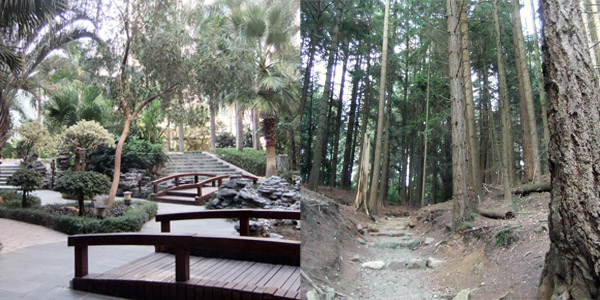
Sunlit Pines

Early Spring, North Carolina: long needle pines and dogwood.

This slideshow requires JavaScript.

What is Shenzhen’s cultural history?

I have added a page of links to Noted posts that provide an introduction into debates about what constitutes SZ’s cultural history. The question interests because “Shenzhen lacks cultural history” has been a critique made by Chinese and Western visitors to the city. However, in the new post 30th anniversary era, constructing a history for SZ has become a key government initiative. Whether imperial or state history should constitute Shenzhen’s core history defines these debates. Of note, the more tradition (especially neo-confucianism) gains momentum in Shenzhen, the more pre-Deng cultural history is valorized as a source of civic identity.

Clicking either history or shenzhen identity in tag cloud on the right side of the screen will bring up many more posts in chronological order, such that you can track my changing interests.

China Talk

Today, I visited my niece’s third grade class to talk about China and had a practical answer to the question, “how do we teach across experience?”

First, show and tell. I brought in money, a kite, mini-terracotta warriors, a teapot and pu’er tea, and a map (and yes, like elementary students in China, these third graders saw how closely China’s borders resemble the silhouette of a chicken.)

Second, play. We looked at the money and compared it to dollars. Several students taught me how to make sweet tea and then I showed them how to use the teapot (and yes, teapots travel.) We also played go fish (去钓鱼!) in Chinese to learn about tones.

Third, detailed story-telling. The students loved the story of the Qin Emperor (秦始皇), wanting to know how many kingdoms he conquered, how many soldiers were buried with him, and what kind clothes he wore.

It seems self evident, but: why isn’t education always this fun?

what is the social function of wilderness?

The Chinese word, 荒地 (huāng dì) translates into English both as “wasteland” and as “wilderness”. More specifically, huāng dì usually refers to “land that has not (yet) been converted into arable fields”. At first blush, this dictionary translation alarms me because, as an American, wilderness refers to (yes) untamed places where the infinite creativity of the universe might be experienced – primordial forests, huge swathes of desert, the looming vastness of an ocean voyage, no matter the size of my ship. Wilderness, for me, is not simply good, but sacred -beyond the human in some foundational way; it is where we go for enlightenment. In contrast, wasteland oozes, disgusts, evokes images of wasted land, industrialization gone array – dystopian visions of Gotham. So how is it that the dictionary definition of huāng dì is both wilderness and wasteland?

Continue reading

Homes within homes

As Shenzhen moves forward in it’s five-year plan to clean up illegal housing, city newspapers are focusing on 房中房 – literally houses within houses. More specifically, subdivided rooms within an urban village home have become a media flashpoint of the real conflict between affordable and safe housing because even white collar workers (let alone rural migrants) are unable to find affordable and convenient housing – once the lure of urban village rentals to young professionals.

how do talk across our experience?

On the ride home from RDU airport to Southern Pines, my brother pointed to the road leading to friend’s new house, “She lives out here in the country.”

I asked incredulously, “And you live in the city?”

“That’s right. Downtown.” And we all laughed.

Now I knew that town and country were relative concepts, but it is difficult here in Southern Pines to describe the scale and velocity of urbanization in Shenzhen.

What can I say in response to the question, “How urban is it where you live?”

I usually answer, “Very. There are few places in the US (outside NYC and LA) that are as expansively urban as Shenzhen, but even NYC and LA have significantly fewer people than Shenzhen.”

And there’s the rub. It’s difficult to imagine the intricacies of Chinese urbanization here in Southern Pines, where the wind rustles through long pine needles as the tree tips bend toward each other in early summer warmth. I keep asking myself, what would allow the diverse experiences of urbanization in Shenzhen and Southern Pines to become reciprocally meaningful? After all, over the past few years Southern Pines has experienced an estimated 20% growth rate. Life here, too, isn’t what it used to be. Nor is it the straightforward alternative to China that many people – both here and there – believe. But there are commonalities – shared desires for better education, government accountability, and public safety, to name the tip of grassroots unrest – that could grow into dialogue.

So point du jour: If we are to figure out a language of global sustainability, we need to develop empathy for each other’s reality in the absence of compatible experience.

Topics you’d like to see comparatively discussed? And why?