that was then

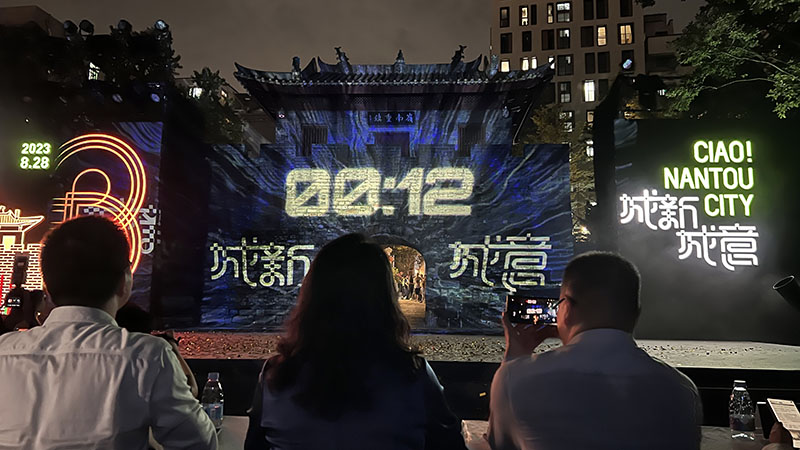
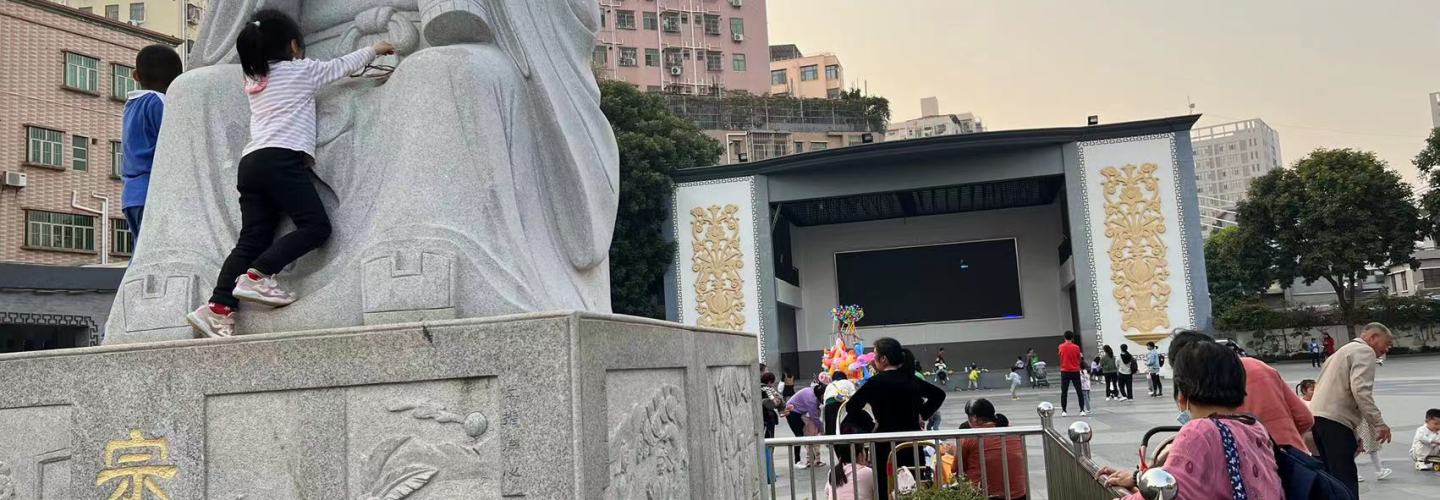
Wandered over to the Shenzhen Bay sports stadium, where people took pictures of themselves in front of universiade installations and topiary. To give a sense of what is meant by “Shenzhen speed (深圳速度)”, I am posting pictures of that particular bit of earth, below.

This slideshow requires JavaScript.

Importantly and often overlooked, hidden in plain sight behind painted walls and temporary green space, the bit of earth just south of the pageantry has gone to seed, awaiting post-universiade construction.

back online

Back. And yes, coming into Hong Kong International Airport, I noticed the extensive advertising for the Universiade, more wonderfully, blue skies welcomed me. Limiting the number of cars in Shenzhen and shutting down factories makes the environment more beautiful. I am looking forward to walking the city over the next few days and enjoying clarity.

away from shenzhen

I will be offline from May 20 until Aug 20, when I will resume posting to Shenzhen Noted. For those visiting Shenzhen Noted for the first time, I hope the blog is helpful. Everyone else; may you have a wonderful summer or winter, depending on whether you find yourself north or south of the equator, respectively. And yes, my Canadian friends are responsible for my new sensitivity to diversity within variations of colonial English; just the other day, for example, I actually said “North America” when I meant “North America” – hee!

a facelift is only skin deep: dongmen

Universiade facelifts continue and, along certain paths in the city – the global, neoliberal, middle class paths – one walks through rubble under tarps and past construction sites. Nevertheless, several steps off those intended tracks, life continues undisturbed by visions of what Shenzhen leaders think foreigners / outsiders should see. The effect of this selective construction is to further isolate pockets of working class ordinariness and transform it into unsightly poverty. In fact, one of the reasons urban villages are as such is because the city grew up around them, closing them in, and distorting their relationship to greater landscape. Thirty odd years ago, a village was a tight cluster of single story story houses and narrow paths in the midst of rice paddies, streams, orchards, and small docks that opened to either the Pearl River or the South China Sea; today an urban village is a tight cluster of three to eight story rentals that hum in the shadows of thirty story apartment complexes and postmodern skyscrapers even as the sea recedes.

Below, a walk through Dongmen, Hubei New Village, and Old Luohu work unit neighborhoods, begging the question: if what we see is what we get, why aren’t we learning to look more deeply?

This slideshow requires JavaScript.

Shenzhen’s neoconfucian movement seeps into official discourse, again

Last night at a bus stop, happened upon Shenzhen’s latest universiade campaign and yes, its Confucian quotes about welcoming guests and behaving in civilized fashion. The neoconfucian quotes are part of a larger campaign that is using the universiade to teach Shenzhen residents how to properly inhabit the city. In the subway, for example, posters show event mascot UU lining up and waiting his turn to get onto the subway. Elementary schools are teaching students to smile openly “in a western way” to great foreign guests in a friendly manners; indeed, in one of my favorite news stories, the Binhe Elementary principal explained the creation of the schools’ Smile Angels and then winning angels analyzed the characteristic that made their smile uniquely welcoming – sweet, like a bow, and so open I end up squinting.

This campaign deepens and expands upon popular neoconfucianism throughout Shenzhen. As mentioned in an earlier post, for example, some schools and many families require children to memorize the three character jing in order to cultivate filial and more intelligent children. The SEZ’s 30th Anniversary was also celebrated with Confucian quotes. I’ve also noticed that recent advertising campaigns have stepped up the filial piety quotient, moving from generalized “care for your parents by using our product” formulae to the following structure – a mother tries to help a son, the son rejects her help, and then discovers his mistake. Product placement underscores the twin moments of maternal care and the son’s enlightenment.

The Confucian Merchant (儒商) has long figured in Shenzhen public discourse about how the newly wealthy should behave, focusing on business ethics and philanthropic responsibility. Then came a grassroots movement among the middle class to teach children Confucian classics. However, the Universiade campaign underscores that the Municipality’s public discourse is growing even more explicitly neoconfucian, which in turn, points to the flexible soft side of municipal ideology and its intersections with culture and commerce – hegemony in the sense of unquestioned common sense.

大望: Culture Highland

Yesterday, I visited the Dawang Culture Highland (大望文化高地). This is the second year that Dawang has been part of the Cultural Industries Fair; like Dafen, Dawang is using art and international art markets to urbanize. Unlike Dafen, however, Dawang is located at the foot of Wutong Mountain and is promoting a more natural and original art experience.

Dawang refers both to a particular village and the cluster of villages that nestle against the foot of Wutong Mountain and so development in the area tends to be village by village, leading to both unexpected convergences and contradictions. Importantly, the spatial layout of the area suggests interesting (if familiar) transitions between rural and urbane Shenzhen as well as the integration of neidi migrants and artists into the city. On the one hand, Maizai, for example, is the village closest to mountain footpaths and has developed a cobblestone pedestrian street for Shenzhen urbanites looking for weekend relaxation and local Hakka cuisine. Other villages specialize in selling lychee honey. There is limited, small scale production and commerce. On the other hand, transportation to the area is inconvenient, which means that land is cheap. Consequently, both artists and squatters have nestled into the edges of Dawang lychee orchards.

This layout highlights the important social function of urban villages in incubating new kinds of Shenzheners: locals as a new kind of renter class, artists as the up and coming middle class, and squatters as the lowest of the city’s urban proletariat. Importantly, the area’s distance from the city center means that its one marketable asset is precisely the feature it wants to destroy – its rural and undeveloped nature (in all senses of the world).

Dawang and its Culture Highland are featured in That’s PRD’s introduction to new artspaces in Guangzhou and Shenzhen. Pictures of the lay of the land, below.

This slideshow requires JavaScript.

原创-the sz cultural industries fair

The Seventh Shenzhen Cultural Industries Fair (文博会) opened three days ago. Of note is the ongoing institutionalization of types of creativity; by Hall theme, various Shenzhen ministries recognize and promote the following types of cultural industry:

  1. Integrate Culture and Science and technology, Advance Industry and Market Development 文化与科技相融合,产业与市场相促进
  2. Creativity, Taste, Life 创意 • 品味 • 生活
  3. New Media, New Life, New Future 新媒体 • 新生活 • 新未来
  4. Inheritance, Craft, Products, Preservation 传承•技艺•产品•保护
  5. [No Hall 5]
  6. Design, Branding, Quality 设计 • 品牌 • 价值
  7. News Publications 新闻出版馆
  8. Culture, Collision, Exchange 文化·碰撞·交融
  9. Creativity, Challenge, Going Beyond 创意·挑战·跨越

Continue reading

universiade facelifts

All the universiade mandated upgrades have us walking through and between construction sites. Today’s pictures from Coastal City and Seaworld.

This slideshow requires JavaScript.

what’s not to love?

This bit of gossip illustrates the social construction of Shenzhen identities, so I’m not just pandering to my baser nature. Really. It may even tell us something about the socio-economic conditions predicating the globalization of yoga. That said, I’m sure it says something about education at Shenzhen University – hee!

I practice yoga at a great studio. Like many studios in Shenzhen, classes are held during the day, evening, and weekends. Their main clientele are upper middle class women from 20 to maybe 55ish, however, most of the women are in their 30s and 40s. There are several male students, but in any class, they are usually a party representative (党代表), which is slang for the only man in a group of women.

One of my friends teaches at Shenzhen University and has, on occasion, introduced interested students to the studio. A while back, one of her male students started practicing and usually joined her for evening class. Then two weeks ago, my friend couldn’t go to class and so student went by himself and found himself the recipient not only of all that female attention, but also invitations for dinner and trips. He finally decided on one of the more flexible cougars and they have been dating since.

Here’s the interesting part of this story: no one had approached him previously because they thought he and my friend were dating! They finally dared approach him on a day when she wasn’t there. In other words, the working assumption of the women and staff at the yoga studio was that when men show up for yoga, its couple’s yoga. Moreover, that when a younger man and woman go to class together, it means that the young man’s virtue is probably up for grabs (so to speak).

As my yoga studio turns: What’s not to love?

the real reason behind the proliferation of shaxian snack bars

Franchises of the Fujian based chain, 沙县小吃 (Shaxian Snack Bar) have sprouted up all over China, and Shenzhen is no exception. However, Shaxian Snack Bars aren’t upscale, in fact, the standardized fast food chain veneer notwithstanding, each Snack Bar seems your ordinary mom and pops dive. Moreover, with all the razing and rebuilding going on, the small restaurants and stalls suddenly appear and just as easily vanish. Currently burning up the web, this bit of satire about the real reason for the success of Shaxian Snack Bar brings together two of my favorite things — political satire and food (中文版).

“The war is over.”

The Snack Bar owner had a cigarette hanging from his mouth and his ass in the chair in front of me, as his eyes darted this way and that. A wisp of smoke came out of his mouth.

I was no longer happy. I had been enjoying a basket of steamed buns and a large portion of wonton, thinking about ordering another drumstick. Actually, I wanted a large rib from the large rib set meal, but it couldn’t be purchased independently, so I was thinking about my options. That was when this middle aged man plopped his ass on the chair in front of me, a lone customer with a smile on his face, and said that meaningless sentence. And he was smoking.

“What war? Also, how much is a large rib from the large rib set meal?” I asked patiently. Continue reading