China Talk

Today, I visited my niece’s third grade class to talk about China and had a practical answer to the question, “how do we teach across experience?”

First, show and tell. I brought in money, a kite, mini-terracotta warriors, a teapot and pu’er tea, and a map (and yes, like elementary students in China, these third graders saw how closely China’s borders resemble the silhouette of a chicken.)

Second, play. We looked at the money and compared it to dollars. Several students taught me how to make sweet tea and then I showed them how to use the teapot (and yes, teapots travel.) We also played go fish (去钓鱼!) in Chinese to learn about tones.

Third, detailed story-telling. The students loved the story of the Qin Emperor (秦始皇), wanting to know how many kingdoms he conquered, how many soldiers were buried with him, and what kind clothes he wore.

It seems self evident, but: why isn’t education always this fun?
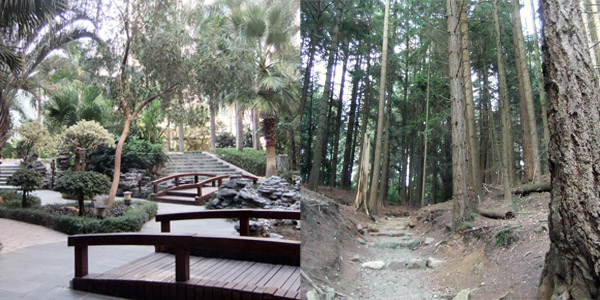
what is the social function of wilderness?

The Chinese word, 荒地 (huāng dì) translates into English both as “wasteland” and as “wilderness”. More specifically, huāng dì usually refers to “land that has not (yet) been converted into arable fields”. At first blush, this dictionary translation alarms me because, as an American, wilderness refers to (yes) untamed places where the infinite creativity of the universe might be experienced – primordial forests, huge swathes of desert, the looming vastness of an ocean voyage, no matter the size of my ship. Wilderness, for me, is not simply good, but sacred -beyond the human in some foundational way; it is where we go for enlightenment. In contrast, wasteland oozes, disgusts, evokes images of wasted land, industrialization gone array – dystopian visions of Gotham. So how is it that the dictionary definition of huāng dì is both wilderness and wasteland?

Continue reading

how do talk across our experience?

On the ride home from RDU airport to Southern Pines, my brother pointed to the road leading to friend’s new house, “She lives out here in the country.”

I asked incredulously, “And you live in the city?”

“That’s right. Downtown.” And we all laughed.

Now I knew that town and country were relative concepts, but it is difficult here in Southern Pines to describe the scale and velocity of urbanization in Shenzhen.

What can I say in response to the question, “How urban is it where you live?”

I usually answer, “Very. There are few places in the US (outside NYC and LA) that are as expansively urban as Shenzhen, but even NYC and LA have significantly fewer people than Shenzhen.”

And there’s the rub. It’s difficult to imagine the intricacies of Chinese urbanization here in Southern Pines, where the wind rustles through long pine needles as the tree tips bend toward each other in early summer warmth. I keep asking myself, what would allow the diverse experiences of urbanization in Shenzhen and Southern Pines to become reciprocally meaningful? After all, over the past few years Southern Pines has experienced an estimated 20% growth rate. Life here, too, isn’t what it used to be. Nor is it the straightforward alternative to China that many people – both here and there – believe. But there are commonalities – shared desires for better education, government accountability, and public safety, to name the tip of grassroots unrest – that could grow into dialogue.

So point du jour: If we are to figure out a language of global sustainability, we need to develop empathy for each other’s reality in the absence of compatible experience.

Topics you’d like to see comparatively discussed? And why?

Shenzhen+China, Utopias+Dystopias Conference

Those in the Boston Area, please join us for the Shenzhen+China, Utopias+Dystopias Conference. Program details, here.

Time: Saturday, March 12, 2011, 09:30-16:30

Location: MIT Department of Architecture, Building 7: Audio Visual Theater (7-431)

Topic: In 1979 when the People’s Republic of China embarked on its current course of economic liberalization, the city of Shenzhen was created as a new model city for policy experimentation and global contact. Shenzhen’s very existence amounted to a tacit acknowledgement of the failures of socialism to provide for the communist society once promised, and a host of new institutions, laws, and opportunities were assembled alongside China’s first skyscrapers and amusement parks. Three decades later, while the promises of post-socialist plenty and international parity have been achieved in many respects, Shenzhen remains a model of China’s recent economic achievements but has also come to represent a dystopia of industrialization and urbanization. Unequal citizenship, quasi-legality, corruption, exploitation, and the rebirth of the propaganda apparatus closely accompany Shenzhen’s success and render its achievements widely questioned. The inequities brought upon by a fast-developing China is intensified outside the PRC, where growing Chinese economic strength is more often than not posed as a threat to everything from liberal democracy to environmental protection to human rights. This conference convenes scholars in humanities and social science whose newest research examines the utopian and dystopian dynamics of the Chinese reform period in Shenzhen and beyond. Employing historical and comparative perspectives in the areas of health, labor, law, art, and urbanism, we examine the historical and transnational trajectories of the enormous changes within contemporary Chinese society as represented first, in Shenzhen’s rise, and second, in the global imagination of China’s post-socialist future.

What does it mean to call someone a 农民?

One of the most derogatory expressions among urbane Shenzheners is to call someone a “peasant (农民 nongmin)”.  As a slur, it’s meanings range from stupid through uneducated to uncultured, but back home in the South, I’m thinking that the culturally appropriate translation might be “red neck”. However, I’m also wondering if “nigger” would work, especially given the connection to fields, agricultural labor, unfair renumeration, and constant disrespect from the country’s elite.

Why am I thinking about peasants, red necks, and niggers? Continue reading

beauty soars

The Pacific Northwest remains, for me, a mythic homeland. Unlike in other urban settings, where I often strive to find the mythic, in Seattle, Portland, and smaller cities along the coast, here, yes. So wondering, about the modernist project in Shenzhen. Does mass architecture elevate the soul? Or does that imaginative leap happen when an architect or investor takes pen to paper and calls the future into being? And can such a feeling constitute social science or is better suited to literature? Meanwhile, the rest of us scuttle through Gotham.

This slideshow requires JavaScript.

border crossing

Yesterday, custom officials at Seatac detained my husband in order to convince him to surrender his Green Card because they said that holding a Green Card was a privilege rather than his right. They maintained that a Green Card only gave a foreign national the privilege of residing in the United States because a Green Card is not a “travel document”. Their language use implied that as a Green Card holder my husband did not have the right to freely enter and leave the United States. However, when my husband and I entered Seattle, we had been abroad roughly half a year, well under the one-year time limit on overseas stays for Green Card holders. In other words, my husband had the legal right to freely enter the United States. Thus, the officers had to convince my husband to surrender his Green Card because it could not be revoked legally.

I am distressed and saddened by yesterday’s events. I am distressed because by choosing to interpret my husband’s right to freely enter and leave the United States as privilege, the officers chose to undermine my husband’s legal rights, rights in which all Americans have enshrined in the Constitution. I am saddened because those same actions imply that the officers also chose to close American borders to my husband without considering that there are many ways of being an American family in a globalizing world.

wide open skies

Much new development in Hexi Tianjin means that the skies are wide open, the farmers missing in action, most buildings uninhabitted, and sunlit beauty that reminds me of Texas.


This slideshow requires JavaScript.

generations

Lately I have been writing about Generations 80 and 90 because much of what they do and think mark interesting sites of departure from older generations. Today, a brief comment about my experience watching Beijing Opera with an 80 year-old friend.

Continue reading

watching the SZ evening news in Tianjin

I have been watching the Tianjin evening news, but last night had the chance to watch the SZ evening news (via SZ satellite television) and the differences between program content were as interesting as the similarities. Impressions below. Continue reading