handshake 302

CZC logosCZC特工队 is a group organized to engage Shenzhen’s urban villages through art, theater, and social media documentary projects. Our first project is called “Handshake 302”.

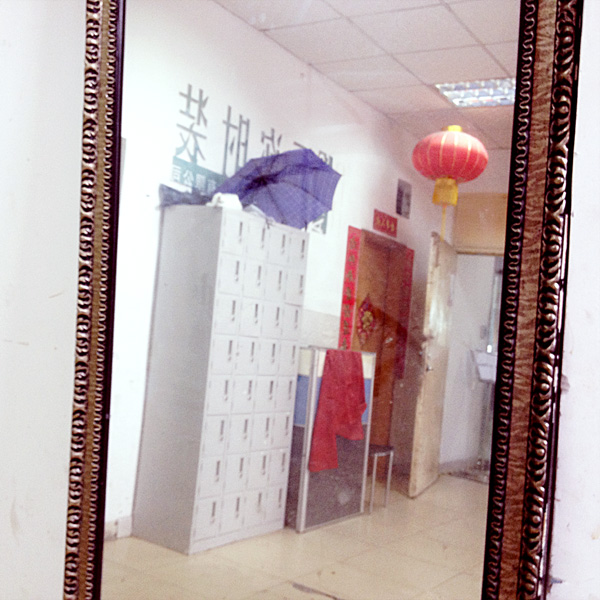
The concept behind Handshake 302 is simple: Baishizhou is our “artspace”, which has its office at Shangbaishi, second block, building 49, apartment 302, a 15 sq meter conveniency apartment in Shangbaishi.

We will use the actual apartment to commission and develop installations. Our first project is “Numbers” and will open on October 10. In addition, we work with visual artists, performing artists, and writers to develop projects that engage and extend Baishizhou. We will use the Baishizhou Culture Plaza (and outdoor stage) to develop performance pieces. On October 20, for example, Peter Moser will work with local street musicians to create a communnity concert. We also encourage artists and performers to create and install / perform works throughout Baishizhou. Fat Bird, for example, is currently developing a piece that uses the Tangtou rowhouses as their stage.

Handshake 302 has been accepted by the 2013 Shenzhen-Hong Kong Architecture Biennale as a collatoral venue, bringing Baishizhou into conversation with the main venues in Shekou.

Impressions of 302 and its immediate environment, below.
This slideshow requires JavaScript.

shekou industrial

Although the City’s relentless upgrades have transformed the lay of much Shekou land, nevertheless it is still possible to find corners shaped by early 80s dreams, technology, and capital. Yesterday, I walked to the 6-story roof of one of the buildings in an old Shekou Industrial Park along New Shekou Road.

This slideshow requires JavaScript.

what number, please

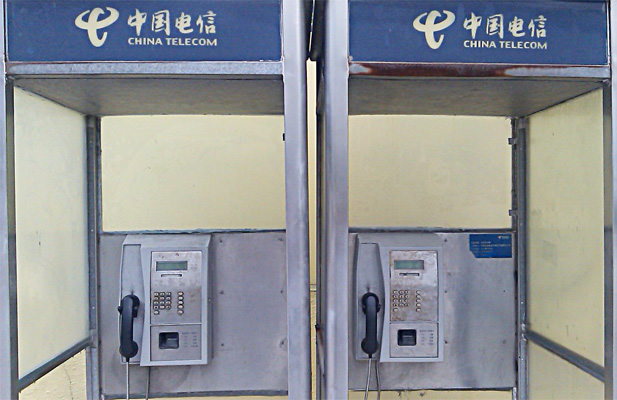
Walking along New Shekou Road this afternoon, I suddenly became aware of the abandoned, but still working telephones in this older, industrial area. I asked several pedestrians when was the last time you used a telephone (in a booth) and not a cell phone? Most counted the time on their fingers, guestimating between 6 and 9 years ago.

Impressions, below. And under that, a poll: When was the last time you used a public telephone in an outdoor telephone booth to call someone?

This slideshow requires JavaScript.

science fictionalized imaginations

The Shenzhen University School of Architecture is celebrating its 30th anniversary. The School of Architecture has a particular place in the university’s history because (1) the first president, Luo Zhengqi was an architect and (2) the first class of students, along with their teachers, actually designed the campus and its earliest buildings.

To commemorate its history, the school has organized a travelling exhibit of notable designs by 26 graduates. All of the designs had won important competitions and/or were being built; in this very practical sense, the work of SZU architecture students is shaping how contemporary Chinese architects are imagining, designing and building space.

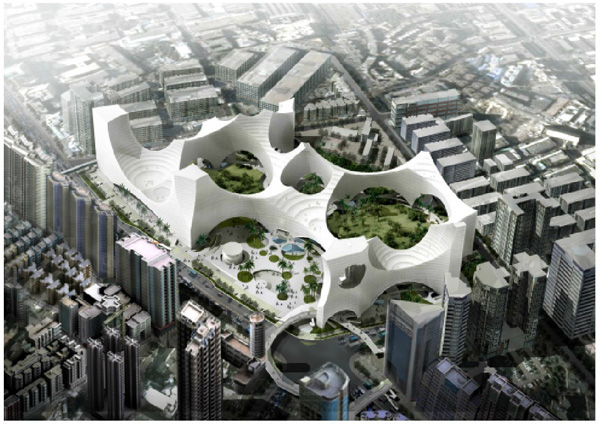
Zhong Qiao’s (钟乔) designs for the Hu Yaobang Memorial, for example, inserts shiny white lines into the rolling hills of terraced rice paddies.Similarly, Zhu Xiongyi and Wang Zhaoming alos located their design for the Chinese National Gene Bank (Shenzhen) among terraced rice paddies. Even more explicitly futuristic, Zeng Guansheng’s design, Hong Kong Alternative Car Park Tower literally sends us flying.

On paper, these designs are delicately beautiful, and yet a sence of futurism and unlimited potential unites the designs. They are ambitious illustrations of contemporary China’s urban imaginary. Some designs examples from the SZU School of Architecture retrospective:

This slideshow requires JavaScript.

The show opened last Saturday on the first floor of the School of Architecture building. It will travel to at least 10 other schools throughout China, returning to Shenzhen for a conference organized by the Shenzhen Center for Design on October 19.

dream of a red china

On November 29, 2012, in one of his first appearances as the General Party Secretary of the People’s Republic, Xi Jinping defined “China’s Dream”, saying, “everyone is debating what China’s Dream is. I think that since the modern era, the greatest dream of the Chinese nation has been the renaissance of the Chinese people (大家都在讨论中国梦。我认为,实现中华民族伟大复兴,就是中华民族以来最伟大的梦想。).”

In support of Xi Jinping’s exhortation, the walls surrounding Shenzhen’s construction sites have been covered in posters that define this dream in terms of Chinese tradition. Visually, this is achieved through folk paintings of children learning to use a calligraphy brush or symbols of new year’s prosperity. However, given that folk nationalism was such an important part of early Maoism, these posters also reference the joys of labor and strengthening the country.

Shenzhen’s take on the campaign interests me because the posters reference Maoism indirectly through a visual rhetoric that reiterates 1950s folk nationalism. Traditional activities and visual styles further evoke a nostalgia for the good old days. Moreover, these posters explicitly celebrate Confucianism. All this to say, the current Shenzhen interpretation of Xi Jinping’s Chinese Dream takes the form of nostalgia for a past that ever happened creates a Chinese identity that is explicitly cultural, rather that political.

I’m not sure if Shenzhen’s take on China’s Dream is the same as in other cities. A quick google of 中国梦, for example, brings up illustrations that are more scientific and futuristic that these colorful posters. Thus, there is something determinedly anti-socialist realism in the Shenzhen campaign, which might lead us to think that Shenzhen’s leaders are ambivalent about the Party. Certainly, it leaves me wondering just how far the current regime will distance itself from its former incarnations in order to maintain hegemony without sharing power.

Examples of these posters, below:

This slideshow requires JavaScript.

even maoist spaces crumble and fade…

Only eleven houses remain occupied in Baishizhou’s Tangtou row houses.

Nanshan District tacitly condemned these houses several years ago, but did not become serious about evictions until the Universidade (Summer 2011). As inhabitants were evicted, the District padlocked the doors, so that the buildings could not be reoccupied. However, as the saying goes, “Those on top have policies, those on the bottom have countermeasures (上有政策,下有对策)”. When houses weren’t immediately padlocked, another family or worker or group of friends moved in. The owners continued to collect rent. When enforcers from the Urban Management Bureau (城管) came by either the inhabitants moved, or made friends with them and stayed, waiting for the final eviction.

This wait and see attitude has been much more successful for inhabitants of houses where the landlord is either in Hong Kong or further abroad. As a 4-year resident said, “Property managers don’t care what we do because the absent landlords are legally responsible. All they have to do is collect rents and their paychecks. I’m polite to urban management and they leave me alone. We’re all human, and when it’s time to move, they’ll tell me.”

Nanshan District has decided to close down the area completely because the summer rains further weakened the structures. These buildings from rural collectivism are no longer simply considered an eyesore, but also dangerously unsound. The vanishing of Maoist economic legacies was, of course, one of Shenzhen’s raison d’etre. However, Maoism lingered in the nooks and crannies of previously built spaces, such as Tangtou. Indeed, the Tangtou row houses are one of the few remaining examples of Maoist architecture in Shenzhen’s inner districts and once they have been razed, Maoism will become more of a spectre than it already is.

Thought du jour: in Shenzhen, even crumbling, Maoist dormitories can no longer safely shelter the city’s poorest workers and their families. Wither the left, indeed.

Impressions of Tangtou wet and sunny, and still occupied interior.

This slideshow requires JavaScript.

globalized footsteps, deteritorialized lives

We speak glibly of Shenzhen as a “global city” and of the importance of “globalization”, drawing attention to “economic forces” and “Chinese politics”. Indeed, these simple phrases help us manage the alienating and dissonant fallout of truly thinking about what it means that our everyday lives stretch out across networks we do not fully see and dependent upon processes we cannot predict, let alone control.

Yesterday, for example, I walked from the Shenzhen Bay Checkpoint to my house on Shekou Industry #8 Street. I passed several hundred cross-border pre-schoolers and elementary students on their way home, another Shenzhen Bay development project (north on Dongbin Road), and a clean collection plastic container to collect clothing donations for poor and/or destitute areas of the interior (neidi). Globalized footsteps indeed. Each of these events represented individual and/or collective attempts to navigate and use international and domestic borders. We can speculate on why parents might send their young children on hour-long treks from Shenzhen to Hong Kong. We can provide Marxist analysis for land reclamation and real estate development in Shenzhen Bay. We can note the rise of philanthropy as Shenzhen’s middle class solidifies its self-identity as caring for neidi communities. But at every twist of thought, the totality of what the city might or might not be, slips away and we resort to chasing the next idea that bumps awareness.

The earth feels solid. The concrete reflects south Chinese heat. The tacky red heart symbolizes an actual desire to improve the world. There is a here and now that seems reliable, until we start thinking. And then, once again, a massive, unwieldy mess of global cogitation distorts the all too ordinary edges of everyday life and we suddenly suspect that life really might be elsewhere.

Impressions, below:

This slideshow requires JavaScript.

shekou tour — from villages to the new coastline via a few side streets

Wonderful walking tour of Shekou with Huang Weiwen, Director of the Shenzhen Center for Design. Of particular note (in no particular order):

Nanhai Road was the primary artery and all industrial parks and housing were built along that road. This road has pride of place on the original China Merchants plan for Shekou. However, on the same map, the village areas were blank. Moreover, road and infrastructure construction served to isolate, rather than integrate the villages into Shekou society. Nevertheless, public facilities such as hospitals, post offices and schools were built in the border zones between the village and China Merchant settlements.

The craze for creating material traces of a history for Shenzhen continues. Next to the Shekou wet market — which has been externally renovated with LED screens — a strip of village holdings / former factories is being converted into “Fishing Street”, where there will be restaurants and other places of consumption. The design for Fishing Street juxtaposes three different Chinese traditions: Guizhou style houses, bas relief murals of Dan or Tan people fishing history, and palm trees. The Guizhou houses were first seen in the Meillen hotel and apartments, but the style has clearly trickled down. The Dan, of course, were the people who lived on fishing boats, only coming online with land reform during the early Mao era. Before they were used as ornamental topiary, the palm trees were used locally as cash crops to make fans. This new development further deepens other murals and village museums in the area.

The most distressing change? The almost complete privatization of the coastline. The new marina includes a private road to that last stretch of leasure coastline. Indeed, residents may now access the coastline either through the Shenzhen Bay Park or window views from a highrise.

ALso, as we walked from the village areas toward China Merchants developments, I couldn’t help but notice the abandoned telephone booths — they litter the older sections of the city. Moreover, it is only when actually noticing these empty stalls that I realize there are no public phones throughout the newer sections of the city. Instead, we all carry phones (of varying degrees of intelligence.)

Impressions, below.

This slideshow requires JavaScript.

a day of culture

Today, there was an exhibition opening in the afternoon and a performance of The Hairy Ape this evening. Suddenly, culture all over Shenzhen. Impressions, below.

This slideshow requires JavaScript.

the jasmine war

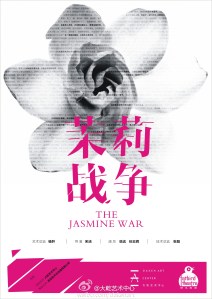
The latest Fat Bird production, The Jasmine War (茉莉战争) will go up next week at the Daqian Art Center, which is located in Eco-Park OCT (深圳华侨城生态圈广场大乾艺术中心). Tickets will be available online through the art center.

Impressions from rehearsal, below:

This slideshow requires JavaScript.

poster